Gas Welding and Cutting Machine
CN → US| HS Code | Tariff Rate | Origin | Destination | Doc |
|---|---|---|---|---|
| 8468201000 | 38.9% | CN | US | Official Doc |
| 8468801000 | 37.9% | CN | US | Official Doc |
Product Images
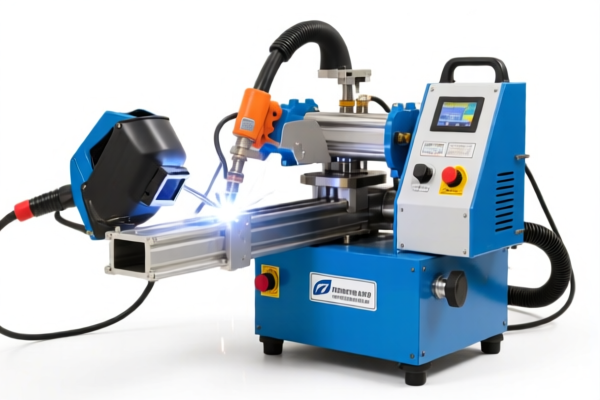
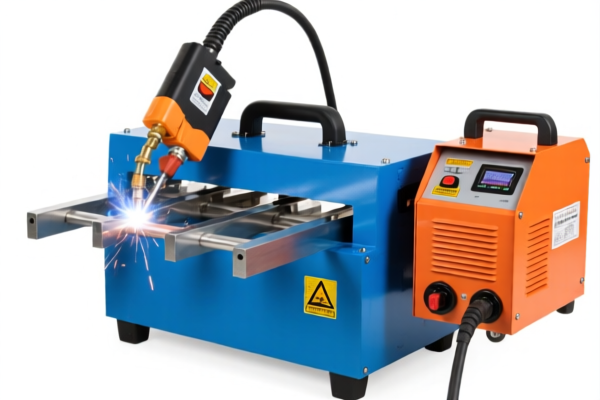
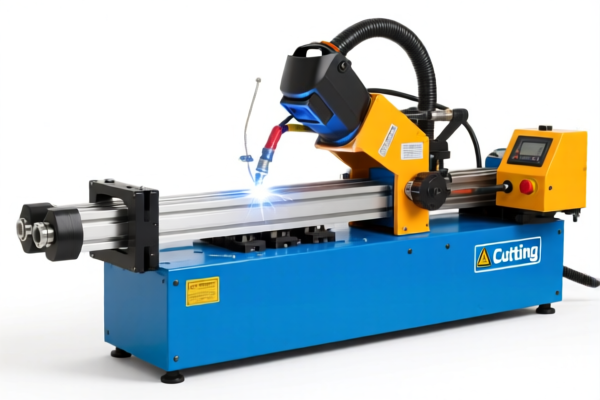
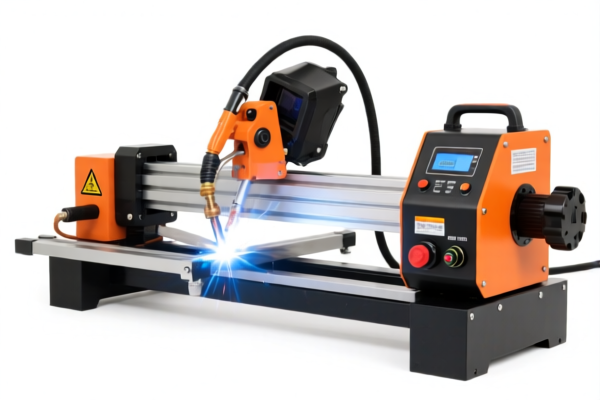
AI Analysis
🔥 Gas Welding and Cutting Machines (Gas Operated Surface Tempering & Welding Appliances)
🌐 HS Code Reference & Customs Clearance Guide | 2026 Latest Tariff Analysis | Professional Clearance Strategy
📌 I. Product Definition & Classification: Do You Really Understand "Gas Welding Machines"?
Gas welding and cutting machines refer to machinery and apparatus used for soldering, brazing, or welding using gas fuel, or gas-operated surface tempering appliances. These are distinct from electric arc welding machines (Headings 8515) and are classified under Heading 8468.
In international trade, these products are primarily divided into two categories based on their operation method:
- Hand-directed or -controlled (Portable/Manual): Machines that are held, directed, or controlled by hand during operation. This includes standard handheld oxy-acetylene torches, portable cutting machines, and small brazing units.
- Other Machinery: Larger, fixed, or semi-automatic units that are not primarily hand-directed.
⚠️ Key Distinction Point:
- If the machine is hand-held, hand-directed, or manually controlled during the welding/cutting process → It falls under 8468.20.10.00 (for Gas-operated) or 8468.80.10.00 (for Other).
- If the machine is fixed, automated, or table-mounted without direct hand control of the torch/head → It may fall under different subheadings (e.g., 8468.90 for parts, or other 8468 categories for non-hand-controlled).
- Note: The provided data specifically covers Hand-directed or -controlled units.
📦 II. HS Code Classification Details (2026 Latest Tariff Authority Comparison)
Based on the provided data, we have two specific HS Codes for Hand-directed or -controlled gas welding/cutting machinery. Both share the same tax structure.
| HS Code | Product Description | Applicable Scenario | Operation Mode |
|---|---|---|---|
8468.20.10.00 |
Gas-operated machinery and apparatus: Hand-directed or -controlled | Handheld gas welders, portable gas cutting torches, gas brazing guns | ✅ Hand-directed |
8468.80.10.00 |
Other machinery and apparatus: Hand-directed or -controlled | Other non-electric welding/cutting devices that are hand-held/controlled (not strictly "gas-operated" in the primary sense, or other types) | ✅ Hand-directed |
🔍 Important Reminder:
- Both codes specifically apply to Hand-directed or -controlled units.
- If your product is a large, fixed, or automated gas welding system, these HS codes may NOT apply. You must check other subheadings under 8468.
- The description "Other than those of heading 8515" confirms these are non-electric (i.e., gas/fuel-based).
💰 III. 2026 Latest Tariff Rate Details (Including Surtaxes)
✅ Applicable Country: United States (US)
✅ Origin: China (CN)
✅ Effective Time: 2025/2026 Tariff Schedule
🎯 1. 8468.20.10.00 —— Gas-operated Machinery (Hand-directed)
| Item | Content |
|---|---|
| Base Tariff Rate | 0.0% |
| Additional Surtax (Section 301/IEEPA) | 0.0% |
| Total Tax Rate | 0.0% |
| Tax Calculation | CIF Value × 0.0% = $0 |
| De Minimis Eligibility | ✅ Yes (Generally, goods under $800 may be exempt, but this depends on broader policy; however, the tariff itself is 0%) |
| Legal Basis Path | HTSUS:8468.20.10.00 → Customs Duty: 0% |
📌 Explanation:
- Gas welding and cutting tools (hand-held) are classified under 8468.20.10.00.
- Unlike many electronic or industrial products, hand-operated gas welding/cutting apparatus currently enjoys a 0% tariff rate (both base and additional surtaxes are 0%).
- This makes them highly competitive and low-cost to import into the US.
🎯 2. 8468.80.10.00 —— Other Machinery (Hand-directed)
| Item | Content |
|---|---|
| Base Tariff Rate | 0.0% |
| Additional Surtax (Section 301/IEEPA) | 0.0% |
| Total Tax Rate | 0.0% |
| Tax Calculation | CIF Value × 0.0% = $0 |
| De Minimis Eligibility | ✅ Yes |
| Legal Basis Path | HTSUS:8468.80.10.00 → Customs Duty: 0% |
📌 Note:
- This code covers "Other" hand-directed machinery and apparatus.
- Like the gas-operated category, it also benefits from a 0% total tariff rate.
- Ensure the product truly fits "hand-directed or -controlled" to qualify.
🛠️ IV. Customs Clearance Practical Advice (Battle-Tested Pitfall Guide)
✅ 1. Required Documentation Checklist (No Exceptions)
| Document | Must Provide | Description |
|---|---|---|
| ✅ Product Specification Sheet | ✔️ | Include type (gas/electric), fuel type (oxy-acetylene, propane, etc.), flow rate, pressure, model number. |
| ✅ Product Photos | ✔️ | Clear images of the entire unit, labels, and any hand-held components. |
| ✅ Commercial Invoice | ✔️ | Must clearly state "Gas-operated welding machine, hand-directed" or similar accurate description. Avoid vague terms like "welder" without specifying power source. |
| ✅ Packing List | ✔️ | Detail contents: torches, hoses, regulators, cylinders (if included). |
| ✅ Safety Certifications | ✔️ | UL, CE, or other safety marks (especially if cylinders are included). |
⚠️ Critical Note:
- If gas cylinders are included, they are classified as Dangerous Goods (Class 2). Separate customs declaration and special transport requirements apply.
- If the product is hand-held, ensure the description explicitly states "Hand-directed" to match HS Code 8468.20.10.00 or 8468.80.10.00.
✅ 2. Declaration Tips (Key Mantra)
🔥 "Gas Welder, Hand-held, 0% Tariff, Clear Description!"
| Scenario | Correct Declaration Method | Wrong Practice |
|---|---|---|
| Handheld gas torch/welder | 8468.20.10.00 or 8468.80.10.00 |
Misclassified as electric welder (8515) → Higher tax |
| Fixed/automated gas welding system | Check other 8468 subheadings | Force into 8468.20 → Potential misclassification |
| Gas cylinder included | Declare separately as DG | Combine in one line without DG notation → Customs Hold |
✅ 3. Special Situations Handling
| Situation | Handling Advice |
|---|---|
| Including Gas Cylinders | Cylinders are Dangerous Goods. They require a separate customs entry and must be shipped via air/sea with proper DG documentation (MSDS, UN Number). Do not combine with the welding machine in a way that obscures the DG nature. |
| OEM Custom Brands | Provide authorization letter if branding is significant. Ensure the description matches the physical product. |
| Hand-held vs. Semi-automatic | If the machine has a motorized feed or automated head, it may NOT be "hand-directed." Consult a customs broker to verify if it falls under 8468.90 (parts) or other categories. |
🌍 V. Global Market Clearance Comparison (2026 Latest)
| Country/Region | Recommended HS Code | Tariff (China Origin) | Certification Requirements | Notes |
|---|---|---|---|---|
| 🇺🇸 USA | 8468.20.10.00 |
0.0% | None typically for basic tools | Zero duty advantage |
| 🇨🇳 China | 8468.20.10.00 |
Varies (Check latest) | CCC (if applicable) | Domestic market rules |
| 🇪🇺 EU | 8468.20.10.00 |
Varies (Usually 0-3%) | CE Marking | Ensure safety standards |
| 🇬🇧 UK | 8468.20.10.00 |
Varies | UKCA Marking | Post-Brexit rules |
📌 Conclusion:
- USA offers a 0% tariff rate for hand-directed gas welding machines, making it a highly competitive product for export.
- Ensure the product is genuinely hand-directed to qualify.
- Be cautious with gas cylinders due to dangerous goods regulations.
📌 VI. Common Errors & Pitfall Guide (Lessons Learned)
❌ Mistake 1: Classifying hand-held gas welders as electric welders (8515)
👉 Consequence: Incorrect HS Code, potential delays, or misclassification penalties. Gas welders are 8468, not 8515.
❌ Mistake 2: Not declaring gas cylinders as Dangerous Goods
👉 Consequence: Customs seizure, fines, or return. Cylinders require separate DG handling.
❌ Mistake 3: Vague product description ("Welder")
👉 Consequence: Customs may request additional info, causing delays. Use "Gas-operated, hand-directed welding torch".
✅ Correct Practice:
"Gas-operated Welding Torch, Hand-held, Model XYZ, Compatible with Oxy-Acetylene, No Electric Motor, Included Hoses and Regulators"
🎯 VII. Conclusion: Professional Declaration, Low Cost, Smooth Clearance!
🎯 Remember the Mantra:
🔹 "Gas Welder, Hand-held, 0% Duty, Clear Description!"
🔹 "No Cylinder? Just Machine. Cylinder? Separate DG Entry!"
🔹 "8468.20.10.00 is your friend for gas torches!"
📌 Pro Tip:
- If your product is electric, do NOT use these codes. Use Heading 8515 instead.
- If your product is large/fixed, do NOT use these codes. Check other 8468 subheadings.
- Always verify Dangerous Goods regulations if gas cylinders are included.
📣 Immediate Action:
📞 Contact a licensed customs broker for DG handling if cylinders are involved.
🚀 Ensure your invoice clearly states "Gas-operated, Hand-directed" to secure the 0% tariff rate.
✨ Accurate Classification = Lower Cost + Faster Clearance!
✨ Professional Clearance Starts with Precise Classification!
💼 Every Duty Saved is Pure Profit!
Customer Reviews
About HS Code Classification
The Harmonized System (HS) is an internationally standardized nomenclature developed by the World Customs Organization (WCO) to classify traded products. Over 200 countries use the HS system as the basis for customs tariffs, trade statistics, and import/export regulations.
Each HS code follows a hierarchical structure:
- Chapter (2 digits) — Broad category of goods (e.g., Chapter 84: Machinery and Mechanical Appliances)
- Heading (4 digits) — More specific grouping within the chapter
- Subheading (6 digits) — Internationally standardized breakdown, used by all WCO member countries
- National subdivisions (8-10 digits) — Country-specific extensions for further classification, such as US HTSUS 10-digit codes
Correct HS code classification is essential for smooth customs clearance, accurate duty payment, and compliance with trade regulations. Misclassification can lead to customs delays, overpayment of duties, or penalties.
When importing from CN to US, the applicable tariff rates may include:
- Most-Favored-Nation (MFN) rate — The standard duty rate applied to WTO members
- General rate — Applied to countries without trade agreements
- Trade remedy duties — Additional tariffs such as Section 301 (anti-dumping), Section 232 (national security), or countervailing duties
The information provided on this page is for reference purposes only. For official classification, please consult with your local customs authority or a licensed customs broker.