Gasoline Cleaning Dispersant
CN → US| HS Code | Tariff Rate | Origin | Destination | Doc |
|---|---|---|---|---|
| 3403191000 | 35.2% | CN | US | Official Doc |
| 3403112000 | 35.2% | CN | US | Official Doc |
| 3402901000 | 38.8% | CN | US | Official Doc |
| 3824992900 | 41.5% | CN | US | Official Doc |
| 3824994900 | 41.5% | CN | US | Official Doc |
Product Images

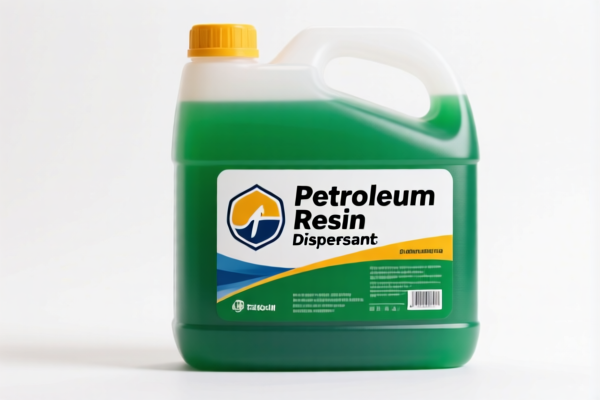
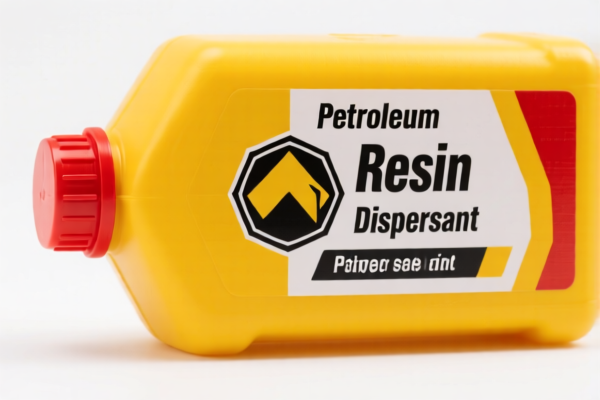
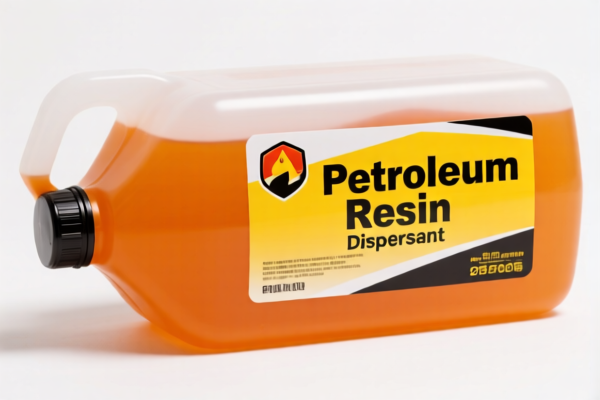
AI Analysis
🚗 Gasoline Cleaning Dispersant (Hydrocarbon-Based Chemical Additives)
🌐 HS Code Reference & Customs Clearance Guide | 2026 Latest Tariff Analysis | Professional Clearance Strategy
📌 I. Product Definition: What Exactly is a "Gasoline Cleaning Dispersant"?
In the automotive and industrial chemical sectors, a "Gasoline Cleaning Dispersant" is a specialized chemical additive designed to be mixed with fuel. Its primary functions are:
- Cleaning: Removing carbon deposits, varnish, and gum from fuel injectors, carburetors, and intake valves.
- Dispersing: Preventing water from freezing and keeping particulate matter suspended to prevent filter clogging.
Key Classification Ambiguity: Because the name contains multiple functional terms ("Cleaning," "Dispersant," and "Gasoline" as the solvent base), customs authorities often debate whether to classify it as a: * Lubricant/Preparation (HS 3403) – If viewed as an engine treatment. * Surface Active Agent/Detergent (HS 3402) – If viewed as a cleaning agent. * Chemical Preparation/Industrial Miscellany (HS 3824) – If viewed as a generic chemical mixture for industrial use.
⚠️ Critical Distinction:
- If the product is primarily a lubricating preparation (e.g., oil additive focus), it may fall under 3403.
- If it is primarily a detergent/surfactant (e.g., fuel system cleaner), it may fall under 3402.
- If it is a general chemical mixture with no specific primary function defined by headings 3401-3403, it defaults to 3824.
📦 II. HS Code Classification Details (2026 Authoritative对照)
Based on the provided data, here are the four possible classifications, ranked by logic and tax implication:
| HS Code | Product Description | Logic Summary | Key Conflict Check |
|---|---|---|---|
| 3403.19.10.00 | Lubricating preparations, other | Matches "Lubricant" function; implies petroleum oil content. | No material/shape conflict. |
| 3403.11.20.00 | Lubricating preparations, containing petroleum oil | Matches "Lubricant" formulation; implies制剂 (preparation) state. | No material/usage conflict. |
| 3402.90.10.00 | Surface active agents, other (Detergents) | Matches "Cleaning" function; implies organic surfactants. | Fits synthetic detergent definition. |
| 3824.99.29.00 | Prepared binders for foundry molds; Other chemical preparations | Matches "Chemical mixture" nature; "Other" category for industrial chem. | No material conflict; generic chemical. |
| 3824.99.49.00 | Other chemical products/preparations (Not elsewhere specified) | Matches "Chemical product" definition; implies hydrocarbon/chemical mix. | No conflict with hydrocarbon description. |
🔍 Critical Reminder:
- The term "Gasoline" often leads to confusion with HS 2710 (Petroleum oils). However, if the product is an additive or preparation (mixture), it is classified under Chapter 34 or 38, not Chapter 27.
- If the primary purpose is cleaning (removing dirt/deposit), 3402 is strong.
- If the primary purpose is protection/lubrication of fuel system parts, 3403 is possible.
- If the function is mixed or generic, 3824 is the "catch-all" but attracts higher duties.
💰 III. 2026 Latest Tariff Rate Breakdown (US Market, China Origin)
✅ Applicable Country: United States (US)
✅ Origin: China (CN)
✅ Effective Date: From November 10, 2025 (including subsequent imports)
🎯 1. 3403.19.10.00 & 3403.11.20.00 — Lubricating Preparations
| Item | Content |
|---|---|
| Base Rate | 0.2% (ad valorem) |
| USITC Surcharge | +25.0% (Section 301 / USITC Footnote) |
| 122 Provision Surcharge | +10.0% (IEEPA/Specific China Provisions) |
| Total Rate | 35.2% |
| Tax Calculation | CIF Value × 35.2% |
| De Minimis Exemption | ❌ Not Available |
| Legal Path | USITC:3403.11.20.00 / 3403.19.10.00 → FOOTNOTE:301 → IEEPA:122 |
📌 Explanation:
- Lubricating preparations are considered industrial chemicals.
- The 35.2% total duty is significant. Importers must ensure the product is truly a "lubricating preparation" and not a simple solvent or detergent to avoid misclassification penalties.
🎯 2. 3402.90.10.00 — Surface Active Agents (Detergents)
| Item | Content |
|---|---|
| Base Rate | 3.8% (ad valorem) |
| USITC Surcharge | +25.0% |
| 122 Provision Surcharge | +10.0% |
| Total Rate | 38.8% |
| Tax Calculation | CIF Value × 38.8% |
| De Minimis Exemption | ❌ Not Available |
| Legal Path | USITC:3402.90.10.00 → FOOTNOTE:301 → IEEPA:122 |
📌 Explanation:
- If classified as a detergent (cleaning agent), the base duty is higher (3.8% vs 0.2%).
- The surcharges are identical, leading to a 38.8% total rate.
- Risk: Misclassifying a lubricant as a detergent increases cost by 3.6% on top of base duty.
🎯 3. 3824.99.29.00 & 3824.99.49.00 — Other Chemical Preparations
| Item | Content |
|---|---|
| Base Rate | 6.5% (ad valorem) |
| USITC Surcharge | +25.0% |
| 122 Provision Surcharge | +10.0% |
| Total Rate | 41.5% |
| Tax Calculation | CIF Value × 41.5% |
| De Minimis Exemption | ❌ Not Available |
| Legal Path | USITC:3824.99.29.00 / 3824.99.49.00 → FOOTNOTE:301 → IEEPA:122 |
📌 Explanation:
- This is the most expensive classification.
- It applies if the product is deemed a generic "chemical preparation" not fitting specifically into 3402 or 3403.
- Warning: Use this code only if the product’s specific function (cleaning vs. lubricating) cannot be definitively proven. Misuse here leads to high costs and potential scrutiny.
🛠️ IV. Customs Clearance Practical Advice (Real-World Pitfall Guide)
✅ 1. Required Documentation Checklist (Non-Negotiable)
| Document | Mandatory? | Purpose |
|---|---|---|
| ✅ Product Specification Sheet | ✔️ | Must detail chemical composition, concentration of active ingredients, and primary function (cleaning vs. lubricating). |
| ✅ Safety Data Sheet (SDS) | ✔️ | Crucial. SDS Section 3 (Composition) determines if it’s a surfactant (3402) or lubricant (3403). |
| ✅ Product Photos | ✔️ | Show packaging, labeling, and container type. |
| ✅ Commercial Invoice | ✔️ | Must clearly state "Chemical Additive for Gasoline Engines" or similar. Avoid vague terms like "Oil". |
| ✅ Certificate of Origin | ✔️ | Confirm CN origin to apply correct surcharges. |
| ✅ Usage Statement | ✔️ | Explain how it’s used (e.g., "Added to fuel tank for injector cleaning"). |
✅ 2. Declaration Strategy (Key Mantra)
🔥 "Function Defines Code: Clean=3402, Lube=3403, Generic=3824!"
| Scenario | Correct Declaration | Wrong Declaration | Consequence |
|---|---|---|---|
| Primary Function: Cleaning Injectors | 3402.90.10.00 |
3824.99.49.00 |
Overpaying tax (38.8% vs 41.5%? No, 3402 is 38.8%, 3824 is 41.5%. Wait, 3403 is cheapest at 35.2%. If it can be argued as a lube treatment, 3403 is best. But if it’s a cleaner, 3402 is correct.) |
| Primary Function: Engine Protection/Lubrication | 3403.11.20.00 |
3402.90.10.00 |
Underpaying base duty if it’s not a lube; risk of penalty. |
| Unclear/Mixed Function | 3824.99.49.00 |
3402.90.10.00 |
High duty (41.5%); safe but costly. |
📌 Strategic Note:
- Cheapest Option:3403(35.2%) if you can argue the product acts as a lubricating preparation (e.g., protects fuel system parts).
- Most Common for "Cleaners":3402(38.8%).
- Safest/Generic:3824(41.5%).
✅ 3. Special Cases & Handling
| Situation | Handling Advice |
|---|---|
| OEM Fuel Additive | Provide manufacturer’s technical sheet proving active ingredients (e.g., polyisobutylene amine). |
| Water Dispersant Only | If primarily for water emulsification, still likely 3402 or 3824. |
| Petroleum Solvent Base | Does not make it HS 2710. The additive nature keeps it in Ch 34/38. |
| Mixed Packaging | Declare the additive separately from the gasoline (if imported together). Gasoline is HS 2710; additive is Ch 34/38. |
🌍 V. Global Market Comparison (2026 Latest)
| Country/Region | Recommended HS Code | Total Duty (China Origin) | Certification Required | Notes |
|---|---|---|---|---|
| 🇺🇸 USA | 3403.11.20.00 / 3402.90.10.00 |
35.2% - 38.8% | EPA (if fuel additive), TSCA | High surcharges apply. |
| 🇨🇳 China | 3402.90.10.00 / 3824.99.90.00 |
~6.5% - 12% | GB Standards | No US-style surcharges. |
| 🇪🇺 EU | 3402.90.00 / 3824.99.97 |
6.5% | REACH Registration | No Section 301 equivalent. |
| 🇯🇵 Japan | 3402.90.00 / 3824.99.90 |
8.5% | JIS Standards | Moderate duties. |
📌 Conclusion:
- USA is the most expensive market due to 301/122 surcharges.
- Duty Savings Opportunity: If the product can be technically described as a lubricating preparation (3403), it saves 3.6% vs3402and 6.3% vs3824.
- Compliance Priority: Ensure the SDS supports the chosen HS code.
📌 VI. Common Mistakes & Pitfalls (Blood Lessons)
❌ Mistake 1: Classifying as HS 2710 (Petroleum Oils) because it’s in a gasoline bottle.
👉 Consequence: Rejection. Additives are chemical preparations, not raw fuels.
❌ Mistake 2: Using HS 3824 for a clearly defined detergent.
👉 Consequence: Overpayment of 2.7%–4.3% in duties.
❌ Mistake 3: Ignoring SDS Section 3.
👉 Consequence: Customs may dispute the chemical nature, leading to audits and back-taxes.
❌ Mistake 4: Claiming "De Minimis" exemption.
👉 Consequence: Chemicals like these are never exempt from Section 301/122 surcharges for China origin.
✅ Correct Practice:
"Fuel System Cleaner and Dispersant, containing polyisobutylene amine and detergent additives, for use in gasoline engines, HS 3402.90.10.00"
🎯 VII. Conclusion: Precision in Classification, Profit in Clearance
🎯 Remember the Mantra:
🔹 "Cleaner=3402, Lube=3403, Generic=3824. Choose wisely, pay less!"
🔹 "SDS is King. Without it, you guess. Guessing costs money."
📌 Pro Tip:
If your product is primarily a detergent, stick to 3402. If it has dual use (cleaning + lubricating), consult a customs broker to see if 3403 can be justified for cost savings (35.2% vs 38.8%).
Always apply for an Advance Ruling if the product function is ambiguous.
📣 Immediate Action:
📞 Contact a certified customs broker + Provide SDS + Verify Primary Function
🚀 Ensure your Gasoline Cleaning Dispersant clears US customs efficiently and cost-effectively!
✨ Professional clearance starts with precise classification!
💼 Every percentage point of duty matters!
Customer Reviews
About HS Code Classification
The Harmonized System (HS) is an internationally standardized nomenclature developed by the World Customs Organization (WCO) to classify traded products. Over 200 countries use the HS system as the basis for customs tariffs, trade statistics, and import/export regulations.
Each HS code follows a hierarchical structure:
- Chapter (2 digits) — Broad category of goods (e.g., Chapter 84: Machinery and Mechanical Appliances)
- Heading (4 digits) — More specific grouping within the chapter
- Subheading (6 digits) — Internationally standardized breakdown, used by all WCO member countries
- National subdivisions (8-10 digits) — Country-specific extensions for further classification, such as US HTSUS 10-digit codes
Correct HS code classification is essential for smooth customs clearance, accurate duty payment, and compliance with trade regulations. Misclassification can lead to customs delays, overpayment of duties, or penalties.
When importing from CN to US, the applicable tariff rates may include:
- Most-Favored-Nation (MFN) rate — The standard duty rate applied to WTO members
- General rate — Applied to countries without trade agreements
- Trade remedy duties — Additional tariffs such as Section 301 (anti-dumping), Section 232 (national security), or countervailing duties
The information provided on this page is for reference purposes only. For official classification, please consult with your local customs authority or a licensed customs broker.