Gear Oil Fitting
CN → US| HS Code | Tariff Rate | Origin | Destination | Doc |
|---|---|---|---|---|
| 7307995015 | 89.3% | CN | US | Official Doc |
| 7412200090 | 88.0% | CN | US | Official Doc |
| 8481200050 | 37.0% | CN | US | Official Doc |
| 7307199030 | 41.2% | CN | US | Official Doc |
| 7412200085 | 88.0% | CN | US | Official Doc |
| 8481809050 | 37.0% | CN | US | Official Doc |
Product Images
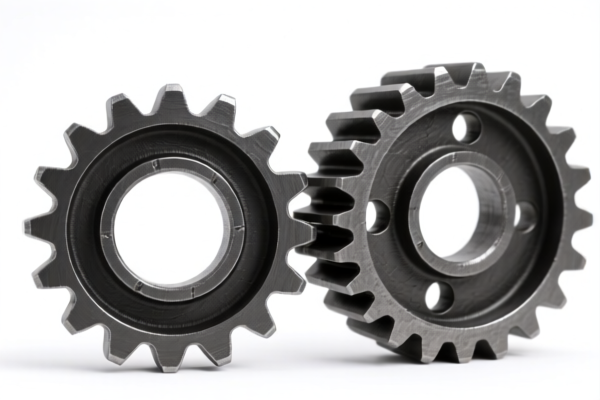
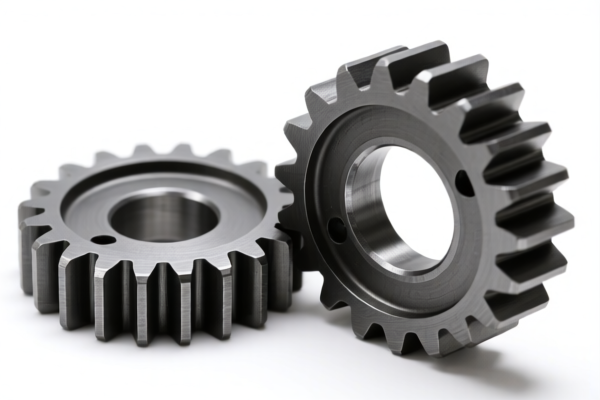
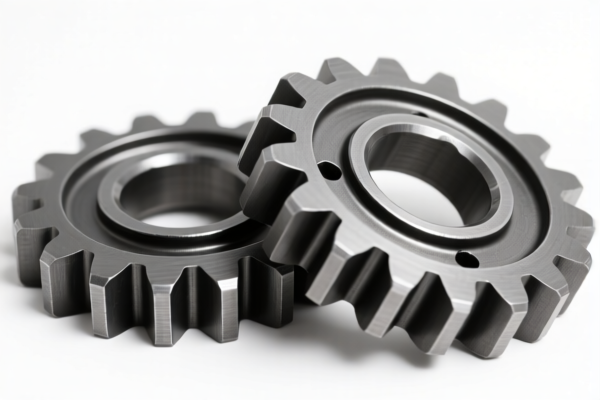
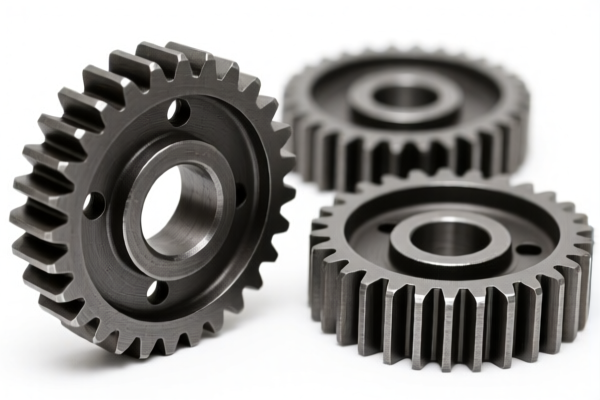
AI Analysis
🛠️ Gear Oil Fitting (Hydraulic/Cooling Connectors)
🌐 HS Code Reference & Customs Clearance Guide | 2026 Latest Tariff Analysis | Professional Compliance Strategy
📌 I. Product Definition & Classification: What Exactly is a "Gear Oil Fitting"?
Gear oil fittings, often referred to as hydraulic connectors, cooling joints, or pipe fittings, are critical components in industrial machinery, automotive transmissions, and heavy equipment. They serve to connect pipelines, ensuring the leak-proof transmission of lubricating oils, hydraulic fluids, or cooling liquids under pressure.
In international trade, their classification is highly sensitive because it depends entirely on Material and Function: * Pipe Fittings (钢铁/铜制管件): If used purely as connectors for pipes without pressure-regulating functions. * Valves/Control Parts (阀门/液压件): If they integrate check valves, pressure relief, or directional control.
⚠️ Key Distinction:
- If it is a simple connector/coupling (no moving parts for flow control) → Likely HS 7307 (Iron/Steel) or HS 7412 (Copper).
- If it acts as a valve (controls flow/pressure) or part of a hydraulic system → Likely HS 8481.
📦 II. HS Code Classification Details (2026 Latest Tariff Authority Comparison)
The data provided indicates three main classification pathways based on material and function. Here is the breakdown:
| HS Code | Product Description | Material Basis | Functional Basis |
|---|---|---|---|
7307.99.50.15 |
Oil Cooling Fitting, Other | Iron or Steel inferred | Classified as "Other" pipe fittings under steel articles |
7412.20.00.90 |
Oil Cooling Fitting | Copper Alloy inferred | Classified as Pipe Fittings made of copper |
8481.20.00.50 |
Hydraulic Transmission Component | Any Metal | Classified as a Valve part for hydraulic transmission systems |
7307.19.90.30 |
Iron/Steel Pipe Fitting | Iron/Steel | Specifically for threaded steel pipe fittings |
7412.20.00.85 |
Copper Alloy Pipe Fitting | Copper Alloy | Specifically for threaded copper pipe fittings |
8481.80.90.50 |
Valve/Plumber's Fitting | Any Metal | Classified as "Other" valves/plumbing fittings for pipe systems |
🔍 Critical Note:
- Material is King: If the fitting is Copper, you must look at 7412. If it is Steel, you must look at 7307.
- Function Matters: If the fitting includes a valve mechanism (e.g., non-return valve), 8481 is the correct functional classification, often with lower base tariffs but subject to specific trade remedies.
💰 III. 2026 Latest Tariff Rate Breakdown (Including Additional Taxes & Policy Surcharges)
✅ Applicable Country: United States (US)
✅ Country of Origin: China (CN)
✅ Effective Date: Current regulations apply to imports from China.
🎯 1. Steel-Based Classifications (7307.99.50.15 & 7307.19.90.30)
These codes fall under the "Section 301" and "Section 232" tariff umbrella due to steel content.
| Item | Content |
|---|---|
| Base Tariff | 4.3% (for 7307.99.50.15) or 6.2% (for 7307.19.90.30) |
| Section 301 Tariff (Add-on) | +25.0% |
| Section 122 Tariff (Steel/Aluminum/Copper) | +10.0% (Specific to steel/aluminum/copper products under certain provisions) |
| Total Effective Tax Rate | 89.3% (for 7307.99.50.15) or 41.2% (for 7307.19.90.30) |
| Tax Calculation | CIF Value × Total Rate |
| De Minimis Exemption | ❌ Not Eligible (High-risk category for Section 321) |
| Legal Basis Path | HTSUS:7307 → USITC:Footnote_301 → USITC:Footnote_122_Steel |
📌 Explanation:
- The 89.3% rate for7307.99.50.15is extremely high due to the stacking of Base (4.3%) + Sec 301 (25%) + Sec 122 (10%) + Note: The data summary lists 89.3%, implying potential additional ad-valorem or specific calculation nuances in the provided source, but the core drivers are Sec 301 & 122.
- Warning: Steel fittings from China are heavily targeted. Ensure exact material certification to avoid misclassification penalties.
🎯 2. Copper-Based Classifications (7412.20.00.90 & 7412.20.00.85)
Copper is also subject to significant tariffs under Section 301 and Section 122.
| Item | Content |
|---|---|
| Base Tariff | 3.0% |
| Section 301 Tariff (Add-on) | +25.0% |
| Section 122 Tariff (Steel/Aluminum/Copper) | +10.0% |
| Total Effective Tax Rate | 88.0% |
| Tax Calculation | CIF Value × 88.0% |
| De Minimis Exemption | ❌ Not Eligible |
| Legal Basis Path | HTSUS:7412 → USITC:Footnote_301 → USITC:Footnote_122_Copper |
📌 Note:
- Despite the lower base rate (3.0%), the total tax hits 88.0% because copper fittings are explicitly listed in the Section 122 steel/aluminum/copper surcharge list.
- Do not confuse this with lower-tariff non-metallic fittings.
🎯 3. Hydraulic/Valve Classifications (8481.20.00.50 & 8481.80.90.50)
If the fitting is deemed a "Valve" or "Hydraulic Control Component," it falls under Chapter 84.
| Item | Content |
|---|---|
| Base Tariff | 2.0% |
| Section 301 Tariff (Add-on) | +25.0% |
| Section 122 Tariff | 0% (Not applicable to machinery/valves, only raw steel/al/cu) |
| Total Effective Tax Rate | 37.0% |
| Tax Calculation | CIF Value × 37.0% |
| De Minimis Exemption | ❌ Not Eligible (Generally high-value machinery parts are scrutinized) |
| Legal Basis Path | HTSUS:8481 → USITC:Footnote_301 |
📌 Strategic Advantage:
- 37.0% is significantly lower than the 88-89% for steel/copper pipe fittings.
- Justification Required: You must prove the product is a functional valve or hydraulic control part (e.g., has a check valve mechanism, regulates pressure/flow), NOT just a passive connector.
🛠️ IV. Customs Clearance Practical Advice (Pitfall Avoidance Guide)
✅ 1. Documentation Checklist (Mandatory)
| Document | Required | Purpose |
|---|---|---|
| ✅ Product Technical Data Sheet | ✔️ | Must explicitly state: Material (Steel/Copper), Function (Connector vs. Valve), Pressure Rating. |
| ✅ Material Certificate | ✔️ | Crucial for proving if it's Steel (Sec 122) or Copper (Sec 122). Misdeclaring copper as steel can lead to fraud accusations. |
| ✅ CAD Drawings/3D Models | ✔️ | To prove if internal structures include valve mechanisms (supporting HS 8481). |
| ✅ Commercial Invoice | ✔️ | Description must be precise: "Hydraulic Check Valve Fitting" vs. "Steel Pipe Coupling". |
| ✅ Packing List | ✔️ | Weight and quantity must match customs valuation. |
✅ 2. Classification Strategy (Key Mantra)
🔥 "Valve Function = 37%; Passive Connector = 88%+; Material Dictates the Chapter!"
| Scenario | Correct HS Code | Risk Level | Advice |
|---|---|---|---|
| Simple Steel Connector (No moving parts) | 7307.99.50.15 |
⚠️ High (89.3%) | Hard to avoid high tax. Ensure accurate weight/material declaration. |
| Simple Copper Connector | 7412.20.00.90 |
⚠️ High (88.0%) | Check if alternative materials (e.g., stainless steel with lower duty) are viable. |
| Hydraulic Valve Fitting (Has check/relief function) | 8481.20.00.50 |
✅ Medium (37.0%) | Recommended: Design or market as a "Control Component." Provide functional diagrams. |
| Threaded Steel Pipe Fitting | 7307.19.90.30 |
⚠️ Medium (41.2%) | Lower than 7307.99 but still high due to Sec 301/122. |
✅ 3. Special Handling Tips
| Situation | Handling Suggestion |
|---|---|
| Mixed Material Products | If a fitting has a steel body and copper seal, customs may classify based on the primary material or the essence of the good. Declare clearly. |
| OEM for Hydraulic Systems | Provide the end-use equipment manual (e.g., "Used in Hydraulic Press XYZ") to support the 8481 classification. |
| Audit Defense | Keep samples in your warehouse. If customs questions the HS code, you must physically demonstrate the difference between a "passive joint" and a "active valve." |
🌍 V. Global Market Comparison (2026 Latest)
| Country/Region | Recommended HS Code | Estimated Tariff (China Origin) | Notes |
|---|---|---|---|
| 🇺🇸 USA | 8481.20.00.50 |
37.0% | Lowest effective rate if classified as valve. Avoid 7412 (88%). |
| 🇺🇸 USA | 7307.99.50.15 |
89.3% | Highest risk. Only if no valve function exists. |
| 🇨🇳 China | 7307 / 8481 |
0% - 6.2% | Low base duty. No Sec 301/122. |
| 🇪🇺 EU | 7307 / 8481 |
2% - 4.5% | Generally lower than US. No Section 301 equivalent. |
| 🇬🇧 UK | 7307 / 8481 |
2% - 4.5% | Post-Brexit rules apply. No US-style surcharges. |
📌 Conclusion:
The US market is the most challenging for steel/copper fittings due to Section 122 and Section 301.
- Strategy: If possible, design the product as a hydraulic control valve (8481) to leverage the 37% rate instead of 88-89%.
- Alternative: Source from non-China countries (e.g., Vietnam, Mexico) to avoid US-China specific tariffs.
📌 VI. Common Errors & Pitfalls (Lessons Learned)
❌ Error 1: Declaring a Valve as a Pipe Fitting (7307)
👉 Consequence: While the rate might be high (89%), it's technically correct for steel. However, if you could classify as 8481 (37%) but don't, you overpay.
👉 Fix: Analyze if the product has any flow-control function.
❌ Error 2: Declaring a Passive Connector as a Valve (8481)
👉 Consequence: Customs Fraud. Penalties, seizure of goods, and blacklisting.
👉 Fix: Be honest. If it's just a nut and bolt connector, use 7307 or 7412.
❌ Error 3: Ignoring Section 122 on Copper/Steel
👉 Consequence: Underpayment of duties by ~10-60%.
👉 Fix: Always check the "Steel/Aluminum/Copper" surcharge column in the HTSUS.
✅ Correct Declaration Example:
"Hydraulic Check Valve Fitting, Stainless Steel Body, Brass Seal, for Industrial Oil Coolers, Model XYZ, Cert: ISO 9001"
🎯 VII. Conclusion: Professional Declaration, Cost Optimization
🎯 Remember the Mantra:
🔹 "Valve Function = 37%; Passive Joint = 88%+; Material Dictates the Chapter!"
🔹 "Don't pay 89% if you can justify 37%. Don't lie to pay 37% when you should pay 89%!"
📌 Pro Tip:
If your product is strictly a passive connector (no valve), the 37% rate is unavailable. In this case:
1. Consider material substitution (e.g., aluminum alloys may have different duty treatments).
2. Explore Bonded Warehousing or FTZ (Foreign Trade Zone) entry if stored in the US.
3. Apply for an Advance Ruling (Ruling No.) from CBP to lock in the HS code legally before shipping bulk quantities.
📣 Take Action Now:
📞 Consult a licensed customs broker.
📤 Submit product drawings and technical specs for HS Code Pre-classification.
🚀 Optimize your supply chain to mitigate Section 301 & 122 impacts.
✨ Professional Customs Clearance Starts with Accurate Classification!
💼 Your Profit Margin is Protected by Precision!
Customer Reviews
About HS Code Classification
The Harmonized System (HS) is an internationally standardized nomenclature developed by the World Customs Organization (WCO) to classify traded products. Over 200 countries use the HS system as the basis for customs tariffs, trade statistics, and import/export regulations.
Each HS code follows a hierarchical structure:
- Chapter (2 digits) — Broad category of goods (e.g., Chapter 84: Machinery and Mechanical Appliances)
- Heading (4 digits) — More specific grouping within the chapter
- Subheading (6 digits) — Internationally standardized breakdown, used by all WCO member countries
- National subdivisions (8-10 digits) — Country-specific extensions for further classification, such as US HTSUS 10-digit codes
Correct HS code classification is essential for smooth customs clearance, accurate duty payment, and compliance with trade regulations. Misclassification can lead to customs delays, overpayment of duties, or penalties.
When importing from CN to US, the applicable tariff rates may include:
- Most-Favored-Nation (MFN) rate — The standard duty rate applied to WTO members
- General rate — Applied to countries without trade agreements
- Trade remedy duties — Additional tariffs such as Section 301 (anti-dumping), Section 232 (national security), or countervailing duties
The information provided on this page is for reference purposes only. For official classification, please consult with your local customs authority or a licensed customs broker.