Gear Shift Assembly
CN → US| HS Code | Tariff Rate | Origin | Destination | Doc |
|---|---|---|---|---|
| 8708996890 | 87.5% | CN | US | Official Doc |
| 8708407580 | 37.5% | CN | US | Official Doc |
| 8483405080 | 37.5% | CN | US | Official Doc |
| 8483905080 | 37.5% | CN | US | Official Doc |
Product Images
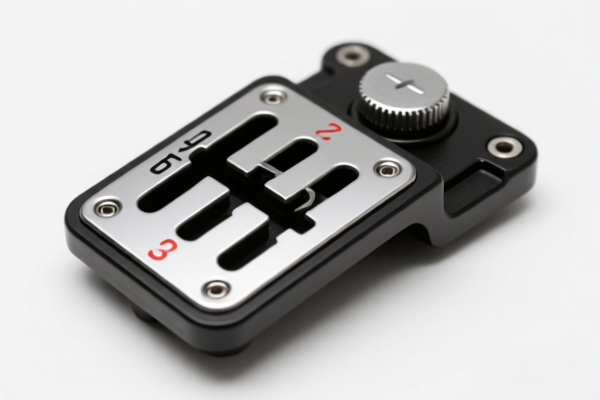
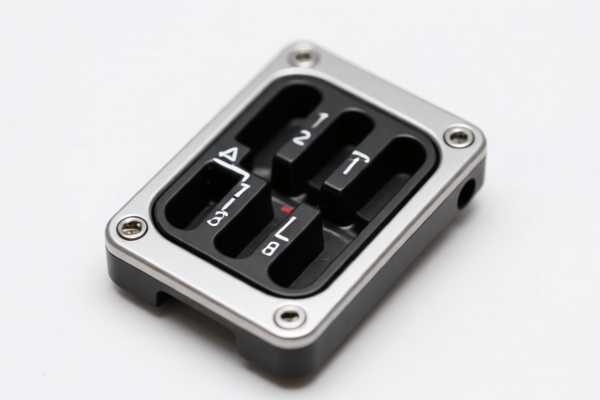
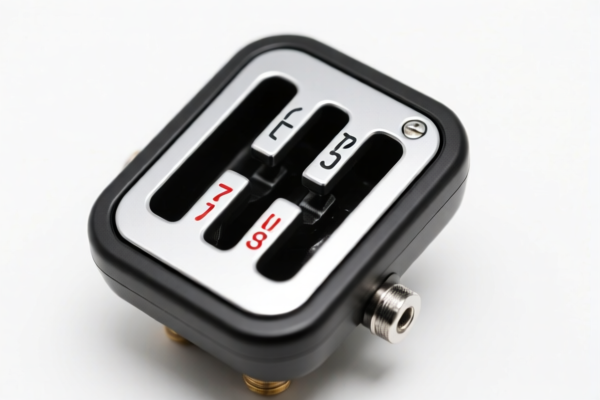
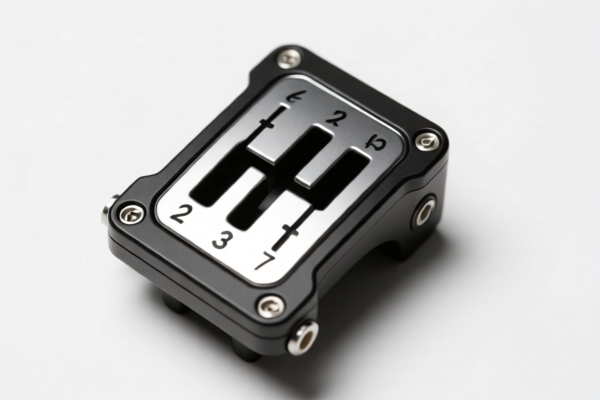
AI Analysis
⚙️ Gear Shift Assembly (Automotive Transmission Components)
🌐 HS Code Reference & Customs Clearance Guide | 2026 Latest Tariff Analysis | Professional通关 Strategy
📌 I. Product Definition & Classification: What is a "Gear Shift Assembly"?
The Gear Shift Assembly is a critical component of the automotive powertrain system. In international trade, it is primarily categorized based on its functional role within the transmission or as a general vehicle part. The classification significantly impacts tariff liabilities, especially under current U.S. trade policies.
Core Functional Distinctions: 1. Transmission Core Component: If the assembly is integral to the shifting mechanism of a gearbox (e.g., selector forks, shift rails within a gearbox context), it falls under Chapter 84 (Machinery) or Chapter 87 (Vehicles) as parts of gearboxes. 2. General Vehicle Part: If viewed broadly as a component facilitating driver input or part of the broader drivetrain without being strictly a gearbox internal mechanism, it may be classified under Chapter 87 as "Parts and accessories" of motor vehicles.
⚠️ Key Classification Pivot:
- Is it a functioning part of a gearbox/variable-speed mechanism? → Look at 8483 or 8708.40.
- Is it a general part with no specific mechanical function tied to a specific chapter? → Look at 8708.99.
- Material Note: Metal construction is assumed for all primary codes listed below.
📦 II. HS Code Classification Details (2026 Latest Tariff Authority对照)
| HS Code | Product Description | Applicable Scenario | Key Classification Logic |
|---|---|---|---|
8708.99.68.90 |
Parts of motor vehicles (Other) | General gear shift assemblies not specifically covered elsewhere. | Classified as a general vehicle part; No material conflict. |
8708.40.75.80 |
Parts of gears, shafts and axle-boxes | Gear shift assembly recognized as a core component of the transmission/gearbox. | Falls under 8708.40 (Parts of gearboxes); Material inferred as Metal. |
8483.40.50.80 |
Gears and gearing; ball and roller screws; gear boxes | Classified as a variable-speed transmission device or part thereof. | Fits the category of transmission apparatus; Consistent with gearbox usage. |
8483.90.50.80 |
Parts of gears, gearing, shafts, etc. | Functional component of a transmission system (gearbox parts). | Classified as a functional part of a gear/transmission system. |
🔍 Critical Reminder:
- 8708.99.68.90 is the "catch-all" for general vehicle parts. It carries the highest tariff burden due to specific steel/aluminum add-ons.
- 8708.40 and 8483.x.x are more specific to the mechanical function (transmission/gearing). They are generally preferred if the item is strictly a transmission component.
- 8483.90 is used when the part is a subsidiary component of a gear box or transmission device.
💰 III. 2026 Latest Tariff Rate Breakdown (Including Additional Duties & Policy Surcharges)
✅ Applicable Country: United States (US)
✅ Origin: China (CN)
✅ Effective Time: Current 2026 Rates
🎯 1. 8708.99.68.90 —— General Parts of Motor Vehicles (Highest Risk)
| Item | Content |
|---|---|
| Base Tariff | 2.5% (ad valorem) |
| Section 301 Additional Tariff | +25.0% |
| Section 232 Tariff (122 Clauses) | +10% (Steel) / +50% (Aluminum/Copper Products) |
| Total Effective Tax Rate | 87.5% |
| Tax Calculation | CIF Value × 87.5% |
| De Minimis Exemption | ❌ Not Eligible (High-value industrial parts) |
| Legal Basis Path | USITC:8708.99.68.90 → SECTION_301:25% → SECTION_232:10%/50% |
📌 Explanation:
- This code incurs the maximum penalty because it is caught by both Section 301 (Trade War tariffs) and Section 232 (National Security tariffs on steel/aluminum).
- If the assembly contains significant aluminum/copper components, the Section 232 rate jumps to 50%, resulting in the total 87.5%.
- Warning: This is the most expensive classification. Avoid if possible by proving it is a specific transmission part (see below).
🎯 2. 8708.40.75.80 —— Parts of Gears/Shafts/Axle-boxes (Transmission Parts)
| Item | Content |
|---|---|
| Base Tariff | 2.5% |
| Section 301 Additional Tariff | +25.0% |
| Section 232 Tariff | +10% (if steel) OR N/A (if not primary steel/aluminum product under 232 scope for this specific subheading, but data suggests 10% applies here too based on summary) |
| Total Effective Tax Rate | 37.5% |
| Tax Calculation | CIF Value × 37.5% |
| De Minimis Exemption | ❌ Not Eligible |
| Legal Basis Path | USITC:8708.40.75.80 → SECTION_301:25% → SECTION_232:10% |
📌 Note:
- This code is significantly cheaper (37.5% vs 87.5%) than the general "Parts" code.
- It requires proof that the item is a core component of a gearbox or transmission system.
- The 10% Section 232 tariff still applies if it is a steel product, but it avoids the additional 25% steel surcharge that might apply to general auto parts under stricter 232 interpretations.
🎯 3. 8483.40.50.80 —— Gears and Gearing / Gear Boxes
| Item | Content |
|---|---|
| Base Tariff | 2.5% |
| Section 301 Additional Tariff | +25.0% |
| Section 232 Tariff | +10% |
| Total Effective Tax Rate | 37.5% |
| Tax Calculation | CIF Value × 37.5% |
| De Minimis Exemption | ❌ Not Eligible |
| Legal Basis Path | USITC:8483.40.50.80 → SECTION_301:25% → SECTION_232:10% |
📌 Note:
- Classified as a transmission device or part thereof.
- Rate is identical to8708.40.
- Suitable if the gear shift assembly is integrated into or directly controls a variable-speed transmission mechanism.
🎯 4. 8483.90.50.80 —— Parts of Gears, Gearing, etc.
| Item | Content |
|---|---|
| Base Tariff | 2.5% |
| Section 301 Additional Tariff | +25.0% |
| Section 232 Tariff | +10% |
| Total Effective Tax Rate | 37.5% |
| Tax Calculation | CIF Value × 37.5% |
| De Minimis Exemption | ❌ Not Eligible |
| Legal Basis Path | USITC:8483.90.50.80 → SECTION_301:25% → SECTION_232:10% |
📌 Note:
- Classified as a functional part of a gear/transmission system.
- This is the best alternative if the item is a standalone component but still functions as part of the transmission.
- Savings: Potential to save 50% in total duty compared to8708.99.68.90.
🛠️ IV. Customs Clearance Practical Advice (Real-World Pitfall Avoidance)
✅ 1. Documentation Checklist (Essential)
| Document | Required | Notes |
|---|---|---|
| ✅ Product Specification Sheet | ✔️ | Must detail weight, material (Steel/Aluminum), dimensions, and function. |
| ✅ Technical Diagrams | ✔️ | Crucial to prove it is a transmission part (8483/8708.40) vs. a general auto part (8708.99). |
| ✅ Product Photos (Labeled) | ✔️ | Show part number, material markers, and mounting points. |
| ✅ Commercial Invoice | ✔️ | Description must be precise: "Gear Shift Assembly, Part of Transmission System" (Avoid vague terms like "Auto Part"). |
| ✅ Certificate of Origin (CO) | ✔️ | Mandatory for US imports from China to verify origin. |
| ✅ Packing List | ✔️ | Ensure weight matches spec sheet to avoid valuation discrepancies. |
✅ 2. Declaration Strategy (Key Tips)
🔥 "Prove the Function, Not the Form"
| Scenario | Correct Declaration | Wrong Declaration |
|---|---|---|
| Gear Shift Assembly | 8708.40.75.80 or 8483.40.50.80 |
8708.99.68.90 ("Other Parts") |
| Material Declaration | Specify Steel or Aluminum clearly | Vague "Metal" |
| Usage Description | "Component for Gearbox Transmission" | "Part for Car" |
📌 Why it Matters:
- Declaring as8708.99.68.90triggers the 87.5% rate due to Section 232 steel/aluminum penalties.
- Declaring as8708.40or8483.x.xtriggers only the 37.5% rate (2.5% Base + 25% Sec 301 + 10% Sec 232).
- Savings: Up to 50% of CIF value in duty savings.
✅ 3. Special Case Handling
| Case | Handling Advice |
|---|---|
| Mixed Materials | If the assembly is 50% steel and 50% aluminum, customs may apply the higher 232 rate. Provide detailed BOM (Bill of Materials). |
| OEM vs. Aftermarket | Both are subject to the same tariffs. Do not label as "Aftermarket" to avoid scrutiny, but ensure part numbers match. |
| Kit with Other Parts | If shipped with a full gearbox, the gearbox HS code (8708.40/8483) may apply to the whole unit. Do not split if it's a single functional unit. |
| Pre-Clearance Ruling | Strongly Recommended: File an Advance Ruling with CBP to confirm the HS Code. This locks in the 37.5% rate and protects against retroactive audits. |
🌍 V. Global Market Comparison (2026 Latest)
| Country/Region | Recommended HS Code | Tariff Rate (China Origin) | Key Certifications | Notes |
|---|---|---|---|---|
| 🇺🇸 USA | 8708.40.75.80 / 8483.40.50.80 |
37.5% | NHTSA Safety Standards | Avoid 8708.99 (87.5%). |
| 🇨🇳 China | 8708.99.68.90 / 8708.40.75.80 |
5% - 10% | CCC (if complete vehicle) | Lower import duties, but watch for domestic taxes. |
| 🇪🇺 EU | 8708.99 / 8483.90 |
4.5% - 6.5% | CE, RoHS | No Section 301/232 equivalents, but anti-dumping may apply. |
| 🇨🇦 Canada | 8708.99 / 8483.90 |
0% - 6.5% | CMVSS | CUSMA benefits if originating from NA. |
| 🇲🇽 Mexico | 8708.99 / 8483.90 |
0% - 8% | NOM | Nearshoring advantages under USMCA. |
📌 Conclusion:
- The USA is the most challenging market for Gear Shift Assemblies due to Section 301 and Section 232叠加 tariffs.
- Accurate Classification is not just a compliance issue; it is a profitability strategy.
- Avoid8708.99.68.90unless you have no other technical basis.
📌 VI. Common Errors & Pitfalls (Lessons Learned)
❌ Error 1: Declaring as "Auto Parts" (General) → 8708.99.68.90
👉 Consequence: 87.5% Tariff.
👉 Fix: Provide engineering drawings to prove it is a transmission component → 8708.40 or 8483 → 37.5%.
❌ Error 2: Ignoring Section 232 Material Penalties
👉 Consequence: If declared as steel but actually aluminum, or vice versa, penalties may apply.
👉 Fix: Clearly state material composition (e.g., "Steel Gear Shift Fork") in the invoice and spec sheet.
❌ Error 3: Splitting the Assembly During Clearance
👉 Consequence: If the shift assembly is part of a larger transmission unit, splitting it may lead to misclassification of each sub-component.
👉 Fix: Declare as a single functional unit if possible, or use the most specific HS code for the primary function.
❌ Error 4: Vague Invoice Description
👉 Consequence: Customs may assign the highest duty rate by default.
👉 Fix: Use specific technical terms: "Gear Shift Assembly for Automotive Transmission, Model XYZ".
✅ Correct Practice:
"Gear Shift Assembly, Automotive Transmission Component, Steel, Model ABC, FITS [Vehicle Make/Model], HS Code 8708.40.75.80"
🎯 VII. Conclusion: Precision Saves 50% in Duties!
🎯 Remember the Golden Rule:
🔹 "Function Over Form: Proove it's a Transmission Part, Not a General Part!"
🔹 "87.5% vs. 37.5%: The difference is a Drawing, Not Just a Code!"
🔹 "Section 232 + 301 = 87.5% on General Parts. Avoid it at all costs!"
📌 Pro Tip:
If your Gear Shift Assembly is sourced from Vietnam, Mexico, or Thailand, you may qualify for USMCA/ASEAN FTZ benefits, potentially reducing tariffs to 0%.
Action:
📞 Consult a Customs Broker → 📄 Submit Technical Specs → 🏛️ Apply for Advance Ruling
🚀 Optimize Your Supply Chain, Reduce Costs, and Clear Customs Smoothly!
✨ Professional Clearance Starts with Accurate Classification!
💼 Every Point of Tariff Difference is Pure Profit!
Customer Reviews
About HS Code Classification
The Harmonized System (HS) is an internationally standardized nomenclature developed by the World Customs Organization (WCO) to classify traded products. Over 200 countries use the HS system as the basis for customs tariffs, trade statistics, and import/export regulations.
Each HS code follows a hierarchical structure:
- Chapter (2 digits) — Broad category of goods (e.g., Chapter 84: Machinery and Mechanical Appliances)
- Heading (4 digits) — More specific grouping within the chapter
- Subheading (6 digits) — Internationally standardized breakdown, used by all WCO member countries
- National subdivisions (8-10 digits) — Country-specific extensions for further classification, such as US HTSUS 10-digit codes
Correct HS code classification is essential for smooth customs clearance, accurate duty payment, and compliance with trade regulations. Misclassification can lead to customs delays, overpayment of duties, or penalties.
When importing from CN to US, the applicable tariff rates may include:
- Most-Favored-Nation (MFN) rate — The standard duty rate applied to WTO members
- General rate — Applied to countries without trade agreements
- Trade remedy duties — Additional tariffs such as Section 301 (anti-dumping), Section 232 (national security), or countervailing duties
The information provided on this page is for reference purposes only. For official classification, please consult with your local customs authority or a licensed customs broker.