Gearbox and Speed Changers
CN → US| HS Code | Tariff Rate | Origin | Destination | Doc |
|---|---|---|---|---|
| 8484900000 | 37.5% | CN | US | Official Doc |
| 8483405080 | 37.5% | CN | US | Official Doc |
| 8483405020 | 37.5% | CN | US | Official Doc |
| 8708405000 | 37.5% | CN | US | Official Doc |
| 8708401150 | 0.0% | CN | US | Official Doc |
Product Images
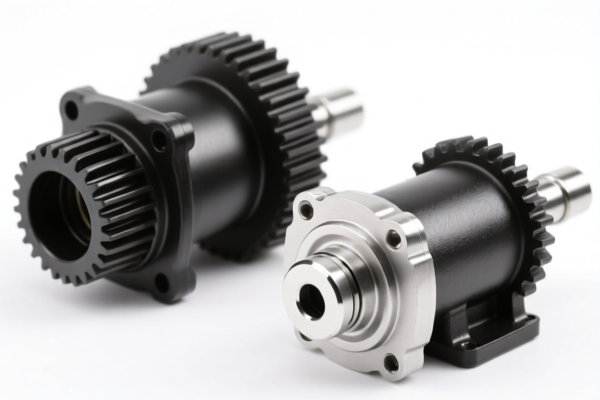
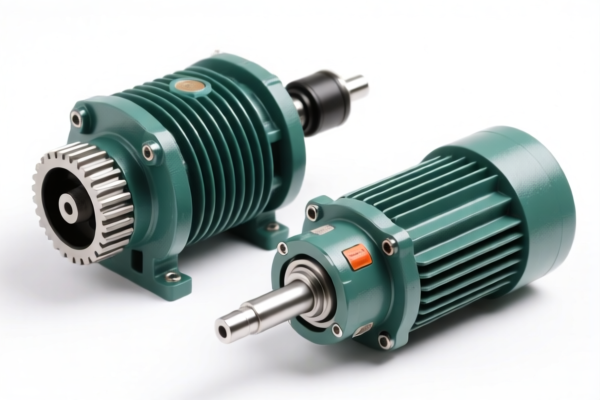
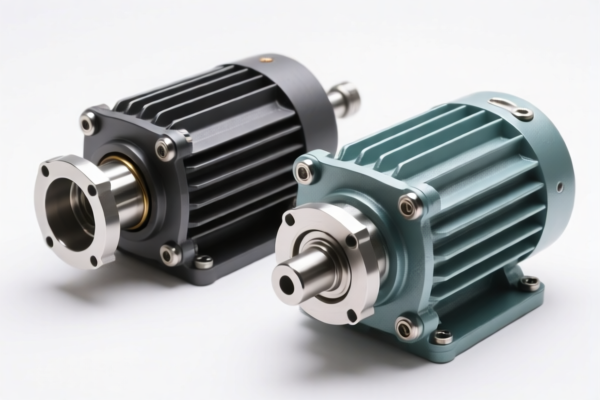
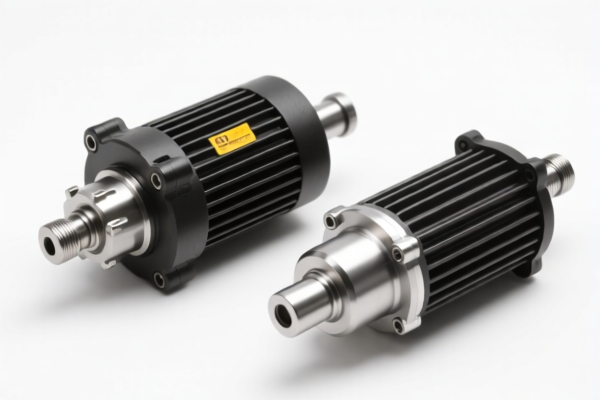
AI Analysis
⚙️ Gearbox and Speed Changers (Automotive & Mechanical Transmissions)
🌐 HS Code Reference & Customs Clearance Guide | 2026 Latest Tariff Analysis | Professional Clearance Strategy
📌 I. Product Definition and Classification: Do You Really Understand "Gearboxes"?
A gearbox (or transmission) is a core mechanical component primarily made of metal, used to change the speed, torque, and direction of power transmission. In international trade, its classification depends heavily on its specific application (e.g., automotive parts vs. general machinery parts) and structural characteristics.
Key Distinction Points:
- General Mechanical Parts: Pure mechanical gearboxes without specific automotive integration → Often fall under 8484 or 8483.
- Automotive Parts: Gearboxes specifically designed for motor vehicles → Falls under 8708.
- Material: Primarily metal-based, fitting the category of mechanical components.
⚠️ Critical Note:
- If classified as a general mechanical part, it may incur higher additional tariffs due to trade restrictions.
- If classified as an automotive part, the tariff structure might differ, though additional penalties often still apply.
- Misclassification Risk: Declaring an automotive gearbox as a general mechanical part (or vice versa) can lead to severe customs delays, fines, or back-payments.
📦 II. HS Code Classification Details (2026 Latest Tariff Authority Comparison)
| HS Code | Product Description | Applicable Scenario | Key Reason for Classification |
|---|---|---|---|
8484.90.00.00 |
Parts of mechanical power transmission equipment | General machinery parts | Summary: Belongs to mechanical core components, mainly made of metal, fitting the category of mechanical parts. |
8483.40.50.80 |
Other gearboxes and speed changers | General machinery categories | Summary: Purpose completely matches "gearboxes and other speed-changing devices," belongs to other categories. |
8483.40.50.20 |
Gears, gearings, and change speed gears | Specific spare parts category | Summary: Belongs to the category of gearboxes and speed changers, fits specific purposes for spare parts. |
8708.40.50.00 |
Parts and accessories for motor vehicles | Automotive parts | Summary: The gearbox fully matches the purpose and function of "transmissions" in the classification explanation. |
8708.40.11.50 |
Parts and accessories for motor vehicles | Vehicle components | Summary: As a vehicle component, it matches the purpose of "transmissions" in the classification with no material conflict. |
🔍 Key Reminder:
- 848x Series: Generally for non-automotive mechanical gearboxes (e.g., industrial machinery, heavy equipment).
- 8708 Series: Specifically for motor vehicle gearboxes (cars, trucks, etc.).
- Material Conflict Check: Ensure the description does not imply non-metallic compositions if classified under mechanical parts.
💰 III. 2026 Latest Tariff Rate Details (Including Additional Taxes, Policy Add-ons)
✅ Applicable Country: United States (US)
✅ Origin: China (CN)
✅ Effective Time: Subject to current trade policies (Section 301 & 122)
🎯 1. 8484.90.00.00 —— Mechanical Power Transmission Parts
| Item | Content |
|---|---|
| Base Tariff Rate | 2.5% (ad valorem) |
| Additional Tariff (Section 301) | +25.0% |
| Section 122 Tariff | +10.0% |
| Total Tariff Rate | 37.5% |
| Tax Calculation | CIF Value × 37.5% |
| De Minimis Exemption | ❌ Not Eligible |
| Legal Basis Path | Base Tariff: 2.5% + Add-on Tariff: 25.0% + 122 Clause Tariff: 10% |
📌 Explanation:
- This classification falls under general mechanical parts, which are subject to multiple layers of additional tariffs.
- The 37.5% total rate is significantly high, impacting profit margins.
- No exemptions apply for this category under current US-China trade agreements.
🎯 2. 8483.40.50.80 & 8483.40.50.20 —— Gearboxes and Speed Changers
| Item | Content |
|---|---|
| Base Tariff Rate | 2.5% |
| Additional Tariff (Section 301) | +25.0% |
| Section 122 Tariff | +10.0% |
| Total Tariff Rate | 37.5% |
| Tax Calculation | CIF Value × 37.5% |
| De Minimis Exemption | ❌ Not Eligible |
| Legal Basis Path | Base Tariff: 2.5% + Add-on Tariff: 25.0% + 122 Clause Tariff: 10% |
📌 Note:
- These HS codes target specific mechanical gearboxes.
- Despite different sub-headings, the tariff burden is identical (37.5%).
- Even if classified as "spare parts," the Section 301 and 122 tariffs still apply.
🎯 3. 8708.40.50.00 & 8708.40.11.50 —— Automotive Transmission Parts
| Item | Content |
|---|---|
| Base Tariff Rate | 2.5% |
| Additional Tariff (Section 301) | +25.0% |
| Section 122 Tariff | +10.0% |
| Total Tariff Rate | 2.5% + 35.0% (Effective 37.5%) |
| Tax Calculation | CIF Value × 37.5% |
| De Minimis Exemption | ❌ Not Eligible |
| Legal Basis Path | Base Tariff: 2.5% + Add-on Tariff: 25.0% + 122 Clause Tariff: 10% |
📌 Important:
- Although these are automotive parts, they are still subject to additional tariffs.
- The summary states: "Matches the purpose of transmitters in classification with no material conflict."
- No tariff reduction is available for automotive gearboxes from China under current policies.
🛠️ IV. Customs Clearance Practical Advice (Real-World Pitfall Avoidance Guide)
✅ 1. Required Documentation Checklist (No Exceptions)
| Document | Must Provide | Description |
|---|---|---|
| ✅ Product Specification Sheet | ✔️ | Include type, gear ratio, input/output torque, weight, dimensions. |
| ✅ Technical Diagrams | ✔️ | Show internal structure, material composition (metal focus). |
| ✅ Product Photos (with Label) | ✔️ | Clear view of model number, brand, and any automotive markings. |
| ✅ Commercial Invoice | ✔️ | Must clearly state "Gearbox/Transmission" and HS Code. |
| ✅ Packing List | ✔️ | Detail packaging to avoid misclassification as "parts" vs. "units." |
| ✅ Certificate of Origin (CO) | ✔️ | Essential for proving China origin (triggers additional tariffs). |
| ✅ Third-Party Test Report | ✔️ | If applicable, ISO/TS certifications for automotive parts. |
✅ 2. Declaration Tips (Key Mnemonics)
🔥 “Function Defines Code, Metal Defines Part, Accuracy Saves Tax!”
| Scenario | Correct Declaration | Wrong Practice |
|---|---|---|
| Automotive Gearbox | 8708.40.50.00 or 8708.40.11.50 |
Misdeclare as general machinery → Risk of penalty |
| Industrial Gearbox | 8484.90.00.00 or 8483.40.50.80 |
Misdeclare as automotive part → Customs rejection |
| Mixed Shipment | Separate HS Codes for Auto vs. General | Combine into one → Both penalized |
| Missing Diagrams | Provide structural drawings | Only list "Gearbox" → High audit risk |
✅ 3. Special Situation Handling
| Situation | Handling Advice |
|---|---|
| OEM Automotive Gearboxes | Provide OEM contracts and vehicle compatibility lists to support 8708 classification. |
| Retrofit Gearboxes | If modified for industrial use, declare under 848x with technical justification. |
| Kit Components | Do not split gearboxes into "gears + housing" if sold as a unit. |
| High-Value Shipments | Consider Advance Ruling from CBP to lock in HS Code and avoid retroactive taxes. |
🌍 V. Global Market Comparison (2026 Latest)
| Country/Region | Recommended HS Code | Tariff (China Origin) | Certification Requirements | Notes |
|---|---|---|---|---|
| 🇺🇸 USA | 8708.40.50.00 / 8484.90.00.00 |
37.5% (incl. 301 & 122) | ISO/TS 16949 (Auto), CE (if EU-origin components) | High tariff burden. No de minimis. |
| 🇨🇳 China | 8708.40.50.00 / 8484.90.00.00 |
5-7% (Import Duty) | CCC (for automotive) | Lower base rate, but export tariffs may apply. |
| 🇪🇺 EU | 8708.40 / 8483.40 |
4-6% (if China origin) | CE, REACH | No Section 301 equivalent, but anti-dumping may apply. |
| 🇯🇵 Japan | 8708.40 / 8483.40 |
0-5% (if FTA applies) | JIS Standards | Check for EPA exemptions. |
📌 Conclusion:
- USA remains the most challenging market due to the cumulative 37.5% tariff.
- EU and Japan offer more favorable rates but require strict compliance with local certifications.
- Cost Optimization: Consider sourcing from non-China origins if possible to avoid Section 301 & 122 tariffs.
📌 VI. Common Errors & Pitfall Avoidance Guide (Blood & Tears Lessons)
❌ Error 1: Declaring an automotive gearbox as a general mechanical part (848x) to avoid "automotive" scrutiny
👉 Consequence: Customs may reclassify it back to 8708 + audit for misdeclaration → Fines + Delays
❌ Error 2: Ignoring Section 122 tariffs on 848x classifications
👉 Consequence: Underpaying by 10% → Back taxes + Interest
❌ Error 3: Splitting a complete gearbox into "gears" and "housing"
👉 Consequence: Each part may be taxed separately or deemed incomplete → Higher total tax
❌ Error 4: Not providing material certificates
👉 Consequence: Customs may doubt the "metal" composition → Valuation disputes
✅ Correct Approach:
"Automotive Transmission Assembly, Model XYZ, Metal Alloy, Compatible with Vehicle ABC, FCC/ISO Certified"
🎯 VII. Conclusion: Precise Classification, Lower Costs, Faster Clearance!
🎯 Remember the Mnemonic:
🔹 “Auto vs. Industrial, Check the Code! Metal & Function, Stay on the Road!”
🔹 “37.5% is the Price of Ignorance, 0% is the Reward of Planning!”
📌 Pro Tip:
- If your gearbox is originating from Vietnam, Mexico, or Thailand, you may be eligible for IEEPA Exemptions, reducing tariffs to 0-5%.
- Strongly Recommend: Apply for a CBP Advance Ruling before shipment to ensure HS Code validity and avoid post-clearance audits.
📣 Immediate Action Required:
📞 Contact a Licensed Customs Broker + Provide Product Photos + Request HS Code Advance Ruling
🚀 Ensure your Gearboxes Clear Customs Smoothly, Minimize Costs, and Maximize Profits!
✨ Professional Clearance Starts with Accurate Classification!
💼 Every Percent of Tax Saved is Profit Gained!
Customer Reviews
About HS Code Classification
The Harmonized System (HS) is an internationally standardized nomenclature developed by the World Customs Organization (WCO) to classify traded products. Over 200 countries use the HS system as the basis for customs tariffs, trade statistics, and import/export regulations.
Each HS code follows a hierarchical structure:
- Chapter (2 digits) — Broad category of goods (e.g., Chapter 84: Machinery and Mechanical Appliances)
- Heading (4 digits) — More specific grouping within the chapter
- Subheading (6 digits) — Internationally standardized breakdown, used by all WCO member countries
- National subdivisions (8-10 digits) — Country-specific extensions for further classification, such as US HTSUS 10-digit codes
Correct HS code classification is essential for smooth customs clearance, accurate duty payment, and compliance with trade regulations. Misclassification can lead to customs delays, overpayment of duties, or penalties.
When importing from CN to US, the applicable tariff rates may include:
- Most-Favored-Nation (MFN) rate — The standard duty rate applied to WTO members
- General rate — Applied to countries without trade agreements
- Trade remedy duties — Additional tariffs such as Section 301 (anti-dumping), Section 232 (national security), or countervailing duties
The information provided on this page is for reference purposes only. For official classification, please consult with your local customs authority or a licensed customs broker.