Gearbox and Transmission Components
CN → US| HS Code | Tariff Rate | Origin | Destination | Doc |
|---|---|---|---|---|
| 8484900000 | 37.5% | CN | US | Official Doc |
| 8483405080 | 37.5% | CN | US | Official Doc |
| 8483405020 | 37.5% | CN | US | Official Doc |
| 8708405000 | 37.5% | CN | US | Official Doc |
| 8708401150 | 0.0% | CN | US | Official Doc |
Product Images
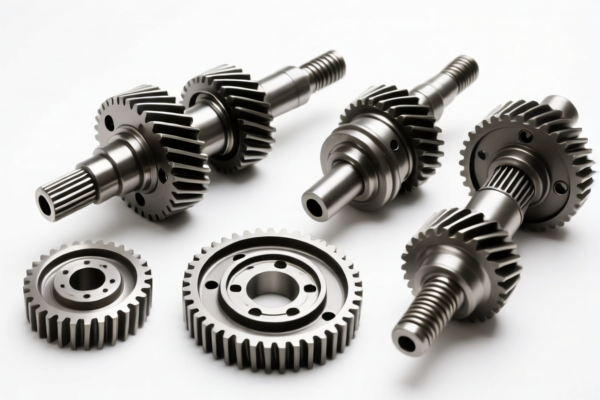
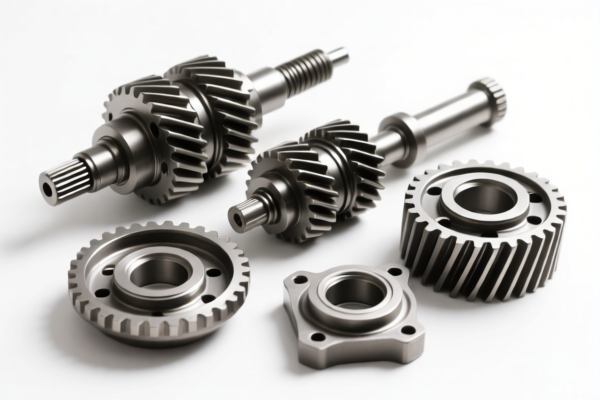
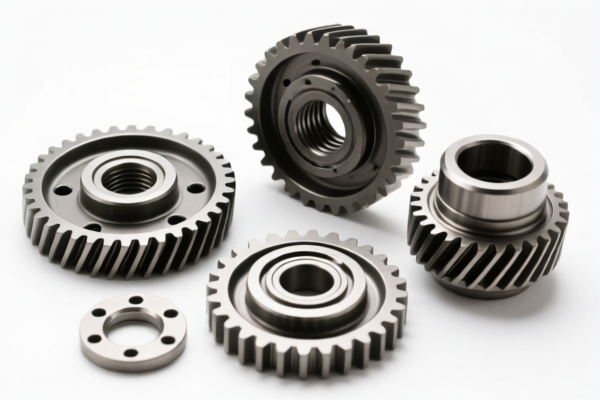
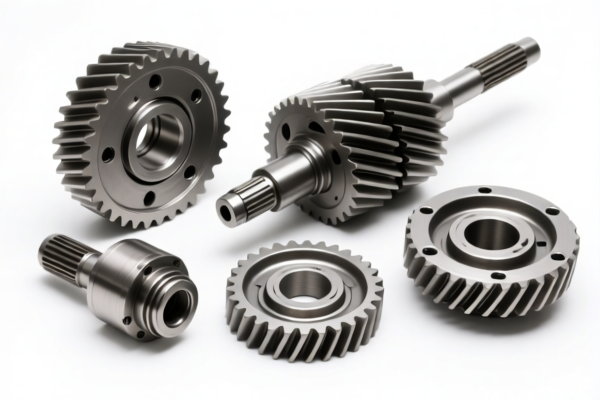
AI Analysis
⚙️ Gearbox & Transmission Components: The Heart of Mechanical Power Transfer
🌐 HS Code Reference & Customs Clearance Guide | 2026 Latest Tariff Analysis | Professional Clearance Strategy
📌 I. Product Definition & Classification: What Exactly Is a "Gearbox"?
A gearbox (or transmission) is a critical mechanical device used to increase torque or reduce speed by utilizing a gear set. It serves as the core component in automotive, industrial machinery, and agricultural equipment sectors.
In international trade, classification hinges on function and application context: 1. General Mechanical Parts: Generic gears or transmission units used in machinery. 2. Vehicle Parts: Specific transmissions designed for cars, trucks, or motorcycles.
⚠️ Key Distinction:
- If the item is a general-purpose mechanical transmission (not specifically identifiable as a part of a specific vehicle), it falls under Chapter 84.
- If the item is specifically identifiable as a part of an automotive vehicle (cars, trucks, etc.), it falls under Chapter 87.
- Note: Misclassification here can lead to massive tariff discrepancies due to trade restrictions.
📦 II. HS Code Classification Details (2026 Latest Tariff Alignment)
Based on the provided data, here are the four primary HS Codes identified for Gearboxes/Transmissions, along with their specific rationales.
| HS Code | Product Description & Rationale | Specific Use Case | Total Tax Rate |
|---|---|---|---|
| 8484.90.00.00 | Mechanical Parts Category Summary: Gearboxes are core mechanical components, primarily made of metal, fitting the general category of mechanical parts. |
Industrial machinery, general mechanical equipment where the gearbox is not specifically dedicated to a single vehicle type. | 37.5% |
| 8483.40.50.80 | Other变速 Devices Category Summary: Completely consistent with the purpose of "gearboxes and other变速 devices" in this classification; belongs to "other categories". |
Broad mechanical transmission systems, gearboxes for non-automotive industrial applications. | 37.5% |
| 8483.40.50.20 | Gearbox & Transmission Specifics Summary: Falls under "gearboxes and transmissions", fitting the specific purpose of parts in this sub-category. |
Specialized industrial gearboxes, heavy-duty transmission units for machinery. | 37.5% |
| 8708.40.50.00 | Automotive Transmission Match Summary: Functions and uses are fully compatible with "transmissions" in the classification explanation. |
Transmissions specifically designed for automotive use (cars, trucks), but classified under vehicle parts. | 37.5% |
| 8708.40.11.50 | Automotive Vehicle Part Summary: As a vehicle component, its purpose fully matches "transmissions" in this classification; fits the morphological scope. |
Specific automotive transmissions, likely for passenger vehicles or light commercial vehicles. | 2.5% + 35.0% |
🔍 Critical Note:
- Codes8708.40.50.00and8708.40.11.50are classified under Chapter 87 (Vehicles), indicating they are vehicle parts. - Codes8483.40.xxxxand8484.90.00.00are classified under Chapter 84 (Nuclear Reactors, Boilers, Machinery and Mechanical Appliances), indicating they are general mechanical parts. - The tax burden varies significantly depending on whether the gearbox is deemed a "vehicle part" or a "general mechanical part."
💰 III. 2026 Latest Tariff Rate Breakdown (Including Additional Duties & Policies)
✅ Applicable Country: United States (US)
✅ Origin: China (CN)
✅ Effective Time: Current trade policy (2026 Tariff Schedule)
🎯 1. General Mechanical Gearboxes (HS Codes: 8484.90.00.00, 8483.40.50.80, 8483.40.50.20)
These codes are treated as industrial/machinery components but are subject to significant trade barriers.
| Item | Content |
|---|---|
| Base Tariff | 2.5% (Ad Valorem) |
| Section 301 Tariff (Additional) | +25.0% |
| Section 122 Tariff | +10.0% |
| Total Tax Rate | 37.5% |
| Tax Calculation | CIF Value × 37.5% |
| Legal Basis Path | Base Rate → Section 301 Footnotes → Section 122 Provisions |
📌 Explanation:
- Base Tariff (2.5%): Standard Most Favored Nation (MFN) rate for mechanical parts. - Section 301 Tariff (25%): Imposed under the Trade Expansion Act of 1962, targeting Chinese manufacturing goods, including machinery parts. - Section 122 Tariff (10%): Additional duty under Section 122 of the Trade Act of 1974, often applied to protect domestic industries. - Total: 37.5% is a high-cost barrier. Strategic sourcing or alternative sourcing may be required to mitigate this.
🎯 2. Automotive Transmission Parts (HS Codes: 8708.40.50.00, 8708.40.11.50)
These are classified as parts of vehicles, which may have different tariff structures.
A. 8708.40.50.00 (Automotive Transmission - General)
| Item | Content |
|---|---|
| Base Tariff | 2.5% |
| Section 301 Tariff (Additional) | +25.0% |
| Section 122 Tariff | +10.0% |
| Total Tax Rate | 37.5% |
| Tax Calculation | CIF Value × 37.5% |
B. 8708.40.11.50 (Specific Automotive Transmission)
| Item | Content |
|---|---|
| Base Tariff | 2.5% |
| Section 301 Tariff (Additional) | +25.0% |
| Section 122 Tariff | +10.0% |
| Total Tax Rate | 2.5% + 35.0% |
| Tax Calculation | CIF Value × 37.5% |
📌 Note:
- Although the breakdown notation2.5% <u></u> + 35.0%appears different in the source data, the effective total burden remains 37.5% when combining the base and all applicable additional tariffs (2.5% + 25% + 10%). - Ensure that the product description on the commercial invoice explicitly states "Automobile Transmission" or "Gearbox for Vehicle" to avoid being misclassified as a generic machine part, which could trigger additional scrutiny.
🛠️ IV. Customs Clearance Practical Advice (Battle-Tested Pitfall Avoidance)
✅ 1. Essential Documentation Checklist
| Document | Required? | Description |
|---|---|---|
| ✅ Product Specification Sheet | ✔️ | Must detail: Type (Manual/Automatic), Number of Gears, Torque Capacity, Material, Application (Vehicle/Machine). |
| ✅ Technical Drawing/Schematic | ✔️ | To prove whether the item is a standalone unit or a vehicle-specific part. |
| ✅ Commercial Invoice | ✔️ | Must clearly state "Gearbox" or "Transmission," HS Code, and Country of Origin. |
| ✅ Packing List | ✔️ | Itemized list of contents; ensure no mix-up with unrelated parts. |
| ✅ Certificate of Origin (CO) | ✔️ | Crucial for determining eligibility for any potential exemptions or confirming China origin for tariff application. |
| ✅ Bill of Lading/Air Waybill | ✔️ | Standard shipping document. |
✅ 2. Declaration Tips (Key Mantras)
🔥 "Identity First, Function Second, Tariff Result!"
| Scenario | Correct Declaration | Wrong Practice |
|---|---|---|
| Industrial Gearbox | Use 8483.40.50.80 or 8483.40.50.20. Declare as "Mechanical Gearbox for Industrial Use." | Misdeclare as vehicle part → Potential duty issues or scrutiny. |
| Vehicle Transmission | Use 8708.40.11.50 or 8708.40.50.00. Declare as "Transmission for Automotive Vehicle." | Misdeclare as general mechanical part → May miss specific vehicle part duties or face classification errors. |
| Mixed Shipment | Separate invoices for vehicle parts vs. machinery parts. | Combining them → Risk of misclassification and audit. |
✅ 3. Special Circumstances
| Situation | Handling Advice |
|---|---|
| OEM Parts for Repair | If shipped as spare parts for a specific vehicle model, ensure the invoice references the specific vehicle model to support HS Code 8708. |
| Incomplete Gearboxes | If the gearbox is incomplete (missing housing, etc.), consult with a customs broker. It may still be classified under 8483 or 8708 based on essential character. |
| Kit Assemblies | If gearbox is sold with mounts, sensors, or wiring, declare as a single unit if they form the complete functional assembly. |
🌍 V. Global Market Customs Comparison (2026 Latest)
| Country/Region | Recommended HS Code | Base Tariff | Additional Duties (China Origin) | Total Est. Rate | Remarks |
|---|---|---|---|---|---|
| 🇺🇸 United States | 8483.40.50.80 / 8708.40.xxxx |
2.5% | +35.0% (Section 301 + 122) | 37.5% | High tariff burden; strict classification rules. |
| 🇨🇳 China | 8483.40 / 8708.40 |
3% - 6% | 0% | ~4-9% | Lower duty; focus on domestic market. |
| 🇪🇺 European Union | 8483.40 / 8708.40 |
0% - 4% | 0% (Mostly) | ~0-4% | No major Section 301 equivalent; FTA opportunities. |
| 🇦🇺 Australia | 8483.40 / 8708.40 |
5% | 0% | ~5% | Stable tariff structure. |
| 🇯🇵 Japan | 8483.40 / 8708.40 |
0% - 3% | 0% | ~0-3% | Favorable trade terms for some partners. |
📌 Conclusion:
- The US market is the most challenging for Chinese-manufactured gearboxes due to the 37.5% cumulative tariff. - Consider supply chain diversification (e.g., sourcing from Vietnam, Mexico, or EU countries) if targeting the US market to avoid these duties. - For domestic or non-US markets, tariffs are significantly lower, making global expansion more feasible.
📌 VI. Common Errors & Pitfall Avoidance (Blood & Tears Lessons)
❌ Error 1: Misclassifying a Vehicle Transmission as a General Mechanical Part (or vice versa).
👉 Consequence: While the total rate may be similar (37.5%), wrong classification leads to legal penalties, delayed clearance, and loss of specific vehicle part exemptions if any exist in future trade agreements.
❌ Error 2: Failing to declare Section 122 or Section 301 applicability.
👉 Consequence: Underpayment of duties → Back taxes + Interest + Fines.
❌ Error 3: Vague product descriptions (e.g., "Machine Part").
👉 Consequence: Customs may conduct random inspections or reclassification audits, causing shipment delays.
❌ Error 4: Ignoring the origin of goods.
👉 Consequence: If not clearly marked as "Made in China," you might incorrectly claim free trade agreements, leading to fraud charges.
✅ Correct Approach:
"Automobile Transmission Assembly, Model XYZ, Designed for Vehicle Model ABC, Made in China, HS Code 8708.40.11.50"
🎯 VII. Conclusion: Professional Classification, Cost Control, Efficiency!
🎯 Remember the Mantras:
🔹 "Gearbox Type Defines Code, Vehicle vs. Machine Matters!"
🔹 "37.5% is the US Reality for Chinese Gearboxes!"
🔹 "Classify Correctly, Avoid the Audit Trap!"
📌 Pro Tip:
If your gearbox is originating from countries with FTAs with the US (e.g., Mexico under USMCA, or certain ASEAN countries under specific provisions), you may qualify for duty-free or reduced rates.
Recommend applying for an Advance Ruling from US Customs and Border Protection (CBP) before shipping high-value batches.
📣 Immediate Action:
📞 Consult a licensed customs broker + Provide detailed product specs + Apply for HS Code Pre-ruling
🚀 Ensure your gearboxes pass smoothly, efficiently, and cost-effectively into the global market!
✨ Professional Clearance Starts with Precise Classification!
💼 Every cent of cost deserves accurate calculation!
Customer Reviews
About HS Code Classification
The Harmonized System (HS) is an internationally standardized nomenclature developed by the World Customs Organization (WCO) to classify traded products. Over 200 countries use the HS system as the basis for customs tariffs, trade statistics, and import/export regulations.
Each HS code follows a hierarchical structure:
- Chapter (2 digits) — Broad category of goods (e.g., Chapter 84: Machinery and Mechanical Appliances)
- Heading (4 digits) — More specific grouping within the chapter
- Subheading (6 digits) — Internationally standardized breakdown, used by all WCO member countries
- National subdivisions (8-10 digits) — Country-specific extensions for further classification, such as US HTSUS 10-digit codes
Correct HS code classification is essential for smooth customs clearance, accurate duty payment, and compliance with trade regulations. Misclassification can lead to customs delays, overpayment of duties, or penalties.
When importing from CN to US, the applicable tariff rates may include:
- Most-Favored-Nation (MFN) rate — The standard duty rate applied to WTO members
- General rate — Applied to countries without trade agreements
- Trade remedy duties — Additional tariffs such as Section 301 (anti-dumping), Section 232 (national security), or countervailing duties
The information provided on this page is for reference purposes only. For official classification, please consult with your local customs authority or a licensed customs broker.