Gearbox and other transmissions
CN → US| HS Code | Tariff Rate | Origin | Destination | Doc |
|---|---|---|---|---|
| 8483407000 | 0.0% | CN | US | Official Doc |
| 8483405080 | 37.5% | CN | US | Official Doc |
| 8708405000 | 37.5% | CN | US | Official Doc |
| 8708403000 | 35.0% | CN | US | Official Doc |
Product Images
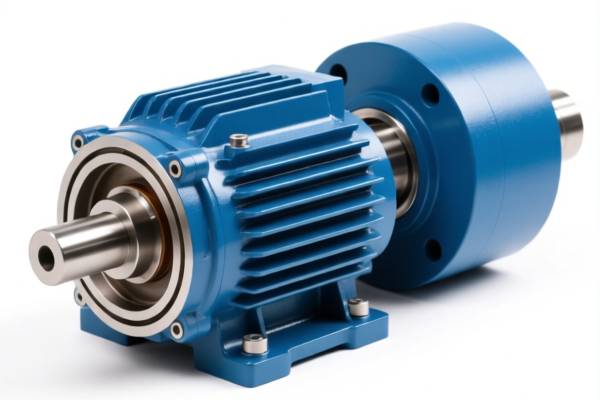
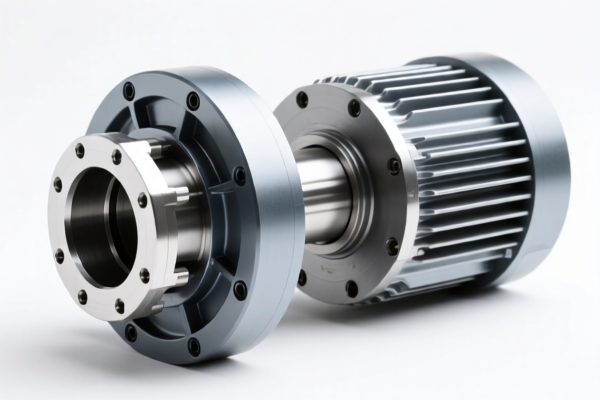
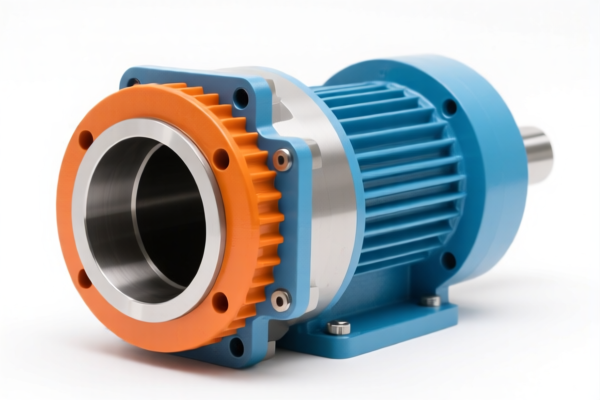
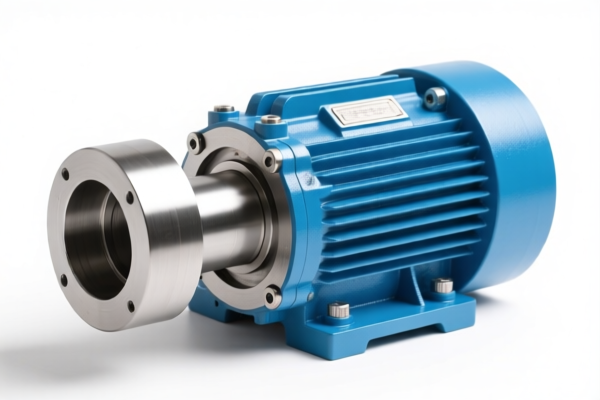
AI Analysis
⚙️ Gearbox and Other Transmissions
🌐 HS Code Reference & Customs Clearance Guide | 2026 Latest Tariff Analysis | Professional Entry Strategy
📌 I. Product Definition: What Exactly is a "Transmission"?
In international trade, Gearboxes and Transmissions are complex mechanical devices used to transmit power and change torque/speed ratios. The classification depends heavily on: 1. Application: Is it for general machinery or specifically for vehicles? 2. Completeness: Is it a standalone unit or a vehicle part? 3. Structure: Gears, shafts, and bearings integrated into a single housing.
⚠️ Critical Distinction:
- If the device is a standalone transmission for industrial machinery, robotics, or general equipment → Chapter 84.
- If the device is a part of a motor vehicle (cars, trucks) → Chapter 87.
📦 II. HS Code Classification Details (2026 Latest Tariff Alignment)
Based on the provided data, here are the precise HS Codes and their logical deductions:
| HS Code | Product Description | Classification Logic & Summary |
|---|---|---|
| 8483.40.70.00 | Standalone Gearbox / General Transmission | ✅ Perfect Match: The product name fully matches the category of "Gearboxes and other transmitting devices." The usage and form factor align perfectly with Chapter 84 (Machinery). |
| 8483.40.50.80 | Functional Transmission Unit | ✅ Functional Match: The product matches the functional requirements of gearboxes under Chapter 84. No material or form conflicts exist. It is classified as a functional equipment within this subheading. |
| 8708.40.50.00 | Vehicle Transmission Parts | ✅ Component Match: Classified as parts of motor vehicles. The transmission unit is considered a component/attachment for vehicles. The "gears" and "gearbox" function matches the attributes of vehicle parts. |
| 8708.40.30.00 | Motor Vehicle Gearbox | ✅ Vehicle Part Match: The transmission device is classified as a motor vehicle part. It falls under the category of parts suitable for vehicles, aligning with Chapter 87 requirements. |
🔍 Key Deduction Logic:
- Ch 84 (8483): For transmissions used in non-vehicle machinery (industrial, agricultural, etc.).
- Ch 87 (8708): For transmissions that are parts of motor vehicles. Even if the gearbox itself is a complex machine, if it’s destined for or identified as a vehicle part, it goes to 8708.
💰 III. 2026 Latest Tariff Rate Breakdown (Including Additional Taxes)
✅ Applicable Country: USA (US)
✅ Origin: China (CN)
✅ Effective Time: Post-2025 Trade Policies
🎯 1. 8483.40.70.00 – Standalone Industrial Gearbox
| Item | Detail |
|---|---|
| Base Tariff | 25¢ each + 3.9% (Ad Valorem) |
| Section 301 Add-on | 25.0% |
| Section 122 Add-on | 10.0% |
| Total Effective Rate | ~38.9% + 25¢/unit |
| Calculation Method | (CIF Value × 3.9%) + 3.0% (Combined Additional) + 25¢ per unit |
| De Minimis Exemption | ❌ Not Applicable (High tariff burden) |
| Legal Basis Path | USITC:8483.40.70.00 → Section 301: +25% → Section 122: +10% |
📌 Explanation:
- Base: 3.9% + 25¢/unit is the standard MFN rate for this subheading.
- Section 301: 25% is the standard trade war tariff on Chinese machinery.
- Section 122: 10% is an additional national security tariff applied to certain imports.
- Warning: The 25¢ per unit fixed duty can significantly impact low-value items.
🎯 2. 8483.40.50.80 – Functional Transmission Unit
| Item | Detail |
|---|---|
| Base Tariff | 2.5% |
| Section 301 Add-on | 25.0% |
| Section 122 Add-on | 10.0% |
| Total Effective Rate | 37.5% |
| Calculation Method | CIF Value × 37.5% |
| De Minimis Exemption | ❌ Not Applicable |
| Legal Basis Path | USITC:8483.40.50.80 → Section 301: +25% → Section 122: +10% |
📌 Note:
- This code has a lower base rate (2.5%) compared to 8483.40.70.00 (3.9% + 25¢).
- However, the total rate (37.5%) is slightly lower than the previous code due to the absence of the per-unit fee, making it potentially more cost-effective for high-value transmissions.
🎯 3. 8708.40.50.00 – Vehicle Transmission Parts
| Item | Detail |
|---|---|
| Base Tariff | 2.5% |
| Section 301 Add-on | 25.0% |
| Section 122 Add-on | 10.0% |
| Total Effective Rate | 37.5% |
| Calculation Method | CIF Value × 37.5% |
| De Minimis Exemption | ❌ Not Applicable |
| Legal Basis Path | USITC:8708.40.50.00 → Section 301: +25% → Section 122: +10% |
📌 Explanation:
- Classified as parts of vehicles, so it uses the vehicle parts tariff structure.
- The 2.5% base is attractive, but the 37.5% total is high due to dual add-ons.
- Crucial: Must prove it is a "part of a vehicle" (e.g., specific model compatibility).
🎯 4. 8708.40.30.00 – Motor Vehicle Gearbox
| Item | Detail |
|---|---|
| Base Tariff | 0.0% |
| Section 301 Add-on | 25.0% |
| Section 122 Add-on | 10.0% |
| Total Effective Rate | 35.0% |
| Calculation Method | CIF Value × 35.0% |
| De Minimis Exemption | ❌ Not Applicable |
| Legal Basis Path | USITC:8708.40.30.00 → Section 301: +25% → Section 122: +10% |
📌 Key Advantage:
- Lowest Total Rate (35.0%) among all options.
- Base Tariff is 0%, meaning only the add-ons apply.
- Best Choice if the product is definitively classified as a motor vehicle gearbox under this specific subheading.
- Risk: Misclassification from 8483 (machinery) to 8708 (vehicle part) must be carefully justified.
🛠️ IV. Customs Clearance Practical Advice
✅ 1. Required Documentation Checklist
| Document | Mandatory? | Purpose |
|---|---|---|
| ✅ Technical Manual | ✔️ | Show internal structure, gear ratios, and application (vehicle vs. industrial). |
| ✅ Product Photos | ✔️ | Clear images of nameplate, serial number, and physical form. |
| ✅ Application Statement | ✔️ | Explicitly state: "Used in [Vehicle Model/Industrial Machine]". |
| ✅ Commercial Invoice | ✔️ | Must match HS Code description precisely (e.g., "Gearbox for Car X" vs. "Industrial Transmission"). |
| ✅ Origin Certificate | ✔️ | To confirm CN origin and apply correct add-on tariffs. |
| ✅ BOM (Bill of Materials) | ✔️ | To prove it’s a single assembly, not separate parts. |
✅ 2. Classification Strategy & Tips
🔥 "Machinery vs. Vehicle Part: The Critical Divide!"
| Scenario | Recommended HS Code | Why? |
|---|---|---|
| Standalone transmission for conveyor, robot, or pump | 8483.40.70.00 or 8483.40.50.80 |
It’s a general machinery component (Ch 84). |
| Transmission specifically for a car/truck | 8708.40.50.00 or 8708.40.30.00 |
It’s a vehicle part (Ch 87). |
| Unclear application | Avoid Ch 87 | If not clearly for vehicles, Ch 84 is safer. Misclassifying industrial parts as vehicle parts can lead to penalties. |
📌 Tip:
- If the gearbox is generic (used in multiple industries), use 8483.
- If it’s model-specific (e.g., "Transmission for Toyota Camry 2023"), use 8708.
✅ 3. Special Considerations
| Situation | Advice |
|---|---|
| OEM Parts for Vehicles | Provide the OEM number and vehicle model to support Ch 87 classification. |
| Used vs. New | Ensure the invoice states "New". Used machinery may have different requirements. |
| High Value | For high-value transmissions, 8708.40.30.00 (35%) is the most cost-effective if applicable. |
| Low Value | For low-value units, the 25¢ per unit in 8483.40.70.00 may add up, so consider 8483.40.50.80 (37.5% ad valorem only) if applicable. |
🌍 V. Global Market Comparison (2026)
| Region | Preferred HS Code | Approx. Tariff (China Origin) | Notes |
|---|---|---|---|
| 🇺🇸 USA | 8483.40.50.80 or 8708.40.30.00 |
35% - 37.5% | High due to Section 301 & 122. |
| 🇨🇳 China | 8483.40 or 8708.40 |
Low (0-5%) | No additional add-ons for domestic trade. |
| 🇪🇺 EU | 8483.40 or 8708.40 |
0% | Generally free if no anti-dumping. |
| 🇬🇧 UK | 8483.40 or 8708.40 |
Low | Post-Brexit tariffs vary, but generally lower than US. |
📌 Conclusion:
- USA is the most challenging market due to 35-38% effective tariffs.
- Ch 87 (Vehicle Parts) often offers a lower total rate (35%) than Ch 84 (37.5-39%) if the product is genuinely a vehicle part.
- Strategic Move: If your product is a vehicle gearbox, classify under 8708.40.30.00 to save 2.5-3.5% in duties.
📌 VI. Common Mistakes & Pitfalls
❌ Mistake 1: Classifying a vehicle gearbox as a general industrial transmission (8483).
👉 Result: Higher tariff (37.5% vs 35%) + Potential customs inquiry on product usage.
❌ Mistake 2: Classifying an industrial gearbox as a vehicle part (8708).
👉 Result: Customs may reject it as "misdeclaration," leading to delays, fines, and reclassification to Ch 84.
❌ Mistake 3: Ignoring the 25¢ per unit fee in 8483.40.70.00.
👉 Result: For large quantities of low-value units, the per-unit fee can exceed the ad valorem tax, unexpectedly increasing costs.
✅ Correct Approach:
"Gearbox Assembly, Model XYZ, for Internal Combustion Engine Vehicle, Part Number 12345, Made in China"
🎯 VII. Conclusion: Optimize Your Classification for Cost Efficiency
🎯 Key Takeaway:
🔹 Vehicle Parts (Ch 87) generally have lower total tariffs (35%) than Industrial Machinery (Ch 84, 37.5-39%).
🔹 Always justify the application: If it’s for a car, prove it. If it’s for a machine, keep it in Ch 84.
🔹 Watch out for per-unit fees:8483.40.70.00has a fixed duty that can hurt low-value shipments.
📌 Pro Tip:
If you are exporting vehicle gearboxes, prioritize
8708.40.30.00(35%) for maximum savings.
If you are exporting industrial transmissions, choose8483.40.50.80(37.5%) to avoid per-unit fees.
📣 Action Plan:
📞 Consult a Customs Broker: Confirm the final HS Code with a professional.
📄 Prepare Documentation: Ensure invoices and specs clearly state the end-use.
📉 Calculate Landed Cost: Factor in the 35-38% tariff into your pricing strategy.
✨ Precision in Classification = Profit in Trade!
💼 Every percentage point counts in the age of trade tariffs.
Customer Reviews
About HS Code Classification
The Harmonized System (HS) is an internationally standardized nomenclature developed by the World Customs Organization (WCO) to classify traded products. Over 200 countries use the HS system as the basis for customs tariffs, trade statistics, and import/export regulations.
Each HS code follows a hierarchical structure:
- Chapter (2 digits) — Broad category of goods (e.g., Chapter 84: Machinery and Mechanical Appliances)
- Heading (4 digits) — More specific grouping within the chapter
- Subheading (6 digits) — Internationally standardized breakdown, used by all WCO member countries
- National subdivisions (8-10 digits) — Country-specific extensions for further classification, such as US HTSUS 10-digit codes
Correct HS code classification is essential for smooth customs clearance, accurate duty payment, and compliance with trade regulations. Misclassification can lead to customs delays, overpayment of duties, or penalties.
When importing from CN to US, the applicable tariff rates may include:
- Most-Favored-Nation (MFN) rate — The standard duty rate applied to WTO members
- General rate — Applied to countries without trade agreements
- Trade remedy duties — Additional tariffs such as Section 301 (anti-dumping), Section 232 (national security), or countervailing duties
The information provided on this page is for reference purposes only. For official classification, please consult with your local customs authority or a licensed customs broker.