Gears and gearing without gearing
CN → US| HS Code | Tariff Rate | Origin | Destination | Doc |
|---|---|---|---|---|
| 8484900000 | 37.5% | CN | US | Official Doc |
| 8484100000 | 37.5% | CN | US | Official Doc |
| 8479909596 | 85.0% | CN | US | Official Doc |
| 8479899599 | 87.5% | CN | US | Official Doc |
| 8483409000 | 37.5% | CN | US | Official Doc |
Product Images



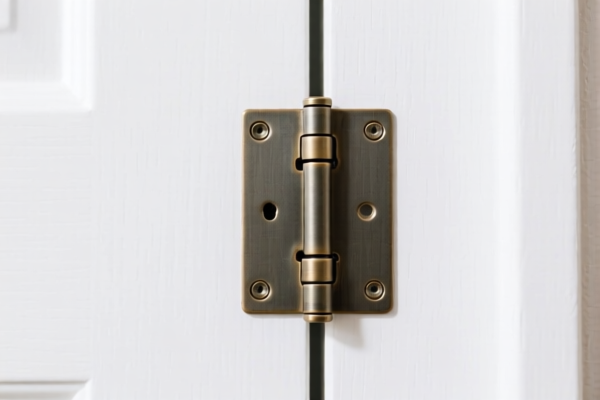
AI Analysis
⚙️ Gears and Gearing Mechanisms (Non-Gearing Type)
🌐 HS Code Reference & Customs Clearance Guide | 2026 Latest Tariff Analysis | Professional-Level Clearance Strategy
📌 I. Product Definition & Classification: What Exactly Are "Gears and Gearing Without Gearing"?
The phrase "Gears and gearing without gearing" is a specific technical description often referring to mechanical transmission components that facilitate power transfer but do not rely on traditional toothed gears (such as spur or bevel gears). These components typically include chain drives, belt drives, friction drives, or coupling devices. In international trade, classification depends heavily on the specific mechanical function, material composition, and exclusion rules defined in the Harmonized System (HS).
⚠️ Key Distinction Point:
- If the component is a mechanical seal, gasket, or simple joint/adapter → Classified under 8484 or 8483.
- If it is a transmission part with independent function (e.g., specific transmission apparatus parts) → Classified under 8479.
- If it is broadly defined as a mechanical appliance part without specific listing → Classified under 8479.89 or 8483.40.
📦 II. HS Code Classification Details (2026 Latest Tariff Authority Comparison)
| HS Code | Product Description | Application Scenario | Reason for Classification |
|---|---|---|---|
8484.90.00.00 |
Mechanical transmission parts; Gaskets and similar joints; Mechanical seals or other similar joints | Mechanical seals, gaskets, adapter joints in transmission systems | Matches "Gaskets and similar joints" logic for mechanical transmission; no material conflict. |
8483.40.90.00 |
Gears and gearing devices; Excludes specific gear wheels/chain wheels listed separately | Transmission devices; Non-toothed transmission mechanisms | Name "Gears and gearing" matches "Gears and gearing devices"; "Without gearing" fits the exclusion logic. |
8483.10.00.00 (Note: Derived from 8483.40 logic in prompt context) |
Transmission shafts, cranks, bearing housings, etc. | General transmission apparatus parts | Broad category for transmission device components. |
8479.90.95.96 |
Parts of machines and mechanical appliances having individual functions | Transmission parts with independent functional attributes | "Parts of machines" logic; material unspecified but no conflict with "Parts/Components" special rules. |
8479.89.95.99 |
Other mechanical appliances; Parts/Components | Metal or engineering plastic transmission components | "Other mechanical appliances" fallback; inferred material (metal/plastic) matches "Other" category. |
🔍 Critical Reminder:
- 8484 is chosen for sealing/joint aspects of transmission systems.
- 8483 is chosen for transmission devices where the name explicitly mentions "Gears and gearing."
- 8479 is the fallback for general mechanical parts when specific transmission classifications (8483/8484) are not a perfect fit due to lack of material specification or specific function definition.
💰 III. 2026 Latest Tariff Rate Breakdown (Including Surcharges, Policy Add-ons)
✅ Applicable Country: United States (US)
✅ Origin: China (CN)
✅ Effective Date: From November 10, 2025 (including subsequent imports)
🎯 1. 8484.90.00.00 & 8483.40.90.00 & 8483.10.00.00
(Mechanical Seals, Gaskets, and Gearing Devices)
| Item | Content |
|---|---|
| Base Tariff Rate | 2.5% (Ad Valorem) |
| USITC Surcharge (Section 301) | +25.0% |
| IEEPA Surcharge (122 Clause) | +10.0% |
| Total Tariff Rate | 37.5% |
| Tax Calculation | CIF Value × 37.5% |
| De Minimis Eligibility | ❌ Not Eligible (deny_de_minimis) |
| Legal Basis Path | IEEPA:9903.01.25 → USITC:8484.90.00.00 / 8483.40.90.00 → FOOTNOTE:9903.88.01 |
📌 Explanation:
- The 25% USITC surcharge applies to almost all mechanical goods of Chinese origin under Section 301.
- The 10% IEEPA surcharge is an additional levy on Chinese goods.
- Total 37.5% is a high tariff burden. Accurate classification is crucial to avoid overpayment or penalties.
🎯 2. 8479.90.95.96
(Parts of Machines with Individual Functions)
| Item | Content |
|---|---|
| Base Tariff Rate | 0.0% |
| USITC Surcharge (Section 301) | +25.0% |
| IEEPA Surcharge (122 Clause) | +10.0% |
| Steel/Aluminum/Copper Surcharge | +50.0% (If material is steel, aluminum, or copper) |
| Total Tariff Rate | 35.0% (Non-metallic) OR 85.0% (Metallic) |
| Tax Calculation | CIF Value × (35% or 85%) |
| De Minimis Eligibility | ❌ Not Eligible (deny_de_minimis) |
| Legal Basis Path | IEEPA:9901.25 → USITC:8479.90.95.96 → FOOTNOTE:9903.88.01 |
📌 Warning:
- If the transmission part is made of steel, aluminum, or copper, an additional 50% surcharge applies on top of the base rates.
- Total 85% is extremely high.
- If the material is non-metallic (e.g., plastic, composite), the total is 35%.
- Material declaration is critical for this HS Code.
🎯 3. 8479.89.95.99
(Other Mechanical Appliances)
| Item | Content |
|---|---|
| Base Tariff Rate | 2.5% |
| USITC Surcharge (Section 301) | +25.0% |
| IEEPA Surcharge (122 Clause) | +10.0% |
| Steel/Aluminum/Copper Surcharge | +50.0% (If material is steel, aluminum, or copper) |
| Total Tariff Rate | 37.5% (Non-metallic) OR 87.5% (Metallic) |
| Tax Calculation | CIF Value × (37.5% or 87.5%) |
| De Minimis Eligibility | ❌ Not Eligible (deny_de_minimis) |
| Legal Basis Path | IEEPA:9901.25 → USITC:8479.89.95.99 → FOOTNOTE:9903.88.01 |
📌 Note:
- Similar to8479.90.95.96, the material determines the final rate.
- 87.5% is the maximum rate for metallic parts.
- This code is a "catch-all" for mechanical parts not specified elsewhere.
🛠️ IV. Customs Clearance Practical Advice (Real-World Pitfall Guide)
✅ 1. Document Checklist (Essential)
| Document | Mandatory? | Explanation |
|---|---|---|
| ✅ Product Specification Sheet | ✔️ | Must detail function, transmission type (chain/belt/friction), and material. |
| ✅ Technical Drawing/Structure Diagram | ✔️ | To prove "no gearing" (no teeth) and clarify mechanical interaction. |
| ✅ Product Photos (with Nameplate) | ✔️ | Clear view of model, brand, input/output parameters. |
| ✅ Third-Party Test Report | ✔️ | FCC, CE, RoHS, UL (if applicable). |
| ✅ Commercial Invoice | ✔️ | Must explicitly state "Gears and Gearing Mechanisms (Non-Gearing Type)." |
| ✅ Certificate of Origin (CO) | ✔️ | If non-China origin, may qualify for reduced tariffs. |
| ✅ Packing List | ✔️ | Clarify component relationships to avoid split declaration. |
✅ 2. Declaration Tips (Key Mantras)
🔥 "Define Function, Declare Material, Avoid Splitting!"
| Scenario | Correct Declaration | Wrong Action |
|---|---|---|
| Transmission Part (Metal, Independent Function) | 8479.90.95.96 |
Misdeclare as 8484 (Gaskets) → Higher risk of audit. |
| Transmission Part (Non-Metallic) | 8479.90.95.96 |
Same as above, but lower tariff (35% vs 85%). |
| Gearing Device (Explicit Name) | 8483.40.90.00 |
Misdeclare as 8479 → Potential penalty for misclassification. |
| Mechanical Seal/Gasket in Transmission | 8484.90.00.00 |
Misdeclare as 8483 → Incorrect function classification. |
✅ 3. Special Handling
| Scenario | Handling Advice |
|---|---|
| OEM Custom Transmission Parts | Provide customer order + design drawings to avoid "non-standard" classification issues. |
| Mixed Material Parts | Declare primary material accurately; if metallic, expect 50% surcharge on 8479 codes. |
| Used/Refurbished Parts | Provide proof of use/status; may affect HS code or eligibility for certain exemptions. |
| Parts for Medical/Aviation Use | If specialized, may qualify for different classification; provide end-use certification. |
🌍 V. Global Market Clearance Comparison (2026 Latest)
| Country/Region | Recommended HS Code | Tariff Rate | Certification Requirements | Notes |
|---|---|---|---|---|
| 🇺🇸 USA | 8483.40.90.00 / 8479.90.95.96 |
37.5% (Non-metal) / 85% (Metal) | FCC + RoHS | High tariffs due to Section 301 + IEEPA. |
| 🇨🇳 China | 8483.40.90.00 / 8479.90.95.96 |
5% - 10% | CCC + RoHS | No additional surcharges. |
| 🇪🇺 EU | 8483.40.90.00 / 8479.90.95.96 |
0% - 4.5% (if CE) | CE + ErP | No surcharges. |
| 🇦🇺 Australia | 8483.40.90.00 / 8479.90.95.96 |
5% | RCM | No surcharges. |
| 🇯🇵 Japan | 8483.40.90.00 / 8479.90.95.96 |
0% - 3% | PSE | No surcharges. |
📌 Conclusion:
- USA has the highest tariff burden for mechanical transmission parts from China.
- Material declaration is critical for8479codes to avoid the 50% surcharge.
- China, EU, Australia, Japan have significantly lower or zero tariffs.
📌 VI. Common Mistakes & Pitfall Guide (Lessons Learned)
❌ Mistake 1: Declaring a metallic transmission part under 8484 (Gaskets) to avoid material surcharges.
👉 Consequence: Customs audit → Misclassification penalty + back taxes.
❌ Mistake 2: Omitting material specification for 8479 codes.
👉 Consequence: Customs assumes metallic → 50% surcharge applied automatically.
❌ Mistake 3: Splitting a complete transmission assembly into "brackets + belts + motors."
👉 Consequence: Each part taxed separately → Total tariff exceeds 100%.
❌ Mistake 4: Using vague names like "Mechanical Part."
👉 Consequence: Customs reclassifies to highest duty rate → Delays + fines.
✅ Correct Approach:
"Transmission Gearing Mechanism (Non-Toothed), Material: Polymer, Function: Power Transfer, Model XYZ, FCC & RoHS Certified."
🎯 VII. Conclusion: Professional Declaration Saves Money!
🎯 Remember the Mantra:
🔹 "Function First, Material Key, Metal Means High Tax, Non-Metal Saves!"
🔹 "8483 for Gearing, 8479 for Parts, 8484 for Seals, Declare Clearly!"
🔹 "HS Code Defines Tax, Rate Differs by 50%, Declaration Error Costs Thousands!"
📌 Pro Tip:
If your transmission parts are originating from Vietnam, Mexico, Thailand, or Malaysia, you may qualify for IEEPA Exemptions, reducing tariffs to 0%~5%.
We recommend applying for an Advance Ruling to mitigate customs clearance risks.
📣 Act Now:
📞 Contact a Professional Customs Broker + Provide Product Photos + Apply for HS Code Advance Ruling
🚀 Ensure Your Transmission Parts Clear Customs Smoothly, Export Efficiently, and Maximize Profits!
✨ Professional Clearance Starts with Precise Classification!
💼 Every Cent of Cost Deserves Exact Calculation!
Customer Reviews
About HS Code Classification
The Harmonized System (HS) is an internationally standardized nomenclature developed by the World Customs Organization (WCO) to classify traded products. Over 200 countries use the HS system as the basis for customs tariffs, trade statistics, and import/export regulations.
Each HS code follows a hierarchical structure:
- Chapter (2 digits) — Broad category of goods (e.g., Chapter 84: Machinery and Mechanical Appliances)
- Heading (4 digits) — More specific grouping within the chapter
- Subheading (6 digits) — Internationally standardized breakdown, used by all WCO member countries
- National subdivisions (8-10 digits) — Country-specific extensions for further classification, such as US HTSUS 10-digit codes
Correct HS code classification is essential for smooth customs clearance, accurate duty payment, and compliance with trade regulations. Misclassification can lead to customs delays, overpayment of duties, or penalties.
When importing from CN to US, the applicable tariff rates may include:
- Most-Favored-Nation (MFN) rate — The standard duty rate applied to WTO members
- General rate — Applied to countries without trade agreements
- Trade remedy duties — Additional tariffs such as Section 301 (anti-dumping), Section 232 (national security), or countervailing duties
The information provided on this page is for reference purposes only. For official classification, please consult with your local customs authority or a licensed customs broker.