Geiger Detector
CN → USProduct Images
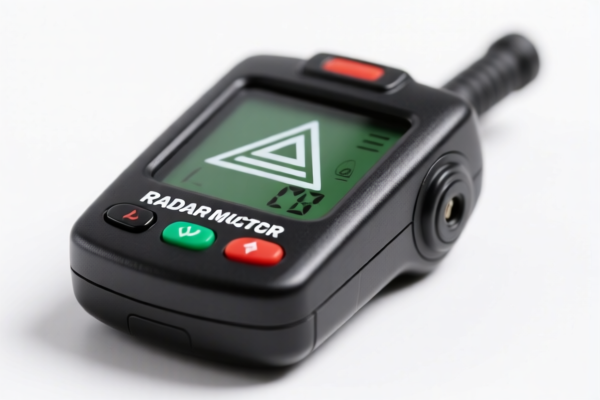
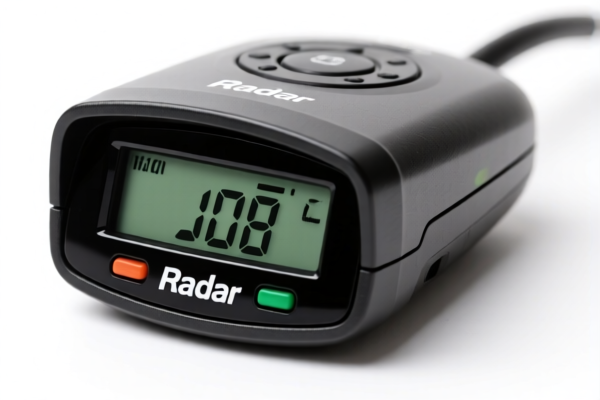


AI Analysis
☢️ Geiger Detector (Radiation Survey Meters)
🌐 HS Code Reference & Customs Clearance Guide | 2026 Latest Tariff Analysis | Professional Clearance Strategy
📌 1. Product Definition & Classification: Do You Really Understand "Geiger Counters"?
A Geiger Detector, technically known as a Radiation Survey Meter or Geiger-Müller Counter, is an electronic instrument used to detect and measure ionizing radiation (alpha, beta, gamma, and neutron radiation). In international trade, it is not classified as a single item but depends heavily on its primary function and specific application.
It is generally divided into two main categories in customs classification:
- General-Purpose Radiation Detectors: Used for industrial safety, environmental monitoring, or general lab use. These fall under Chapter 90 (Optical, Photographic, Cinematographic, Measuring, Checking, Precision, Medical or Surgical Instruments).
- Specialized Scientific/Security Instruments: If specifically designed for nuclear research, medical diagnostics, or border security screening, they may have different subheadings or require specific licensing.
⚠️ Key Distinction Point:
- If the device is a handheld survey meter for measuring radiation levels in the environment → Chapter 90 (e.g., 9030, 9027).
- If it is a part/component (e.g., just the Geiger tube/probe) without the electronic readout unit → Chapter 85 or 90 parts.
- If it is a dosimeter (worn by personnel to measure exposure) → 9030.
📦 2. HS Code Classification Details (2026 Latest Tariff Authority对照)
| HS Code | Product Description | Application Scenario | Key Features |
|---|---|---|---|
9030.39.00.00 |
Other instruments and apparatus for measuring or checking electrical quantities, not for measuring semiconductor devices | General Geiger Counters (Handheld/Monitor) | Measures ionizing radiation intensity; handheld; digital/analog display. Most common for industrial safety. |
9030.40.00.00 |
Oscillographs, oscillographs, and spectrum analyzers | Not applicable | Geiger counters do not analyze frequency spectra. |
9030.90.00.00 |
Parts and accessories for instruments and apparatus of heading 9030 | Geiger Probes/Tubes | Standalone GM tubes, detector heads without electronics. |
9027.80.50.00 |
Other instruments and apparatus for physical or chemical analysis | Specialized Lab Detectors | Benchtop units used in laboratories for precise elemental analysis or high-precision lab testing. |
8543.70.90.00 |
Other signals generating apparatus | Simple Alarm Devices | Rare; only if the device is purely a signal generator for radiation alarms without measurement capability. |
🔍 Focus Reminder:
- The vast majority of commercial Geiger Detectors fall under9030.39.00.00.
- DO NOT classify as9031.80(Other measuring/checking instruments) unless it is a specialized non-electrical device.
- If the device includes data logging or connectivity (USB/Wi-Fi), it still generally stays under9030.39.00.00as the primary function is measurement.
💰 3. 2026 Latest Tariff Rate Details (Including Surtaxes & Policy Add-ons)
✅ Applicable Country: United States (US)
✅ Origin: China (CN)
✅ Effective Date: November 10, 2025 (including subsequent imports)
🎯 1. 9030.39.00.00 —— Handheld Radiation Survey Meters (Geiger Counters)
| Item | Content |
|---|---|
| Basic Tariff Rate | 0% (ad valorem) |
| USITC Surcharge | +25% (from USITC Footnote 9903.88.01, Section 301) |
| IEEPA Surcharge | +10% (Targeting Chinese/HK products, from Nov 10, 2025) |
| Total Tariff Rate | 45% |
| Tax Calculation | CIF Value × 45% |
| De Minimis Eligibility | ❌ No (deny_de_minimis) |
| Legal Basis Path | IEEPA:9903.01.25 → IEEPA:9903.01.24 → USITC:9030.39.00.00 → FOOTNOTE:9903.88.01 |
📌 Explanation:
- Although the base tariff for many scientific instruments is 0%, the Section 301 Surcharge (+25%) and IEEPA Surcharge (+10%) apply to Chinese-origin electronics and measurement devices.
- Total Burden: 45%. This is a significant cost for low-value handheld detectors.
- No De Minimis Exemption: Shipments valued under $800 do NOT qualify for tax exemption. Customs will scrutinize these shipments.
🎯 2. 9030.90.00.00 —— Parts & Accessories (Geiger Tubes/Probes)
| Item | Content |
|---|---|
| Basic Tariff Rate | 0% |
| USITC Surcharge | +25% |
| IEEPA Surcharge | +10% |
| Total Tariff Rate | 45% |
| Tax Calculation | CIF Value × 45% |
| De Minimis Eligibility | ❌ No |
📌 Note:
- Spare parts, replacement GM tubes, and probes are taxed at the same rate as the complete unit if classified under parts.
- Ensure the invoice clearly distinguishes between "Complete Unit" and "Replacement Part" to avoid misclassification penalties.
🛠️ 4. Customs Clearance Operational Advice (Practical Pitfall Avoidance)
✅ 1. Documentation Checklist (Missing items will cause delays)
| Document | Required | Description |
|---|---|---|
| ✅ Product Specification Sheet | ✔️ | Must include detection types (Alpha/Beta/Gamma/Nu), energy range, and sensitivity. |
| ✅ Safety Data Sheet (SDS) | ✔️ | If the device contains radioactive sources (e.g., calibration sources) or batteries (Li-ion). |
| ✅ Battery Information | ✔️ | If shipped with Lithium batteries, must comply with UN38.3 and IATA DGR for air freight. |
| ✅ Certificate of Origin (CO) | ✔️ | Essential for claiming any potential exemptions (if from non-China origin). |
| ✅ Commercial Invoice | ✔️ | Clearly state "Radiation Survey Meter" or "Geiger Counter, Model XYZ." Avoid vague terms like "Detector." |
| ✅ NRC/Regulatory Compliance Letter | ✔️ | For US imports, a letter stating the device is Class I/II/III radiation-emitting product per FDA 21 CFR 1020.40 is often required. |
✅ 2. Declaration Tips (Key Mnemonics)
🔥 "Measure Radiation, Code 9030.39; No Source Inside, Class I Device."
| Scenario | Correct Declaration | Wrong Practice |
|---|---|---|
| Handheld Geiger Counter | 9030.39.00.00 |
Misclassifying as 8543 (Signals) → 45% penalty risk |
| Device with Calibration Source | High Risk! | May require NRC Import Permit + 9030.39.00.00 |
| Geiger Tube Only | 9030.90.00.00 |
Declaring as complete unit → Overpayment or underpayment |
| Portable Dosimeter (Personal) | 9030.49.00.00 |
Misclassifying as 9030.39 (Survey Meter) |
✅ 3. Special Case Handling
| Scenario | Handling Advice |
|---|---|
| Device Contains Calibration Source | CRITICAL: Many Geiger counters come with a small Cesium-137 or Strontium-90 source for calibration. - If YES: You need an NRC Import Permit or agreement from the Nuclear Regulatory Commission. - Customs Warning: Do not ship radioactive materials without prior approval. Shipments will be seized. |
| Lithium Batteries | Must declare UN3481 (Li-ion) or UN3090 (Li-metal). Use proper packaging (PI 965/967/968/969). |
| Medical vs. Industrial | If marketed for medical diagnosis, it may fall under FDA Medical Device regulations. Clarify intended use in the invoice. |
🌍 5. Global Market Comparison (2026 Latest)
| Country/Region | Recommended HS Code | Tariff | Certification Requirement | Notes |
|---|---|---|---|---|
| 🇺🇸 USA | 9030.39.00.00 |
45% (China) | FDA 21 CFR 1020.40 + FCC | High scrutiny on radioactive sources. |
| 🇨🇳 China | 9030.39.00.00 |
0% | CCC (if applicable) | No surtax. |
| 🇪🇺 EU | 9030.39.00 |
0% | CE + RoHS | No surtax. |
| 🇯🇵 Japan | 9030.39.00 |
0% | PSE (for electronics) | No surtax. |
| 🇦🇺 Australia | 9030.39.00 |
5% | RCM | No surtax. |
📌 Conclusion:
- The US is the only major market imposing high surtaxes (45%) on Chinese-made Geiger Detectors.
- EU, Japan, and Australia have low or zero tariffs, making them more cost-effective for Chinese exports.
- Regulatory Compliance (FDA/NRC in US, CE in EU) is more critical than tariff differences.
📌 6. Common Errors & Pitfall Guide (Lessons Learned)
❌ Error 1: Shipping a Geiger Counter with a calibration source without an NRC permit
👉 Consequence: Shipment seized by CBP/FDA; heavy fines; potential criminal liability.
❌ Error 2: Declaring as "Electronics Detector" or "Safety Tool"
👉 Consequence: Customs lacks clarity; delays for additional documentation; possible misclassification.
❌ Error 3: Ignoring Battery Regulations
👉 Consequence: Air freight rejection; safety hazard flags.
❌ Error 4: Using "Part" HS Code for a Complete Unit
👉 Consequence: Under-declaration of value/tax; audit risk.
✅ Correct Practice:
"Radiation Survey Meter, Handheld, Digital Display, Detects Gamma/Beta, Model XYZ, FCC Certified, NO RADIOACTIVE SOURCE INCLUDED, Ships with AA Batteries."
🎯 7. Conclusion: Professional Declaration for Smooth Clearance
🎯 Remember the Mnemonic:
🔹 "Code 9030.39 for Meters; No Source Inside, Avoid NRC Fees."
🔹 "45% Tax in US for China Origin; Check Battery Rules."
📌 Pro Tip:
If your Geiger Detector is originally from Vietnam, Mexico, or Malaysia, you may apply for IEEPA Exemption, reducing the tariff to 0%~5%.
Recommendation: Always apply for an FDA Product Code Registration and ensure the device is Class I (General Control) unless it is a medical device.
📣 Immediate Action:
📞 Contact a licensed customs broker + Provide FDA Compliance Docs + Declare "No Radioactive Source" clearly on Invoice
🚀 Ensure smooth customs clearance, avoid seizure, and protect your supply chain.
✨ Professional Clearance Starts with Accurate Classification!
💼 Your every cent of cost should be calculated precisely!
Customer Reviews
About HS Code Classification
The Harmonized System (HS) is an internationally standardized nomenclature developed by the World Customs Organization (WCO) to classify traded products. Over 200 countries use the HS system as the basis for customs tariffs, trade statistics, and import/export regulations.
Each HS code follows a hierarchical structure:
- Chapter (2 digits) — Broad category of goods (e.g., Chapter 84: Machinery and Mechanical Appliances)
- Heading (4 digits) — More specific grouping within the chapter
- Subheading (6 digits) — Internationally standardized breakdown, used by all WCO member countries
- National subdivisions (8-10 digits) — Country-specific extensions for further classification, such as US HTSUS 10-digit codes
Correct HS code classification is essential for smooth customs clearance, accurate duty payment, and compliance with trade regulations. Misclassification can lead to customs delays, overpayment of duties, or penalties.
When importing from CN to US, the applicable tariff rates may include:
- Most-Favored-Nation (MFN) rate — The standard duty rate applied to WTO members
- General rate — Applied to countries without trade agreements
- Trade remedy duties — Additional tariffs such as Section 301 (anti-dumping), Section 232 (national security), or countervailing duties
The information provided on this page is for reference purposes only. For official classification, please consult with your local customs authority or a licensed customs broker.