Gel Seat Cushion
CN → US| HS Code | Tariff Rate | Origin | Destination | Doc |
|---|---|---|---|---|
| 9404909605 | 17.3% | CN | US | Official Doc |
| 3926902100 | 21.7% | CN | US | Official Doc |
| 9404909622 | 17.3% | CN | US | Official Doc |
| 4016990500 | 20.9% | CN | US | Official Doc |
| 4016100000 | 35.0% | CN | US | Official Doc |
Product Images
AI Analysis
🛋️ Gel Seat Cushion (凝胶座垫)
🌐 HS Code Reference & Customs Clearance Guide | 2026 Latest Tariff Analysis | Professional Clearance Strategy
📌 I. Product Definition & Classification: Do You Really Understand "Gel Seat Cushions"?
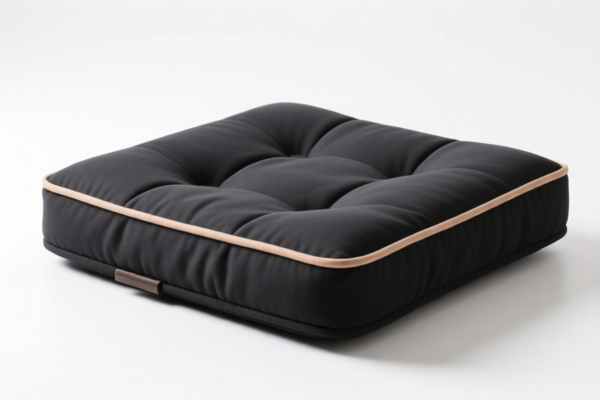
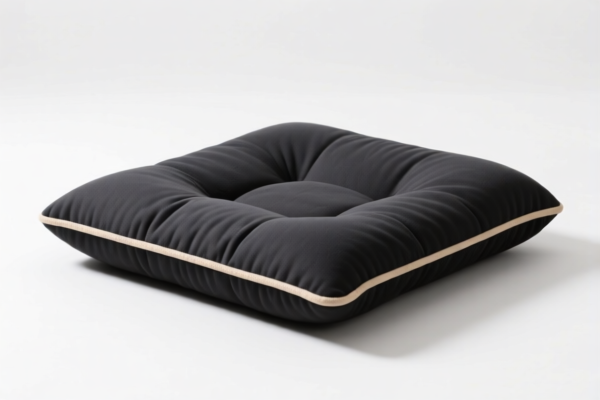
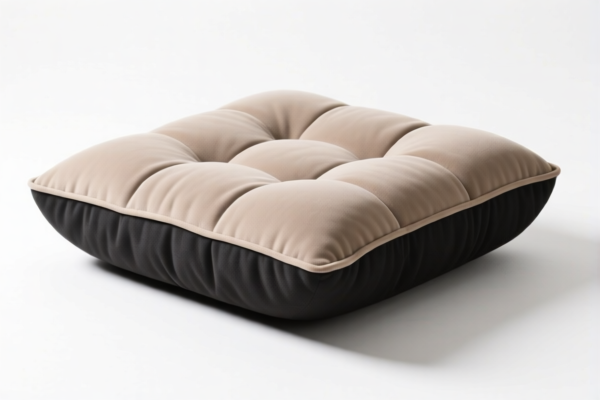
A Gel Seat Cushion is a comfort accessory designed to relieve pressure, improve posture, and enhance seating ergonomics for chairs, office desks, or vehicles. In international trade, its classification is highly sensitive to two factors: 1. Material Composition: Is it primarily made of textile (cotton/fabric), plastic/polymer, rubber, or a composite? 2. Functional Structure: Is it a simple padding insert, a support structure (like a honeycomb core), or a finished consumer good?
⚠️ Key Distinction Point:
- If the outer shell is fabric/textile with gel/foam filling →归入 Chapter 94 (Furniture Accessories) or Chapter 63 (Textiles) depending on specific construction.
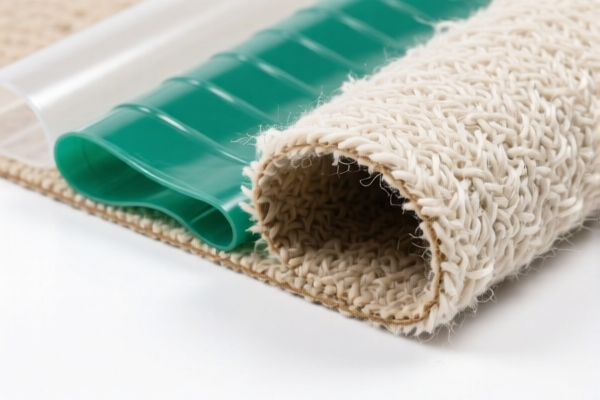
- If the structure is rigid plastic/polymer (e.g., honeycomb gel pads) →归入 Chapter 39 (Plastics).
- If the material is rubber/elastic →归入 Chapter 40 (Rubber).
📦 II. HS Code Classification Details (2026 Latest Tariff Authority Comparison)
Based on the provided data, here are the 5 potential HS Codes for Gel Seat Cushions, categorized by material and form:
| HS Code | Product Description | Material Inference | Form/Use Case | Total Tax Rate |
|---|---|---|---|---|
9404.90.96.05 |
Textile-Based Cushion | Cotton/Textile shell with gel/foam core | Pad-type, textile outer cover | 17.3% |
3926.90.21.00 |
Plastic/Polymer Pad | Plastic / Synthetic Polymer | Other plastic articles, pad-like form | 21.7% |
9404.90.96.22 |
Honeycomb Support Pad | Honeycomb Rubber or Plastic | Mattress support / Backrest/Seat support structure | 17.3% |
4016.99.05.00 |
Rubber/Elastomer Cushion | Vulcanized Rubber / Elastomer | Household items, seat cushion application | 20.9% |
4016.10.00.00 |
Other Rubber Articles | Vulcanized Rubber / Elastomer (Generic) | Other articles of vulcanized rubber | 35.0% |
🔍 Critical Insight:
- The lowest tax rate (17.3%) applies if the product can be classified under Chapter 94 (Furniture accessories/padding), either as a textile pad (9404.90.96.05) or a support structure (9404.90.96.22).
- The highest tax rate (35.0%) applies if it is strictly classified as a generic rubber article under4016.10.00.00, often due to high "122 Clause" or Section 301 surcharges.
- Material declaration is crucial: Misdeclaring a plastic gel pad as a textile cushion can lead to customs penalties.
💰 III. 2026 Latest Tariff Rate Breakdown (Including Surcharges & Policy Add-ons)
✅ Applicable Country: United States (US)
✅ Origin: China (CN)
✅ Effective Date: Post-2025 Tariff Regime
🎯 1. 9404.90.96.05 & 9404.90.96.22 —— Best Case Scenario (Textile/Support Structure)
| Item | Content |
|---|---|
| Base Tariff | 7.3% (ad valorem) |
| Section 301 Surcharge | 0.0% (Specific to these subheadings) |
| Clause 122 Surcharge | +10.0% |
| Total Tariff Rate | 17.3% |
| Tax Calculation | CIF Value × 17.3% |
| De Minimis Eligibility | ❌ No (Subject to commercial import rules) |
| Legal Basis Path | USITC:9404.90.96.05 → FOOTNOTE:122 |
📌 Explanation:
- These codes fall under "Articles of bedding and similar furnishing articles."
- Advantage: They avoid the higher Section 301 tariffs often applied to general plastics or rubber goods from China.
- Condition: Must clearly demonstrate textile outer shell (96.05) or specific support structure (96.22).
🎯 2. 3926.90.21.00 —— Plastic/Polymer Classification
| Item | Content |
|---|---|
| Base Tariff | 4.2% (ad valorem) |
| Section 301 Surcharge | +7.5% |
| Clause 122 Surcharge | +10.0% |
| Total Tariff Rate | 21.7% |
| Tax Calculation | CIF Value × 21.7% |
| De Minimis Eligibility | ❌ No |
| Legal Basis Path | USITC:3926.90.21.00 → FOOTNOTE:122 |
📌 Note:
- If your gel cushion is a rigid plastic shell with gel insert, this is the likely classification.
- Slightly higher than textile classifications due to Section 301 surcharges on plastics.
🎯 3. 4016.99.05.00 —— Rubber/Elastomer Household Item
| Item | Content |
|---|---|
| Base Tariff | 3.4% (ad valorem) |
| Section 301 Surcharge | +7.5% |
| Clause 122 Surcharge | +10.0% |
| Total Tariff Rate | 20.9% |
| Tax Calculation | CIF Value × 20.9% |
| De Minimis Eligibility | ❌ No |
| Legal Basis Path | USITC:4016.99.05.00 → FOOTNOTE:122 |
📌 Note:
- Suitable if the cushion is made of soft rubber or elastomeric gel not considered "plastic."
- Low base rate, but Section 301 applies.
🎯 4. 4016.10.00.00 —— Highest Risk (Generic Rubber Articles)
| Item | Content |
|---|---|
| Base Tariff | 0.0% (ad valorem) |
| Section 301 Surcharge | +25.0% |
| Clause 122 Surcharge | +10.0% |
| Total Tariff Rate | 35.0% |
| Tax Calculation | CIF Value × 35.0% |
| De Minimis Eligibility | ❌ No |
| Legal Basis Path | USITC:4016.10.00.00 → FOOTNOTE:122 → IEEPA:9903.01.25 |
📌 Warning:
- This is the worst-case scenario.
- High Section 301 surcharge (25%) applies to general rubber articles.
- Avoid this code if you can justify a more specific classification (like4016.99.05.00or9404.90.96.xx).
🛠️ IV. Customs Clearance Practical Advice (Battle-Tested Pitfall Guide)
✅ 1. Preparation Checklist (Mandatory Items)
| Document | Required | Explanation |
|---|---|---|
| ✅ Product Spec Sheet | ✔️ | Must specify: Material % (e.g., "60% Cotton, 40% Gel Foam"), Dimensions, Weight. |
| ✅ Material Composition Proof | ✔️ | Test reports showing if the outer shell is textile or plastic. Critical for 9404 vs 3926. |
| ✅ Product Photos | ✔️ | Front, back, cross-section (to show internal structure: honeycomb? solid gel? layered?). |
| ✅ Commercial Invoice | ✔️ | Description must match HS Code (e.g., "Textile Seat Cushion with Gel Insert"). |
| ✅ Bill of Lading/Packing List | ✔️ | Ensure no loose parts that could be misclassified as separate accessories. |
✅ 2. Declaration Strategy (Key Mnemonics)
🔥 “Material Dictates Code, Structure Dictates Rate, Don’t Guess, Prove It!”
| Scenario | Correct HS Code | Risk if Wrong |
|---|---|---|
| Fabric cover + Gel/Foam | 9404.90.96.05 (17.3%) |
Misclassifying as Plastic → 21.7% (Higher) |
| Plastic Shell + Gel Core | 3926.90.21.00 (21.7%) |
Misclassifying as Rubber → 35.0% (Much Higher!) |
| Honeycomb Support Base | 9404.90.96.22 (17.3%) |
Misclassifying as Generic Rubber → 35.0% |
| Pure Rubber Pad | 4016.99.05.00 (20.9%) |
Misclassifying as Generic → 35.0% |
✅ 3. Special Case Handling
| Situation | Handling Advice |
|---|---|
| Composite Material (e.g., Plastic frame + Fabric cover) | Declare based on essential character. If fabric is outermost and defines use as "cushion," argue for 9404. Provide material breakdown. |
| Gel is the Key Feature | If gel is embedded in a textile case, emphasize "Textile Article with Gel" to target 9404. If gel is a standalone plastic sheet, use 3926. |
| OEM Custom Shapes | Provide 3D drawings. If shape is non-standard, ensure it doesn’t look like a "part" of another machine (which might change chapter). |
| Samples vs. Commercial | Even for samples, if value > $800, de minimis may not apply if subject to Section 301. Check current trade war exemptions. |
🌍 V. Global Market Customs Comparison (2026 Latest)
| Country/Region | Recommended HS Code | Estimated Duty | Certification | Note |
|---|---|---|---|---|
| 🇺🇸 USA | 9404.90.96.05 |
17.3% | None specific | Best Rate. Avoid 4016.10 (35%). |
| 🇨🇳 China | 9404.90.96.05 |
~7-10% | CCC (if applicable) | Lower base rate, no 122 clause. |
| 🇪🇺 EU | 9404.90.99 |
5-8% | REACH (Chemicals in gel) | No Section 301 surcharges. |
| 🇬🇧 UK | 9404.90.99 |
5% | UKCA | Post-Brexit rules apply. |
| 🇦🇺 Australia | 9404.90.90 |
5% | AS/NZS Standards | No major surcharges. |
📌 Conclusion:
- USA is the most complex market due to 122 Clause and Section 301 surcharges.
- Optimization Opportunity: If your product can be proven to have a textile outer shell, choose9404.90.96.05to save 4.4%-17.7% in duties compared to plastic/rubber codes.
📌 VI. Common Errors & Pitfall Guide (Lessons Learned)
❌ Error 1: Declaring a plastic gel pad as a "Textile Cushion"
👉 Consequence: Customs audit → Fine for misdeclaration → Delayed shipment.
👉 Fix: Provide material test reports proving outer layer is NOT fabric.
❌ Error 2: Using 4016.10.00.00 for a rubber seat pad
👉 Consequence: Pay 35% instead of 20.9% or 17.3%.
👉 Fix: Check if it fits 4016.99.05.00 (Specific household rubber items) for lower surcharge.
❌ Error 3: Ignoring the "Honeycomb" structure
👉 Consequence: Misclassifying a support structure as a simple pad.
👉 Fix: If it provides structural support like a mattress core, use 9404.90.96.22 (17.3%).
✅ Best Practice Declaration:
"Gel Seat Cushion, Cotton Outer Cover, Polyurethane Gel Core, Washable, Ergonomic Design"
(Targets9404.90.96.05)
🎯 VII. Conclusion: Precise Classification Saves Money!
🎯 Key Takeaway:
🔹 "Textile Shell = 17.3% | Plastic Shell = 21.7% | Rubber Shell = 20.9% | Generic Rubber = 35%!"
🔹 "Don’t let 'Gel' scare you. It’s about what the Gel is wrapped in!"
📌 Pro Tip:
If your supplier provides a hybrid product (e.g., plastic frame with fabric cover), consult a customs broker for a Pre-Ruling (Advance Ruling) from US CBP. This can lock in the lower 17.3% rate for up to 5 years, providing certainty for your supply chain.
📣 Immediate Action:
📞 Audit your current HS Code against the 5 options above.
📄 Request material composition sheets from your manufacturer.
🚀 Optimize your declaration to target9404.90.96.05or9404.90.96.22for maximum savings!
✨ Professional Clearance Starts with Precise Classification!
💼 Every 1% of duty saved is pure profit!
Customer Reviews
About HS Code Classification
The Harmonized System (HS) is an internationally standardized nomenclature developed by the World Customs Organization (WCO) to classify traded products. Over 200 countries use the HS system as the basis for customs tariffs, trade statistics, and import/export regulations.
Each HS code follows a hierarchical structure:
- Chapter (2 digits) — Broad category of goods (e.g., Chapter 84: Machinery and Mechanical Appliances)
- Heading (4 digits) — More specific grouping within the chapter
- Subheading (6 digits) — Internationally standardized breakdown, used by all WCO member countries
- National subdivisions (8-10 digits) — Country-specific extensions for further classification, such as US HTSUS 10-digit codes
Correct HS code classification is essential for smooth customs clearance, accurate duty payment, and compliance with trade regulations. Misclassification can lead to customs delays, overpayment of duties, or penalties.
When importing from CN to US, the applicable tariff rates may include:
- Most-Favored-Nation (MFN) rate — The standard duty rate applied to WTO members
- General rate — Applied to countries without trade agreements
- Trade remedy duties — Additional tariffs such as Section 301 (anti-dumping), Section 232 (national security), or countervailing duties
The information provided on this page is for reference purposes only. For official classification, please consult with your local customs authority or a licensed customs broker.