Gel type Polymer Ion Exchange Resins
CN → US| HS Code | Tariff Rate | Origin | Destination | Doc |
|---|---|---|---|---|
| 3914006000 | 38.9% | CN | US | Official Doc |
| 3914002000 | 35.0% | CN | US | Official Doc |
| 3907995050 | 41.5% | CN | US | Official Doc |
| 3824992900 | 41.5% | CN | US | Official Doc |
| 3907290000 | 41.5% | CN | US | Official Doc |
Product Images



AI Analysis
🧪 Gel-Type Polymer Ion Exchange Resins
🌐 HS Code Reference & Customs Clearance Guide | 2026 Latest Tariff Analysis | Professional Entry Strategies
📌 1. Product Definition & Classification: Understanding "Gel-Type Polymer Ion Exchange Resins"
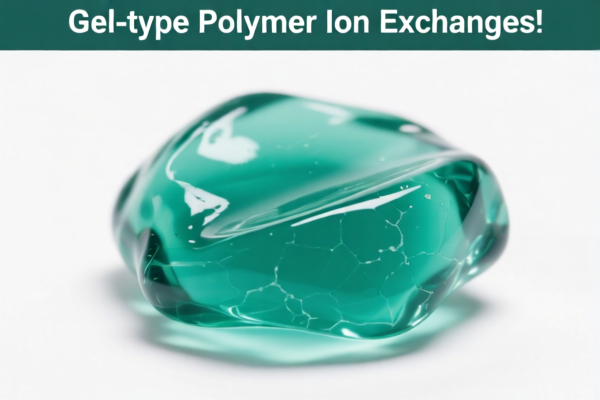
Ion Exchange Resins are synthetic polymeric materials widely used in water purification, catalysis, pharmaceutical production, and metal recovery. Gel-type resins refer to non-porous beads with a dense network structure that allows ions to diffuse through the hydrated polymer matrix.
In international trade, the classification depends heavily on the chemical base of the polymer (e.g., styrenic, acrylic, polyester, polyether) and whether it is classified as a "polymer" or a "chemical product."
⚠️ Key Distinction Point:
- If the resin is primarily composed of styrene-divinylbenzene (SDB) copolymers, it typically falls under Chapter 39 (Plastics).
- If the resin is based on other polymers (like polyesters or polyethers) or is considered a prepared chemical mixture, it may fall under Chapter 38 (Miscellaneous Chemical Products) or other subheadings in Chapter 39.
- The specific HS code determines the Base Tariff, which significantly impacts the Total Tax Rate when combined with US Section 301 (25%) and Section 122 (10%) duties.
📦 2. HS Code Classification Details (2026 Latest Tariff Authority Comparison)
Based on the provided data, here are the potential HS codes for Gel-Type Polymer Ion Exchange Resins:
| HS Code | Product Description Summary | Application Context | Polymer Base Implication |
|---|---|---|---|
3914.00.60.00 |
Polymer ion exchange resin, matched to polymer ion exchangers | General styrenic/acrylic gel resins | Standard plastic polymer classification |
3914.00.20.00 |
Polymer-based ion exchange resin, conforming to polymer requirements | Specific polymer types meeting Chapter 39 criteria | Likely Styrenic/Acrylic base |
3907.99.50.50 |
Polymer-based ion exchange resin, within polyester & related polymers | Polyester-based ion exchange resins | Polyester backbone |
3824.99.29.00 |
Polymer-based ion exchange resin, classified as other chemical products | Non-standard polymers or chemical preparations | Not strictly "plastic" under Ch. 39 |
3907.29.00.00 |
Polymer-based ion exchange resin, under other polyethers | Polyether-based ion exchange resins | Polyether backbone |
🔍 Important Note:
-3914.00is the standard heading for Ion Exchangers based on Polymers.
- Codes under3907(Polyesters/Polyethers) and3824(Chemicals) are used when the resin's chemical structure does not fit the typical "ion exchanger" definition under 3914 or requires specific polymer categorization.
- Misclassification risk: Declaring a polyester-based resin as a standard styrenic resin (3914) may lead to customs queries, although the total tax rate here is similar due to high base duties.
💰 3. 2026 Latest Tariff Rate Breakdown (Including Surcharge & Policy Surcharges)
✅ Applicable Country: United States (US)
✅ Origin: China (CN)
✅ Effective Date: 2025/2026 (Current Trade Policy)
✅ Duties Applied: Base Tariff + Section 301 (25%) + Section 122 (10%)
🎯 1. 3914.00.60.00 —— Polymer Ion Exchange Resin (Standard)
| Item | Content |
|---|---|
| Base Tariff | 3.9% |
| Section 301 Surcharge | +25.0% |
| Section 122 Surcharge | +10.0% |
| Total Tax Rate | 38.9% |
| Calculation Basis | CIF Value × 38.9% |
| De Minimis Exemption | ❌ Not Applicable (Deny De Minimis) |
| Legal Basis Path | HTS:3914.00.60.00 → USITC:301 → IEEPA:122 |
📌 Explanation:
- This is a common classification for standard gel resins (e.g., Dowex, Purolite type).
- The 3.9% base duty is relatively low, but the 35% in surcharges make it expensive.
- Tip: Ensure the product is indeed a "polymer ion exchanger" and not a "chemical preparation" to stay in this chapter.
🎯 2. 3914.00.20.00 —— Polymer-Based Ion Exchange Resin (Specific Polymer)
| Item | Content |
|---|---|
| Base Tariff | 0.0% |
| Section 301 Surcharge | +25.0% |
| Section 122 Surcharge | +10.0% |
| Total Tax Rate | 35.0% |
| Calculation Basis | CIF Value × 35.0% |
| De Minimis Exemption | ❌ Not Applicable |
| Legal Basis Path | HTS:3914.00.20.00 → USITC:301 → IEEPA:122 |
📌 Explanation:
- Lowest Tax Rate Option: With a 0% base duty, the total rate is 35%, which is 3.9% cheaper than3914.00.60.00.
- Condition: The resin must meet specific criteria for this subheading, often related to the specific polymer composition or form.
- Strategy: If your resin qualifies, always prefer3914.00.20.00over.60.00for cost savings.
🎯 3. 3907.99.50.50 —— Polyester-Based Ion Exchange Resin
| Item | Content |
|---|---|
| Base Tariff | 6.5% |
| Section 301 Surcharge | +25.0% |
| Section 122 Surcharge | +10.0% |
| Total Tax Rate | 41.5% |
| Calculation Basis | CIF Value × 41.5% |
| De Minimis Exemption | ❌ Not Applicable |
| Legal Basis Path | HTS:3907.99.50.50 → USITC:301 → IEEPA:122 |
📌 Explanation:
- Higher base duty (6.5%) due to polyester classification.
- Only use if the resin is chemically a polyester and cannot be classified under 3914.
🎯 4. 3824.99.29.00 —— Other Chemical Products & Preparations
| Item | Content |
|---|---|
| Base Tariff | 6.5% |
| Section 301 Surcharge | +25.0% |
| Section 122 Surcharge | +10.0% |
| Total Tax Rate | 41.5% |
| Calculation Basis | CIF Value × 41.5% |
| De Minimis Exemption | ❌ Not Applicable |
| Legal Basis Path | HTS:3824.99.29.00 → USITC:301 → IEEPA:122 |
📌 Explanation:
- Used when the resin is considered a "preparation" rather than a pure polymer.
- Higher cost: Avoid if possible unless no other classification fits.
🎯 5. 3907.29.00.00 —— Polyether-Based Ion Exchange Resin
| Item | Content |
|---|---|
| Base Tariff | 6.5% |
| Section 301 Surcharge | +25.0% |
| Section 122 Surcharge | +10.0% |
| Total Tax Rate | 41.5% |
| Calculation Basis | CIF Value × 41.5% |
| De Minimis Exemption | ❌ Not Applicable |
| Legal Basis Path | HTS:3907.29.00.00 → USITC:301 → IEEPA:122 |
📌 Explanation:
- Specific to polyether-based resins.
- Same high tax rate as polyester and chemical preparation categories.
🛠️ 4. Customs Clearance Practical Advice (Combat Avoidance Guide)
✅ 1. Document Checklist (All Required)
| Document | Must Provide | Description |
|---|---|---|
| ✅ Product Specification Sheet | ✔️ | Detailed chemical composition, polymer type (Styrenic, Polyester, etc.), bead size, functional group. |
| ✅ MSDS (Material Safety Data Sheet) | ✔️ | Required for chemical handling and classification verification. |
| ✅ Technical Data Sheet (TDS) | ✔️ | Explains ion exchange capacity, density, and physical form (Gel vs. Macroporous). |
| ✅ Commercial Invoice | ✔️ | Must clearly state "Ion Exchange Resin" and specify polymer type. |
| ✅ Packing List | ✔️ | Net weight, gross weight, package dimensions. |
| ✅ Certificate of Origin | ✔️ | To verify China origin and apply correct surcharges. |
| ✅ Photo of Product & Labeling | ✔️ | Clear image of the beads, packaging, and labels. |
✅ 2. Declaration Tips (Key Mantras)
🔥 "Clarify Polymer Base, Specify Type, Avoid Ambiguity!"
| Scenario | Correct Declaration | Incorrect Practice |
|---|---|---|
| Standard Styrenic Resin | 3914.00.20.00 (0% Base) |
Declaring as 3914.00.60.00 (3.9% Base) → Overpay 3.9% |
| Polyester Resin | 3907.99.50.50 |
Declaring as 3914.00.20.00 → Misclassification Risk |
| Generic "Ion Exchanger" | Specify: "Gel-type, Styrenic Polymer, Bead Size 0.3-1.2mm" | Using vague terms like "Chemical Filter Material" → Customs Query/Delay |
| Mixed Shipment | Separate HS Codes for different polymer types | Mixing 3914 and 3824 in one line item → Rejection |
✅ 3. Special Cases Handling
| Case | Handling Advice |
|---|---|
| Macroporous vs. Gel | Gel resins are dense; Macroporous have visible pores. Both fall under similar HS codes, but physical description matters for customs inspection. |
| Dry vs. Wet Beads | Dry beads may be classified as "Plastic Materials"; Wet beads as "Aqueous Preparations." Dry is safer for Ch. 39. |
| Customs Ruling Request | If uncertain between 3914 and 3824, apply for an Advance Ruling before shipment. |
| High Value Shipments | For large volumes, negotiate with broker to verify if 3914.00.20.00 applies to save 3.9% base duty. |
🌍 5. Global Market Comparison (2026 Latest)
| Country/Region | Recommended HS Code | Tariff (China Origin) | Certification Required | Notes |
|---|---|---|---|---|
| 🇺🇸 USA | 3914.00.20.00 |
35.0% Total | None specific | Cheapest option. Verify polymer base. |
| 🇺🇸 USA | 3914.00.60.00 |
38.9% Total | None specific | Standard option. |
| 🇪🇺 EU | 3914.00.00 |
0-6.5% + VAT | REACH Registration | No Section 301/122 duties. |
| 🇨🇳 China | 3914.00.00 |
0% | CCC (if applicable) | Low import duty for domestic use. |
| 🇯🇵 Japan | 3914.00.00 |
3.9% | FSCC | Moderate duty. |
📌 Conclusion:
- USA Market: Highest burden due to Section 301 (25%) and Section 122 (10%) surcharges.
- Cost Optimization: Always aim for3914.00.20.00(0% Base) if your resin qualifies.
- EU/Japan: No punitive tariffs, making these markets more cost-effective for resin exports.
📌 6. Common Errors & Pitfalls (Lessons Learned)
❌ Error 1: Classifying all ion exchange resins under 3914.00.60.00 without checking for 3914.00.20.00
👉 Result: Paying 3.9% more on the CIF value unnecessarily.
❌ Error 2: Using vague descriptions like "Chemical Resin"
👉 Result: Customs detention, request for extra documents, or forced reclassification to higher-tariff codes.
❌ Error 3: Ignoring Section 122 (10%) surcharge in cost calculation
👉 Result: Underestimating landed cost by 10%, leading to margin erosion.
❌ Error 4: Declaring wet resins as dry polymers
👉 Result: Misclassification risk; wet resins may fall under chemical preparations (3824) with different regulations.
✅ Correct Practice:
"Gel-Type Ion Exchange Resin, Styrenic Polymer, Dry Beads, 0.3-1.2mm, for Water Purification, Model XYZ, MSDS Attached"
🎯 7. Conclusion: Precise Classification, Lower Costs, Smoother Clearance!
🎯 Remember the Mantra:
🔹 "Polymer Base Determines Code, 3914-20 is the Gold, 301+122 Add 35%, Don't Guess, Just Test!"
🔹 "Save 3.9% by Choosing 20.00, Avoid 41.5% if You Can, Declare Clearly, Avoid Dan!"
📌 Pro Tip:
If your resin is not from China (e.g., USA, Germany), no Section 301 or 122 duties apply.
For China-origin resins, always consult a customs broker to verify if3914.00.20.00applies to your specific chemical composition.
📣 Immediate Action:
📞 Contact your customs broker + Provide TDS/MSDS + Request HS Code Confirmation
🚀 Optimize your tariff rate, protect your margin, and ship with confidence!
✨ Professional customs clearance starts with accurate classification!
💼 Every cent of duty saved is pure profit!
Customer Reviews
About HS Code Classification
The Harmonized System (HS) is an internationally standardized nomenclature developed by the World Customs Organization (WCO) to classify traded products. Over 200 countries use the HS system as the basis for customs tariffs, trade statistics, and import/export regulations.
Each HS code follows a hierarchical structure:
- Chapter (2 digits) — Broad category of goods (e.g., Chapter 84: Machinery and Mechanical Appliances)
- Heading (4 digits) — More specific grouping within the chapter
- Subheading (6 digits) — Internationally standardized breakdown, used by all WCO member countries
- National subdivisions (8-10 digits) — Country-specific extensions for further classification, such as US HTSUS 10-digit codes
Correct HS code classification is essential for smooth customs clearance, accurate duty payment, and compliance with trade regulations. Misclassification can lead to customs delays, overpayment of duties, or penalties.
When importing from CN to US, the applicable tariff rates may include:
- Most-Favored-Nation (MFN) rate — The standard duty rate applied to WTO members
- General rate — Applied to countries without trade agreements
- Trade remedy duties — Additional tariffs such as Section 301 (anti-dumping), Section 232 (national security), or countervailing duties
The information provided on this page is for reference purposes only. For official classification, please consult with your local customs authority or a licensed customs broker.