General Office Supplies
CN → US| HS Code | Tariff Rate | Origin | Destination | Doc |
|---|---|---|---|---|
| 9608100000 | 0.0% | CN | US | Official Doc |
| 9608404000 | 24.1% | CN | US | Official Doc |
| 4820900000 | 35.0% | CN | US | Official Doc |
| 4820104000 | 10.0% | CN | US | Official Doc |
| 8472909080 | 35.0% | CN | US | Official Doc |
Product Images
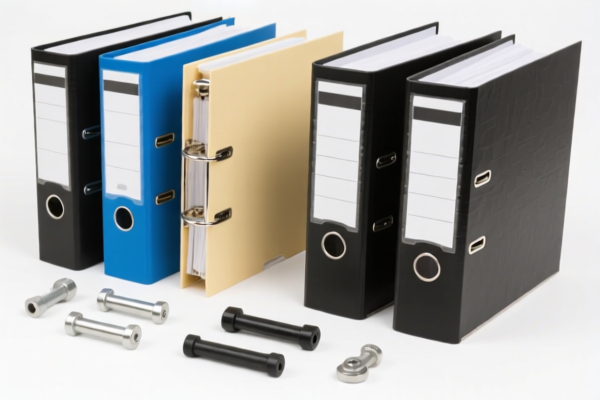


AI Analysis
📝 General Office Supplies: The Ultimate Global Trade & Customs Guide (2026)
🚀 Mastering Classification, Tariffs & Clearance Strategies | 2026 Edition
🌐 1. What Are "General Office Supplies"?
General Office Supplies encompass a wide array of non-specialized tools used in administrative, educational, and professional environments. Unlike dedicated "Office Machines" (like complex photocopiers), these items often include writing instruments, paper organizers, staplers, folders, and generic stationery.
⚠️ Crucial Warning: The classification of "General Office Supplies" is highly ambiguous. Because the term is generic, customs authorities will dig deep into: 1. Material Composition (Plastic, Paper, Metal, Ink) 2. Function (Writing, Organizing, Filing) 3. Design/Structure (Is it a pen, a notebook, or a file?)
Misclassification is the #1 cause of delays and penalties for this category.
📦 2. HS Code Classification Matrix (2026 Tax Rules)
Based on the specific attributes of your goods, they may fall into one of the following 5 Critical Categories. Note: All listed below are subject to US-China trade restrictions.
| 🏷️ HS Code | Product Category | Key Description & Logic | Material/Usage Match |
|---|---|---|---|
| 8472.90.90.80 | General Office Machinery | Classified under "Office Machines" as a "General Purpose" item. No material conflict. Fits the "兜底" (Catch-all) category for office tech. | ✅ No Conflict ✅ Catch-all |
| 8472.90.60.00 | Office Machines (Catch-all) | Based on the "Other/Catch-all" principle. Compatible with office machinery use. No material or shape conflicts. | ✅ No Conflict ✅ Catch-all |
| 9608.10.00.00 | Ballpoint Pens & Tools | Matches usage with "General Office Supplies" like ballpoint pens. Lacks specific material description but no conflict. | ✅ Writing Tools ✅ Pen Focus |
| 9608.40.40.00 | Pencils & Other Writing | Based on "Other/Catch-all" principle. Fits within the category of pencils/writing instruments. | ✅ Writing Tools ✅ Pencil Focus |
| 4820.90.00.00 | Paper/Board Stationery | Material inferred as Paper or Cardboard. Matches usage of folders, notebooks, organizers. | ✅ Paper/Material ✅ Stationery |
🔍 Classification Logic: * If the item is a machine (e.g., a generic stapler or hole punch with a mechanism): Look at 8472. * If the item is a pen: Look at 9608.10. * If the item is a pencil: Look at 9608.40. * If the item is paper/folders: Look at 4820.
💰 3. 2026 Tariff Breakdown (US Market - China Origin)
⚠️ ALERT: Almost all categories of General Office Supplies from China face Aggressive Tariff Stacking.
🏷️ Category A: Office Machinery & Catch-All (HS 8472 & 4820)
- Items: General office machines, paper organizers, folders, generic office tech.
- Base Tariff:
0.0% - Section 301 Additional Tariff:
+25.0% - Section 122 (China Specific):
+10.0% - 🔴 TOTAL EFFECTIVE RATE: 35.0%
- Calculation:
0% + 25% + 10% = 35% - Impact: Extremely High. A $100 item becomes $135 in duty alone.
- Calculation:
🏷️ Category B: Writing Instruments (Pens) - HS 9608.10.00.00
- Items: Ballpoint pens, general pens.
- Specific Rate:
0.8¢ per unit+5.4%(Base) - Section 301 Additional:
+7.5% - Section 122 (China Specific):
+10.0% - 🔴 TOTAL EFFECTIVE RATE: ~17.5% (Ad Valorem) + Per Unit Fee
- Note: This is a mixed tariff. For high-volume, low-cost pens, the per unit fee (0.8¢) can eat up all profit margins quickly.
🏷️ Category C: Pencils & Other Writing - HS 9608.40.40.00
- Items: Pencils, mechanical pencils, writing tools.
- Base Tariff:
6.6% - Section 301 Additional:
+7.5% - Section 122 (China Specific):
+10.0% - 🔴 TOTAL EFFECTIVE RATE: 24.1%
- Calculation:
6.6% + 7.5% + 10% = 24.1% - Impact: Moderate to High. Less than pens, but still significant.
- Calculation:
🛠️ 4. Strategic Clearance Recommendations (How to Survive 2026)
✅ Step 1: Precise Product Description is Non-Negotiable
Do NOT ship under the generic term "General Office Supplies." * ❌ Bad: "Office Supplies, 1000pcs mixed." * ✅ Good: "Plastic Ballpoint Pens (HS 9608.10), Paper Notebooks (HS 4820), Metal Staplers (HS 8472)." * Why? Customs will separate the shipment based on your description. If you mix them, they will audit the most expensive items, leading to duty penalties.
✅ Step 2: The "De Minimis" Trap
- ⚠️ WARNING: Unlike small parcels (<$800), commercial office supplies (especially machinery and bulk stationery) are NOT eligible for the de minimis exemption (Section 321) if they are classified as "General Office Machinery" or large bulk shipments.
- Strategy: If shipping in bulk, you MUST file a formal entry. Prepare for the full 35% or 24.1% tax.
✅ Step 3: Material Documentation (The "Paper" Defense)
- For HS 4820 (Paper/Cardboard) and HS 9608 (Plastic/Metal):
- Provide a Material Declaration stating the % of wood fiber, plastic, or metal.
- For Paper Products, prove the remanufactured or recycled status if applicable, as some specific recycled categories might have different tariff treatments (though currently, the 35% applies to the "catch-all" 4820.90.00.00).
✅ Step 4: Section 122 & 301 Mitigation
- The "Double Tap": You cannot escape the
25%(Section 301) and10%(Section 122) combined with the base rate. - Strategy:
- Supplier Diversification: Consider sourcing generic office supplies from Vietnam, Mexico, or India (if they meet rules of origin) to avoid the "China" specific
25%+10%surcharge. - Pre-Arrival Ruling (PAR): File a request with CBP 60 days before shipment to confirm if your specific "General Office Supply" fits the
8472or9608category before you pay.
- Supplier Diversification: Consider sourcing generic office supplies from Vietnam, Mexico, or India (if they meet rules of origin) to avoid the "China" specific
🚨 5. Common Pitfalls & Red Flags
| ❌ Mistake | ⚠️ Consequence | 💡 Solution |
|---|---|---|
| Using "General Office Supplies" as the description | Customs rejects, audits, and re-classifies to the highest tax rate (35%). | Be Specific: "Plastic Staplers," "Paper Folders," "Blue Ballpoint Pens." |
| Mixing Pen (9608) and Paper (4820) in one SKU | Complex duty calculation, potential penalty for misclassification. | Separate SKUs: Ship pens and paper in separate cartons with separate invoices. |
| Ignoring the "Per Unit" Fee for Pens | Profit margin erased by the 0.8¢ each fee on thousands of pens. |
Re-calculate: Ensure the selling price covers Total Cost + 0.8¢/unit + 17.5% Duty. |
| Assuming "Office Machine" means high tech | Low-tech items (staplers) get caught in 8472 (35% tax) unnecessarily. |
Verify: Check if a simpler HS code exists for the specific mechanism. |
🎯 6. Final Verdict: The Bottom Line
- Total Tax Risk: 24.1% to 35.0%.
- Primary Risk Factor: The "Catch-all" nature of
8472and4820leads to the highest tax bracket (35%). - Best Strategy:
- Split Shipments: Separate Pens, Pencils, and Paper into distinct shipments.
- Pre-Classification: Get a binding ruling for your specific item mix.
- Price Adjustment: Factor in the 35% tax immediately into your cost-of-goods-sold (COGS) calculations.
🚀 Pro Tip: If you are importing "General Office Supplies" for resale in the US, your margin is likely too thin to absorb the 35% tax. Immediate Action Required: Negotiate with suppliers for Country of Origin changes (e.g., "Made in Vietnam") to bypass the Section 301/122 surcharges.
Disclaimer: This guide is based on 2026 projected tariff structures. Always consult a licensed customs broker (CBP Licensed Entry Specialist) before finalizing shipments.
Customer Reviews
About HS Code Classification
The Harmonized System (HS) is an internationally standardized nomenclature developed by the World Customs Organization (WCO) to classify traded products. Over 200 countries use the HS system as the basis for customs tariffs, trade statistics, and import/export regulations.
Each HS code follows a hierarchical structure:
- Chapter (2 digits) — Broad category of goods (e.g., Chapter 84: Machinery and Mechanical Appliances)
- Heading (4 digits) — More specific grouping within the chapter
- Subheading (6 digits) — Internationally standardized breakdown, used by all WCO member countries
- National subdivisions (8-10 digits) — Country-specific extensions for further classification, such as US HTSUS 10-digit codes
Correct HS code classification is essential for smooth customs clearance, accurate duty payment, and compliance with trade regulations. Misclassification can lead to customs delays, overpayment of duties, or penalties.
When importing from CN to US, the applicable tariff rates may include:
- Most-Favored-Nation (MFN) rate — The standard duty rate applied to WTO members
- General rate — Applied to countries without trade agreements
- Trade remedy duties — Additional tariffs such as Section 301 (anti-dumping), Section 232 (national security), or countervailing duties
The information provided on this page is for reference purposes only. For official classification, please consult with your local customs authority or a licensed customs broker.