General Purpose Animal Muzzles (Training)
CN → US| HS Code | Tariff Rate | Origin | Destination | Doc |
|---|---|---|---|---|
| 4201006000 | 37.8% | CN | US | Official Doc |
| 6307909891 | 24.5% | CN | US | Official Doc |
| 4201003000 | 37.4% | CN | US | Official Doc |
Product Images
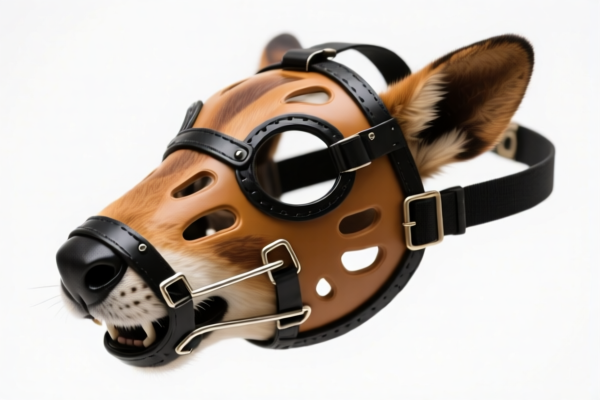
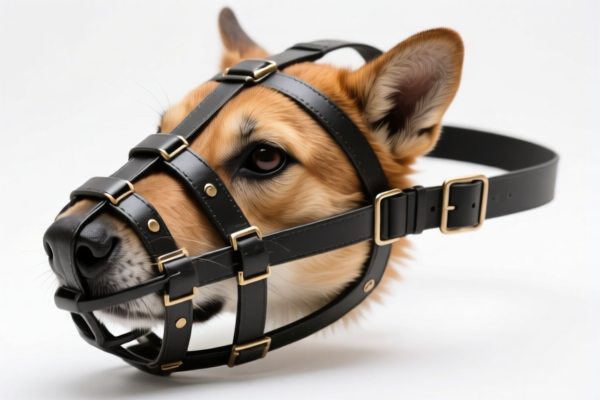
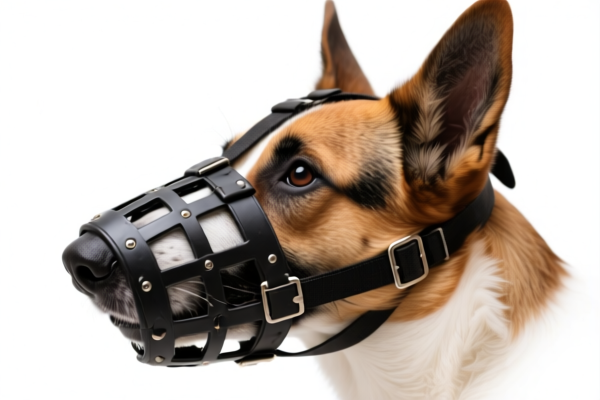
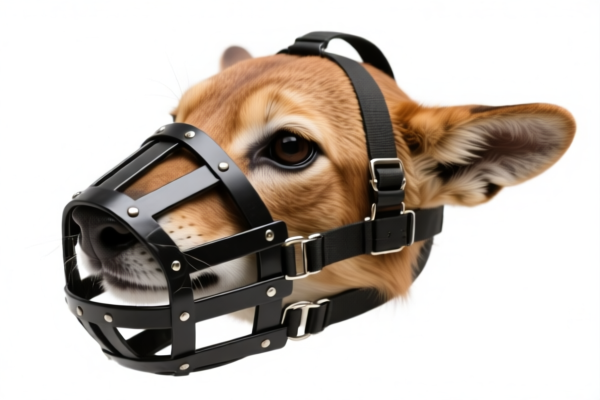
AI Analysis
🐾 Animal Muzzles (General Purpose / Training)
🌐 HS Code Reference & Customs Clearance Guide | 2026 Latest Tariff Analysis | Professional Level Entry Strategy
📌 I. Product Definition and Classification: Do You Really Understand "Animal Muzzles"?
Animal Muzzles, specifically those labeled "General Purpose" and intended for "Training", are essential tools in animal handling, veterinary care, and behavioral modification. In international trade, these items fall under the category of Animal Saddle and Harness Goods (Chapter 42) or Other Made-Up Textile Articles (Chapter 63), depending on their specific material composition and structural intent.
General Purpose Muzzles: Designed for versatile use (e.g., preventing biting in dogs/cats without restricting breathing excessively);
Training Muzzles: Often lighter, less restrictive, or designed for short-term behavioral correction.
⚠️ Key Distinction Points:
- If the product is classified as an "Animal Harness or Tack" (including muzzles as part of animal equipment) → It falls under Chapter 42 (4201.00).
- If the product is considered a generic "Made-up Article" without specific animal-tack function recognition → It may fall under Chapter 63 (6307.90).
📦 II. HS Code Classification Details (2026 Latest Tariff Authority Comparison)
Based on the provided data, here are the two primary classification pathways with their corresponding tax implications.
| HS Code | Product Description | Application Scenario | Tax Rate Summary |
|---|---|---|---|
4201.00.60.00 |
Animal Muzzles (General Purpose/Lightweight) | Standard animal control equipment, training aids | 37.8% Total |
4201.00.30.00 |
Animal Muzzles (General Purpose) | Generic animal tack, non-specific material constraints | 37.4% Total |
6307.90.98.91 |
Other Made-Up Articles (Muzzles as Textile Goods) | Muzzles treated as general textile products, not specific tack | 24.5% Total |
🔍 Critical Analysis:
-4201.00Series: Recognizes the muzzle as "Animal Saddle and Harness Goods." This is the most technically accurate classification for functional animal equipment.
-6307.90Series: Treats the muzzle as a generic textile-made item. While the tax rate is lower, the risk of customs re-classification exists if the item is clearly designed for animal control.
💰 III. 2026 Latest Tariff Rate Details (Including Surcharges & Policy Add-ons)
✅ Applicable Country: USA (US)
✅ Origin: China (CN)
✅ Effective Time: 2025 November 10 onwards (for subsequent imports)
🎯 1. 4201.00.60.00 —— Animal Muzzles (General Purpose/Lightweight)
| Item | Content |
|---|---|
| Base Duty Rate | 2.8% (ad valorem) |
| Section 301 Surcharge | +25.0% |
| Section 122 Surcharge | +10.0% |
| Total Effective Rate | 37.8% |
| Tax Calculation | CIF Value × 37.8% |
| De Minimis Eligibility | ❌ Not Eligible (High duty rate exceeds threshold benefits) |
| Legal Basis Path | USITC:4201.00.60.00 → Footnote:301 → Footnote:122 |
📌 Explanation:
- "Base Duty 2.8%": Standard tariff for animal saddle/harness goods.
- "Section 301 25%": Added tariff on Chinese goods under the Trade Act of 1974.
- "Section 122 10%": Specific administrative surcharge applied to this category.
- Total 37.8%: This is a high-cost import. Pre-payment of duties is significant.
🎯 2. 4201.00.30.00 —— Animal Muzzles (General Purpose)
| Item | Content |
|---|---|
| Base Duty Rate | 2.4% (ad valorem) |
| Section 301 Surcharge | +25.0% |
| Section 122 Surcharge | +10.0% |
| Total Effective Rate | 37.4% |
| Tax Calculation | CIF Value × 37.4% |
| De Minimis Eligibility | ❌ Not Eligible |
| Legal Basis Path | USITC:4201.00.30.00 → Footnote:301 → Footnote:122 |
📌 Note:
- Nearly identical to4201.00.60.00. The slight difference (0.4%) comes from the base duty rate (2.4% vs 2.8%).
- Both classifications view the muzzle as functional animal equipment.
🎯 3. 6307.90.98.91 —— Other Made-Up Articles (Muzzles)
| Item | Content |
|---|---|
| Base Duty Rate | 7.0% (ad valorem) |
| Section 301 Surcharge | +7.5% |
| Section 122 Surcharge | +10.0% |
| Total Effective Rate | 24.5% |
| Tax Calculation | CIF Value × 24.5% |
| De Minimis Eligibility | ❌ Not Eligible |
| Legal Basis Path | USITC:6307.90.98.91 → Footnote:301 → Footnote:122 |
📌 Caution:
- Lowest Total Rate (24.5%), but Highest Risk.
- Customs may argue that a muzzle is specifically "animal tack" and not a general "textile article."
- If re-classified to Chapter 42 after entry, you will owe the difference (37.8% - 24.5% = 13.3% extra) + potential penalties.
🛠️ IV. Customs Clearance Practical Advice (Avoiding Pitfalls)
✅ 1. Required Documentation Checklist
| Document | Required | Description |
|---|---|---|
| ✅ Product Specification Sheet | ✔️ | Clearly state: "Animal Muzzle," material (leather, nylon, etc.), size, intended use (Training/General). |
| ✅ Product Photos | ✔️ | Show the muzzle in context (e.g., on a dog model) to prove animal-use intent. |
| ✅ Commercial Invoice | ✔️ | Description must match HS Code logic: "Animal Training Muzzle, General Purpose." |
| ✅ Material Composition | ✔️ | Specify if Leather (Chapter 41/42) or Textile (Chapter 63). |
| ✅ Country of Origin Certificate | ✔️ | For tariff application. |
✅ 2. Declaration Tips (Key Rules)
🔥 “Define Function, Not Just Material”
| Scenario | Correct Declaration | Incorrect Declaration |
|---|---|---|
| Muzzle for Dog Training | 4201.00.60.00 or 4201.00.30.00 |
6307.90.98.91 (Risk of re-classification) |
| Leather Muzzle | 4201.00.xxxx (Strongest Case) |
4203.10 (Gloves) or 6307 (Textile) |
| Nylon Webbing Muzzle | 4201.00.xxxx (If considered Harness) |
6307.90.98.91 |
| Generic Face Mask (Human) | 6307.90.98.91 or 3926 |
4201 (Wrong Chapter) |
📌 Strategy:
- If the muzzle is made of leather or heavy-duty webbing with buckles/belts, Chapter 42 is the safest legal path, despite the higher tax.
- If you declare under Chapter 63 to save tax, be prepared to provide proof that it is not primarily recognized as "tack" in your home market, or risk audits.
✅ 3. Special Cases Handling
| Scenario | Handling Advice |
|---|---|
| Mixed Materials | If >50% textile, 6307 might be argued, but "function" often overrides. Stick to 4201 for safety. |
| OEM Private Label | Provide brand authorization. Ensure the name "Muzzle" is clear, not "Face Cover." |
| Bulk Import for Retail | Ensure packaging shows animal use (e.g., image of a dog). |
| Sample Shipments | Still subject to the same HS Code and duties. No exemption for commercial samples if value > $800. |
🌍 V. Global Market Comparison (2026 Update)
| Country/Region | Recommended HS Code | Total Duty (China Origin) | Certification Needed | Notes |
|---|---|---|---|---|
| 🇺🇸 USA | 4201.00.60.00 |
37.8% | None specific | High tariff due to 301 + 122. |
| 🇪🇺 EU | 4201.00.00 |
~4-6% | CE (if applicable) | Lower base duty, no Section 301. |
| 🇨🇳 China | 4201.00.60.00 |
~5-10% | CCC (if applicable) | Domestic duty lower. |
| 🇬🇧 UK | 4201.00.00 |
~4% | None | Post-Brexit tariff structure. |
📌 Conclusion:
- USA is the most expensive market due to Section 301 and 122 tariffs.
- EU/UK offer significantly lower duty rates (~4-6%), making them more attractive for pricing strategies.
📌 VI. Common Mistakes & Pitfalls (Lessons Learned)
❌ Mistake 1: Declaring as "Human Face Mask" (6307.90.98.91) to avoid tax
👉 Consequence: Customs detects animal-use design (buckles, snout shape) → Re-classification + Penalties.
❌ Mistake 2: Ignoring Section 122 Surcharge
👉 Consequence: Underpayment by 10% → Back taxes + Interest.
❌ Mistake 3: Vague Description "Animal Accessory"
👉 Consequence: Customs assigns arbitrary HS Code → Delays and Uncertainty.
❌ Mistake 4: Using 6307 without strong textile evidence
👉 Consequence: If inspected, goods may be held until "Animal Tack" classification is proven.
✅ Correct Approach:
"Animal Muzzle, General Purpose, for Dog Training, Material: Nylon/Leather, HS Code: 4201.00.60.00"
🎯 VII. Conclusion: Professional Declaration, Cost Control!
🎯 Remember the Rule:
🔹 "Function Dictates Chapter, Material Supports Claim, 301 & 122 Apply to China, 37.8% is the Standard Cost."
🔹 "Don't risk 24.5% if you might owe 37.8% + Penalties. Stick to4201for accuracy."
📌 Pro Tip:
If your muzzles are non-Chinese origin (e.g., Vietnam, Turkey), you may avoid Section 301 and 122 surcharges, reducing duty to just the Base Rate (~2.8%).
Consider supply chain diversification if shipping primarily to the USA.
📣 Action Required:
📞 Consult a Licensed Customs Broker + Provide Product Samples + File Advance Ruling if importing large volumes.
🚀 Ensure Accurate Classification, Minimize Risk, and Optimize Cash Flow.
✨ Precision in Classification Saves Dollars!
💼 Your Profit Margin Depends on Accurate Tariff Application!
Customer Reviews
About HS Code Classification
The Harmonized System (HS) is an internationally standardized nomenclature developed by the World Customs Organization (WCO) to classify traded products. Over 200 countries use the HS system as the basis for customs tariffs, trade statistics, and import/export regulations.
Each HS code follows a hierarchical structure:
- Chapter (2 digits) — Broad category of goods (e.g., Chapter 84: Machinery and Mechanical Appliances)
- Heading (4 digits) — More specific grouping within the chapter
- Subheading (6 digits) — Internationally standardized breakdown, used by all WCO member countries
- National subdivisions (8-10 digits) — Country-specific extensions for further classification, such as US HTSUS 10-digit codes
Correct HS code classification is essential for smooth customs clearance, accurate duty payment, and compliance with trade regulations. Misclassification can lead to customs delays, overpayment of duties, or penalties.
When importing from CN to US, the applicable tariff rates may include:
- Most-Favored-Nation (MFN) rate — The standard duty rate applied to WTO members
- General rate — Applied to countries without trade agreements
- Trade remedy duties — Additional tariffs such as Section 301 (anti-dumping), Section 232 (national security), or countervailing duties
The information provided on this page is for reference purposes only. For official classification, please consult with your local customs authority or a licensed customs broker.