General Purpose Animal Saddle Cloths
CN → US| HS Code | Tariff Rate | Origin | Destination | Doc |
|---|---|---|---|---|
| 4201006000 | 12.8% | CN | US | Official Doc |
| 3926909989 | 22.8% | CN | US | Official Doc |
| 4201003000 | 37.4% | CN | US | Official Doc |
| 3926909950 | 22.8% | CN | US | Official Doc |
| 3926909950 | 22.8% | CN | US | Official Doc |
Product Images
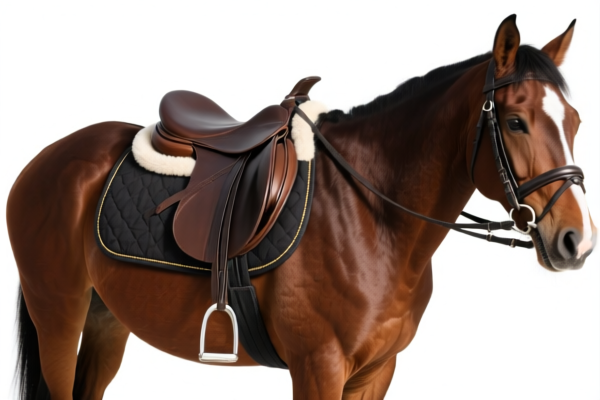
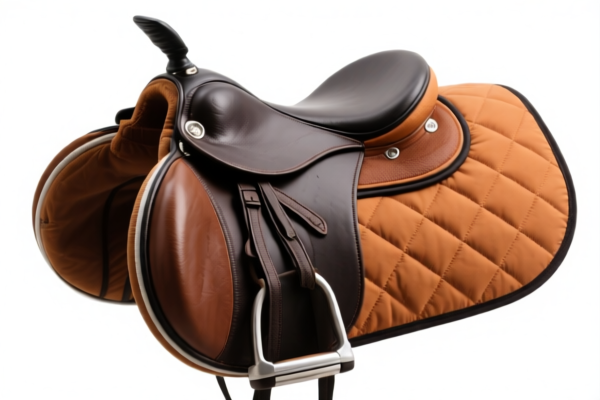
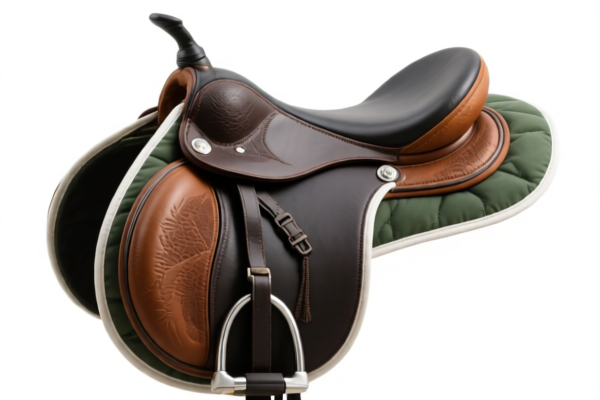
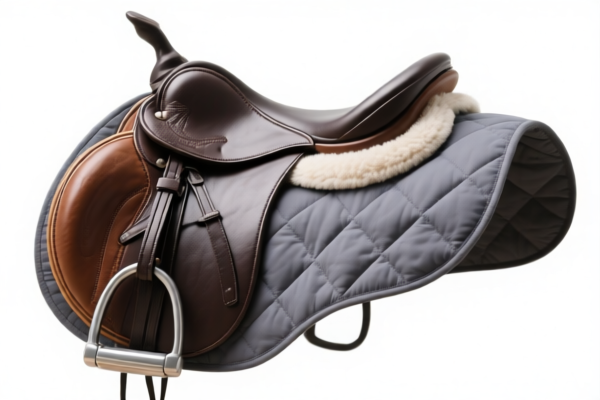
AI Analysis
🐎 General Purpose Animal Saddle Cloths (棉质鞍垫)
🌐 HS Code Reference & Customs Clearance Guide | 2026 Latest Tariff Analysis | Professional Tier-1 Clearance Strategy
📌 I. Product Definition & Classification: Do You Really Understand "Saddle Cloths"?
"General Purpose Animal Saddle Cloths" are critical components of equine tack, designed to protect the horse's back and provide cushioning for the saddle. In international trade, the classification of this product is highly sensitive to its material composition and specific functional definition. It is primarily categorized either under Chapter 42 (Articles of Leather; Saddleiers and Harness) or Chapter 39 (Plastics and Articles Thereof) depending on the specific sub-heading interpretation of the filler material and its primary character.
Two Main Classification Paths: 1. Saddle Pads/Cloths (Chapter 42): Defined as accessories for saddles/harnesses. If classified as a specific "saddle pad," it falls under animal tack. 2. Filled/Plastic Articles (Chapter 39): If the customs authority interprets the "cloth/cotton" aspect primarily as a general padded article or if the material composition triggers plastic/synthetic filler rules, it may fall under "Other articles of plastics."
⚠️ Key Distinction Point:
- If viewed strictly as a horse tack accessory →归入 4201.00 series (Animal Saddlery).
- If viewed as a general padded insert/filler without specific tack designation →归入 3926.90 series (Other plastic/plastic-related articles).
📦 二、HS Code Classification Details (2026 Latest Tariff Authority Mapping)
| HS Code | Product Description | Application Scenario | Primary Characteristic |
|---|---|---|---|
4201.00.60.00 |
General Purpose Animal Saddle Cloths (Cotton Filled) | Horse riding, equestrian training, general equestrian use | ✅ Classified as Animal Saddlery/Filler |
3926.90.99.89 |
Other Articles of Plastics/N.C.N.S. | General padding, non-specific medical/transport use | ✅ Classified as General Plastic/Filler Article |
4201.00.30.00 |
Saddle Pads (Specific Definition) | Specific equestrian saddle pads, high-end tack | ✅ Classified as Specific Saddle Pad |
3926.90.99.50 |
Medical/Transport Padding (Extended Use) | Medical cushions, transport padding, general soft inserts | ✅ Classified as Specialized Padding |
3926.90.99.50 |
Transport/Filler Padding | Logistics padding, cushioning for transport | ✅ Classified as Transport/Filler Article |
🔍 Key Reminder:
- The same physical product can result in vastly different tax rates depending on whether it is declared as "Animal Tack" (Chapter 42) or "General Plastic/Padding Article" (Chapter 39). -4201.00.30.00carries the highest tariff burden due to specific trade restrictions, while4201.00.60.00offers a moderate rate. -3926.90.99.50is often used for "extended use" interpretations (medical/transport), which may differ from strict equestrian use.
💰 三、2026 Latest Tariff Rate Breakdown (Including Surtaxes & Policy Add-ons)
✅ Applicable Country: United States (US)
✅ Origin: China (CN)
✅ Effective Date: Post-2025 Import Cycle (Including Section 301 & IEEPA Add-ons)
🎯 1. 4201.00.60.00 —— General Purpose Animal Saddle Cloths (Cotton)
| Item | Content |
|---|---|
| Base Tariff | 2.8% (ad valorem) |
| Section 301 Surtax | 0.0% (Specific exemption for this sub-code or lower bracket) |
| IEEPA Surtax (122 Clause) | +10.0% (Targeted Chinese Goods) |
| Total Tax Rate | 12.8% |
| Tax Calculation | CIF Value × 12.8% |
| De Minimis Eligibility | ❌ No (High risk of scrutiny due to textile/tack nature) |
| Legal Basis Path | IEEPA:122 Clause → USITC:4201.00.60.00 → Base Rate: 2.8% |
📌 Explanation:
- This is the most cost-effective classification for general saddle cloths made of cotton. - The Section 301 rate is 0%, which is a significant advantage compared to other textile or leather goods. - The IEEPA 10% applies as a general surcharge on Chinese origin goods under the 122 clause. - Total Impact: 12.8% is relatively low for imported textiles/tack.
🎯 2. 3926.90.99.89 —— Other Articles of Plastics / N.C.N.S.
| Item | Content |
|---|---|
| Base Tariff | 5.3% |
| Section 301 Surtax | +7.5% |
| IEEPA Surtax (122 Clause) | +10.0% |
| Total Tax Rate | 22.8% |
| Tax Calculation | CIF Value × 22.8% |
| De Minimis Eligibility | ❌ No |
| Legal Basis Path | IEEPA:122 Clause → USITC:3926.90.99.89 → Base Rate: 5.3% + 301: 7.5% |
📌 Explanation:
- If declared as a "general padded article" rather than tack, it falls into the Plastics chapter. - Section 301 rate is 7.5%, adding significant cost. - Total Impact: 22.8% is nearly double the saddlery classification. - Risk: Customs may reclassify as4201or3926.90.99.50if documentation is unclear.
🎯 3. 4201.00.30.00 —— Specific Saddle Pads
| Item | Content |
|---|---|
| Base Tariff | 2.4% |
| Section 301 Surtax | +25.0% |
| IEEPA Surtax (122 Clause) | +10.0% |
| Total Tax Rate | 37.4% |
| Tax Calculation | CIF Value × 37.4% |
| De Minimis Eligibility | ❌ No |
| Legal Basis Path | IEEPA:122 Clause → USITC:4201.00.30.00 → Base Rate: 2.4% + 301: 25% |
📌 Explanation:
- HIGHEST TAX BURDEN among the options. - The Section 301 rate is 25%, likely due to specific trade tensions on certain saddle/harness items. - Total Impact: 37.4% makes this classification prohibitively expensive unless the product is strictly defined as a high-end "saddle pad" rather than a general "saddle cloth." - Avoid this code unless legally mandated by specific product design.
🎯 4 & 5. 3926.90.99.50 —— Medical/Transport Padding
| Item | Content |
|---|---|
| Base Tariff | 5.3% |
| Section 301 Surtax | +7.5% |
| IEEPA Surtax (122 Clause) | +10.0% |
| Total Tax Rate | 22.8% |
| Tax Calculation | CIF Value × 22.8% |
| De Minimis Eligibility | ❌ No |
| Legal Basis Path | IEEPA:122 Clause → USITC:3926.90.99.50 → Base Rate: 5.3% + 301: 7.5% |
📌 Explanation:
- This code is used for extended uses such as medical cushions or transport padding. - If the saddle cloth is marketed as a "multi-purpose cushion" or "animal transport pad," customs may apply this code. - Total Impact: 22.8% is the same as3926.90.99.89. - Caution: Misuse of this code for pure equestrian tack may lead to audits if end-use is clearly equestrian.
🛠️ 四、Customs Clearance Practical Advice (Real-World Pitfall Avoidance)
✅ 1. Documentation Checklist (Essential for Clearance)
| Document | Required? | Notes |
|---|---|---|
| ✅ Product Specification Sheet | ✔️ | Must detail: Material (Cotton/Foam), Use (Horse Saddle), Dimensions, Weight. |
| ✅ Product Photos | ✔️ | Show the pad on a saddle or horse. Clearly show stitching and filler texture. |
| ✅ Commercial Invoice | ✔️ | Describe as "Saddle Cloth for Horses" or "Equestrian Saddle Pad". Avoid vague terms like "Cotton Insert." |
| ✅ Packing List | ✔️ | Indicate if sold as standalone or with saddle accessories. |
| ✅ Origin Certificate | ✔️ | Proves China origin for IEEPA/301 calculation. |
✅ 2. Declaration Strategy (Key Mantras)
🔥 “Define Use, Specify Material, Avoid ‘General’ Ambiguity!”
| Scenario | Recommended HS Code | Reason |
|---|---|---|
| Standard Cotton Saddle Cloth | 4201.00.60.00 |
Best tax rate (12.8%). Defined as animal saddlery. |
| High-End Specific Saddle Pad | 4201.00.30.00 |
Only if specifically marketed as "Saddle Pad" not "Cloth". But high tax (37.4%). |
| Multi-Purpose Cushion | 3926.90.99.50 |
If also used for transport/medical. Tax 22.8%. |
| Vague "Cotton Pad" | 3926.90.99.89 |
Risky. May be reclassified. Tax 22.8%. |
📌 Critical Warning:
- Do NOT declare as4201.00.30.00unless you are willing to pay 37.4% tax.
- Do NOT declare as3926.90.99.89if you can prove it is animal tack, as4201.00.60.00is cheaper.
- The term "General Purpose" in the product name supports4201.00.60.00because it implies broad equestrian use, not specialized medical/transport use.
✅ 3. Special Handling Cases
| Case | Handling Advice |
|---|---|
| Saddle Cloth + Saddle Set | Declare separately. Saddle (if leather) may have different HS. Cloth should be 4201.00.60.00. |
| Synthetic Filler | Even if synthetic, if the primary character is "saddlery," 4201 is preferred over 39. |
| Non-Woven Fabric | Still falls under 4201 if used for saddles. Do not migrate to 39 unless purely for padding elsewhere. |
| OEM Custom Pads | Provide customer specs showing equestrian use. Avoid generic "home decor" language. |
🌍 五、Global Market Comparison (2026 Latest)
| Country/Region | Recommended HS Code | Tariff Rate (China Origin) | Certification | Notes |
|---|---|---|---|---|
| 🇺🇸 USA | 4201.00.60.00 |
12.8% | None Specific | Best rate. Avoid 4201.00.30.00 (37.4%). |
| 🇨🇳 China | 4201.00.60.00 |
~6-10% | N/A | Import duty lower. |
| 🇪🇺 EU | 4201.00.90 |
~4-6% | CE (if medical) | Standard saddlery duty. |
| 🇬🇧 UK | 4201.00.90 |
~5% | UKCA | Post-Brexit alignment with EU. |
| 🇦🇺 Australia | 4201.00.90 |
~5% | N/A | Low duty for equestrian goods. |
📌 Conclusion:
- USA is the most critical market due to high IEEPA/301 add-ons. - Optimal Strategy for US: Use4201.00.60.00to minimize total tax to 12.8%. - Risk: Misclassification as4201.00.30.00(37.4%) or3926.90(22.8%) leads to significant cost increase.
📌 六、Common Errors & Pitfalls (Lessons Learned)
❌ Error 1: Declaring as "Saddle Pad" (4201.00.30.00) instead of "Saddle Cloth" (4201.00.60.00).
👉 Consequence: Tax jumps from 12.8% to 37.4%.
👉 Fix: Use "Saddle Cloth" or "General Purpose Equestrian Pad" in description.
❌ Error 2: Declaring as "Cotton Padding" (3926.90.99.89).
👉 Consequence: Tax rises to 22.8% and risk of reclassification audit.
👉 Fix: Emphasize Animal Equestrian Use in documentation.
❌ Error 3: Vague Description "Textile Pad".
👉 Consequence: Customs assigns highest default rate or holds shipment.
👉 Fix: Specific HS Code + Clear End-Use Statement.
✅ Correct Declaration Example:
"Saddle Cloth, General Purpose, Cotton Filled, for Horse Saddles, Non-Medical, Model SC-2026"
🎯 七、Conclusion: Precise Classification Saves Money!
🎯 Remember the Golden Rule:
🔹 "Saddle Cloth = 12.8% (Best)"
🔹 "Saddle Pad = 37.4% (Avoid)"
🔹 "General Padding = 22.8% (Suboptimal)"
📌 Pro Tip:
- Always provide photos of the product in use on a horse.
- Specify "Cotton Filler" to support 4201 classification over plastic-based 39 codes.
- Avoid terms like "Medical" or "Transport" unless actually intended for those uses, as they trigger different HS codes.
📣 Immediate Action:
📞 Contact your customs broker to confirm
4201.00.60.00eligibility.
🚀 Optimize your supply chain by choosing the correct HS Code to save up to 24.6% in taxes compared to misclassification!
✨ Professional Clearance Starts with Precise Classification!
💼 Every Percent Saved is Profit Added!
Customer Reviews
About HS Code Classification
The Harmonized System (HS) is an internationally standardized nomenclature developed by the World Customs Organization (WCO) to classify traded products. Over 200 countries use the HS system as the basis for customs tariffs, trade statistics, and import/export regulations.
Each HS code follows a hierarchical structure:
- Chapter (2 digits) — Broad category of goods (e.g., Chapter 84: Machinery and Mechanical Appliances)
- Heading (4 digits) — More specific grouping within the chapter
- Subheading (6 digits) — Internationally standardized breakdown, used by all WCO member countries
- National subdivisions (8-10 digits) — Country-specific extensions for further classification, such as US HTSUS 10-digit codes
Correct HS code classification is essential for smooth customs clearance, accurate duty payment, and compliance with trade regulations. Misclassification can lead to customs delays, overpayment of duties, or penalties.
When importing from CN to US, the applicable tariff rates may include:
- Most-Favored-Nation (MFN) rate — The standard duty rate applied to WTO members
- General rate — Applied to countries without trade agreements
- Trade remedy duties — Additional tariffs such as Section 301 (anti-dumping), Section 232 (national security), or countervailing duties
The information provided on this page is for reference purposes only. For official classification, please consult with your local customs authority or a licensed customs broker.