General Purpose Conveyor Belting Textile Reinforced
CN → US| HS Code | Tariff Rate | Origin | Destination | Doc |
|---|---|---|---|---|
| 4010100000 | 0.0% | CN | US | Official Doc |
| 4010990000 | 0.0% | CN | US | Official Doc |
| 3926905500 | 40.1% | CN | US | Official Doc |
| 3926905700 | 41.5% | CN | US | Official Doc |
| 8431390010 | 35.0% | CN | US | Official Doc |
| 8431390080 | 35.0% | CN | US | Official Doc |
Product Images
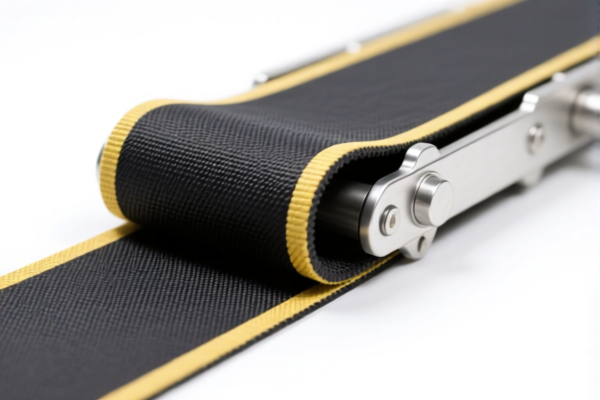
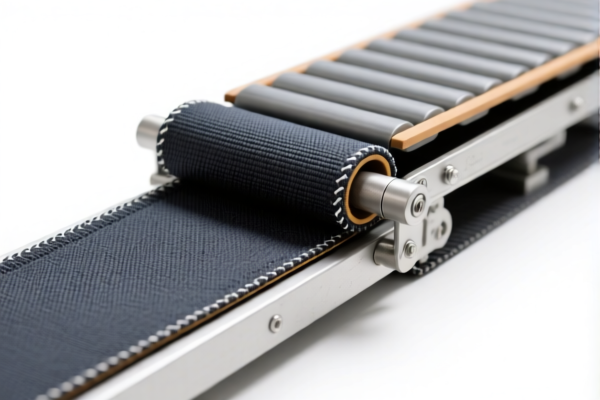
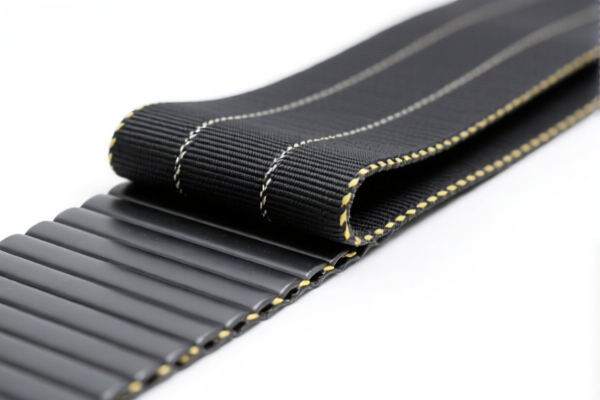
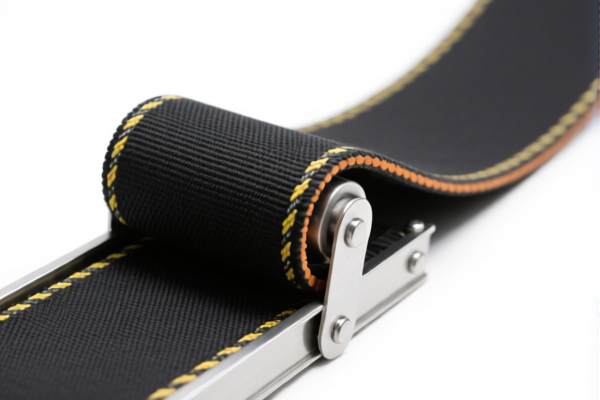
AI Analysis
🚛 General Purpose Conveyor Belting: Textile-Reinforced (Rubber/Plastics)
🌐 HS Code Reference & Clearance Guide | 2026 Latest Tariff Analysis | Professional Customs Strategy
📌 I. Product Definition & Classification: What Are "General Purpose Conveyor Belts"?
Conveyor belts, textile-reinforced, of rubber or plastics, for general purposes are industrial transport belts designed for moving bulk materials or packages in mining, agriculture, logistics, and manufacturing.
In international trade, they are primarily classified into two categories based on their completeness and intended use:
-
The Belt Itself (Chapter 40 or 39):
- Rubber/Plastics Base: If the belt is made of rubber or plastics and reinforced with textiles, it generally falls under Chapter 40 (Rubber) or Chapter 39 (Plastics).
- Key Distinction:
- If it is a textile-reinforced belt of rubber/plastics →归入 4010 (Rubber) or 3926 (Plastics).
- If it is a V-belt (specific profile for power transmission) → Often classified under 3926.90 or 4010, depending on material.
-
Parts & Accessories (Chapter 84):
- Structural Parts: Frames, rollers, pulleys, and support structures are classified under Heading 8431 (Parts of lifting/handling machinery).
- Key Distinction:
- If the item is only the belt → Chapter 40/39.
- If the item is a part suitable solely for conveyors (e.g., specific rollers, frames) → Heading 8431.
⚠️ Critical Classification Point:
- Raw Belts (Rubber/Plastic):归入 4010.10 or 4010.99 (Rubber) OR 3926.90 (Plastic/Textile mix).
- V-Belts: Specific profile belts for machinery → 3926.90.55.
- Conveyor Parts (Rollers/Frames): → 8431.39.
📦 II. HS Code Classification Details (2026 Latest Tariff Authority Comparison)
| HS Code | Product Description | Applicable Scenario | Material/Base |
|---|---|---|---|
4010.10.00.00 |
Conveyor belts, textile-reinforced, of rubber or plastics, for general purposes | General industrial transport, mining, agriculture | ✅ Rubber/Plastics + Textile |
4010.99.00.00 |
Other conveyor belts, textile-reinforced, of rubber or plastics | Specialty belts, high-temp, oil-resistant, non-standard | ✅ Rubber/Plastics + Textile |
8431.39.00.10 |
Parts suitable for use solely/principally with machinery of headings 8425-8430: Of 8428: Of elevators and conveyors | Rollers, pulleys, frames, tensioners for conveyors | ❌ Steel/Plastic/Metal Parts |
8431.39.00.80 |
Parts suitable for use solely/principally with machinery of headings 8425-8430: Of 8428: Other | Other conveyor components not specified in .10 | ❌ Steel/Plastic/Metal Parts |
3926.90.55.00 |
Other articles of plastics: Belting and belts for machinery: V-belts | Power transmission V-belts (not for material transport) | ✅ Plastics/Textile |
3926.90.57.00 |
Other articles of plastics: Belting and belts for machinery: Other (Man-made fibers predominate) | Plastic-based conveyor belts with textile reinforcement | ✅ Plastic + Man-made Fiber |
🔍 Key Reminder:
- "General Purpose" Belts (Rubber/Plastic) → 4010.10.00.00 is the primary code.
- V-Belts (Power Transmission) → 3926.90.55.00.
- Conveyor Parts (Rollers/Frames) → 8431.39.00.
- Do NOT confuse "Conveyor Belts" (4010/3926) with "Conveyor Parts" (8431).
💰 III. 2026 Latest Tariff Rate Details (Including Additional Taxes)
✅ Applicable Country: United States (US)
✅ Origin: China (CN)
✅ Effective Date: 2025/2026 (Subject to USITC/IEEPA regulations)
🎯 1. 4010.10.00.00 —— General Purpose Conveyor Belts (Rubber/Plastics, Textile-Reinforced)
| Item | Content |
|---|---|
| Base Tariff | Error / Failed to Retrieve |
| USITC Additional Tariff | Error / Failed to Retrieve |
| IEEPA Additional Tariff | Error / Failed to Retrieve |
| Total Tax Rate | Error |
| Tax Calculation | CIF Value × Error |
| De Minimis Exemption | ❌ N/A (Data retrieval failed) |
| Legal Basis | HS:4010.10.00.00 |
📌 Explanation:
- The system failed to retrieve the specific tax details for4010.10.00.00.
- Recommendation: This code typically falls under Section 301 (China tariffs). Historically, conveyor belts often face 7.5% - 25% additional tariffs depending on the specific HTS subheading and USITC footnotes.
- Action: Contact a customs broker to confirm the current 301 tariff status for4010.10.00.00.
🎯 2. 4010.99.00.00 —— Other Conveyor Belts (Rubber/Plastics, Textile-Reinforced)
| Item | Content |
|---|---|
| Base Tariff | Error / Failed to Retrieve |
| USITC Additional Tariff | Error / Failed to Retrieve |
| IEEPA Additional Tariff | Error / Failed to Retrieve |
| Total Tax Rate | Error |
| Tax Calculation | CIF Value × Error |
| De Minimis Exemption | ❌ N/A (Data retrieval failed) |
| Legal Basis | HS:4010.99.00.00 |
📌 Explanation:
- Similar to4010.10, this code may also be subject to Section 301 tariffs.
- Action: Verify with USITC databases for the latest tariff schedule for "Other Conveyor Belts."
🎯 3. 8431.39.00.10 —— Parts of Elevators and Conveyors
| Item | Content |
|---|---|
| Base Tariff | 0.0% |
| Additional Tariff | 25.0% (Section 301) |
| Total Tax Rate | 25.0% |
| Tax Calculation | CIF Value × 25.0% |
| De Minimis Exemption | ❌ Not Available (Subject to Section 301) |
| Legal Basis | HS:8431.39.00.10 → Section 301: 25% |
📌 Explanation:
- Base Tariff: 0% (Most Favored Nation rate for parts).
- Additional Tariff: 25% due to Section 301 trade measures against China.
- Total: 25%.
- Note: This applies to parts (rollers, frames), not the belts themselves.
🎯 4. 8431.39.00.80 —— Other Parts of Lifting/Handling Machinery
| Item | Content |
|---|---|
| Base Tariff | 0.0% |
| Additional Tariff | 25.0% (Section 301) |
| Total Tax Rate | 25.0% |
| Tax Calculation | CIF Value × 25.0% |
| De Minimis Exemption | ❌ Not Available (Subject to Section 301) |
| Legal Basis | HS:8431.39.00.80 → Section 301: 25% |
📌 Explanation:
- Same as above: 0% Base + 25% Additional = 25% Total.
- Applies to other conveyor parts not specified in.10.
🎯 5. 3926.90.55.00 —— V-Belts (Plastics/Textile)
| Item | Content |
|---|---|
| Base Tariff | 5.1% |
| Additional Tariff | 25.0% (Section 301) |
| Total Tax Rate | 30.1% |
| Tax Calculation | CIF Value × 30.1% |
| De Minimis Exemption | ❌ Not Available (Subject to Section 301) |
| Legal Basis | HS:3926.90.55.00 → Section 301: 25% |
📌 Explanation:
- Base Tariff: 5.1%.
- Additional Tariff: 25% due to Section 301.
- Total: 30.1%.
- Note: V-belts are for power transmission, not material transport. Do not confuse with conveyor belts (4010).
🎯 6. 3926.90.57.00 —— Other Belts (Plastics/Man-Made Fibers)
| Item | Content |
|---|---|
| Base Tariff | 0.0% |
| Additional Tariff | 0.0% |
| Total Tax Rate | 0.0% |
| Tax Calculation | CIF Value × 0.0% |
| De Minimis Exemption | ✅ Potentially Available (If under $800) |
| Legal Basis | HS:3926.90.57.00 |
📌 Explanation:
- Base Tariff: 0%.
- Additional Tariff: 0% (Exempt from Section 301 in this specific subheading).
- Total: 0%.
- Note: This is a low-tariff option for plastic-based belts with man-made fiber reinforcement.
🛠️ IV. Clearance Practical Advice (Real-World Pitfall Guide)
✅ 1. Document Checklist (Mandatory)
| Document | Required | Description |
|---|---|---|
| ✅ Product Specification | ✔️ | Material (Rubber/Plastic), Reinforcement (Textile Type), Dimensions, Hardness |
| ✅ Material Safety Data Sheet (MSDS) | ✔️ | If rubber compounds contain hazardous substances |
| ✅ Commercial Invoice | ✔️ | Clearly state "Conveyor Belt, Textile-Reinforced, Rubber/Plastics" |
| ✅ Packing List | ✔️ | Weight, Dimensions, Quantity |
| ✅ Bill of Lading/Air Waybill | ✔️ | Standard shipping documents |
| ✅ Certificate of Origin | ✔️ | For potential FTZ (Free Trade Zone) benefits (if applicable) |
✅ 2. Declaration Tips (Key Mnemonic)
🔥 "Material Determines Code, Parts vs. Belt, V-Belt is Different!"
| Scenario | Correct Declaration | Wrong Practice |
|---|---|---|
| General Conveyor Belt (Rubber/Plastic) | 4010.10.00.00 |
Misdeclare as 8431 (Parts) → Higher Tax |
| Conveyor Roller/Frame | 8431.39.00.10 or .80 |
Misdeclare as 4010 (Belt) → Wrong Classification |
| V-Belt (Power Transmission) | 3926.90.55.00 |
Misdeclare as 4010 (Conveyor Belt) → 30.1% vs Error |
| Plastic Belt with Textile | 3926.90.57.00 |
Misdeclare as 4010 → 0% vs Error |
| Mixed Shipment (Belt + Rollers) | Split Declaration | Combined Declaration → Customs Audit Risk |
✅ 3. Special Case Handling
| Scenario | Handling Advice |
|---|---|
| Belt + Rollers Sold Together | Declare separately: 4010.10.00.00 for belts, 8431.39.00.10 for rollers. Do not combine. |
| V-Belts vs. Conveyor Belts | V-belts are for motors/machinery (3926.90.55). Conveyor belts are for material transport (4010.10). |
| Plastic vs. Rubber | Rubber → 4010. Plastics → 3926. Check material composition. |
| Textile Reinforcement | If man-made fibers predominate, 3926.90.57.00 may have 0% tariff. Verify fiber content. |
🌍 V. Global Main Market Clearance Comparison (2026 Latest)
| Country/Region | Recommended HS Code | Tariff (China Origin) | Certification | Notes |
|---|---|---|---|---|
| 🇺🇸 USA | 4010.10.00.00 |
Error (Check 301) | None | Parts (8431) = 25%. V-Belts (3926.90.55) = 30.1%. |
| 🇨🇳 China | 4010.10.00.00 |
5-10% | CCC (if applicable) | No additional Section 301 tariffs. |
| 🇪🇺 EU | 4010.10.00.00 |
0-4.5% | CE, REACH | No Section 301 tariffs. |
| 🇦🇺 Australia | 4010.10.00.00 |
5% | ARL | No additional tariffs. |
| 🇯🇵 Japan | 4010.10.00.00 |
0-3% | PSE | No additional tariffs. |
📌 Conclusion:
- USA is the most complex due to Section 301 tariffs.
- Parts (8431) face 25% additional tax.
- V-Belts (3926.90.55) face 30.1% total tax.
- Plastic Belts with Textile (3926.90.57) may have 0% tax.
📌 VI. Common Mistakes & Pitfall Guide (Blood Lessons)
❌ Mistake 1: Declaring Conveyor Belts as Conveyor Parts (8431)
👉 Consequence: If belts are classified as 8431, they may face 25% additional tariff (if not exempt), whereas belts may have different rates. Also, wrong HS Code leads to audit.
❌ Mistake 2: Confusing V-Belts (3926.90.55) with Conveyor Belts (4010.10)
👉 Consequence: V-Belts have a 30.1% total tariff. Conveyor Belts have Error (unknown, likely high). Misclassification leads to overpayment or underpayment.
❌ Mistake 3: Ignoring Material Composition (Rubber vs. Plastic)
👉 Consequence: Rubber → 4010. Plastic → 3926. Different tax rates. Plastic belts with textile (3926.90.57) may have 0% tax.
❌ Mistake 4: Combining Belts and Rollers in One Declaration
👉 Consequence: Customs may reject or audit. Declare separately: 4010.10.00.00 for belts, 8431.39.00.10 for rollers.
✅ Correct Practice:
"Rubber Conveyor Belt, Textile-Reinforced, General Purpose, 10m x 0.5m, Model XYZ" →
4010.10.00.00
"Steel Conveyor Roller, For Elevators/Conveyors, Model ABC" →8431.39.00.10
🎯 VII. Conclusion: Professional Declaration, Save Time, Reduce Cost!
🎯 Remember the Mnemonic:
🔹 "Belts are 4010/3926, Parts are 8431, V-Belts are 3926.55."
🔹 "Rubber/Plastic Belts: Error. Parts: 25%. V-Belts: 30.1%. Plastic/Textile: 0%."
🔹 "HS Code is Key, Tariff Difference is Huge, Wrong Declaration Means Penalty!"
📌 Pro Tip:
- If your conveyor belts are made of plastics with man-made fibers (3926.90.57.00), you may benefit from 0% tariff.
- For conveyor parts (8431.39.00), expect 25% additional tariff.
- For V-belts (3926.90.55.00), expect 30.1% total tariff.
- Action: Confirm the exact material composition and use case to select the correct HS Code.
📣 Immediate Action:
📞 Contact a Professional Customs Broker + Provide Product Photos + Apply for HS Code Advance Ruling
🚀 Ensure Smooth Clearance, Efficient Export, and Maximize Profit!
✨ Professional Clearance Starts with Accurate Classification!
💼 Every Penny of Cost Deserves Precise Calculation!
Customer Reviews
About HS Code Classification
The Harmonized System (HS) is an internationally standardized nomenclature developed by the World Customs Organization (WCO) to classify traded products. Over 200 countries use the HS system as the basis for customs tariffs, trade statistics, and import/export regulations.
Each HS code follows a hierarchical structure:
- Chapter (2 digits) — Broad category of goods (e.g., Chapter 84: Machinery and Mechanical Appliances)
- Heading (4 digits) — More specific grouping within the chapter
- Subheading (6 digits) — Internationally standardized breakdown, used by all WCO member countries
- National subdivisions (8-10 digits) — Country-specific extensions for further classification, such as US HTSUS 10-digit codes
Correct HS code classification is essential for smooth customs clearance, accurate duty payment, and compliance with trade regulations. Misclassification can lead to customs delays, overpayment of duties, or penalties.
When importing from CN to US, the applicable tariff rates may include:
- Most-Favored-Nation (MFN) rate — The standard duty rate applied to WTO members
- General rate — Applied to countries without trade agreements
- Trade remedy duties — Additional tariffs such as Section 301 (anti-dumping), Section 232 (national security), or countervailing duties
The information provided on this page is for reference purposes only. For official classification, please consult with your local customs authority or a licensed customs broker.