General Purpose Emulsion SBR
CN → US| HS Code | Tariff Rate | Origin | Destination | Doc |
|---|---|---|---|---|
| 4002110000 | 35.0% | CN | US | Official Doc |
| 4002910000 | 35.0% | CN | US | Official Doc |
| 4002510000 | 35.0% | CN | US | Official Doc |
Product Images
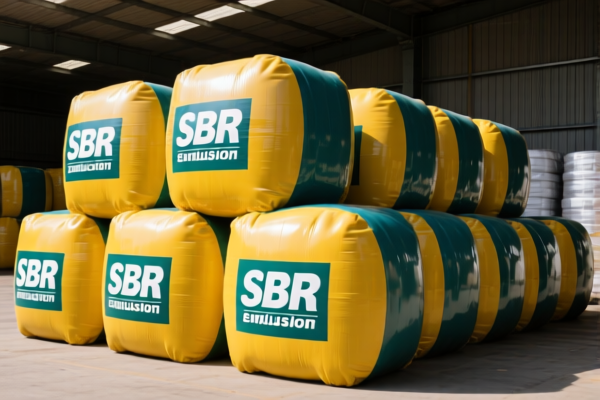
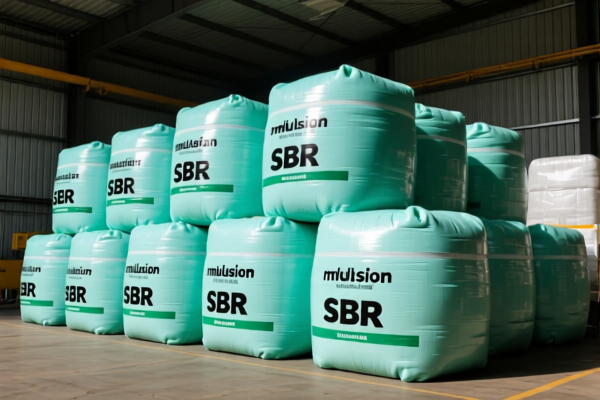
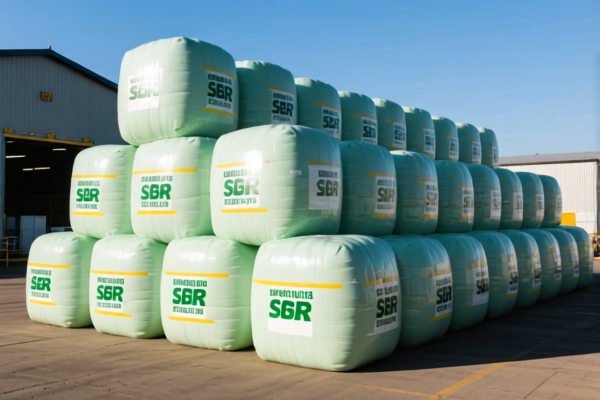

AI Analysis
🧪 General Purpose Emulsion SBR (Styrene-Butadiene Rubber)
🌐 HS Code Reference & Customs Clearance Guide | 2026 Latest Tariff Analysis | Professional Clearance Strategy
📌 I. Product Definition & Classification: What is "General Purpose Emulsion SBR"?
General Purpose Emulsion SBR (E-SBR) is one of the most widely used synthetic rubbers in the global market. Produced via emulsion polymerization of styrene and butadiene, it serves as a critical raw material in: * Tire Manufacturing: Sidewalls, treads, and inner liners. * Footwear: Shoe soles and heels. * Industrial Goods: Conveyor belts, hoses, gaskets, and vibration dampeners. * Adhesives: Pressure-sensitive adhesives for tapes and labels.
In international trade, SBR is classified based on its state (latex/emulsion) and specific type. For "General Purpose" variants, the classification heavily depends on whether the product is explicitly defined as "latex" or generic "emulsion," and its specific subtype (e.g., SBR 1500).
⚠️ Key Distinction Point: * Latex Form: If marketed and shipped as a milky aqueous dispersion ("latex"), it often falls under specific latex HS codes (e.g., 4002.91). * Generic Emulsion/SBR: If described broadly as "Emulsion SBR" or "SBR Rubber" without strict "latex" designation in some contexts, it may fall under 4002.11 (Styrene-butadiene rubber, emulsion polymerized). * Note: Customs authorities may scrutinize the physical state. A stable aqueous dispersion is chemically "latex." However, HS Code 4002.11.00.00 explicitly covers "Styrene-butadiene rubber (SBR), emulsion polymerized." This is the primary category for general-purpose E-SBR in bulk form.
📦 II. HS Code Classification Details (2026 Latest Tariff Authority Cross-Reference)
Based on the provided data, the following HS Codes apply to Emulsion SBR and related synthetic rubber latexes. Note that while "General Purpose" typically maps to SBR 1500, the data links specific descriptors to specific codes.
| HS Code | Product Description | Summary & Material State | Application Scenario |
|---|---|---|---|
4002.11.00.00 |
Styrene-Butadiene Rubber (SBR), Emulsion Polymerized (Note: Data lists "Emulsion SBR" and "Synthetic Rubber Latex (SBR)" under this code in some entries) |
Material: SBR State: Emulsion / Latex |
Tire treads, sidewalls, general industrial rubber goods, footwear. |
4002.91.00.00 |
Other Synthetic Rubber Latex (Data links "Synthetic Rubber Latex (SBR)" and "Oil-soluble Nitrile Rubber Latex" here in some entries, suggesting potential overlap or specific product variances) |
Material: Synthetic Rubber / Nitrile (NBR) State: Latex |
Specialty adhesives, coatings, foam rubber, specific NBR applications. |
4002.51.00.00 |
Nitrile-Butadiene Rubber (NBR) Latex | Material: Nitrile Rubber (NBR) State: Latex |
Oil-resistant hoses, gaskets, gloves, industrial rolls. |
🔍 Critical Clarification: *
4002.11.00.00is the most common code for General Purpose SBR (E-SBR) such as SBR 1500, especially when described as "Emulsion SBR" or "SBR Latex." *4002.91.00.00is often used for specialty synthetic rubber latexes or when the specific subtype (like high-vinyl SBR or specific NBR blends) falls outside the standard SBR definition of 4002.11. The provided data shows ambiguity, listing "Synthetic Rubber Latex (SBR)" under 4002.91 in one entry. Customs classification depends on the exact technical specifications and the official description in the commercial invoice. *4002.51.00.00is for Nitrile (NBR), not SBR. Ensure your product is not NBR if claiming SBR classification.
💰 III. 2026 Latest Tariff Rate Breakdown (Including Surcharge Policies)
✅ Applicable Country: United States (US)
✅ Origin: China (CN)
✅ Effective Date: November 10, 2025 (and subsequent imports)
✅ Total Tax Rate: 35.0% (Consistent across all listed HS Codes for Chinese origin)
🎯 1. 4002.11.00.00 – Styrene-Butadiene Rubber (SBR), Emulsion Polymerized
| Item | Content |
|---|---|
| Base Tariff | 0.0% (Ad Valorem) |
| USITC Surcharge (Section 301) | +25.0% |
| IEEPA Surcharge (Section 122/Other) | +10.0% |
| Total Effective Rate | 35.0% |
| Tax Calculation | CIF Value × 35% |
| De Minimis Eligibility | ❌ Not Eligible (Deny de minimis for Section 301/IEEPA goods from China) |
| Legal Basis Path | USITC:4002.11.00.00 → FOOTNOTE:301.88.01 → IEEPA:9903.01.25 |
📌 Explanation: * Base Rate (0%): Standard Most Favored Nation (MFN) rate for rubber is often low or zero. * 25% Surcharge: Applies under Section 301 of the Trade Act of 1974, targeting specific Chinese goods, including synthetic rubber. * 10% Surcharge: Additional tariff under IEEPA (International Emergency Economic Powers Act) or specific executive orders (referred to as "122 clause" in some internal systems), applicable to Chinese-origin goods. * Total 35%: This is a high-cost import. Profit margins must account for this significant tax burden.
🎯 2. 4002.91.00.00 – Other Synthetic Rubber Latex
| Item | Content |
|---|---|
| Base Tariff | 0.0% |
| USITC Surcharge (Section 301) | +25.0% |
| IEEPA Surcharge | +10.0% |
| Total Effective Rate | 35.0% |
| Tax Calculation | CIF Value × 35% |
| De Minimis Eligibility | ❌ Not Eligible |
| Legal Basis Path | USITC:4002.91.00.00 → FOOTNOTE:301.88.01 → IEEPA:9903.01.24 |
📌 Note: * Despite potential differences in technical specifications, if the product is classified under 4002.91 and originates from China, it inherits the same 35% total tariff due to the overarching trade policies. * Ambiguity Risk: Misclassifying SBR 1500 (4002.11) as "Other Synthetic Rubber" (4002.91) might lead to scrutiny, but the tax outcome is identical. However, accurate classification is required for regulatory compliance (e.g., EPA, DOT for tires).
🎯 3. 4002.51.00.00 – Nitrile Rubber (NBR) Latex
| Item | Content |
|---|---|
| Base Tariff | 0.0% |
| USITC Surcharge (Section 301) | +25.0% |
| IEEPA Surcharge | +10.0% |
| Total Effective Rate | 35.0% |
| Tax Calculation | CIF Value × 35% |
| De Minimis Eligibility | ❌ Not Eligible |
📌 Warning: * If your product is SBR, do not use
4002.51.00.00(which is for Nitrile/NBR). Misdeclaration can lead to penalties. * However, the tariff rate remains 35%, so the cost impact is the same.
🛠️ IV. Customs Clearance Practical Advice (Best Practices)
✅ 1. Required Documentation Checklist
| Document | Mandatory | Notes |
|---|---|---|
| ✅ Commercial Invoice | ✔️ | Must clearly state: "Styrene-Butadiene Rubber (SBR), Emulsion Polymerized," Grade (e.g., SBR 1500), and Country of Origin (China). |
| ✅ Bill of Lading/Air Waybill | ✔️ | Ensure weight and volume match invoice. |
| ✅ Product Specification Sheet | ✔️ | Details polymer type, styrene/butadiene ratio (e.g., 23.5/76.5 for SBR 1500), Mooney viscosity. |
| ✅ Certificate of Origin (CO) | ✔️ | Required to prove Chinese origin (and thus apply the 35% tariff correctly; avoiding misdeclaration). |
| ✅ Safety Data Sheet (SDS) | ✔️ | Rubber latex/SBR is generally non-hazardous but may require SDS for transport safety. |
| ✅ EPA/Tire Plant Certification | ⚠️ | If used for tire manufacturing, downstream facilities must comply with EPA TREAD Act. |
✅ 2. Declaration Strategy (Key Mantras)
🔥 "Accurate Description, Correct HS, Avoid Penalties!"
| Scenario | Correct Declaration | Incorrect Practice |
|---|---|---|
| SBR 1500 (Latex/Emulsion) | 4002.11.00.00 - "Styrene-Butadiene Rubber, Emulsion Polymerized" |
Using vague terms like "Rubber Powder" (which might fall under 4005) or "Plastic" |
| High-Vinyl SBR | 4002.91.00.00 - "Other Synthetic Rubber Latex" |
Misclassifying as standard SBR if specs differ significantly |
| Nitrile Rubber (NBR) | 4002.51.00.00 - "Nitrile-Butadiene Rubber Latex" |
Declaring as SBR to avoid specific regulations (NBR has different uses) |
| Bulk Rubber Blocks (Solid) | 4002.19.00.00 - "Other SBR, not latex" |
Declaring solid blocks as "Emulsion" (State mismatch!) |
📌 Critical Note on Physical State: * Emulsion/Latex: Liquid/milky dispersion →
4002.11or4002.91. * Solid Rubber: Dry crumb or block → Different HS codes (e.g.,4002.19). Ensure your product form matches the HS code. General Purpose Emulsion SBR is typically sold as a latex or a dried crumb. If dried crumb, check if4002.19applies (though data provided focuses on latex/emulsion forms).
✅ 3. Special Cases & Mitigation
| Situation | Recommendation |
|---|---|
| Mixed Containers | If SBR is mixed with other non-tariff goods, ensure SBR is clearly separated and documented. Mixed shipments may delay clearance. |
| Transshipment | If shipped via Vietnam/Malaysia, origin tracing is strict. If Chinese origin, 35% still applies. Avoid "third-country transshipment" schemes that lack genuine transformation. |
| De Minimis Exemption | ❌ No Relief: Under $800 de minimis (Section 321) does not apply to goods subject to Section 301/IEEPA tariffs from China. All shipments, regardless of value, are subject to 35%. |
| Tariff Engineering | Consider blending or processing in a third country (with substantial transformation) to change origin, but this is complex and requires legal advice. |
🌍 V. Global Market Clearance Comparison (2026)
| Country/Region | Recommended HS Code | Base Tariff | Surcharge (China) | Total Tariff | Notes |
|---|---|---|---|---|---|
| 🇺🇸 USA | 4002.11.00.00 |
0% | +25% (301) +10% (IEEPA) | 35% | High barrier. Strict enforcement. |
| 🇨🇳 China | 4002.11.00.00 |
5-10% | None | ~5-10% | Major producer/exporter. Low import tax. |
| 🇪🇺 EU | 4002.11.00.00 |
6.5% | None | 6.5% | No Section 301-style tariffs. Competitive. |
| 🇮🇳 India | 4002.11.00.00 |
7.5% | Basic Customs Duty + SWS | ~15% | Varies by trade agreements. |
| 🇲🇽 Mexico | 4002.11.00.00 |
5-10% | None | ~5-10% | USMCA context, but Chinese goods face tariffs. |
📌 Conclusion: * USA is the most expensive market due to the 35% total tariff. * EU and China offer significantly lower tax burdens. * Strategic Advice: If targeting the US market, consider supply chain diversification (e.g., sourcing from Indonesia, Thailand, or Malaysia where possible) to avoid the 35% surcharge. Ensure Rules of Origin are strictly met.
📌 VI. Common Errors & Pitfalls (Blood Lessons)
❌ Error 1: Declaring Solid SCRubber as Emulsion SBR
👉 Consequence: Misclassification → HS code 4002.19 vs 4002.11 → Potential penalties or delay.
👉 Solution: Clearly specify physical state: "Latex" or "Dried Crumb."
❌ Error 2: Ignoring Section 301/IEEPA in cost calculation
👉 Consequence: Underquoting CIF value → Unexpected bill from CBP → Cash flow crisis.
👉 Solution: Build 35% tax into landed cost from Day 1.
❌ Error 3: Using "Synthetic Rubber" as a generic description
👉 Consequence: Customs may request technical data → Delayed release (7-14 days).
👉 Solution: Use precise terms: "Styrene-Butadiene Rubber (SBR), Emulsion Polymerized, Grade 1500."
❌ Error 4: Assuming De Minimis applies
👉 Consequence: Sample shipments (<$800) still taxed at 35% → Surprises for small buyers.
👉 Solution: Inform customers explicitly that all shipments are subject to 35% tariff.
✅ Correct Declaration Example:
"Styrene-Butadiene Rubber (SBR), Emulsion Polymerized, General Purpose, Latex Form, Grade SBR 1500, CAS No. 9003-55-8, Country of Origin: China"
🎯 VII. Conclusion: Professional Declaration Saves Money!
🎯 Remember the Mantra:
🔹 "State matters: Latex vs. Solid. HS Code decides the tariff. 35% is the China surcharge price. Don’t guess, verify!"
🔹 "Accurate description prevents delays. 35% is non-negotiable for Chinese SBR in the US."
📌 Pro Tip:
If your SBR is sourced from Indonesia, Malaysia, or Thailand, it may qualify for 0%~5% tariffs in the US (depending on specific trade agreements and origin rules).
✅ Recommendation:
📞 Consult a licensed customs broker to confirm the Country of Origin and apply for Advance Rulings if uncertain.
🚀 Optimize supply chain to mitigate the 35% tariff burden.
📣 Immediate Action:
📄 Prepare precise product specs (Styrene/Bd ratio, Mooney viscosity, physical state).
🧾 Include full tariff burden in pricing for US buyers.
🚫 Never under-declare value or misstate origin.
✨ Professional clearance starts with precise classification!
💼 Every percentage point counts in global trade!
Customer Reviews
About HS Code Classification
The Harmonized System (HS) is an internationally standardized nomenclature developed by the World Customs Organization (WCO) to classify traded products. Over 200 countries use the HS system as the basis for customs tariffs, trade statistics, and import/export regulations.
Each HS code follows a hierarchical structure:
- Chapter (2 digits) — Broad category of goods (e.g., Chapter 84: Machinery and Mechanical Appliances)
- Heading (4 digits) — More specific grouping within the chapter
- Subheading (6 digits) — Internationally standardized breakdown, used by all WCO member countries
- National subdivisions (8-10 digits) — Country-specific extensions for further classification, such as US HTSUS 10-digit codes
Correct HS code classification is essential for smooth customs clearance, accurate duty payment, and compliance with trade regulations. Misclassification can lead to customs delays, overpayment of duties, or penalties.
When importing from CN to US, the applicable tariff rates may include:
- Most-Favored-Nation (MFN) rate — The standard duty rate applied to WTO members
- General rate — Applied to countries without trade agreements
- Trade remedy duties — Additional tariffs such as Section 301 (anti-dumping), Section 232 (national security), or countervailing duties
The information provided on this page is for reference purposes only. For official classification, please consult with your local customs authority or a licensed customs broker.