General Purpose Horse Saddle Cloths (Breathable)
CN → US| HS Code | Tariff Rate | Origin | Destination | Doc |
|---|---|---|---|---|
| 4201006000 | 37.8% | CN | US | Official Doc |
| 4201003000 | 37.4% | CN | US | Official Doc |
| 6217109550 | 32.1% | CN | US | Official Doc |
| 6117909055 | 32.1% | CN | US | Official Doc |
| 6117909050 | 32.1% | CN | US | Official Doc |
Product Images
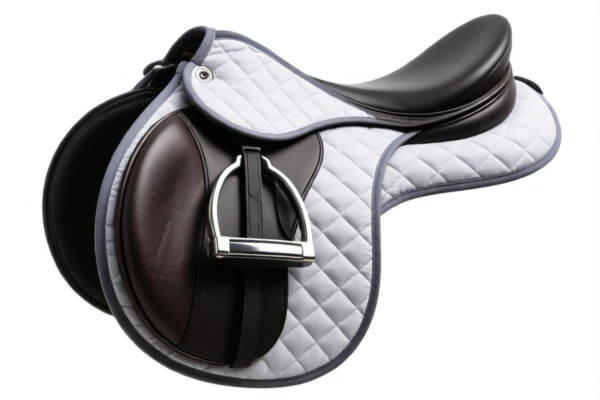
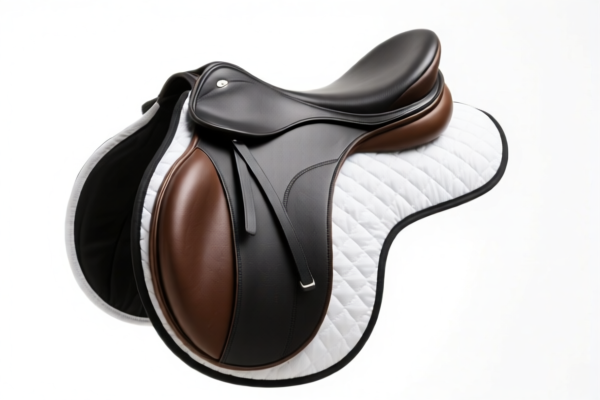
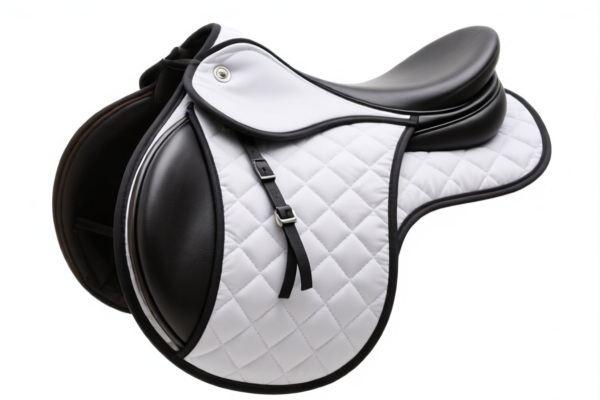
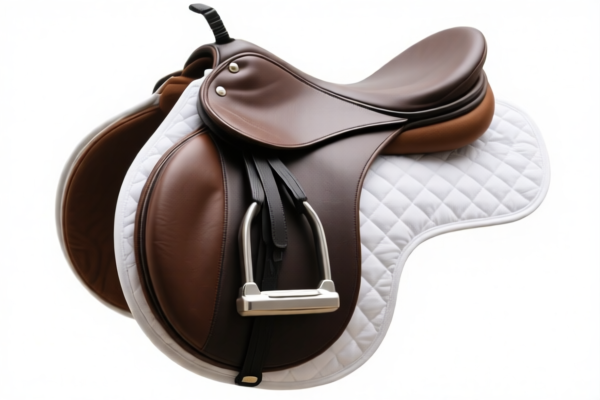
AI Analysis
🐎 General Purpose Horse Saddle Cloths (Breathable)
🌐 HS Code Reference & Customs Clearance Guide | 2026 Latest Tariff Analysis | Professional Clearance Strategy
📌 I. Product Definition & Classification: What Exactly Are "Saddle Cloths"?
Saddle cloths (also known as saddle pads or numnahs) are essential equestrian accessories placed between the horse’s back and the saddle. They provide cushioning, protect the horse’s coat, and absorb sweat. The specific descriptor "Breathable" implies fabric technology (mesh, synthetic blends) designed for airflow and moisture management.
In international trade, the classification depends heavily on the material composition and the intended use: * Animal-Specific Equipment: If clearly designed exclusively for horse tack (saddle accessories), they fall under Chapter 42. * General Apparel/Textiles: If generic in design or made from standard textile materials not exclusively for animals, they may fall under Chapter 61 (Knitted) or Chapter 62 (Non-Knitted).
⚠️ Critical Distinction:
- If the product is exclusively for animals (horses), it is likely Chapter 42 (Articles of leather; articles of travel goods, handbags...).
- If the product is generic cloth/garment accessory not specifically identifiable as animal gear, it falls under Chapter 61 or 62 (Apparel and clothing accessories).
📦 II. HS Code Classification Details (Based on Provided Data)
| HS Code | Product Description | Classification Logic | Total Tax Rate |
|---|---|---|---|
4201.00.60.00 |
Animal Tack & Harness Accessories | Matches use (Animal Apparel/Harness Accessories) and form. Classified under "Other animal saddlery and harness." | 37.8% |
4201.00.30.00 |
Animal Equipment (Finished Goods) | Matches use (Animal Apparel/Harness Accessories) and form (Finished Product). Fits the definition of animal equipment. | 37.4% |
6217.10.95.50 |
Other Made-Up Clothing Accessories | "Cloths" implies finished consumer goods. Matches "clothing accessories" or "parts of garments." No conflict with "Other" category. | 32.1% |
6117.90.90.55 |
Knitted/Crocheted Clothing Accessories | Matches form and use. Falls under knitted/crocheted apparel accessories category. Inferred as plausible based on reasonable deduction. | 32.1% |
6117.90.90.50 |
Knitted/Crocheted Clothing Accessories | Matches form ("Cloths"). Material inferred as fabric/man-made fiber due to "Breathable" feature. No conflict with classification logic. | 32.1% |
🔍 Key Insight:
- Chapter 42 Codes (4201.xxxx) carry higher tax rates (~37.8%) but are more accurate if the product is unambiguously for horses.
- Chapter 61/62 Codes (6117.xxxx,6217.xxxx) carry lower tax rates (~32.1%) and classify the item as a generic textile accessory, which may be acceptable if the design is not exclusively horse-specific.
💰 III. 2026 Latest Tariff Rate Breakdown (Including Surcharges)
✅ Applicable Country: United States (US)
✅ Origin: China (CN)
✅ Effective Date: From November 10, 2025 (and subsequent imports)
🎯 1. 4201.00.60.00 — Animal Saddlery and Harness Accessories
| Item | Content |
|---|---|
| Base Tariff | 2.8% (ad valorem) |
| Section 301 Surcharge | +25.0% (Additional Tariff from USITC Footnote) |
| IEEPA Surcharge | +10.0% (122 Section Tariff for China) |
| Total Rate | 37.8% |
| Tax Calculation | CIF Value × 37.8% |
| De Minimis Eligibility | ❌ No (Deny de minimis for Section 301/IEEPA goods) |
| Legal Path | IEEPA:9903.01.25 → IEEPA:9903.01.24 → USITC:4201.00.60.00 → FOOTNOTE:301 |
📌 Explanation:
- 2.8% Base: Standard MFN duty for animal saddlery.
- 25% Section 301: Trade war tariff on Chinese-made animal goods.
- 10% IEEPA: Additional national security/trade remedy tariff.
- Total 37.8%: High burden for animal-specific textiles.
🎯 2. 4201.00.30.00 — Other Animal Equipment (Finished)
| Item | Content |
|---|---|
| Base Tariff | 2.4% (ad valorem) |
| Section 301 Surcharge | +25.0% |
| IEEPA Surcharge | +10.0% |
| Total Rate | 37.4% |
| Tax Calculation | CIF Value × 37.4% |
| De Minimis Eligibility | ❌ No |
| Legal Path | IEEPA:9901.25 → IEEPA:9903.01.24 → USITC:4201.00.30.00 → FOOTNOTE:301 |
📌 Note:
- Slightly lower base rate (2.4% vs 2.8%) than4201.00.60.00.
- Still subject to full 35% surcharges.
🎯 3. 6217.10.95.50 / 6117.90.90.55 / 6117.90.90.50 — Textile/Clothing Accessories
| Item | Content |
|---|---|
| Base Tariff | 14.6% (ad valorem) |
| Section 301 Surcharge | +7.5% (Reduced rate for some textile accessories) |
| IEEPA Surcharge | +10.0% |
| Total Rate | 32.1% |
| Tax Calculation | CIF Value × 32.1% |
| De Minimis Eligibility | ❌ No |
| Legal Path | IEEPA:9901.25 → IEEPA:9903.01.24 → USITC:6117/6217 Codes → FOOTNOTE:301 |
📌 Note:
- Base rate is higher (14.6%) compared to animal tack (2.4-2.8%), but Section 301 surcharge is lower (7.5% vs 25%).
- Result: Net tax is 5.7% lower (32.1% vs 37.8%).
- This classification requires arguing that the item is a generic textile accessory, not exclusively animal equipment.
🛠️ IV. Customs Clearance Practical Advice (Battle-Tested Tips)
✅ 1. Documentation Checklist (All Required)
| Document | Mandatory? | Description |
|---|---|---|
| ✅ Product Spec Sheet | ✔️ | Includes dimensions, material (e.g., polyester mesh, sheepskin), and "Breathable" feature description. |
| ✅ Product Photos | ✔️ | Clear images showing design, stitching, and any branding. Must show it can be used as a saddle pad. |
| ✅ Commercial Invoice | ✔️ | Clearly state: "General Purpose Horse Saddle Cloth, Breathable Fabric." Avoid overly specific "Exclusively for Horses" if using Chapter 61/62. |
| ✅ Packing List | ✔️ | Detail items per box. Avoid mixing with unrelated goods. |
| ✅ Material Composition Label | ✔️ | Crucial for Chapter 61/62 classification. Must specify "100% Polyester," "Cotton Blend," etc. |
| ✅ Origin Certificate | ❌ Optional | If claiming preferential rates (not applicable here for CN-US). |
✅ 2. Declaration Strategy (Key Mantra)
🔥 "Generic Design = Lower Tax, Specific Use = Higher Tax!"
| Scenario | Recommended HS Code | Risk Level |
|---|---|---|
| Generic Pad (No horse-specific shaping) | 6217.10.95.50 or 6117.90.90.50 |
✅ Low (32.1%) |
| Shaped Pad (Clearly for horse saddle) | 4201.00.60.00 |
⚠️ Medium (37.8%) |
| Mislabeling Generic as Animal Tack | 4201.00.30.00 |
❌ High (Overpayment + Audit Risk) |
| Mislabeling Animal Tack as Generic | 6117.90.90.55 |
❌ High (Customs Penalty + Back Taxes) |
✅ 3. Special Considerations
| Situation | Recommendation |
|---|---|
| "Breathable" Feature | Highlight this in the spec sheet as a technical fabric feature, not just an animal accessory trait. Supports Chapter 61/62. |
| OEM Customization | If custom-printed with horse branding, Customs may insist on Chapter 42. Use Chapter 42 for branded items. |
| Mixed Shipments | If shipping with other textiles, keep saddle cloths separate in documentation to avoid confusion. |
| De Minimis (Section 321) | ❌ Do not rely on $800 de minimis exemption for these HS codes due to Section 301/IEEPA surcharges. Full duty applies. |
🌍 V. Global Market Comparison (2026 Latest)
| Country/Region | Recommended HS Code | Total Tax (China Origin) | Certification | Notes |
|---|---|---|---|---|
| 🇺🇸 USA | 6117.90.90.50 / 4201.00.60.00 |
32.1% - 37.8% | None | High tariffs due to 301/IEEPA. |
| 🇨🇳 China | 6217.10.95.50 |
~5-10% | CCC (if applicable) | Lower duty, no surcharges. |
| 🇪🇺 EU | 6217.10.95.50 |
~0-12% | CE (if applicable) | No Section 301 equivalent. |
| 🇬🇧 UK | 6117.90.90.55 |
~0-12% | UKCA | Post-Brexit rules apply. |
| 🇨🇦 Canada | 6217.10.95.50 |
~0-15% | None | USMCA may apply if not China-origin. |
📌 Conclusion:
- USA is the most expensive market for these goods due to additional tariffs.
- Choosing Chapter 61/62 can save 5.7% in tax compared to Chapter 42, but requires careful product design and documentation.
📌 VI. Common Mistakes & Pitfalls (Lessons Learned)
❌ Mistake 1: Using "Saddle Pad" in the description but declaring under Chapter 61
👉 Consequence: Customs may reclassify to Chapter 42, leading to back taxes + penalties.
❌ Mistake 2: Assuming $800 de minimis applies
👉 Consequence: 100% seizure or forced return for shipments over $800 under Section 301/IEEPA rules.
❌ Mistake 3: Ignoring "Breathable" fabric composition
👉 Consequence: Incorrect Chapter 61/62 sub-classification. Must specify knit vs. non-knit.
❌ Mistake 4: Mixing animal and human apparel in one shipment
👉 Consequence: Delays, audits, and potential misclassification of entire shipment.
✅ Correct Practice:
"Saddle Cloth, Breathable Mesh, 100% Polyester, Generic Design, Unbranded"
HS Code:6217.10.95.50
Declaration: "Textile Accessories for Equestrian Use"
🎯 VII. Conclusion: Precise Classification, Cost Efficiency!
🎯 Remember the Mantra:
🔹 "Generic = Cheaper, Specific = More Expensive."
🔹 "32.1% vs 37.8% — That’s 5.7% Savings on Every Dollar!"
🔹 "No De Minimis for China-Origin Textiles!"
📌 Pro Tip:
If your saddle cloths are specially shaped for horses, stick to Chapter 42 (4201.00.60.00) to avoid audit risks. If they are generic rectangular pads, use Chapter 61/62 (6117.90.90.50 / 6217.10.95.50) for lower duties.
📣 Immediate Action:
📞 Consult a customs broker for Advance Ruling if uncertain.
📸 Provide clear product images and fabric composition details.
🚀 Optimize your tariff burden with smart classification!
✨ Professional Clearance Starts with Accurate Classification!
💼 Every percentage point counts in your profit margin!
Customer Reviews
About HS Code Classification
The Harmonized System (HS) is an internationally standardized nomenclature developed by the World Customs Organization (WCO) to classify traded products. Over 200 countries use the HS system as the basis for customs tariffs, trade statistics, and import/export regulations.
Each HS code follows a hierarchical structure:
- Chapter (2 digits) — Broad category of goods (e.g., Chapter 84: Machinery and Mechanical Appliances)
- Heading (4 digits) — More specific grouping within the chapter
- Subheading (6 digits) — Internationally standardized breakdown, used by all WCO member countries
- National subdivisions (8-10 digits) — Country-specific extensions for further classification, such as US HTSUS 10-digit codes
Correct HS code classification is essential for smooth customs clearance, accurate duty payment, and compliance with trade regulations. Misclassification can lead to customs delays, overpayment of duties, or penalties.
When importing from CN to US, the applicable tariff rates may include:
- Most-Favored-Nation (MFN) rate — The standard duty rate applied to WTO members
- General rate — Applied to countries without trade agreements
- Trade remedy duties — Additional tariffs such as Section 301 (anti-dumping), Section 232 (national security), or countervailing duties
The information provided on this page is for reference purposes only. For official classification, please consult with your local customs authority or a licensed customs broker.