General Purpose Horse Saddle Cloths Breathable
CN → US| HS Code | Tariff Rate | Origin | Destination | Doc |
|---|---|---|---|---|
| 4205008000 | 35.0% | CN | US | Official Doc |
| 6307909887 | 24.5% | CN | US | Official Doc |
| 6307909885 | 24.5% | CN | US | Official Doc |
| 3926907500 | 14.2% | CN | US | Official Doc |
Product Images
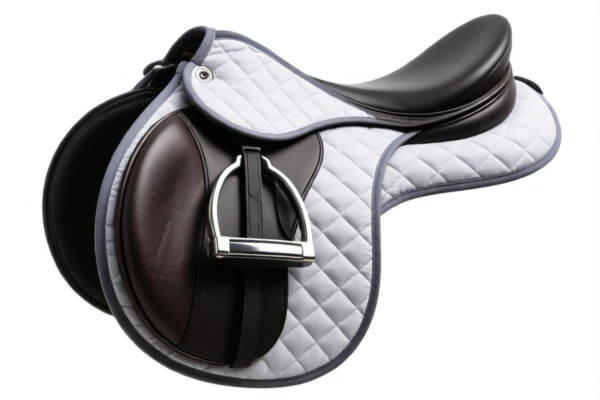
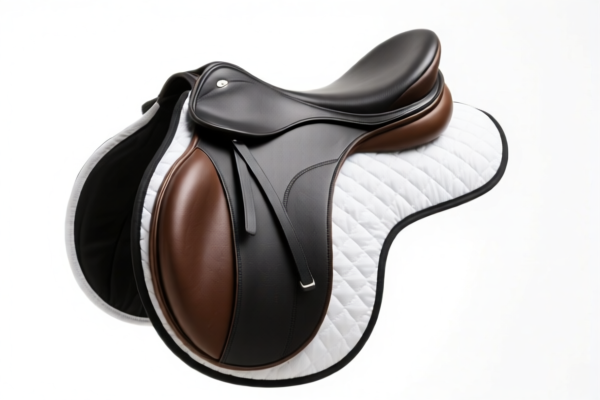
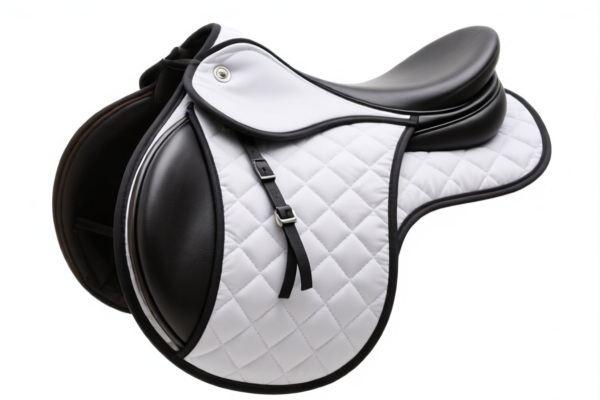
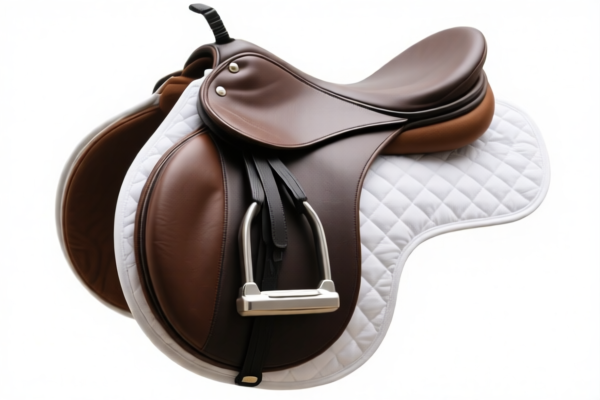
AI Analysis
🐎 General Purpose Horse Saddle Cloths & Breathable Pads: HS Code & Customs Clearance Guide (2026)
🌐 HS Code Reference & Clearance Guide | 2026 Latest Tariff Analysis | Professional Strategy for Equestrian Gear
📌 I. Product Definition & Classification: What Exactly is a "Breathable Saddle Cloth"?
In international trade, General Purpose Horse Saddle Cloths (often referred to as saddle pads, numnahs, or shock-absorbing pads) are critical equestrian accessories. Their classification depends heavily on material composition and functional design.
Key Distinctions: * Leather/Composite Leather Pads: Traditional, durable, often used for formal riding. * Fabric/Textile Pads: Cotton, wool, or synthetic blends; breathable, moisture-wicking. * Plastic/Plastic-Foam Pads: Shock-absorbing, often featuring air pockets or gel inserts made of polyurethane (PU) foam.
⚠️ Critical Differentiator:
- If the pad is primarily leather/composite leather → It falls under Chapter 42.
- If the pad is primarily textile (cotton/synthetic) → It falls under Chapter 63 (Made-up textile articles).
- If the pad is primarily plastic foam (PU) and designed as a shock-absorbing cushion → It may fall under Chapter 39.
📦 II. HS Code Classification Details (2026 Latest Tariff Authority Comparison)
Based on the provided data, here are the three possible classifications for General Purpose Horse Saddle Cloths:
| HS Code | Product Description | Material Basis | Key Characteristics |
|---|---|---|---|
4205.00.80.00 |
Other made-up leather articles / Saddle pads | Leather or Composite Leather | Traditional saddle pads, often leather-lined or made of synthetic leather. No textile conflict. |
6307.90.98.85 |
Other made-up textile articles | Cotton, Wool, or Fabric Blend | Breathable textile pads. Standard equestrian use. No material conflict. |
6307.90.98.87 |
Other made-up textile articles | Synthetic Fiber Fabric | Technical synthetic fabrics (polyester/nylon) with moisture-wicking properties. |
3926.90.75.00 |
Other plastic articles | Polyurethane (PU) Foam / Plastic | Shock-absorbing pads with inflatable or foam cushions. Specifically designed for cushioning via plastic/foam material. |
🔍 Important Note:
-4205.00.80.00: Choose if the pad is made of leather or composite leather.
-6307.90.98.85or6307.90.98.87: Choose if the pad is made of textile materials (cotton, wool, synthetic fabric).
-3926.90.75.00: Choose if the pad is primarily made of plastic foam and functions as a shock-absorbing cushion (e.g., air-filled or PU foam pads).
💰 III. 2026 Latest Tariff Rate Breakdown (Including Surtaxes & Policy Surcharges)
✅ Applicable Country: United States (US)
✅ Origin: China (CN)
✅ Effective Date: 2025/2026 (Subject to current 122 Clause & Section 301 tariffs)
🎯 1. 4205.00.80.00 – Leather/Composite Leather Saddle Pads
| Item | Content |
|---|---|
| Base Tariff | 0.0% (ad valorem) |
| Section 301 Surtax | +25.0% |
| 122 Clause Tariff | +10.0% |
| Total Tariff Rate | 35.0% |
| Tax Calculation | CIF Value × 35.0% |
| De Minimis Exemption | ❌ Not Eligible (Section 301 goods are excluded) |
| Legal Basis Path | Section 301: 9903.88.01 → IEEPA: 9903.01.25 → USITC: 4205.00.80.00 |
📌 Explanation:
- 0% base rate because leather articles are relatively low-tariff.
- 25% Section 301 is the standard US-China trade war surtax.
- 10% 122 Clause is an additional surtax on specific Chinese-origin goods.
- Total: 35%. This is a high-cost category.
🎯 2. 6307.90.98.85 & 6307.90.98.87 – Textile Saddle Pads
| Item | Content |
|---|---|
| Base Tariff | 7.0% (ad valorem) |
| Section 301 Surtax | +7.5% |
| 122 Clause Tariff | +10.0% |
| Total Tariff Rate | 24.5% |
| Tax Calculation | CIF Value × 24.5% |
| De Minimis Exemption | ❌ Not Eligible (Section 301 goods are excluded) |
| Legal Basis Path | Section 301: 9903.88.01 → IEEPA: 9903.01.25 → USITC: 6307.90.98.85/87 |
📌 Explanation:
- 7.0% base rate applies to general made-up textile articles.
- 7.5% Section 301 is a partial surtax (lower than the 25% for leather/electronics).
- 10% 122 Clause applies.
- Total: 24.5%. This is more cost-effective than leather pads.
🎯 3. 3926.90.75.00 – Plastic/Foam Shock-Absorbing Saddle Pads
| Item | Content |
|---|---|
| Base Tariff | 4.2% (ad valorem) |
| Section 301 Surtax | 0.0% |
| 122 Clause Tariff | +10.0% |
| Total Tariff Rate | 14.2% |
| Tax Calculation | CIF Value × 14.2% |
| De Minimis Exemption | ❌ Not Eligible (Due to 122 Clause) |
| Legal Basis Path | 122 Clause: 9903.01.25 → USITC: 3926.90.75.00 |
📌 Explanation:
- 4.2% base rate for plastic articles.
- 0% Section 301 – This is a significant advantage! Many plastic goods are excluded from the 25% surtax.
- 10% 122 Clause still applies.
- Total: 14.2%. This is the most tax-efficient option, but only if the product can be legally classified as a plastic/plastic-foam shock-absorbing article.
🛠️ IV. Customs Clearance Practical Advice (Avoiding Pitfalls)
✅ 1. Documentation Checklist (All Required)
| Document | Must Provide | Notes |
|---|---|---|
| ✅ Product Specification Sheet | ✔️ | Must clearly state material composition (e.g., "100% Polyurethane Foam," "Cotton Cover," "Leather Lining"). |
| ✅ Product Photos | ✔️ | Show structure, layers, and any labels. For foam pads, show the foam layer clearly. |
| ✅ Commercial Invoice | ✔️ | Must match the HS Code description. Do NOT just write "Saddle Cloth." Use specific terms like "Polyurethane Foam Shock-Absorbing Pad." |
| ✅ Packing List | ✔️ | Detail contents to avoid mixed-category penalties. |
| ✅ Material Certificate | ✔️ | For textile pads, prove it's not leather. For foam pads, prove it's PU/Plastic. |
✅ 2. Declaration Strategy (Key Tips)
🔥 "Material is King, Function is Queen!"
| Scenario | Recommended HS Code | Declaration Name | Risk |
|---|---|---|---|
| Leather/Composite Leather Pad | 4205.00.80.00 |
"Leather Saddle Pad" | High tariff (35%). Ensure it's not misclassified as textile. |
| Cotton/Synthetic Fabric Pad | 6307.90.98.85 |
"Textile Saddle Pad" | Medium tariff (24.5%). Ensure no leather lining dominates. |
| PU Foam/Air-Cushion Pad | 3926.90.75.00 |
"Polyurethane Foam Shock-Absorbing Saddle Pad" | Lowest tariff (14.2%). Must prove plastic/foam is the primary material and function is shock-absorption. |
⚠️ Warning:
- If a pad is mostly textile but has a thin foam layer, it is NOT3926.90.75.00. It must be classified as textile (6307...).
- If a pad is mostly leather with a thin fabric layer, it is NOT textile. It is4205.00.80.00.
- Misclassification leads to back taxes, fines, and cargo detention.
✅ 3. Special Case Handling
| Case | Advice |
|---|---|
| Mixed Material Pads | Use the principal material for classification. If 60% foam, 40% fabric, you may argue for 3926... if foam provides the primary function (shock absorption). Provide technical proof. |
| "Breathable" Labeling | "Breathable" is a marketing term. Do not declare as "Breathable Saddle Cloth." Declare by material (e.g., "Mesh Fabric Pad"). |
| Set Packages (Pad + Girth) | Declare separately if they are different materials. Do not group a leather pad with a plastic girth. |
🌍 V. Global Market Comparison (2026)
| Country/Region | Recommended HS Code (Foam Pad) | Tariff Rate | Notes |
|---|---|---|---|
| 🇺🇸 USA | 3926.90.75.00 |
14.2% | Best option for foam pads due to 0% Section 301. |
| 🇨🇳 China | 3926.90.90.90 |
Varies | Check local tariff book. |
| 🇪🇺 EU | 3926.90.97 |
~5-6% | No Section 301. Lower tariffs. |
| 🇬🇧 UK | 3926.90.99 |
~5-6% | Post-Brexit tariffs apply. |
📌 Conclusion:
- For US Imports: If your saddle pad is made of polyurethane foam and functions as a shock absorber,3926.90.75.00is the most cost-effective at 14.2%.
- If it's textile: Use6307.90.98.85at 24.5%.
- If it's leather: Use4205.00.80.00at 35.0%.
📌 VI. Common Mistakes & Pitfalls (Lessons Learned)
❌ Mistake 1: Declaring a PU foam pad as a textile pad (6307...)
👉 Result: You pay 24.5% instead of 14.2%. Overpayment of 10.3%.
❌ Mistake 2: Declaring a textile pad as a foam pad (3926...)
👉 Result: Customs rejects the classification, demands back taxes at 24.5%, plus fines. Delayed clearance.
❌ Mistake 3: Ignoring the 122 Clause
👉 Result: All three HS Codes above include a 10% 122 Clause surtax. Failing to account for this leads to budget miscalculations.
✅ Correct Action:
"Polyurethane Foam Shock-Absorbing Saddle Pad, Unlined, Breathable Mesh Cover" →
3926.90.75.00(14.2%)
🎯 VII. Conclusion: Professional Declaration Saves Money!
🎯 Remember the Golden Rule:
🔹 "Foam Pad? Use 3926 (14.2%)."
🔹 "Textile Pad? Use 6307 (24.5%)."
🔹 "Leather Pad? Use 4205 (35.0%)."
📌 Pro Tip:
If your product is 80% foam but has a fabric cover, provide a material breakdown to Customs. Argue that the primary function is shock absorption via foam, justifying 3926.90.75.00. This can save you 10.3% in tariffs.
📣 Immediate Action:
📞 Contact a licensed customs broker.
📄 Submit material composition certificates.
🚀 Optimize your HS Code for maximum profit!
✨ Professional Customs Clearance Starts with Accurate Classification!
💼 Every 1% of tariff saved is pure profit!
Customer Reviews
About HS Code Classification
The Harmonized System (HS) is an internationally standardized nomenclature developed by the World Customs Organization (WCO) to classify traded products. Over 200 countries use the HS system as the basis for customs tariffs, trade statistics, and import/export regulations.
Each HS code follows a hierarchical structure:
- Chapter (2 digits) — Broad category of goods (e.g., Chapter 84: Machinery and Mechanical Appliances)
- Heading (4 digits) — More specific grouping within the chapter
- Subheading (6 digits) — Internationally standardized breakdown, used by all WCO member countries
- National subdivisions (8-10 digits) — Country-specific extensions for further classification, such as US HTSUS 10-digit codes
Correct HS code classification is essential for smooth customs clearance, accurate duty payment, and compliance with trade regulations. Misclassification can lead to customs delays, overpayment of duties, or penalties.
When importing from CN to US, the applicable tariff rates may include:
- Most-Favored-Nation (MFN) rate — The standard duty rate applied to WTO members
- General rate — Applied to countries without trade agreements
- Trade remedy duties — Additional tariffs such as Section 301 (anti-dumping), Section 232 (national security), or countervailing duties
The information provided on this page is for reference purposes only. For official classification, please consult with your local customs authority or a licensed customs broker.