General Purpose Horse Saddlery Sets
CN → US| HS Code | Tariff Rate | Origin | Destination | Doc |
|---|---|---|---|---|
| 4205002000 | 35.0% | CN | US | Official Doc |
| 4205004000 | 36.8% | CN | US | Official Doc |
Product Images
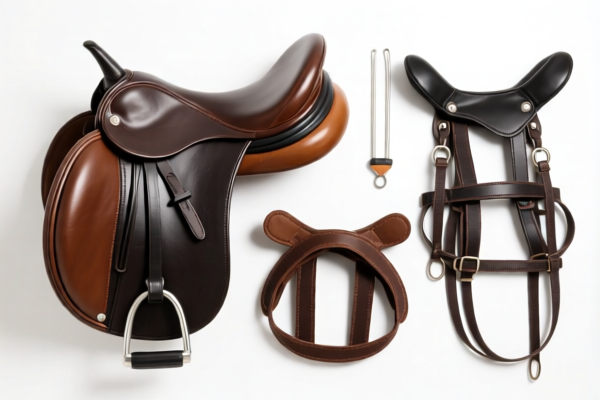
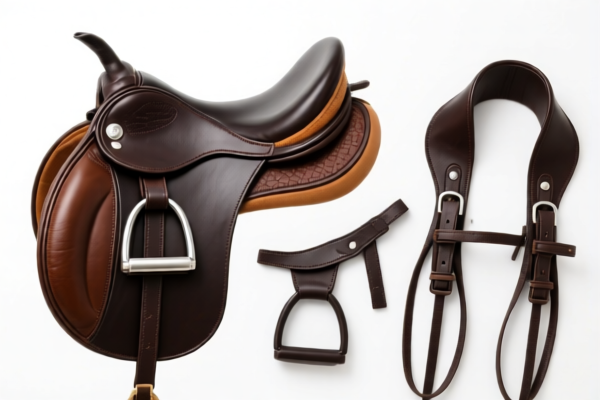
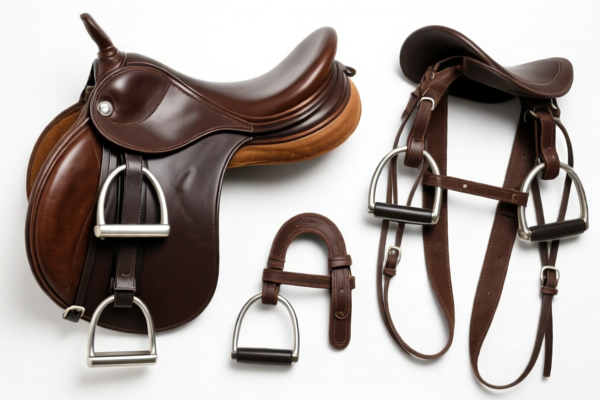
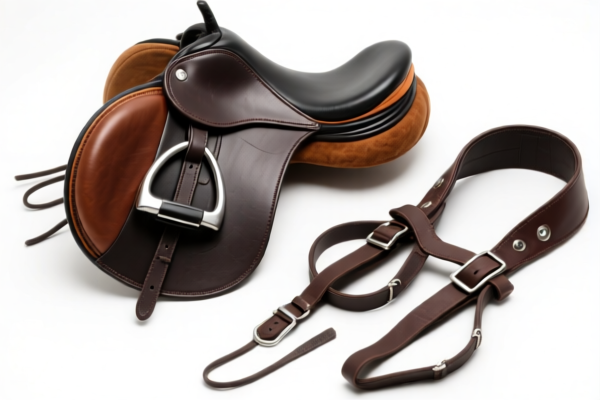
AI Analysis
🐎 General Purpose Horse Saddlery Sets (Leather Goods)
🌐 HS Code Reference & Customs Clearance Guide | 2026 Latest Tariff Analysis | Professional Clearance Strategy
📌 I. Product Definition & Classification: What Exactly Are You Importing?
Horse saddlery sets are essential equestrian equipment used for riding, driving, and handling horses. In international trade, these items are primarily classified under Chapter 42: Articles of Leather; Harness and Trimmings for Animal Use; Travel Goods, Handbags and Similar Containers.
Because "General Purpose Horse Saddlery" often contains multiple components (saddle, bridle, reins, girths, stirrups), customs classification depends heavily on material composition and specific component breakdown.
⚠️ Critical Distinction:
- If the set includes shoelaces-like leather strings or straps/strrops as separate line items or distinct components, they may be classified under 4205.00.
- If the entire set is considered a "saddle" (Chapter 42, Heading 4201), it usually falls under 4201.00.
- However, based on the provided<DATA>, we are focusing specifically on the components classified under 4205.00.20.00 (Shoelaces/Leather Strings) and 4205.00.40.00 (Straps and Strops). This implies the import might involve separate leather accessories or a component-based declaration rather than a complete saddle assembly.
📦 II. HS Code Classification Details (Based on Provided Data)
| HS Code | Product Description | Tax Detail (Base + Additional) | Total Tax |
|---|---|---|---|
4205.00.20.00 |
Shoelaces (Other articles of leather or of composition leather: Other: Shoelaces) | Base: 0.0%, Additional: 25.0% | 25.0% |
4205.00.40.00 |
Straps and Strops (Other articles of leather or of composition leather: Other: Straps and strops) | Base: 1.8%, Additional: 25.0% | 26.8% |
🔍 Key Insight:
- "Shoelaces" (4205.00.20.00): In the context of saddlery, this may refer to leather lacing, stitching threads, or decorative leather strings used in saddle making, rather than human footwear laces. Ensure the product description matches this usage to avoid misclassification.
- "Straps and Strops" (4205.00.40.00): This typically covers girths, breastplates, reins, or other flat leather straps used in horse tack. These are distinct from the saddle itself (which is a "harness" under 4201).
💰 III. 2026 Tariff Rate Breakdown (Detailed Explanation)
✅ Applicable Country: USA (US)
✅ Country of Origin: China (CN)
✅ Effective Date: From November 10, 2025 (and onwards)
🎯 1. 4205.00.20.00 – Shoelaces (Leather/Composition)
| Item | Content |
|---|---|
| Base Duty Rate | 0% (Ad Valorem) |
| Section 301 Additional Duty | +25% (USITC Footnote for Chapter 42 items from China) |
| Total Effective Duty | 25.0% |
| Calculation Method | CIF Value × 25% |
| De Minimis Eligibility | ❌ Not Eligible (Section 301 duties do not apply to de minimis shipments in most cases, but for general commerce, this is the standard rate) |
| Legal Basis Path | HTSUS:4205.00.20.00 → USITC:301 Footnote 9903.88.01 (Applicable to Chapter 42) |
📌 Explanation:
- The 0% base rate reflects the relatively low tariff on leather accessories like laces.
- The 25% additional duty is imposed under Section 301 of the Trade Act of 1974 as part of the ongoing trade measures against China.
- Total Cost Impact: For every $1,000 of CIF value, you pay $250 in duties.
🎯 2. 4205.00.40.00 – Straps and Strops (Leather/Composition)
| Item | Content |
|---|---|
| Base Duty Rate | 1.8% (Ad Valorem) |
| Section 301 Additional Duty | +25% (USITC Footnote for Chapter 42 items from China) |
| Total Effective Duty | 26.8% |
| Calculation Method | CIF Value × 26.8% |
| De Minimis Eligibility | ❌ Not Eligible |
| Legal Basis Path | HTSUS:4205.00.40.00 → USITC:301 Footnote 9903.88.01 (Applicable to Chapter 42) |
📌 Explanation:
- The 1.8% base rate is slightly higher than shoelaces due to the broader category of "straps."
- The 25% additional duty applies equally, bringing the total to 26.8%.
- Total Cost Impact: For every $1,000 of CIF value, you pay $268 in duties.
🛠️ IV. Customs Clearance Practical Advice (Pitfall Avoidance Guide)
✅ 1. Documentation Checklist (Essential for Clearance)
| Document | Required | Notes |
|---|---|---|
| ✅ Commercial Invoice | ✔️ | Must clearly state: "Leather Straps," "Shoelaces," or "Straps and Strops" as per HS Code. Avoid vague terms like "Saddle Parts" if they don't match. |
| ✅ Packing List | ✔️ | Separate line items for "Shoelaces/Laces" and "Straps" if declared under different HS codes. |
| ✅ Product Photos | ✔️ | Show texture, stitching, and form. Must distinguish between "flat straps" and "lacing threads." |
| ✅ Material Declaration | ✔️ | Specify "Leather" or "Composition Leather." Synthetic materials may fall under Chapter 59 or 60. |
| ✅ Origin Certificate | ✔️ | Prove Chinese origin to apply Section 301 duties correctly. |
✅ 2. Classification Strategy (Key Tips)
🔥 "Separate Components, Separate Codes: Know Your Part!"
| Scenario | Correct Declaration | Risk of Misclassification |
|---|---|---|
| Flat leather girths/reins | 4205.00.40.00 (Straps) |
Misclassifying as "Saddle" (4201) → Higher duty potential or audit |
| Decorative leather lacing/stitching | 4205.00.20.00 (Shoelaces) |
Misclassifying as "Part of Harness" (4201) → Potential duty dispute |
| Complete Saddle + Tack Set | 4201.00.00.00 (Saddle) |
Do NOT split a complete saddle into straps/shoelaces unless shipped separately. Complete sets are classified by the principal item (the saddle). |
| Synthetic (PU/Rubber) Straps | 5911.90 or 6117.90 |
Using 4205 for non-leather → Severe Penalty |
📌 Critical Note:
- Do not lump all "saddlery" under one HS Code. If you are importing straps and lacing separately, use 4205. If you are importing a complete saddle, use 4201.00.00.00.
- The provided data only covers 4205 items. Ensure your shipment does not include complete saddles, bridles, or stirrups under these codes, as they belong to Heading 4201.
✅ 3. Special Considerations
| Situation | Handling Advice |
|---|---|
| Mixed Materials | If straps contain metal buckles or rings, the leather still dominates if it’s the main character. Declare under 4205. |
| Customs Examination | Be prepared to show the cross-section of the material. If it’s not leather or composition leather, HS 4205 is incorrect. |
| Valuation | Ensure the CIF value includes all costs up to the US port. Under-declaring value triggers audits, especially with 25% additional duties. |
🌍 V. Global Market Comparison (2026)
| Country/Region | Recommended HS Code | Duty Rate (China Origin) | Notes |
|---|---|---|---|
| 🇺🇸 USA | 4205.00.20.00 / 4205.00.40.00 |
25.0% / 26.8% | High due to Section 301 |
| 🇪🇺 EU | 4205.00.20.00 / 4205.00.40.00 |
~2.5% - 4.7% | No Section 301 equivalent; lower base rates |
| 🇨🇳 China | 4205.00.20.00 / 4205.00.40.00 |
0% - 5% | Import duties may vary; check latest Chinese customs tariff |
| 🇬🇧 UK | 4205.00.20.00 / 4205.00.40.00 |
~2.5% - 4.7% | Post-Brexit tariff structure applies |
📌 Conclusion:
- USA is the most expensive market for these items due to Section 301 additional duties.
- EU/UK/Asia markets have significantly lower duty burdens for leather accessories.
📌 VI. Common Mistakes & Pitfalls (Lessons Learned)
❌ Mistake 1: Declaring complete saddles as "Straps" (4205.00.40.00) to avoid higher duties on saddles.
👉 Consequence: Customs will reclassify as 4201.00.00.00, impose back duties + penalties.
❌ Mistake 2: Mixing synthetic straps with leather straps and declaring both under 4205.
👉 Consequence: Synthetic items are classified under Chapter 59/60. Mixed shipment leads to partial reclassification and delays.
❌ Mistake 3: Ignoring the 25% Section 301 duty.
👉 Consequence: Unexpected cost increase of 25% on CIF value, eroding profit margins.
✅ Correct Approach:
"Leather Straps, Horse Tack, Composition Leather, Model XYZ, Made in China"
(Ensure precise material description and component breakdown.)
🎯 VII. Conclusion: Precision in Classification Saves Money!
🎯 Remember:
🔹 "Straps go to 4205, Saddle goes to 4201."
🔹 "25% Additional Duty is mandatory for China-origin leather accessories in the US."
🔹 "Shoelaces = 25%, Straps = 26.8%. Total cost impact is significant!"
📌 Pro Tip:
If you are importing complete saddlery sets (saddle + bridle + girth), consider declaring them under 4201.00.00.00 (Saddlery) if they are sold as a set. Check the duty rate for 4201 against the sum of 4205 components. Sometimes, 4201 may have a different base rate, though it may still be subject to Section 301. Always calculate the total landed cost before deciding on classification.
📣 Immediate Action:
📞 Consult with a licensed customs broker to verify if your "General Purpose Horse Saddlery Set" contains components that must be separated under 4205 or if it should be declared as a set under 4201.
🚀 Accurate classification ensures smooth clearance and accurate cost control!
✨ Professional clearance starts with precise classification!
💼 Every percentage point of duty affects your bottom line!
Customer Reviews
About HS Code Classification
The Harmonized System (HS) is an internationally standardized nomenclature developed by the World Customs Organization (WCO) to classify traded products. Over 200 countries use the HS system as the basis for customs tariffs, trade statistics, and import/export regulations.
Each HS code follows a hierarchical structure:
- Chapter (2 digits) — Broad category of goods (e.g., Chapter 84: Machinery and Mechanical Appliances)
- Heading (4 digits) — More specific grouping within the chapter
- Subheading (6 digits) — Internationally standardized breakdown, used by all WCO member countries
- National subdivisions (8-10 digits) — Country-specific extensions for further classification, such as US HTSUS 10-digit codes
Correct HS code classification is essential for smooth customs clearance, accurate duty payment, and compliance with trade regulations. Misclassification can lead to customs delays, overpayment of duties, or penalties.
When importing from CN to US, the applicable tariff rates may include:
- Most-Favored-Nation (MFN) rate — The standard duty rate applied to WTO members
- General rate — Applied to countries without trade agreements
- Trade remedy duties — Additional tariffs such as Section 301 (anti-dumping), Section 232 (national security), or countervailing duties
The information provided on this page is for reference purposes only. For official classification, please consult with your local customs authority or a licensed customs broker.