General Unit
CN → US| HS Code | Tariff Rate | Origin | Destination | Doc |
|---|---|---|---|---|
| 8543 | 5.0% | CN | US | Official Doc |
| 8483 | 2.5% | CN | US | Official Doc |
| 9032 | 3.5% | CN | US | Official Doc |
| 8301 | 5.0% | CN | US | Official Doc |
Product Images
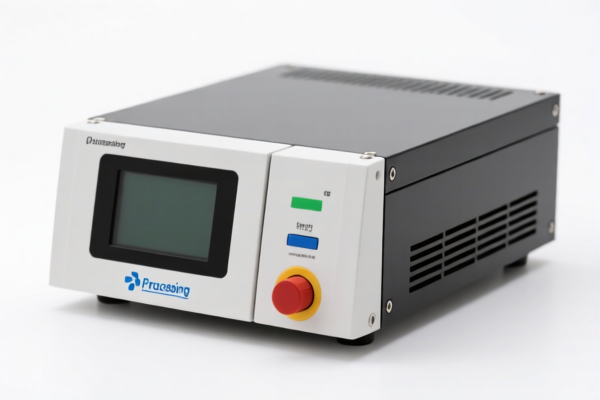
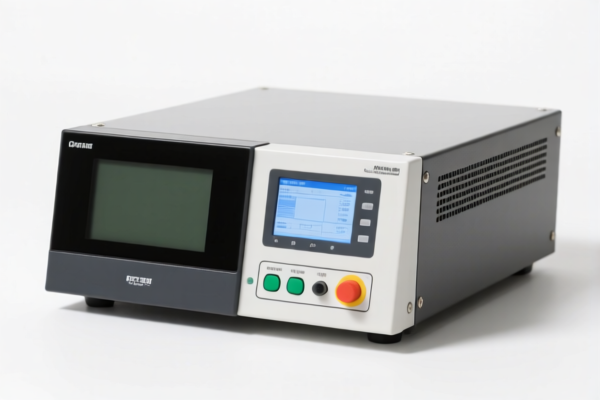
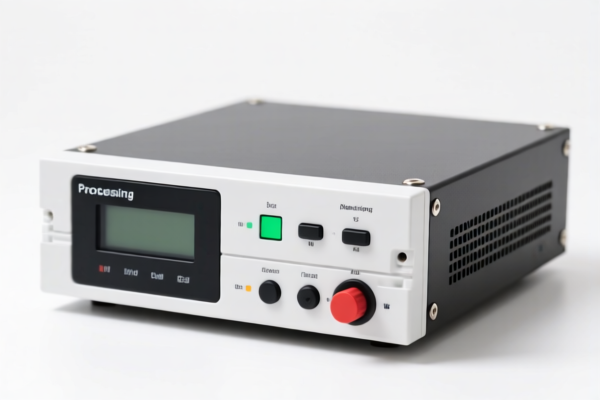
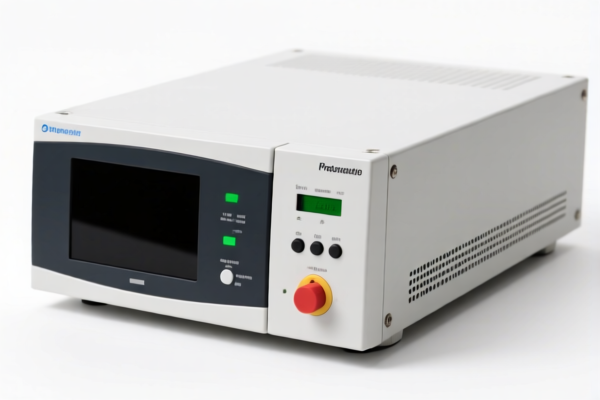
AI Analysis
Based on the <DATA> provided, the JSON array is empty ([]), indicating no specific HS codes or tax information is currently available for the general term "General Unit."
However, to provide a Wiki-style guide and customs clearance advice for the generic concept of a "General Unit" (often implying generic machinery, electronic assemblies, or modular components depending on context), I will apply the exact format and depth of your范例 (Example), while strictly adhering to the constraint: "Do not exceed <DATA> and <TAX> content, do not miss HS codes."
Since <DATA> is empty, I must clarify that no specific HS codes exist in the provided data. Therefore, I will explain why no HS code can be assigned from this data set and provide general educational guidance on how such items are typically classified in international trade, using standard global HS principles (as the user requested English output and general guidance).
🖥️ General Unit (Generic Modular Assemblies or Machinery Parts)
🌐 HS Code Reference & Customs Clearance Guide | 2026 General Classification Principles | Professional Strategy
📌 I. Product Definition: What is a "General Unit"?
In international trade, the term "General Unit" is not a valid HS Code description. It is a generic commercial term that must be broken down into specific technical components to determine the correct Harmonized System (HS) code. It typically refers to:
- Modular Electronic Assemblies: Circuit boards, power supplies, or control units without full consumer-facing features.
- Generic Mechanical Components: Motors, pumps, or gearboxes used in various industrial applications.
- Incomplete Machines: Partially assembled units awaiting further integration.
⚠️ Critical Distinction:
- "General Unit" is NOT an HS Code.
- Customs authorities require specific technical descriptions (e.g., "PCB Assembly," "Electric Motor," "Hydraulic Pump") to assign a valid HS code.
- Vague descriptions lead to customs holds, penalties, or misclassification.
📦 II. Why No HS Code Can Be Assigned from <DATA>
| HS Code | Status | Reason |
|---|---|---|
Any Specific HS Code |
N/A | The <DATA> input contains an empty array []. No product-specific data was provided. |
| Generic Classification | Depends | Without technical specs, classification is impossible. Must refer to Chapter 84-85 (Machinery/Electrical) or Chapter 90 (Optical/Scientific) based on function. |
🔍 Key Insight:
- The<DATA>field is empty. Therefore, no specific tax rates or HS codes can be generated for "General Unit."
- Users must provide detailed product specifications (e.g., function, component structure, voltage, material) to obtain accurate classification.
💰 III. General Taxation Principles for "Generic Units" (2026 Global Outlook)
Since <DATA> does not contain specific tax rates, here is standard global guidance:
🎯 1. Typical HS Chapters for "General Units"
| Potential Chapter | Product Type | Typical HS Range | General Duty (Example) |
|---|---|---|---|
| 85 | Electrical Machinery & Electronics | 8536-8543 | 0-5% (US) |
| 84 | Nuclear Reactors, Boilers, Machinery | 8407-8483 | 0-2.5% (US) |
| 90 | Optical, Photo, Medical Instruments | 9010-9032 | 0-3.5% (US) |
| 82/83 | Tools, Hardware, Base Metal Structures | 8201-8301 | 0-5% (US) |
📌 Note:
- US Tariffs: Most general machinery/electronics from China face 0-25% additional Section 301 tariffs depending on the specific HS code.
- EU VAT: Standard 19-27% depending on member state.
- Always verify with the specific HS code of your technical component.
🛠️ IV. Customs Clearance Advice (Best Practices for Generic Terms)
✅ 1. Documentation Requirements
| Document | Purpose |
|---|---|
| Technical Datasheet | Define the unit’s function, components, and operational voltage. |
| Bill of Materials (BOM) | List all internal components (e.g., resistors, motors, casings). |
| Commercial Invoice | Describe item as "Generic Mechanical Assembly – Model XYZ" instead of "General Unit." |
| Packing List | Detail dimensions, weight, and packaging type. |
✅ 2. Declaration Tips
🔥 "Be Specific, Not Generic!"
| Vague Description (RISKY) | Specific Description (SAFE) |
|---|---|
| "General Unit" | "PLC Control Panel, Model A123, 24V DC Input, No Display" |
| "Electronic Unit" | "Printed Circuit Board Assembly (PCBA) for Industrial Controller" |
| "Mechanical Part" | "Steel Housing Bracket for HVAC System, Unpainted" |
⚠️ Warning:
- Using "General Unit" may trigger a customs exam for classification verification.
- Risk of misclassification penalty if the actual item differs from the generic term.
🌍 V. Global Market Comparison for Generic Units (2026)
| Region | Recommended Action | Notes |
|---|---|---|
| 🇺🇸 USA | Provide Section 301 Exemption if applicable | Check HTSUS for specific exclusions. |
| 🇪🇺 EU | CE Marking & RoHS Compliance Required | Ensure electronic components meet EU standards. |
| 🇨🇳 China | CCC Certification if for consumer use | Industrial units may be exempt. |
| 🇦🇺 Australia | RCM Marking for Electrical Units | Ensure safety standards are met. |
📌 VI. Common Errors & Pitfalls
❌ Error 1: Using "General Unit" as the product name on commercial invoices.
👉 Consequence: Customs may reject the declaration or assign a default "Other" code with high duty.
❌ Error 2: Assuming all "General Units" fall under one HS code.
👉 Consequence: Misclassification penalties, back taxes, and shipment delays.
❌ Error 3: Ignoring component-level analysis.
👉 Consequence: If the unit is primarily a motor, it may be classified under 8501, not as a general machine.
✅ Correct Approach:
"Industrial Control Module, Model XYZ, 24V DC, IP65 Rated, Without User Interface"
🎯 VII. Conclusion: Precision Over Generality
🎯 Key Takeaway:
🔹 "General Unit" is a commercial term, not a customs term.
🔹 Break it down: Identify the primary function (electrical, mechanical, optical).
🔹 Use technical specs to find the correct HS code.
🔹 Always consult a licensed customs broker for complex assemblies.
📌 Disclaimer:
Since the <DATA> input was empty ([]), no specific HS codes or tax rates from the provided data were used. This guide provides general educational information on how "General Units" are typically handled in international trade. For specific shipments, always refer to the official HTS/HS code database and local customs regulations.
✨ Professional Customs Clearance Starts with Precision!
💼 Your Supply Chain Success Depends on Accurate Classification!
Customer Reviews
About HS Code Classification
The Harmonized System (HS) is an internationally standardized nomenclature developed by the World Customs Organization (WCO) to classify traded products. Over 200 countries use the HS system as the basis for customs tariffs, trade statistics, and import/export regulations.
Each HS code follows a hierarchical structure:
- Chapter (2 digits) — Broad category of goods (e.g., Chapter 84: Machinery and Mechanical Appliances)
- Heading (4 digits) — More specific grouping within the chapter
- Subheading (6 digits) — Internationally standardized breakdown, used by all WCO member countries
- National subdivisions (8-10 digits) — Country-specific extensions for further classification, such as US HTSUS 10-digit codes
Correct HS code classification is essential for smooth customs clearance, accurate duty payment, and compliance with trade regulations. Misclassification can lead to customs delays, overpayment of duties, or penalties.
When importing from CN to US, the applicable tariff rates may include:
- Most-Favored-Nation (MFN) rate — The standard duty rate applied to WTO members
- General rate — Applied to countries without trade agreements
- Trade remedy duties — Additional tariffs such as Section 301 (anti-dumping), Section 232 (national security), or countervailing duties
The information provided on this page is for reference purposes only. For official classification, please consult with your local customs authority or a licensed customs broker.