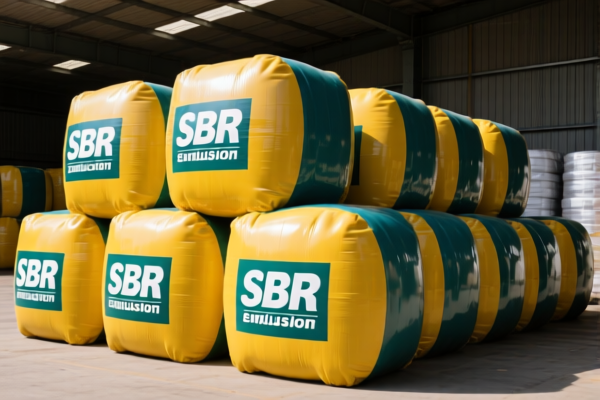
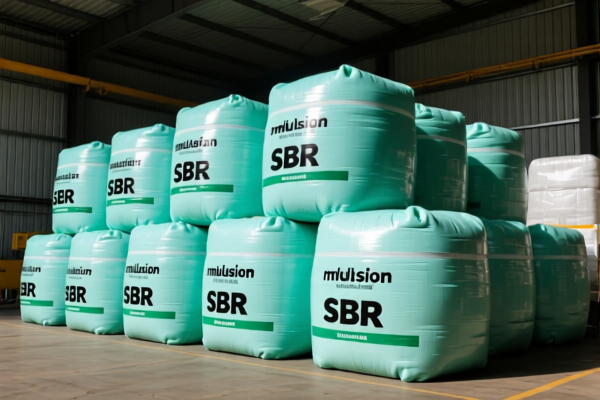
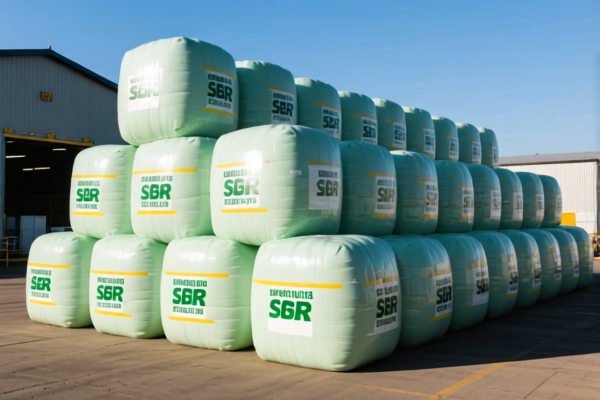
General purpose SBR Emulsion
CN → USProduct Images

AI Analysis
🧪 General Purpose SBR Emulsion (Styrene-Butadiene Rubber)
🌐 HS Code Reference & Customs Clearance Guide | 2026 Latest Tariff Analysis | Professional Compliance Strategy
📌 I. Product Definition & Classification: What is "General Purpose SBR"?
General Purpose SBR Emulsion, often referred to as ESBR (Emulsion Polymerized Styrene-Butadiene Rubber) or E-SBR, is a synthetic rubber copolymer produced by emulsion polymerization. It is one of the most widely used synthetic rubbers globally, primarily serving as a partial replacement for natural rubber in various industrial applications.
In international trade, it is distinct from Solution SBR (SSBR) and Solid SBR forms. The key characteristic is its latex form (liquid emulsion) rather than solid blocks or sheets.
⚠️ Critical Distinction:
- ESBR (Emulsion Type): Typically classified under 4002.20 (Latex).
- SSBR/SBR Blocks (Solution/Solid Type): Typically classified under 4002.51 or 4002.69 (Other rubber).
- Natural Rubber Latex: Classified under 4001.21.
- Pure Styrene-Butadiene Copolymer (Solid): Classified under 4002.51.00.00.
📦 II. HS Code Classification Details (2026 Official Tariff对照)
| HS Code | Product Description | Application Scenario | Physical Form |
|---|---|---|---|
4002.20.00.00 |
Styrene-butadiene rubber (SBR) latex; Emulsion polymerized SBR (ESBR); Carboxylated SBR | Tires (tread compounds), shoe soles, carpet backing, adhesives, paper coating | ✅ Liquid/Latex |
4002.51.00.00 |
Styrene-butadiene rubber (SBR), random copolymer, unvulcanized | Tires, conveyor belts, hoses (usually in block/sheet form) | ❌ Solid |
4002.69.00.00 |
Other unvulcanized rubber (including blended natural/synthetic) | Miscellaneous rubber compounds | ✅ Solid/Block |
4001.21.00.00 |
Natural rubber latex | Medical gloves, balloons, non-industrial applications | ✅ Liquid/Latex |
🔍 Key Reminder:
- ESBR (Emulsion SBR) must be classified under 4002.20.
- Do NOT confuse ESBR with SSBR (Solution SBR), which falls under 4002.51.
- If the product is a solid block of SBR, it is NOT 4002.20. It is likely 4002.51 or 4002.69.
- Customs Inspection Point: Customs may request a Material Safety Data Sheet (MSDS) and TDS (Technical Data Sheet) to confirm the polymerization method (Emulsion vs. Solution).
💰 III. 2026 Latest Tariff Rate Details (USA Specific)
✅ Applicable Country: United States (US)
✅ Origin: China (CN)
✅ Effective Date: November 10, 2025 (and subsequent imports)
🎯 1. 4002.20.00.00 —— General Purpose SBR Emulsion (ESBR)
| Item | Content |
|---|---|
| Base Rate | 4.2% (ad valorem) |
| USITC Additional Duty | +25% (under USITC Footnote 9903.88.01 / Section 301) |
| IEEPA Additional Duty | +10% (针对中国/香港产品,自2025年11月10日起) |
| Total Duty Rate | 39.2% |
| Tax Calculation | CIF Value × 39.2% |
| De Minimis Eligibility | ❌ Not Eligible (deny_de_minimis) |
| Legal Basis Path | IEEPA:9903.01.25 → IEEPA:9903.01.24 → USITC:4002.20.00.00 → FOOTNOTE:9903.88.01 |
📌 Explanation:
- The 25% USITC duty is imposed under the Trade Act of 1974, Section 301, targeting specific Chinese goods.
- The 10% IEEPA duty is applied under the International Emergency Economic Powers Act for Chinese-origin products.
- Total 39.2% is a high duty rate, significantly impacting profitability.
- Note: Some exemptions may apply if the product is used in specific manufacturing processes, but generally, SBR latex is fully taxable.
🎯 2. 4002.51.00.00 —— Solid SBR (For Comparison)
| Item | Content |
|---|---|
| Base Rate | 4.2% |
| USITC Additional Duty | +25% |
| IEEPA Additional Duty | +10% |
| Total Duty Rate | 39.2% |
| De Minimis Eligibility | ❌ Not Eligible |
| Legal Basis Path | Same as above |
📌 Note:
- Solid SBR and Emulsion SBR have identical tariff structures for China-origin goods.
- Both are subject to the 301 tariff + IEEPA duty.
- No preference for one form over the other in terms of duty reduction.
🛠️ IV. Customs Clearance Practical Advice (Avoid Pitfalls)
✅ 1. Required Documentation Checklist
| Document | Mandatory | Description |
|---|---|---|
| ✅ Product Specification Sheet (TDS) | ✔️ | Must specify polymerization method (Emulsion vs. Solution), styrene content (%), and vulcanization status. |
| ✅ MSDS (Material Safety Data Sheet) | ✔️ | Required for chemical imports. Confirm classification as "Rubber Latex." |
| ✅ Commercial Invoice | ✔️ | Clearly state "SBR Latex (Emulsion Polymerized)" or "ESBR." Avoid vague terms like "Rubber Compound." |
| ✅ Certificate of Origin (CO) | ✔️ | Required to determine origin and apply IEEPA/301 duties. |
| ✅ Bill of Lading | ✔️ | Confirm weight and volume. |
| ✅ FCC/CE Certificates | ❌ (Usually Not Required) | Rubber products are generally not subject to FCC/CE unless they contain electronic components (e.g., smart tires). |
✅ 2. Declaration Tips (Key Mnemonic)
🔥 "Latex is 4002.20, Solid is 4002.51. Emulsion vs. Solution matters!"
| Scenario | Correct Declaration | Error to Avoid |
|---|---|---|
| SBR in liquid form (Latex) | 4002.20.00.00 (SBR Latex) |
Misdeclare as "Rubber Compound" → Incorrect classification |
| SBR in block/sheet form | 4002.51.00.00 (SBR Solid) |
Misdeclare as "Latex" → Customs delay |
| Natural Rubber Latex | 4001.21.00.00 |
Misdeclare as "SBR Latex" → Higher duty penalty |
| SBR + Carbon Black Mix | 4002.91 or 4002.99 |
Misdeclare as pure SBR → Under-declaration of value/duty |
✅ 3. Special Cases & Handling
| Situation | Handling Advice |
|---|---|
| Blended SBR Latex | If SBR latex is blended with other rubbers (e.g., NBR), classify under 4002.91 or 4002.99 depending on predominant type. |
| Packaging Type | Ensure packaging is sealed and labeled correctly. Leaks can lead to rejection or re-inspection. |
| Origin Verification | If the SBR is produced in Vietnam or Thailand but with Chinese raw materials, Rule of Origin must be carefully evaluated. May still be subject to IEEPA if "substantial transformation" is not proven. |
| Anti-Dumping/Countervailing Duties | Check for any additional AD/CVD orders on SBR from specific Chinese provinces. |
🌍 V. Global Market Customs Comparison (2026 Latest)
| Country/Region | Recommended HS Code | Duty Rate (China Origin) | Certification Requirements | Notes |
|---|---|---|---|---|
| 🇺🇸 USA | 4002.20.00.00 |
39.2% | None (General) | High duty due to Section 301 + IEEPA |
| 🇨🇳 China | 4002.20.00.00 |
0% (Import Duty) | None | Duty-free import for SBR latex |
| 🇪🇺 EU | 4002.20.00 |
0% (GSP/Free Trade) | REACH Registration | REACH compliance is critical |
| 🇬🇧 UK | 4002.20.00 |
0% | UK REACH | Post-Brexit regulations apply |
| 🇯🇵 Japan | 4002.20.00 |
0% - 3.5% | JIS Standards | Low duty, high quality standards |
| 🇮🇳 India | 4002.20.00 |
5% - 10% | BIS Certification | Higher duties, strict quality checks |
📌 Conclusion:
- USA is the most expensive market due to 39.2% total duties.
- EU/UK/Japan offer duty-free or low-duty access, but REACH/UK REACH compliance is mandatory for chemical imports.
- India has moderate duties but strict import licensing.
📌 VI. Common Errors & Pitfalls (Lessons Learned)
❌ Error 1: Declaring SBR Latex as "Rubber Compound" without specifying polymerization method.
👉 Consequence: Customs may reclassify it incorrectly, leading to higher duties or penalties.
❌ Error 2: Confusing SBR Latex (4002.20) with Natural Rubber Latex (4001.21).
👉 Consequence: Natural rubber may have different trade remedies or quotas. Misdeclaration can lead to seizure.
❌ Error 3: Ignoring REACH Registration for EU exports.
👉 Consequence: Goods will be blocked at EU border if the supplier is not REACH-registered.
❌ Error 4: Not verifying Origin for transshipped goods.
👉 Consequence: If SBR is shipped from China via Vietnam, it may still be subject to US IEEPA duties if substantial transformation is not proven.
✅ Correct Practice:
"Styrene-Butadiene Rubber (SBR) Latex, Emulsion Polymerized, ESBR Type, Unvulcanized, CAS No. 9003-55-8, MSDS Attached, REACH Registered (if EU)"
🎯 VII. Conclusion: Precision in Classification Saves Costs!
🎯 Remember the Mnemonic:
🔹 "Latex is 4002.20, Solid is 4002.51. Emulsion vs. Solution, don't let it slip!"
🔹 "USA duty is 39.2%, plan your supply chain wisely!"
🔹 "REACH is key for EU, origin matters for USA!"
📌 Pro Tip:
If your SBR latex is produced in Vietnam, Thailand, or Indonesia, you may qualify for lower US duties (no 301/IEEPA) if substantial transformation occurs.
Recommendation: Apply for an Advance Ruling from US Customs (CBP) to confirm classification and duty rate.
For EU exports, ensure REACH registration is completed before shipment.
📣 Immediate Action:
📞 Contact your customs broker + Provide TDS & MSDS + Verify Origin
🚀 Ensure compliance, avoid delays, and maximize profit!
✨ Professional Customs Clearance Starts with Accurate Classification!
💼 Your every cent of cost deserves precise calculation!
Customer Reviews
About HS Code Classification
The Harmonized System (HS) is an internationally standardized nomenclature developed by the World Customs Organization (WCO) to classify traded products. Over 200 countries use the HS system as the basis for customs tariffs, trade statistics, and import/export regulations.
Each HS code follows a hierarchical structure:
- Chapter (2 digits) — Broad category of goods (e.g., Chapter 84: Machinery and Mechanical Appliances)
- Heading (4 digits) — More specific grouping within the chapter
- Subheading (6 digits) — Internationally standardized breakdown, used by all WCO member countries
- National subdivisions (8-10 digits) — Country-specific extensions for further classification, such as US HTSUS 10-digit codes
Correct HS code classification is essential for smooth customs clearance, accurate duty payment, and compliance with trade regulations. Misclassification can lead to customs delays, overpayment of duties, or penalties.
When importing from CN to US, the applicable tariff rates may include:
- Most-Favored-Nation (MFN) rate — The standard duty rate applied to WTO members
- General rate — Applied to countries without trade agreements
- Trade remedy duties — Additional tariffs such as Section 301 (anti-dumping), Section 232 (national security), or countervailing duties
The information provided on this page is for reference purposes only. For official classification, please consult with your local customs authority or a licensed customs broker.