Generic Office Items
CN → US| HS Code | Tariff Rate | Origin | Destination | Doc |
|---|---|---|---|---|
| 9608100000 | 0.0% | CN | US | Official Doc |
| 9608404000 | 24.1% | CN | US | Official Doc |
| 4820900000 | 35.0% | CN | US | Official Doc |
| 4820104000 | 10.0% | CN | US | Official Doc |
| 8472909080 | 35.0% | CN | US | Official Doc |
Product Images
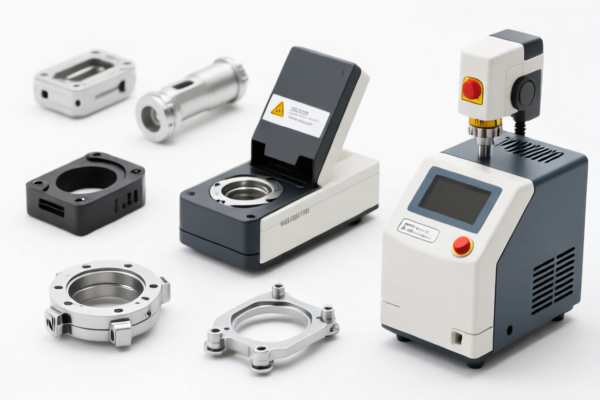
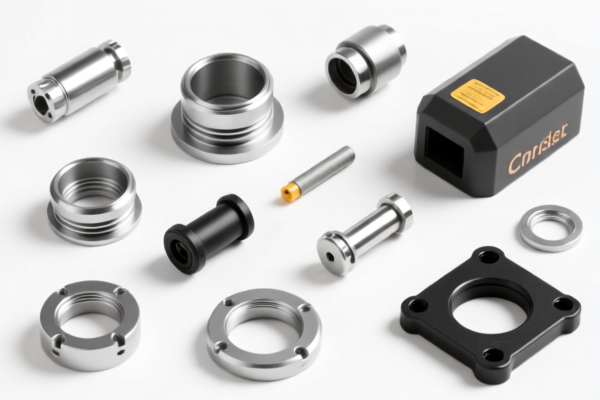
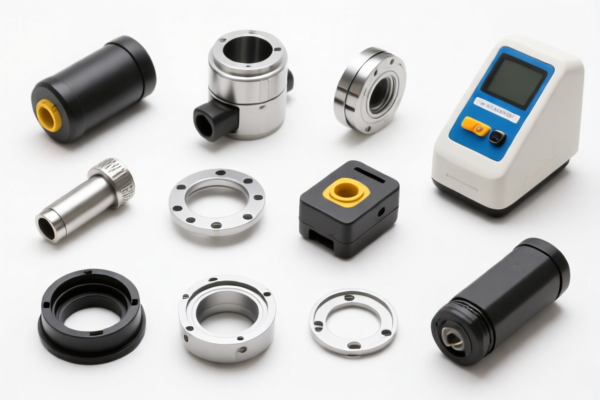

AI Analysis
📂 Generic Office Items (General Office Supplies)
🌐 HS Code Reference & Clearance Guide | 2026 Latest Tariff Analysis | Professional Customs Strategy
📌 I. Product Definition & Classification: Do You Really Understand "Generic Office Items"?
"Generic Office Items" is a broad commercial term that lacks a single, specific Harmonized System (HS) code. In international trade, these goods are fragmented across multiple categories based on material composition, specific function, and mechanical nature. Misclassification here is the leading cause of customs delays and unexpected tariff shocks.
⚠️ Critical Distinction Point:
- Are they mechanical parts of office machines? → Chapter 84
- Are they writing instruments (pens/pencils)? → Chapter 96
- Are they paper-based stationery? → Chapter 48
- Are they miscellaneous office supplies? → Chapter 96 (Miscellaneous) or 84/85 (Parts)
📦 II. HS Code Classification Matrix (2026 Latest Tariff Authority Comparison)
| HS Code | Product Description | Applicable Scenario | Material/Function Conflict? |
|---|---|---|---|
8472.90.90.80 |
Parts of office machines (Other) | Generic office machine accessories, non-specific parts | ✅ No material conflict; Fallback category for office machines |
8472.90.60.00 |
Parts of office machines (Other) | Compatible with office machinery; generic fallback | ✅ No material conflict; Compatible with office machine usage |
9608.10.00.00 |
Ball-point pens | Generic office items containing or resembling ball-point pens | ⚠️ Specific Function: Must be writing tools |
9608.40.40.00 |
Pencils (other than pencil leads) | Generic office items falling under writing instruments category | ⚠️ Specific Function: Must be pencils |
4820.90.00.00 |
Notebooks, account books, etc. (Other) | Paper or cardboard-based generic office supplies | ✅ Material Specific: Inferred as paper/cardboard |
🔍 Key Warning:
- Do not lump all "office supplies" under one code. A pen and a paperclip have different HS codes. - If the item is a part of a machine (e.g., a roller for a shredder), use 8472.90.xxxx. - If the item is a writing tool (pen/pencil), use 9608. - If the item is paper-based (notebooks/stationery), use 4820.
💰 III. 2026 Latest Tariff Rate Breakdown (Including Additional Duties)
✅ Applicable Country: United States (US)
✅ Country of Origin: China (CN)
✅ Effective Date: November 10, 2025 (and subsequent imports)
🎯 1. 8472.90.90.80 & 8472.90.60.00 —— Parts of Office Machines (Other)
| Item | Content |
|---|---|
| Base Rate | 0.0% (ad valorem) |
| Section 301 Additional Tariff | +25.0% |
| Section 122 Tariff (IEEPA) | +10.0% |
| Total Tariff | 35.0% |
| Tax Calculation | CIF Value × 35% |
| De Minimis Exemption | ❌ Not Eligible (deny_de_minimis) |
| Legal Basis Path | USITC:8472.90.90.80 → FOOTNOTE:301 → IEEPA:9903.01.24 |
📌 Explanation:
- "Base 0%": The standard MFN duty for these parts is zero. - "301 Tariff 25%": Added under U.S. Trade Law Section 301 for Chinese goods. - "Section 122 Tariff 10%": Additional tariff imposed under IEEPA for Chinese imports. - Total 35%: This is a high-cost category. Must be accounted for in pricing strategy.
🎯 2. 9608.10.00.00 —— Ball-point Pens
| Item | Content |
|---|---|
| Base Rate | 0.8¢ each + 5.4% (ad valorem) |
| Section 301 Additional Tariff | +7.5% |
| Section 122 Tariff (IEEPA) | +10.0% |
| Total Tariff | 0.8¢ each + 22.9% (5.4% + 7.5% + 10%) |
| Tax Calculation | Per-unit duty + CIF Value × 22.9% |
| De Minimis Exemption | ❌ Not Eligible (deny_de_minimis) |
| Legal Basis Path | USITC:9608.10.00.00 → FOOTNOTE:301 → IEEPA:9903.01.24 |
📌 Note:
- This category is per-unit (cent-based) plus ad valorem. - Total effective rate is ~22.9% + fixed cents. - Suitable for bulk pen imports.
🎯 3. 9608.40.40.00 —— Pencils
| Item | Content |
|---|---|
| Base Rate | 6.6% (ad valorem) |
| Section 301 Additional Tariff | +7.5% |
| Section 122 Tariff (IEEPA) | +10.0% |
| Total Tariff | 24.1% |
| Tax Calculation | CIF Value × 24.1% |
| De Minimis Exemption | ❌ Not Eligible (deny_de_minimis) |
| Legal Basis Path | USITC:9608.40.40.00 → FOOTNOTE:301 → IEEPA:9903.01.24 |
📌 Note:
- Slightly lower than pens due to higher base rate (6.6% vs 5.4%). - Total 24.1% is still significant.
🎯 4. 4820.90.00.00 —— Paper/Cardboard Stationery (Notebooks, etc.)
| Item | Content |
|---|---|
| Base Rate | 0.0% (ad valorem) |
| Section 301 Additional Tariff | +25.0% |
| Section 122 Tariff (IEEPA) | +10.0% |
| Total Tariff | 35.0% |
| Tax Calculation | CIF Value × 35% |
| De Minimis Exemption | ❌ Not Eligible (deny_de_minimis) |
| Legal Basis Path | USITC:4820.90.00.00 → FOOTNOTE:301 → IEEPA:9903.01.24 |
📌 Note:
- Same total rate (35%) as office machine parts. - Applies only if the item is predominantly paper or cardboard. - Do not use for plastic/metal office supplies.
🛠️ IV. Customs Clearance Practical Advice (Real-World Pitfall Avoidance)
✅ 1. Required Documentation Checklist (All are Mandatory)
| Document | Mandatory? | Description |
|---|---|---|
| ✅ Product Specification Sheet | ✔️ | Details material, function, and exact composition |
| ✅ Product Photos (Labeled) | ✔️ | Clear images showing the item, brand, and any markings |
| ✅ Commercial Invoice | ✔️ | Must specify "Generic Office Items" but include precise description (e.g., "Ball-point Pen, Plastic") |
| ✅ Packing List | ✔️ | Itemize contents; do not lump dissimilar items |
| ✅ Certificate of Origin (CO) | ✔️ | If originating from non-China countries, may qualify for lower tariffs |
| ✅ Third-Party Test Report | ✔️ | FDA, RoHS, or CPSC (if applicable for children's supplies) |
✅ 2. Declaration Strategy (Key Mantras)
🔥 “Function First, Material Second, Split if Necessary, Avoid ‘Generic’!”
| Scenario | Correct Declaration | Incorrect Practice |
|---|---|---|
| Mixed Box (Pens + Paper) | Split Declaration: 9608.10.00.00 for pens, 4820.90.00.00 for paper |
Declare as "Office Supplies" → 100% Inspection Delay |
| Office Machine Part | 8472.90.60.00 or 8472.90.90.80 |
Declare as "Plastic Part" → Risk of misclassification penalty |
| Pen | 9608.10.00.00 |
Declare as "Writing Tool" → Vague, leads to 301 scrutiny |
| Notebook | 4820.90.00.00 |
Declare as "Paper Product" → May trigger higher base rates if not specific |
✅ 3. Special Handling Cases
| Scenario | Handling Advice |
|---|---|
| OEM Custom Office Supplies | Provide client PO + design drawings to prove specific function/material |
| Mixed Containers (Pens + Parts) | Must split HS codes. Do not attempt to average tariffs. |
| Items for Children’s Use | Additional CPSC certification required; ensure no lead/paint issues |
| High-Value Office Parts | Consider Advance Ruling from CBP to confirm 8472 classification |
🌍 V. Global Market Clearance Comparison (2026 Latest)
| Country/Region | Recommended HS Code | Tariff (China Origin) | Certification Requirements | Notes |
|---|---|---|---|---|
| 🇺🇸 USA | 8472.90.90.80 / 9608.10.00.00 |
22.9%–35% | FCC, RoHS (if electronic) | Highest tariffs due to 301 + Section 122 |
| 🇨🇳 China | 8472.90.90.80 / 9608.10.00.00 |
0%–6.6% | CCC (if applicable) | No additional duties |
| 🇪🇺 EU | 8472.90.90.80 / 9608.10.00.00 |
0%–4.5% | CE, REACH | No Section 301/122 |
| 🇦🇺 Australia | 8472.90.90.80 / 9608.10.00.00 |
5%–10% | RCM | Moderate duties |
| 🇯🇵 Japan | 8472.90.90.80 / 9608.10.00.00 |
0%–5% | PSE (if electronic) | Low duties |
📌 Conclusion:
- USA is the most expensive market due to叠加 (stacked) tariffs (301 + 122). - EU and Japan are more tariff-friendly for generic office items. - China origin goods face no additional duties in non-US markets.
📌 VI. Common Mistakes & Pitfall Avoidance (Lessons Learned)
❌ Mistake 1: Declaring all office supplies as "Miscellaneous" without detail
👉 Consequence: Customs may assign Worst-Case HS Code → 35% tariff applied to everything.
❌ Mistake 2: Combining pens and machine parts in one line item
👉 Consequence: Classification error → Penalties + Back Taxes.
❌ Mistake 3: Ignoring "Section 122" for China-origin goods
👉 Consequence: Unexpected 10% tax on top of 301 tariffs → Profit Margin Erosion.
❌ Mistake 4: Using "Generic Office Items" as the only description
👉 Consequence: CBP Request for Information (RFI) → Delivery Delays.
✅ Correct Practice:
“Ball-point Pen, Plastic Barrel, Blue Ink, 0.7mm, Model XYZ”
“Office Machine Roller, Rubber, Part No. 12345”
“Notebook, A5, 100 Pages, Spiral Bound”
🎯 VII. Conclusion: Precision in Classification Saves Money!
🎯 Remember the Mantra:
🔹 “Function Dictates HS, Material Confirms It, 35% is the US Price, Split to Save!”
🔹 “Generic is Not a Code, Specific Description Saves You from Fines!”
📌 Pro Tip:
If your items are originating from Vietnam, Mexico, Thailand, or Malaysia, you may apply for IEEPA Exemptions or lower tariffs.
Recommend applying for an Advance Ruling from CBP for high-volume shipments.
📣 Immediate Action:
📞 Contact a licensed customs broker + Provide Product Specs + Apply for HS Code Advance Ruling
🚀 Let your generic office items clear customs smoothly, maximize margins, and scale globally!
✨ Professional Clearance Starts with Accurate Classification!
💼 Every Cent of Tariff is a Cent of Your Profit!
Customer Reviews
About HS Code Classification
The Harmonized System (HS) is an internationally standardized nomenclature developed by the World Customs Organization (WCO) to classify traded products. Over 200 countries use the HS system as the basis for customs tariffs, trade statistics, and import/export regulations.
Each HS code follows a hierarchical structure:
- Chapter (2 digits) — Broad category of goods (e.g., Chapter 84: Machinery and Mechanical Appliances)
- Heading (4 digits) — More specific grouping within the chapter
- Subheading (6 digits) — Internationally standardized breakdown, used by all WCO member countries
- National subdivisions (8-10 digits) — Country-specific extensions for further classification, such as US HTSUS 10-digit codes
Correct HS code classification is essential for smooth customs clearance, accurate duty payment, and compliance with trade regulations. Misclassification can lead to customs delays, overpayment of duties, or penalties.
When importing from CN to US, the applicable tariff rates may include:
- Most-Favored-Nation (MFN) rate — The standard duty rate applied to WTO members
- General rate — Applied to countries without trade agreements
- Trade remedy duties — Additional tariffs such as Section 301 (anti-dumping), Section 232 (national security), or countervailing duties
The information provided on this page is for reference purposes only. For official classification, please consult with your local customs authority or a licensed customs broker.