Genuine Leather Handcase
CN → US| HS Code | Tariff Rate | Origin | Destination | Doc |
|---|---|---|---|---|
| 4107112000 | 37.4% | CN | US | Official Doc |
| 4107111020 | 35.0% | CN | US | Official Doc |
| 4202219000 | 44.0% | CN | US | Official Doc |
| 4202110090 | 43.0% | CN | US | Official Doc |
| 4202110030 | 43.0% | CN | US | Official Doc |
Product Images
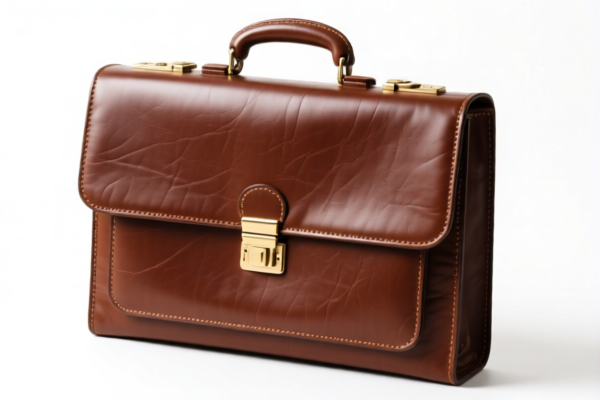
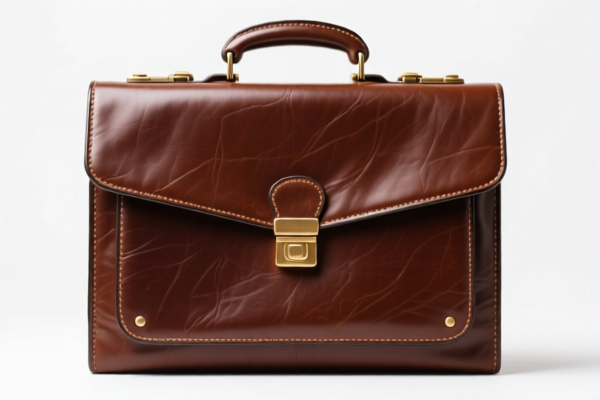
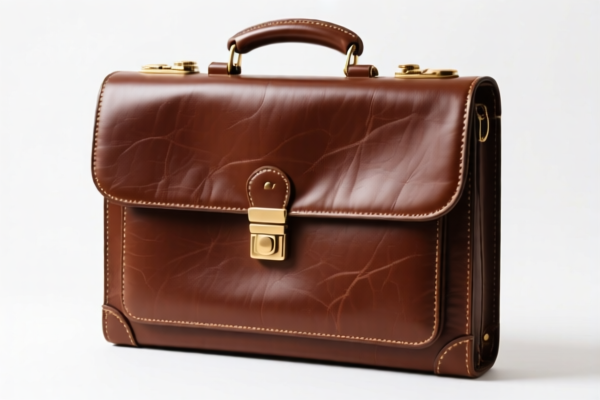
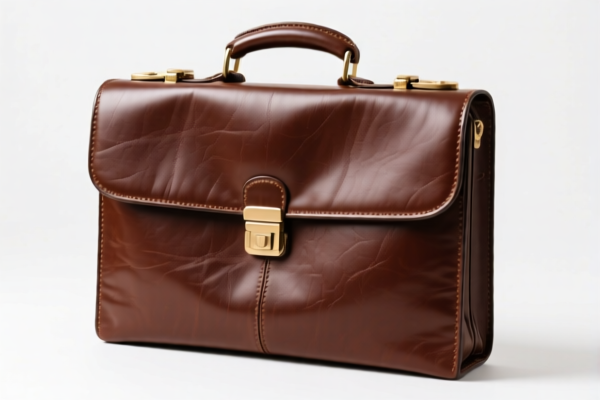
AI Analysis
👜 Genuine Leather Handcase (Handbag/Case)
🌐 HS Code Reference & Customs Clearance Guide | 2026 Latest Tariff Analysis | Professional Clearance Strategy
📌 I. Product Definition & Classification: What is a "Genuine Leather Handcase"?
A "Genuine Leather Handcase" typically refers to bags, cases, or containers made primarily from processed animal skin (cowhide, horsehide, etc.). In international trade, the classification depends heavily on whether it is considered a raw material (leather) or a finished good (luggage/accessory).
⚠️ Key Distinction:
- If the item is unfinished leather (tanned but not made into a specific shape like a bag with handles/lining) →归入 Chapter 41 (Leather).
- If the item is a finished bag (with structure, handles, lining, closures) →归入 Chapter 42 (Articles of Leather).
📦 II. HS Code Classification Details (2026 Latest Authorized Reference)
Based on the provided data, here are the precise classifications and tax implications:
| HS Code | Product Description | Tax Summary | Legal Interpretation |
|---|---|---|---|
4107.11.20.00 |
Raw Tanned Leather (Cow/Horse) | 37.4% | Matches material: Genuine leather, meets processing requirements for cow/horse animal skins. Note: Classified as raw material, not finished bag. |
4107.11.10.20 |
Specific Tanned Leather (Cow/Horse) | 35.0% | Matches material: Cowhide or horsehide, meets genuine leather characteristics. Note: Lower base duty than above, but still raw material classification. |
4202.21.90.00 |
Handbag/Case with Leather Outer Surface | 44.0% | Matches: Articles of luggage made of leather outer surface. Note: Standard finished bag classification. |
4202.11.00.90 |
Handbag/Case with Leather Outer Surface | 43.0% | Matches: Cowhide material & bag usage, classified under "Container" category. |
4202.11.00.30 |
Handbag/Case with Leather Outer Surface | 43.0% | Matches: Cowhide material & bag form (e.g., handbags, briefcases). |
🔍 Critical Insight:
- Raw Leather vs. Finished Bag: The difference in tax is significant. If you ship a finished bag but declare it as raw leather (4107...), you risk customs penalties for misclassification.
- Sub-heading Variations:4202.11and4202.21differ slightly by "shape" or "specific use."4202.11often covers handbags, while4202.21may cover items like handbags, pouches, or other luggage.
- US Tariffs: All these codes incur heavy Section 301 and IEEPA surcharges.
💰 III. 2026 Latest Tariff Rate Breakdown (Including Surcharges)
✅ Applicable Country: United States (US)
✅ Origin: China (CN)
✅ Effective Date: From November 10, 2025 (and subsequent imports)
🎯 1. Raw Leather Classifications (4107.11.20.00 & 4107.11.10.20)
| Item | Details |
|---|---|
| Base Duty | 0.0% – 2.4% (Ad Valorem) |
| Section 301 Duty | +25.0% (USITC Footnote) |
| IEEPA Surcharge | +10.0% (China-specific, effective Nov 10, 2025) |
| Total Effective Rate | 35.0% – 37.4% |
| De Minimis Exemption? | ❌ NO (Not eligible for $800 de minimis) |
| Legal Basis Path | IEEPA:9903.01.25 → USITC:4107.11.20.00 → FOOTNOTE:301 |
📌 Explanation:
- These codes apply if the item is not a finished bag (e.g., large sheets of tanned leather).
- Even with a lower base duty (0-2.4%), the 25% + 10% surcharges push the total to 35-37.4%.
🎯 2. Finished Leather Bags (4202.21.90.00, 4202.11.00.90, 4202.11.00.30)
| Item | Details |
|---|---|
| Base Duty | 8.0% – 9.0% (Ad Valorem) |
| Section 301 Duty | +25.0% |
| IEEPA Surcharge | +10.0% |
| Total Effective Rate | 43.0% – 44.0% |
| De Minimis Exemption? | ❌ NO (Not eligible for $800 de minimis) |
| Legal Basis Path | IEEPA:9903.01.25 → USITC:4202.11.00.x0 → FOOTNOTE:301 |
📌 Explanation:
- This is the correct classification for genuine leather handbags.
- Higher Base Duty: Unlike raw leather, finished bags have a base duty of 8-9%, making the total tax burden higher (43-44%).
- Risk: Misdeclaring a bag as raw leather to save 1-2% in base duty is a common but risky practice that can lead to reclassification, fines, and seizure.
🛠️ IV. Customs Clearance Practical Advice (Avoiding Pitfalls)
✅ 1. Documentation Checklist (Mandatory)
| Document | Required | Notes |
|---|---|---|
| ✅ Commercial Invoice | ✔️ | Must clearly state "Genuine Leather Handbag" or "Handcase," not "Leather Sheet." |
| ✅ Packing List | ✔️ | Detail quantity, weight, and dimensions. |
| ✅ Product Photos | ✔️ | Show full bag, logo, material texture, and lining. |
| ✅ Material Declaration | ✔️ | Specify "Cowhide" or "Horsehide." Avoid vague terms like "PU" or "Faux" if genuine. |
| ✅ FCC/CE Certificates | ❌ | Not required for leather goods, but helpful if electronic components are included (e.g., smart bag). |
| ✅ Origin Certificate | ✔️ | If shipped from non-China origins, may reduce tariffs. |
✅ 2. Declaration Tips (Key Mantras)
🔥 “Be Specific: Material + Use + Structure”
| Scenario | Correct Declaration | Incorrect Declaration |
|---|---|---|
| Finished Handbag | "Genuine Cowhide Leather Handbag, Model XYZ, 30x20cm" |
"Leather Goods" or "Leather Sheet" |
| Raw Leather | "Tanned Cowhide Leather, 2.0mm, Unfinished" |
"Handbag" |
| Mixed Materials | "Leather Outer, Canvas Lining, Handbag" |
"100% Leather" (if lining is not) |
✅ 3. Special Handling
| Situation | Recommendation |
|---|---|
| Smart Bags (with charging ports) | Declare as 4202... but include electrical specs; may trigger additional electronic component duties. |
| Luxury Brand Items | Ensure trademark authorization is available to avoid IP infringement holds. |
| Small Quantities (De Minimis) | Do NOT use $800 exemption for leather goods from China under current IEEPA rules; taxes are not exempt. |
🌍 V. Global Market Comparison (2026 Latest)
| Country/Region | Recommended HS Code | Total Tariff (China Origin) | Notes |
|---|---|---|---|
| 🇺🇸 USA | 4202.21.90.00 |
44.0% | Highest tax burden due to 301 + IEEPA surcharges. |
| 🇨🇳 China | 4202.21.00.90 |
8.0% | No additional surcharges for domestic import. |
| 🇪🇺 EU | 4202.21.00.00 |
4.0% | Standard MFN rate; no additional punitive tariffs. |
| 🇬🇧 UK | 4202.21.00.00 |
12.0% | Post-Brexit standard tariff. |
| 🇯🇵 Japan | 4202.21.00.00 |
7.0% | Moderate duty, no punitive surcharges. |
📌 Conclusion:
- The US market is the most expensive for importing genuine leather goods from China due to 44% total tariffs.
- Consider supply chain diversification (e.g., manufacturing in Vietnam or Italy) to leverage FTAs and avoid high duties.
📌 VI. Common Errors & Pitfalls (Lessons Learned)
❌ Error 1: Declaring a finished handbag as raw leather (4107...) to save 1-2% base duty.
👉 Consequence: Customs reclassification → Back taxes + fines + shipment delay.
❌ Error 2: Using "Leather Goods" as a generic description.
👉 Consequence: Unclear classification → Audits & Requests for Additional Documentation.
❌ Error 3: Ignoring IEEPA Surcharge eligibility.
👉 Consequence: Assuming de minimis exemption → Unexpected charges upon arrival.
✅ Correct Approach:
"Genuine Cowhide Leather Handbag, Handmade, with Metal Hardware, Model ABC, Made in China"
🎯 VII. Conclusion: Professional Clearance, Cost Control, Efficiency!
🎯 Key Takeaways:
🔹 “Finished Bags are 44%, Raw Leather is 35-37%.”
🔹 “Misclassification is Costly – Be Precise.”
🔹 “No De Minimis Exemption for Leather from China in the US.”
📌 Pro Tip:
If your leather goods are originating from Vietnam, Mexico, or Italy, you may qualify for IEEPA exemptions or lower base duties.
Recommendation: Apply for an Advance Ruling (Pre-classification) to confirm the correct HS code before shipment.
📣 Immediate Action:
📞 Consult a licensed customs broker + Provide product photos + Pre-apply for HS Code Ruling
🚀 Ensure smooth clearance, maximize profits, and minimize risks!
✨ Professional clearance starts with accurate classification!
💼 Every percentage point matters in global trade!
Customer Reviews
About HS Code Classification
The Harmonized System (HS) is an internationally standardized nomenclature developed by the World Customs Organization (WCO) to classify traded products. Over 200 countries use the HS system as the basis for customs tariffs, trade statistics, and import/export regulations.
Each HS code follows a hierarchical structure:
- Chapter (2 digits) — Broad category of goods (e.g., Chapter 84: Machinery and Mechanical Appliances)
- Heading (4 digits) — More specific grouping within the chapter
- Subheading (6 digits) — Internationally standardized breakdown, used by all WCO member countries
- National subdivisions (8-10 digits) — Country-specific extensions for further classification, such as US HTSUS 10-digit codes
Correct HS code classification is essential for smooth customs clearance, accurate duty payment, and compliance with trade regulations. Misclassification can lead to customs delays, overpayment of duties, or penalties.
When importing from CN to US, the applicable tariff rates may include:
- Most-Favored-Nation (MFN) rate — The standard duty rate applied to WTO members
- General rate — Applied to countries without trade agreements
- Trade remedy duties — Additional tariffs such as Section 301 (anti-dumping), Section 232 (national security), or countervailing duties
The information provided on this page is for reference purposes only. For official classification, please consult with your local customs authority or a licensed customs broker.