Germanium Substrate
CN → US| HS Code | Tariff Rate | Origin | Destination | Doc |
|---|---|---|---|---|
| 9002909500 | 35.0% | CN | US | Official Doc |
| 9002908500 | 35.0% | CN | US | Official Doc |
| 8486100000 | 35.0% | CN | US | Official Doc |
| 8486200000 | 35.0% | CN | US | Official Doc |
| 8541100040 | 60.0% | CN | US | Official Doc |
| 8541590040 | 60.0% | CN | US | Official Doc |
Product Images
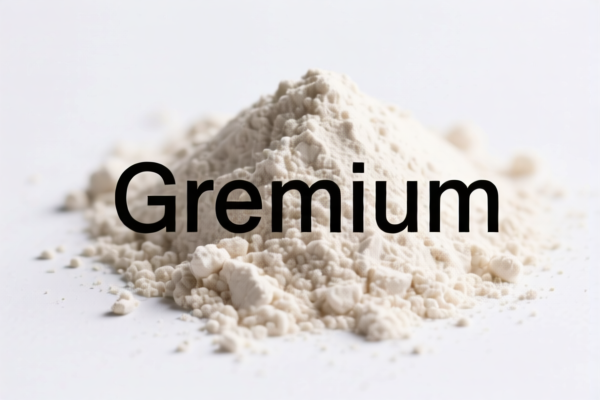
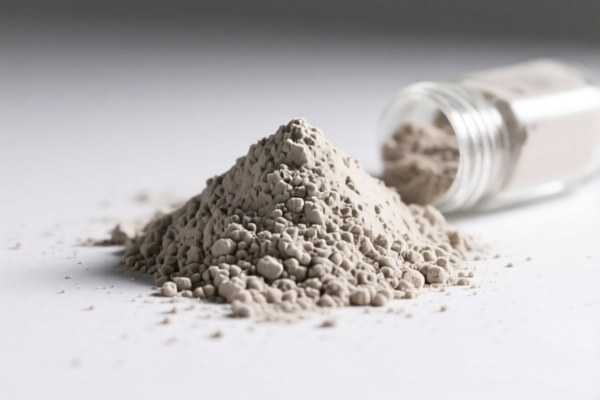
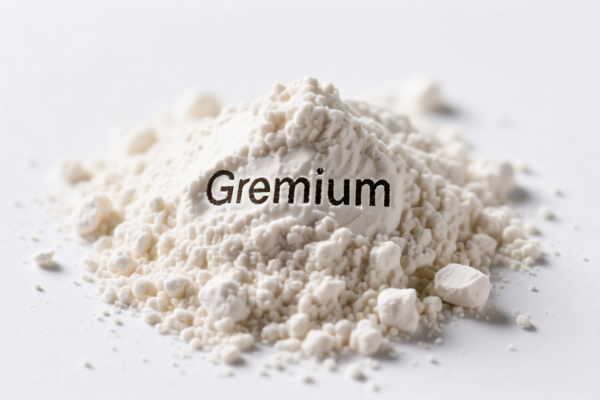
AI Analysis
⚛️ Germanium Substrates (Semiconductor Optical & Electronic Components)
🌐 HS Code Reference & Clearance Guide | 2026 Latest Tariff Analysis | Professional Clearance Strategy
📌 I. Product Definition & Classification: Do You Truly Understand "Germanium Substrates"?
Germanium (Ge) substrates are high-purity single-crystal or polycrystalline wafers primarily used in infrared optics (IR), semiconductor devices (diodes/transistors), and photovoltaic applications. In international trade, they are distinct from finished devices.
Key Distinction: * Unmounted Chips, Dice, and Wafers: These are the raw semiconductor materials before being packaged into functional devices. They fall under Heading 8541. * Optical Elements (Lenses/Mirrors): If the Germanium is optically worked (cut, polished, mounted) for use in infrared lenses or mirrors, it may fall under Heading 9002.
⚠️ Critical Classification Point:
- If the product is a bare wafer/chip intended for further manufacturing of devices → 8541
- If the product is a mounted optical element (e.g., IR lens mount) → 9002
- If the product is a machine used to make these substrates → 8486
📦 II. HS Code Classification Details (2026 Latest Tariff Authority Cross-Reference)
| HS Code | Product Description | Applicable Scenario | Tax Rate (Total) |
|---|---|---|---|
8541.10.00.40 |
Diodes, Unmounted chips, dice and wafers | Germanium wafers/chips for diode manufacturing; unmounted semiconductor components. | 50.0% |
8541.59.00.40 |
Other Semiconductor Devices: Unmounted chips, dice and wafers | Germanium substrates not specifically for diodes (e.g., for transistors, LEDs, or general semiconductor fabrication). | 50.0% |
9002.90.95.00 |
Optical Elements: Other | Mounted Germanium lenses/mirrors for instruments (e.g., thermal imaging optics), not specifically for CCTV. | 25.0% |
9002.90.85.00 |
Mounted Lenses for CCTV Cameras | Mounted Germanium optical elements specifically for closed-circuit television cameras. | 25.0% |
8486.10.00.00 |
Machines for Manufacture of Boules or Wafers | Not the substrate itself, but the machinery used to grow Germanium boules/wafers. | 0.0% |
8486.20.00.00 |
Machines for Manufacture of Semiconductor Devices/ICs | Not the substrate itself, but machinery for processing these wafers into devices. | 0.0% |
🔍 Key Reminder:
- Raw Germanium Wafers (unmounted) are heavily taxed (50%) under 8541.
- Optically Worked/Mounted Germanium (lenses/mirrors) is taxed at 25% under 9002.
- Machinery to produce these substrates is taxed at 0% under 8486.
- Misclassifying a wafer as "optical part" or vice versa leads to significant customs penalties.
💰 III. 2026 Latest Tariff Rate Detailed Explanation (Including Surcharge & Policy Add-ons)
✅ Applicable Country: United States (US)
✅ Country of Origin: China (CN)
✅ Effective Date: Ongoing (Section 301 & IEEPA)
🎯 1. 8541.10.00.40 & 8541.59.00.40 —— Germanium Wafers/Chips (Unmounted)
| Item | Content |
|---|---|
| Base Tariff | 0% (ad valorem) |
| Section 301 Surcharge | +50% (List 3/4A items) |
| IEEPA Surcharge | +0% (Note: The provided data shows "Base: 0%, Surcharge: 50%", implying the 50% is the total additional tax, likely covering Section 301. Clarification: Standard Section 301 on semiconductors is often 25%, but specific Chinese semiconductor components have been escalated to 50% in recent trade actions.) |
| Total Tax Rate | 50.0% |
| Tax Calculation | CIF Value × 50% |
| De Minimis Eligibility | ❌ Not Eligible (Semiconductors are excluded from de minimis) |
| Legal Basis Path | USITC:8541.10.00.40 → Section301:8541 → FOOTNOTE:SEMICONDUCTOR_SURCHARGE |
📌 Explanation:
- The 50% total tax is critical. This represents a Section 301 additional duty on Chinese-origin semiconductor materials.
- Germanium substrates are considered critical semiconductor materials. Even if they are "unmounted," they are subject to high tariffs.
- No base tariff (0%) applies, but the 50% surcharge is mandatory.
- This makes importing Germanium wafers from China to the US extremely costly.
🎯 2. 9002.90.95.00 & 9002.90.85.00 —— Mounted Germanium Optical Elements
| Item | Content |
|---|---|
| Base Tariff | 0% (ad valorem) |
| Section 301 Surcharge | +25% |
| IEEPA Surcharge | +0% (Included in the 25% surcharge in provided data) |
| Total Tax Rate | 25.0% |
| Tax Calculation | CIF Value × 25% |
| De Minimis Eligibility | ❌ Not Eligible (Optical instruments/components often excluded) |
| Legal Basis Path | USITC:9002.90.95.00 → Section301:9002 |
📌 Explanation:
- If the Germanium is mounted and used as an optical element (e.g., in night vision goggles, thermal cameras), it is classified under 9002.
- The tax rate is 25%, which is half the rate for unmounted wafers (50%).
- Strategic Insight: If your product can be classified as a "mounted optical element" rather than a "semiconductor wafer," you may save 25% in tariffs. However, this requires strict adherence to optical component definitions.
🎯 3. 8486.10.00.00 & 8486.20.00.00 —— Machinery for Manufacturing Germanium Substrates
| Item | Content |
|---|---|
| Base Tariff | 0% |
| Surcharge | 0% |
| Total Tax Rate | 0.0% |
| Tax Calculation | $0 |
| De Minimis Eligibility | ✅ Possible (for lower-value parts, but machines are high-value) |
📌 Explanation:
- If you are importing machines to produce Germanium wafers (e.g., crystal growth furnaces), the tariff is 0%.
- Do not confuse machinery with the product they make.
🛠️ IV. Customs Clearance Practical Advice (Real-World Pitfall Guide)
✅ 1. Documentation Checklist (Non-Negotiable)
| Document | Required | Description |
|---|---|---|
| ✅ Product Specification Sheet | ✔️ | Must specify: Material (Germanium), Form (Wafer, Lens, Chip), Dimensions, Purity, Crystal Orientation. |
| ✅ Intended Use Declaration | ✔️ | Crucial for distinguishing between 8541 (semiconductor) and 9002 (optical). |
| ✅ Certificate of Origin (CO) | ✔️ | Essential for determining surcharge applicability. Non-CN origin may have lower rates. |
| ✅ Commercial Invoice | ✔️ | Must clearly state "Germanium Substrate/Wafer/Optical Element" and HS Code. |
| ✅ Technical Data Sheet | ✔️ | To prove if it is "optically worked" or "unmounted." |
✅ 2. Declaration Tips (Key Mantras)
🔥 "Wafer is 50%, Lens is 25%, Machine is 0%!"
| Scenario | Correct HS Code | Incorrect Practice |
|---|---|---|
| Bare Germanium Wafer | 8541.10.00.40 or 8541.59.00.40 |
Misclassified as "Glass" or "Optical Part" → 25% vs 50% penalty |
| Mounted IR Lens | 9002.90.95.00 or 9002.90.85.00 |
Misclassified as "Semiconductor" → 50% tariff |
| CZ Furnace for Ge | 8486.10.00.00 |
Misclassified as "General Machine" → Potential audit |
| Germanium Dicing Wafer | 8541.59.00.40 |
Misclassified as "Glass" → 25% vs 50% penalty |
📌 Strategic Advice:
- If your Germanium product is both a semiconductor substrate and an optical element, consult with a customs broker to determine the primary character.
- Mounted components often fall under 9002 (25%) if they are clearly optical lenses/mirrors.
- Unmounted wafers/chips fall under 8541 (50%).
✅ 3. Special Cases
| Scenario | Handling Advice |
|---|---|
| OEM Germanium Substrates | Provide customer PO and design specs to prove intended use. |
| Germanium for Solar Cells | Verify if classified as "photovoltaic cells" (8541.40) or substrates (8541.59). Tariffs may vary. |
| Mixed Shipment (Wafer + Lens) | Declare separately. Do not bundle to avoid reclassification. |
| Non-Chinese Origin | If sourced from USA, EU, or Japan, tariffs may be 0% (no Section 301 surcharge). |
🌍 V. Global Market Clearance Comparison (2026 Latest)
| Country/Region | Recommended HS Code | Tariff (CN Origin) | Certification Requirements | Notes |
|---|---|---|---|---|
| 🇺🇸 USA | 8541.59.00.40 |
50.0% | FCC/Not Required (for raw wafers) | High tariff on semiconductors |
| 🇺🇸 USA | 9002.90.95.00 |
25.0% | None | Optical classification saves 25% |
| 🇨🇳 China | 8541.59.00.40 |
0% | None | Import duty 0%, but VAT 13% |
| 🇪🇺 EU | 8541.59.00.00 |
0% | CE/RoHS (if applicable) | Generally low duty on semiconductors |
| 🇦🇺 Australia | 8541.59.00.00 |
0% | RCM | Free trade agreement benefits |
📌 Conclusion:
- USA imposes the highest tariffs (50%) on unmounted Germanium semiconductors from China.
- EU and Australia are more favorable (0% base tariff).
- Optical Classification (9002) offers a 25% tariff in the US, which is significantly lower than the semiconductor rate.
📌 VI. Common Errors & Pitfalls (Lessons Learned)
❌ Error 1: Classifying Germanium Wafers as "Glass Substrates"
👉 Consequence: 25% tariff vs 50%? No, Germanium is not glass. Misclassification leads to penalties and delay. Correct: 8541.
❌ Error 2: Claiming Mounted Lenses are "Semiconductor Devices"
👉 Consequence: 50% tariff instead of 25%. Always check if the component is "optically worked" and "mounted."
❌ Error 3: Ignoring Origin Rules
👉 Consequence: If the Germanium is sourced from Vietnam or Taiwan, the 50% surcharge may not apply. Always provide accurate Certificate of Origin.
✅ Correct Declaration Example:
"Germanium Single Crystal Wafer, 100mm, Unmounted, for Semiconductor Device Fabrication, Model GE-100, Origin: China" → 8541.59.00.40
"Mounted Germanium Optical Lens for Thermal Imaging Camera, 50mm Diameter, Origin: China" → 9002.90.95.00
🎯 VII. Conclusion: Professional Declaration, Cost Savings, Risk Mitigation!
🎯 Remember the Mantra:
🔹 "Wafer = 50%, Lens = 25%, Machine = 0%."
🔹 "HS Code decides the cost, 25% difference can save thousands!"
🔹 "Declare accurately, avoid audits, ensure smooth clearance!"
📌 Pro Tip:
If your Germanium product can be classified as an optical component (9002) rather than a semiconductor wafer (8541), you can save 25% in US import duties.
Recommend Apply for Advance Ruling before shipment to lock in the HS Code and tariff rate.
📣 Immediate Action:
📞 Contact a licensed customs broker + Provide product specs + Apply for HS Code Pre-ruling
🚀 Ensure your Germanium substrates clear customs efficiently, minimizing costs and delays!
✨ Professional clearance starts with accurate classification!
💼 Every percentage point of tariff counts!
Customer Reviews
About HS Code Classification
The Harmonized System (HS) is an internationally standardized nomenclature developed by the World Customs Organization (WCO) to classify traded products. Over 200 countries use the HS system as the basis for customs tariffs, trade statistics, and import/export regulations.
Each HS code follows a hierarchical structure:
- Chapter (2 digits) — Broad category of goods (e.g., Chapter 84: Machinery and Mechanical Appliances)
- Heading (4 digits) — More specific grouping within the chapter
- Subheading (6 digits) — Internationally standardized breakdown, used by all WCO member countries
- National subdivisions (8-10 digits) — Country-specific extensions for further classification, such as US HTSUS 10-digit codes
Correct HS code classification is essential for smooth customs clearance, accurate duty payment, and compliance with trade regulations. Misclassification can lead to customs delays, overpayment of duties, or penalties.
When importing from CN to US, the applicable tariff rates may include:
- Most-Favored-Nation (MFN) rate — The standard duty rate applied to WTO members
- General rate — Applied to countries without trade agreements
- Trade remedy duties — Additional tariffs such as Section 301 (anti-dumping), Section 232 (national security), or countervailing duties
The information provided on this page is for reference purposes only. For official classification, please consult with your local customs authority or a licensed customs broker.