Gift Bag
CN → US| HS Code | Tariff Rate | Origin | Destination | Doc |
|---|---|---|---|---|
| 3923210095 | 38.0% | CN | US | Official Doc |
| 3923290000 | 38.0% | CN | US | Official Doc |
| 4819504060 | 35.0% | CN | US | Official Doc |
| 4819200040 | 35.0% | CN | US | Official Doc |
| 4202995000 | 42.8% | CN | US | Official Doc |
Product Images

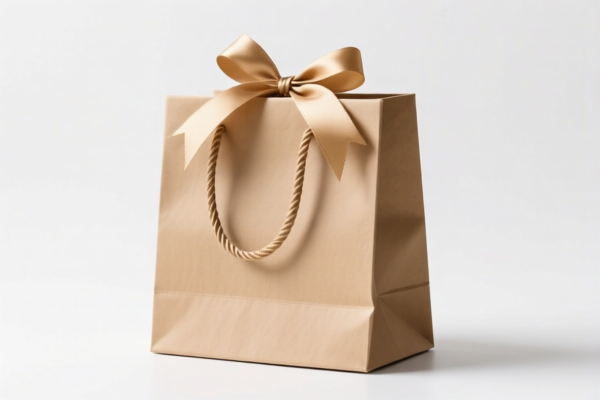

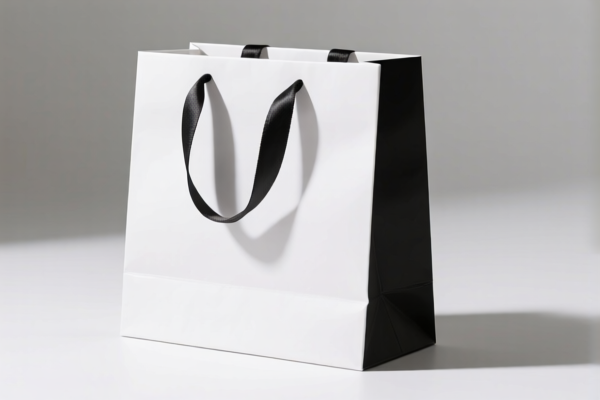
AI Analysis
🎁 Gift Bags (Packaging Containers)
🌐 HS Code Reference & Clearance Guide | 2026 Latest Tariff Analysis | Professional Customs Strategy
📌 I. Product Definition & Classification: What Exactly is a "Gift Bag"?
A "Gift Bag" is a versatile packaging item primarily used for gifting, retail presentation, or event favors. In international trade, its classification depends strictly on material composition and structural form. It is not a single category but a functional descriptor that maps to different HS Codes based on what it is made of.
Plastic Gift Bags: Made from polymers like polyethylene (PE) or polypropylene (PP). These are flexible, often handled with handles, and categorized under Chapter 39.
Paper/Cardboard Gift Bags: Made from paper, paperboard, or coated cardboard. These include folded paper bags, rigid boxes, and structured carriers. These fall under Chapter 48 or 42.
⚠️ Key Distinction Point:
- If the bag is plastic (flexible, polymer-based) →归入 3923 (Plastics);
- If the bag is paper/cardboard (folded or rigid) → 归入 4819 (Paper Packaging) or 4202 (Articles of Paper Covered in Other Materials).
📦 II. HS Code Classification Details (2026 Latest Tariff Authority Comparison)
| HS Code | Product Description | Applicable Scenario | Material Type |
|---|---|---|---|
3923.21.00.95 |
Plastic sacks and bags (other than those of heading 3923.21.00.10), specifically for "other" plastic packaging | Plastic gift bags (e.g., PE/PP material), flexible pouches | 🧪 Plastic |
3923.29.00.00 |
Other articles for the conveyance or packing of goods, of plastics | Plastic gift bags with handles, reinforced plastic bags, "satchel" type plastic bags | 🧪 Plastic |
4819.50.40.60 |
Paper or cardboard containers, boxes, pouches, and wallets | Simple folded paper gift bags, unlined paper bags | 📄 Paper/Cardboard |
4819.20.00.40 |
Folded cartons and boxes (not of corrugated paper) | Rigid or semi-rigid paper gift boxes, high-end paper carriers | 📄 Paper/Cardboard |
4202.99.50.00 |
Articles of apparel and clothing accessories, other | Paper bags covered/lined with other materials (e.g., plastic-coated paper, fabric-lined paper gift bags) | 📄🧪 Composite |
🔍 Key Reminder:
- Plastic vs. Paper: The primary differentiator is the outer layer material. If it feels like plastic and tears like plastic, it's3923. If it crinkles like paper, it's4819or4202.
- Lining Matters: A paper bag with a thick plastic liner or coating may shift from4819to4202depending on the predominant character or specific national interpretations, but typically4202covers "covered by other materials."
💰 III. 2026 Latest Tariff Rate Breakdown (Including Surtaxes, Policy Surcharges)
✅ Applicable Country: United States (US)
✅ Country of Origin: China (CN)
✅ Effective Date: From Nov 10, 2025 (for subsequent imports)
🎯 1. 3923.21.00.95 & 3923.29.00.00 —— Plastic Gift Bags
| Item | Content |
|---|---|
| Base Tariff | 3.0% (ad valorem) |
| Section 301 Surtax | +25% (From USITC Footnote 9903.88.01) |
| IEEPA Surtax | +10% (Against Chinese/HK products, effective Nov 10, 2025) |
| Total Tax Rate | 38.0% |
| Tax Calculation | CIF Value × 38.0% |
| De Minimis Eligibility | ❌ No (deny_de_minimis) |
| Legal Basis Path | IEEPA:9903.01.25 → IEEPA:9903.01.24 → USITC:3923.21.00.95 / 3923.29.00.00 |
📌 Explanation:
- "Base Tariff 3%": Standard Most Favored Nation (MFN) rate for plastic packaging.
- "Section 301 Surtax 25%": The ongoing trade war tariff on Chinese plastic goods.
- "IEEPA Surtax 10%": The additional penalty on Chinese-origin plastics introduced in late 2025.
- Combined Rate: 38%. This is a high-cost category for plastic gift bags. Do not underestimate the impact on margin.
🎯 2. 4819.50.40.60 & 4819.20.00.40 —— Paper/Cardboard Gift Bags
| Item | Content |
|---|---|
| Base Tariff | 0.0% (ad valorem) |
| Section 301 Surtax | +25% (From USITC Footnote 9903.88.01) |
| IEEPA Surtax | +10% (Against Chinese/HK products, effective Nov 10, 2025) |
| Total Tax Rate | 35.0% |
| Tax Calculation | CIF Value × 35.0% |
| De Minimis Eligibility | ❌ No (deny_de_minimis) |
| Legal Basis Path | IEEPA:9903.01.25 → IEEPA:9903.01.24 → USITC:4819.50.40.60 / 4819.20.00.40 |
📌 Explanation:
- "Base Tariff 0%": Paper packaging often enjoys lower base tariffs.
- "Section 301 Surtax 25%": Still applies to Chinese paper products.
- "IEEPA Surtax 10%": Still applies.
- Combined Rate: 35%. Slightly cheaper than plastic bags, but still significant.
🎯 3. 4202.99.50.00 —— Composite/Covered Gift Bags
| Item | Content |
|---|---|
| Base Tariff | 7.8% (ad valorem) |
| Section 301 Surtax | +25% (From USITC Footnote 9903.88.01) |
| IEEPA Surtax | +10% (Against Chinese/HK products, effective Nov 10, 2025) |
| Total Tax Rate | 42.8% |
| Tax Calculation | CIF Value × 42.8% |
| De Minimis Eligibility | ❌ No (deny_de_minimis) |
| Legal Basis Path | IEEPA:9903.01.25 → IEEPA:9903.01.24 → USITC:4202.99.50.00 |
📌 Explanation:
- "Base Tariff 7.8%": Higher base rate because it's classified as an "article of other materials covering paper."
- "Surtaxes 25% + 10%": Same punitive surtaxes apply.
- Combined Rate: 42.8%. Highest tariff risk! Avoid this classification if possible unless the bag is genuinely a luxury item made primarily of non-paper materials (e.g., leather-wrapped paper).
🛠️ IV. Customs Clearance Practical Advice (Battle-Tested Pitfall Avoidance)
✅ 1. Document Preparation Checklist (All Required)
| Document | Required | Notes |
|---|---|---|
| ✅ Product Spec Sheet | ✔️ | Material composition (e.g., 100% PE, 80gsm Paper), handle type, capacity |
| ✅ Product Photos | ✔️ | Clear images of bag texture, handles, and any coatings |
| ✅ Commercial Invoice | ✔️ | Accurate description: "Plastic Gift Bag" or "Paper Gift Bag" – Do not just say "Bag" |
| ✅ Packing List | ✔️ | Quantity, weight, dimensions |
| ✅ Origin Certificate (CO) | ✔️ | If not China-origin, may reduce/surtax |
| ✅ Third-party Test Report | ✔️ | FDA Food Contact (if for food gifts), Prop 65 (California) |
✅ 2. Declaration Tips (Key Mantras)
🔥 “Material First, Function Second, Name Precise, Tax Saved!”
| Scenario | Correct Declaration | Wrong Practice |
|---|---|---|
| Plastic Bag with Paper Handle | 3923.29.00.00 (Plastic) |
Declaring as "Paper Bag" → Audit Risk |
| Paper Bag with Plastic Coating | 4202.99.50.00 (Covered) |
Declaring as 4819 → Under-declaration Risk |
| Pure Paper Gift Bag | 4819.50.40.60 (Paper) |
Declaring as 4202 → Higher Tax (42.8% vs 35%) |
| Plastic Bag | 3923.21.00.95 (Plastic) |
Declaring as 4819 → Customs Penalty |
⚠️ Critical Warning:
- Do NOT declare as "Textile Bag" or "Canvas Bag" unless it is actually made of fabric. Misclassification of material leads to severe penalties.
- Handles: If a plastic bag has a cardboard handle, it is still generally classified as plastic (3923) if the plastic body is dominant.
✅ 3. Special Situations
| Situation | Handling Advice |
|---|---|
| Luxury Gift Bags (e.g., Silk-lined, Leather-wrapped) | Likely 4202.99.50.00. Expect 42.8% tax. Consider if material can be simplified to paper to save tax. |
| Biodegradable Plastic Bags | If certified biodegradable but still plastic polymer, likely still 3923. Check for specific eco-certifications that might affect HS code in other countries, but US currently treats most bio-plastics as plastics. |
| Reusable Shopping Bags | If made of non-woven polypropylene (non-woven fabric), it may be classified under 6305 or 6307. Not 3923. This could lower tax. Ensure material is "non-woven fabric," not just "plastic film." |
🌍 V. Global Market Clearance Comparison (2026 Latest)
| Country/Region | Recommended HS Code | Tariff (China Origin) | Certification | Notes |
|---|---|---|---|---|
| 🇺🇸 USA | 3923.29.00.00 (Plastic) 4819.50.40.60 (Paper) |
38.0% (Plastic) 35.0% (Paper) |
FDA, Prop 65 | High surtaxes apply. |
| 🇨🇳 China | 3923.29.00.00 4819.50.40.60 |
3% (Plastic) 0% (Paper) |
CCC (if applicable) | No extra surtaxes. |
| 🇪🇺 EU | 3923.29 4819.50 |
0-6.5% | REACH, LFGB | No Section 301/IEEPA surtaxes. |
| 🇨🇦 Canada | 3923.29 4819.50 |
5-10% | Health Canada | No punitive surtaxes. |
📌 Conclusion:
- USA is the most expensive market due to the 25% + 10% surtaxes.
- Paper bags (35%) are slightly more cost-effective than Plastic bags (38%) in the US.
- Composite bags (42.8%) should be avoided if possible due to the high base tariff.
📌 VI. Common Errors & Pitfall Guide (Lessons from Blood)
❌ Mistake 1: Declaring a plastic bag with a paper handle as a "Paper Bag"
👉 Consequence: Customs audit → 38% tax assessed → Back taxes + fines.
❌ Mistake 2: Declaring a coated paper bag as simple paper (4819)
👉 Consequence: Under-declaration → 42.8% tax assessed → 7.8% base tax difference + penalties.
❌ Mistake 3: Not specifying "Gift Bag" in description
👉 Consequence: Customs may reclassify as general "Packaging" or "Container" → Delay + Additional Duty.
✅ Correct Practice:
"Plastic Gift Bag, 100% Polyethylene, with Cotton Handle, 12x14 inch, Model G-100, FDA Compliant"
vs
"Paper Gift Bag, 100% Kraft Paper, Folded, 10x10 inch, Model P-200"
🎯 VII. Conclusion: Professional Declaration, Save Money, Ensure Clearance!
🎯 Remember the Mantra:
🔹 "Plastic is 38%, Paper is 35%, Composite is 42%."
🔹 "Material determines the code, code determines the cost."
🔹 "Do not mix materials in declaration, or pay the price!"
📌 Pro Tip:
If your gift bags are made of non-woven fabric (e.g., PP spunbond), they may fall under Chapter 63 (Textiles), which often has lower or zero tariffs in some jurisdictions (check specific HS codes like 6305.33 or 6307.90). This is a major cost-saving opportunity for reusable gift bags!
📣 Action Now:
📞 Contact a professional customs broker + Provide material samples + Apply for Advance Ruling
🚀 Let your gift bags, clear smoothly, efficiently, and maximize profit!
✨ Professional Clearance Starts with Accurate Classification!
💼 Every cent of cost deserves precise calculation!
Customer Reviews
About HS Code Classification
The Harmonized System (HS) is an internationally standardized nomenclature developed by the World Customs Organization (WCO) to classify traded products. Over 200 countries use the HS system as the basis for customs tariffs, trade statistics, and import/export regulations.
Each HS code follows a hierarchical structure:
- Chapter (2 digits) — Broad category of goods (e.g., Chapter 84: Machinery and Mechanical Appliances)
- Heading (4 digits) — More specific grouping within the chapter
- Subheading (6 digits) — Internationally standardized breakdown, used by all WCO member countries
- National subdivisions (8-10 digits) — Country-specific extensions for further classification, such as US HTSUS 10-digit codes
Correct HS code classification is essential for smooth customs clearance, accurate duty payment, and compliance with trade regulations. Misclassification can lead to customs delays, overpayment of duties, or penalties.
When importing from CN to US, the applicable tariff rates may include:
- Most-Favored-Nation (MFN) rate — The standard duty rate applied to WTO members
- General rate — Applied to countries without trade agreements
- Trade remedy duties — Additional tariffs such as Section 301 (anti-dumping), Section 232 (national security), or countervailing duties
The information provided on this page is for reference purposes only. For official classification, please consult with your local customs authority or a licensed customs broker.