Gift Packaging Clip
CN → US| HS Code | Tariff Rate | Origin | Destination | Doc |
|---|---|---|---|---|
| 4415109000 | 45.7% | CN | US | Official Doc |
| 8308100000 | 0.0% | CN | US | Official Doc |
| 3923500000 | 40.3% | CN | US | Official Doc |
| 3923900080 | 38.0% | CN | US | Official Doc |
| 4415208000 | 45.7% | CN | US | Official Doc |
Product Images
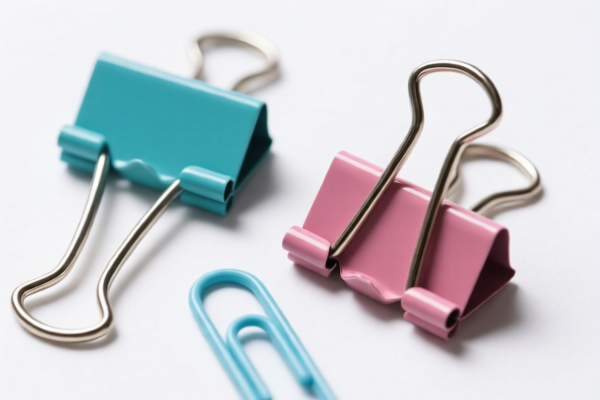
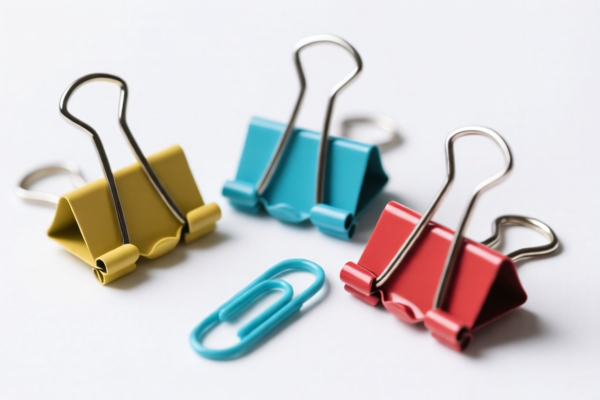


AI Analysis
🎀 Gift Packaging Clip (Gift Tie / Ribbon Clip)
🌐 HS Code Reference & Customs Clearance Guide | 2026 Latest Tariff Analysis | Professional Clearance Strategy
📌 I. Product Definition & Classification: What is a "Gift Packaging Clip"?
Gift Packaging Clips are small accessories used to secure, fasten, or decorate ribbons, bows, or packaging materials on gift boxes, envelopes, and parcels. In international trade, they are rarely classified as "stationery" or "toys." Instead, their classification depends entirely on the material composition and functional structure.
They generally fall into two main categories: 1. Wooden Clips: Often made of wood, bamboo, or cork, used for a rustic or eco-friendly aesthetic. 2. Plastic/Metal Clips: Used for durability or specific functional fastening (e.g., alligator clips, spring clips).
⚠️ Key Classification Distinction: - If made of Wood → Look at Chapter 44 (Wood and Articles of Wood). - If made of Plastic → Look at Chapter 39 (Plastics and Articles Thereof). - If made of Metal → Look at Chapter 83 (Articles of Base Metal).
📦 II. HS Code Classification Details (2026 Latest Tariff Authority)
Based on the provided data, here is the precise breakdown for Gift Packaging Clips:
| HS Code | Product Description | Material | Summary of Classification |
|---|---|---|---|
4415.10.90.00 |
Wooden Packaging Crates, Cases, Drums, and Similar Packings; Packing Blocks for Crates, Cases, Drums, etc. | Wood | Classified as Wooden Packaging Accessories. |
8308.10.00.00 |
Clasps, Frames with Clasps, Buckles, Snap-hooks, Snap-rings, Hook Eyes, Eyes, and Pins and Eyes, of Base Metal; Parts of Buckles or Clasps | Metal | Classified as Metal Fasteners/Clasps for packaging or general use. |
3923.50.00.00 |
Stops, Plugs, Caps, Lids, Covers, Caps for Corks, Bottles, Boxes, Cases, Bags and Other Containers, of Plastics | Plastic | Classified as Plastic Packaging Supplies (specifically closures/lids/caps context). |
3923.90.00.80 |
Articles for the conveyance or packaging of goods, of plastics; Stoppers, Lids, Caps and Other Closures, of Plastics (Other) | Plastic | Classified as Other Plastic Packaging Articles. |
4415.20.80.00 |
Packing Crates, Cases, Drums and Similar Packings; Packing Blocks for Packing Crates, Cases, Drums, etc. (Other) | Wood | Classified as Other Wooden Packaging Items (Pallets/Loading Boards context). |
🔍 Critical Note: - Wooden clips are strictly grouped under Chapter 44 as packaging aids, not decorative items. - Plastic clips are split between 3923.50 (if viewed as caps/closures for bottles/containers) and 3923.90 (if viewed as general packaging supplies). The distinction often lies in whether the clip is "integrally formed" with a container closure or a separate accessory. - Metal clips are classified under Chapter 83 as base metal articles, specifically clasps/fasteners.
💰 III. 2026 Latest Tariff Rate Breakdown (Including Surcharges)
✅ Applicable Country: United States (US)
✅ Country of Origin: China (CN)
✅ Effective Date: November 10, 2025 (and subsequent imports)
⚠️ Warning: All listed HS Codes below are subject to Section 301 Tariffs and IEEPA Section 122 Tariffs, resulting in significantly higher costs than standard MFN rates.
🎯 1. 4415.10.90.00 & 4415.20.80.00 —— Wooden Packaging Clips
| Item | Content |
|---|---|
| Base Tariff | 10.7% |
| Section 301 Surcharge | +25.0% |
| IEEPA Section 122 Tariff | +10.0% |
| Total Effective Rate | 45.7% |
| Tax Calculation | CIF Value × 45.7% |
| De Minimis Eligibility | ❌ No (Denied) |
📌 Explanation: - Wooden packaging materials are considered "packaging aids" rather than simple stationery. - The 10.7% base rate is combined with the 25% Section 301 tariff (trade war measures) and an additional 10% IEEPA tariff (specific to Chinese-origin goods under emergency powers). - Result: Nearly half of the product value is lost to duties.
🎯 2. 8308.10.00.00 —— Metal Packaging Clips (Clasps/Fasteners)
| Item | Content |
|---|---|
| Base Tariff | 1.1¢/kg + 2.9% |
| Section 301 Surcharge | +25.0% |
| IEEPA Section 122 Tariff | +10.0% |
| Total Effective Rate | 1.1¢/kg + 2.9% + 35.0% (Ad Valorem Equivalent) |
| Tax Calculation | (Weight × 1.1¢) + (CIF Value × 2.9% × 3.5) |
| De Minimis Eligibility | ❌ No |
📌 Explanation: - Metal clips are often weighed for duty calculation due to the specific base rate structure (1.1¢/kg). - The 2.9% ad valorem base is multiplied by the total surcharge factor (35%), making the effective ad valorem component much higher. - Result: For heavy metal clips, the per-kg fee adds up; for light clips, the percentage applies.
🎯 3. 3923.50.00.00 —— Plastic Packaging Clips (Specific Closures/Caps)
| Item | Content |
|---|---|
| Base Tariff | 5.3% |
| Section 301 Surcharge | +25.0% |
| IEEPA Section 122 Tariff | +10.0% |
| Total Effective Rate | 40.3% |
| Tax Calculation | CIF Value × 40.3% |
| De Minimis Eligibility | ❌ No |
📌 Explanation: - If the plastic clip is interpreted as a "cap," "lid," or "stopper" for a container, it falls here. - Result: High tariff burden, similar to wooden clips.
🎯 4. 3923.90.00.80 —— Plastic Packaging Clips (Other Packaging Articles)
| Item | Content |
|---|---|
| Base Tariff | 3.0% |
| Section 301 Surcharge | +25.0% |
| IEEPA Section 122 Tariff | +10.0% |
| Total Effective Rate | 38.0% |
| Tax Calculation | CIF Value × 38.0% |
| De Minimis Eligibility | ❌ No |
📌 Explanation: - This is often the most common classification for general-purpose plastic gift clips (e.g., alligator clips, ribbon fasteners) that don't fit the "closure" definition. - Result: Slightly lower than
3923.50, but still very high due to surcharges.
🛠️ IV. Customs Clearance Practical Advice (Pitfall Avoidance Guide)
✅ 1. Preparation Checklist (Essential Documents)
| Document | Required? | Notes |
|---|---|---|
| ✅ Product Photos | ✔️ | Must clearly show the clip, material, and how it attaches to ribbon/paper. |
| ✅ Material Declaration | ✔️ | Explicitly state: "100% Plastic," "Solid Wood," or "Zinc Alloy." |
| ✅ Function Description | ✔️ | Describe as "Accessory for gift wrapping," NOT "Stationery" or "Toy." |
| ✅ HS Code Justification | ✔️ | Provide reasoning for chosen HS code (e.g., "Classified under 3923 as plastic packaging article"). |
| ✅ Commercial Invoice | ✔️ | Value must include all costs up to the US port (CIF). |
| ✅ Packing List | ✔️ | Weight and count must match customs declarations exactly. |
✅ 2. Declaration Strategy (Key Tips)
🔥 “Material First, Function Second, Avoid ‘Stationery’!”
| Scenario | Correct Declaration | Incorrect Declaration | Consequence |
|---|---|---|---|
| Plastic Clip | 3923.90.00.80 - Plastic Gift Clip |
"Plastic Stationery" | Misclassification risk → Penalties |
| Wooden Clip | 4415.10.90.00 - Wooden Packaging Aid |
"Wooden Decoration" | Higher duty rate or rejection |
| Metal Clip | 8308.10.00.00 - Metal Clasp |
"Jewelry Part" | Wrong chapter → Customs hold |
| Mixed Box | Separate by material in invoice | Mixed HS code | Customs will split and audit → Delay |
✅ 3. Special Cases
| Case | Handling Advice |
|---|---|
| OEM Custom Clips | Provide design specs showing material. If coated, specify base metal/plastic. |
| Wooden Clips with Paint/Varnish | Still classified under Chapter 44 (wood). Do not claim Chapter 96 (miscellaneous manufactured articles) to avoid scrutiny. |
| Plastic Clips with Metal Springs | Usually classified as Plastic (3923) if plastic is the principal material, but may be challenged. Best to declare as Plastic and justify. |
| Bulk vs. Retail | Bulk industrial clips vs. retail gift clips do not change HS code, but affect duty value. |
🌍 V. Global Market Comparison (2026 Latest)
| Country/Region | Recommended HS Code | Tariff Rate (China Origin) | Certification/Notes |
|---|---|---|---|
| 🇺🇸 USA | 3923.90.00.80 (Plastic)4415.10.90.00 (Wood)8308.10.00.00 (Metal) |
38.0% - 45.7% | High tariffs due to IEEPA + 301. De Minimis ($800) does not apply. |
| 🇪🇺 EU | 8308.10.00 (Metal)3923.50 (Plastic)4415.20 (Wood) |
0% - 3.5% | Generally low duty. EPR registration required for plastic/wood packaging. |
| 🇬🇧 UK | Similar to EU | 0% - 3.5% | Post-Brexit rules apply. EPR required. |
| 🇨🇦 Canada | 8308.10.003923.504415.20 |
0% - 5% | Low duty. No IEEPA surcharge. |
| 🇯🇵 Japan | 8308.10.003923.504415.20 |
0% - 5% | Low duty. No surcharge. |
📌 Conclusion: - USA is the most expensive market for gift packaging clips due to the 35% surcharge on top of base tariffs. - EU, UK, Canada, and Japan have significantly lower duties, making them more attractive for cost-sensitive exports. - De Minimis ($800) does NOT apply to these HS codes in the USA. Every shipment, no matter how small, is subject to duty.
📌 VI. Common Mistakes & Pitfalls (Lessons Learned)
❌ Mistake 1: Classifying as "Stationery" (e.g., 9608 or 4820)
👉 Consequence: Customs will reclassify based on material, leading to 45% duty instead of potential lower rates (if eligible), plus penalties.
❌ Mistake 2: Ignoring the "IEEPA Section 122" Tariff 👉 Consequence: Underestimating cost by 10%. This tariff applies specifically to Chinese-origin goods under emergency powers.
❌ Mistake 3: Assuming "De Minimis" applies for small gift clips 👉 Consequence: Shipments under $800 are still liable for duty for these HS codes. Do not rely on the $800 exemption.
❌ Mistake 4: Mixing materials in one HS Code 👉 Consequence: A plastic clip with a metal spring must be classified correctly. If declared as pure plastic, it may be rejected. Split the shipment or declare the principal material accurately.
✅ Correct Practice:
"Plastic Gift Ribbon Clip, 2cm, Assorted Colors, HS Code: 3923.90.00.80, Origin: China, Value: $X, Weight: Y kg"
🎯 VII. Conclusion: Professional Declaration for Cost Efficiency
🎯 Remember the Key Takeaways:
🔹 "Material Dictates Code: Wood=44, Plastic=39, Metal=83"
🔹 "USA Tariff is High: Base + 25% + 10% = ~40-46%"
🔹 "No De Minimis: Small shipments still pay duty"
🔹 "Avoid 'Stationery': Use 'Packaging Accessory' or 'Clasp'"
📌 Pro Tip:
- If exporting to the US, consider supply chain adjustments (e.g., final assembly in a non-China country) to avoid IEEPA/301 tariffs.
- For EU/UK, focus on EPR (Extended Producer Responsibility) registration for plastic/wood packaging materials to avoid customs holds.
- Always request a Pre-Ruling from CBP (US Customs) for high-value shipments to ensure HS code accuracy.
📣 Take Action Now:
📞 Consult with a licensed customs broker. 📸 Provide clear product photos and material specs. 🚀 Minimize Duty, Maximize Profit, Ensure Smooth Clearance!
✨ Accurate Classification is the First Step to Successful Global Trade!
💼 Every Cent Counts in International Logistics!
Customer Reviews
About HS Code Classification
The Harmonized System (HS) is an internationally standardized nomenclature developed by the World Customs Organization (WCO) to classify traded products. Over 200 countries use the HS system as the basis for customs tariffs, trade statistics, and import/export regulations.
Each HS code follows a hierarchical structure:
- Chapter (2 digits) — Broad category of goods (e.g., Chapter 84: Machinery and Mechanical Appliances)
- Heading (4 digits) — More specific grouping within the chapter
- Subheading (6 digits) — Internationally standardized breakdown, used by all WCO member countries
- National subdivisions (8-10 digits) — Country-specific extensions for further classification, such as US HTSUS 10-digit codes
Correct HS code classification is essential for smooth customs clearance, accurate duty payment, and compliance with trade regulations. Misclassification can lead to customs delays, overpayment of duties, or penalties.
When importing from CN to US, the applicable tariff rates may include:
- Most-Favored-Nation (MFN) rate — The standard duty rate applied to WTO members
- General rate — Applied to countries without trade agreements
- Trade remedy duties — Additional tariffs such as Section 301 (anti-dumping), Section 232 (national security), or countervailing duties
The information provided on this page is for reference purposes only. For official classification, please consult with your local customs authority or a licensed customs broker.