Ginger Powder
CN → USProduct Images
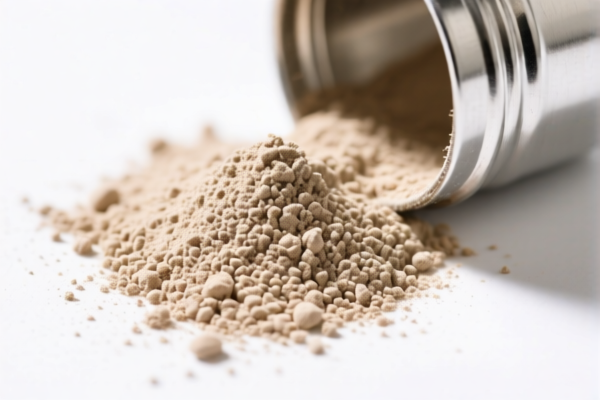
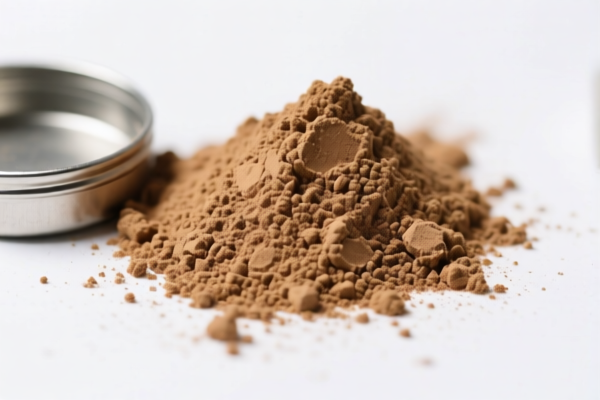
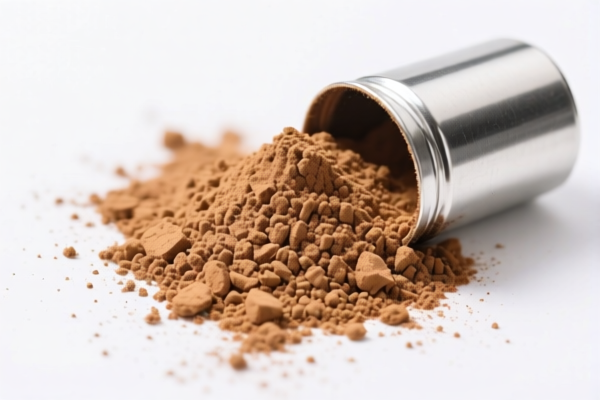

AI Analysis
🌶️ Ginger Powder (Zingiber Officinale)
🌐 HS Code Reference & Customs Clearance Guide | 2026 Latest Tariff Analysis | Professional Entry Strategy
📌 1. Product Definition & Classification: Do You Know Your Spice?
Ginger Powder is a widely used culinary spice, traditional medicine ingredient, and food additive derived from the dried root of Zingiber officinale. In international trade, it is strictly classified under Chapter 9 (Vegitable Products) rather than Chapter 20 (Preparations), as it is a simple dried, ground product without significant modification or mixing with other ingredients.
Key Distinction:
- Pure Ginger Powder: Ground ginger with no additives, preservatives, or anti-caking agents → HS 0910.11
- Spice Blends/Mixes: If mixed with salt, anti-caking agents, or other spices (e.g., Curry Powder) → HS 0910.99 or 2103.90
- Ginger Extract/Oleoresin: Concentrated form using solvents → HS 1302.19 (Not applicable here)
⚠️ Critical Classification Point:
- If the product is 100% pure ground ginger root, it falls under 0910.11.00.00.
- If it contains added salt, anti-caking agents (e.g., silicon dioxide), or flour, it may be classified as a prepared seasoning under 2103.90.00.00 or 0910.99.00.00.
- Misclassification Risk: Declaring "Spice Mix" for pure ginger to avoid higher tariffs is illegal and leads to seizures.
📦 2. HS Code Breakdown (2026 Authoritative Tariff Schedule)
| HS Code | Product Description | Application | Additives Present? |
|---|---|---|---|
0910.11.00.00 |
Ginger, prepared or dried, ground or not | Pure ginger powder, culinary use, herbal tea base | ❌ No |
0910.99.00.00 |
Spices and miscellany of Section IV (Other spices) | Ginger mixed with other dry spices (e.g., chili powder blend) | ✅ Mixed |
2103.90.00.00 |
Sauces and preparations therefor; mixed condiments and seasonings | Ginger powder with salt, anti-caking agents, or fillers | ✅ Added |
1302.19.00.00 |
Vegetable saps and extracts (Ginger oleoresin) | Concentrated ginger extract for flavor industry | ❌ N/A (Different form) |
🔍 Key Reminder:
- Pure Ginger Powder must be declared as 0910.11.00.00.
- If the powder contains anti-caking agents (common in industrial exports), customs may reclassify it as 2103.90.00.00 (Prepared Seasoning).
- Always check the Ingredient List on the commercial invoice.
💰 3. 2026 Latest Tariff Rate Analysis (Including Surcharges)
✅ Applicable Country: United States (US)
✅ Origin: China (CN)
✅ Effective Date: November 10, 2025 onwards
🎯 1. 0910.11.00.00 —— Pure Ginger Powder
| Item | Content |
|---|---|
| Base Rate | 0% (Most Favored Nation) |
| USITC Additional Duty | +25% (Under USITC Footnote 9903.08.01 – "Spices andMiscellaneous Products of Chapter 9") |
| IEEPA Additional Duty | +10% (Section 301/IEEPA Tariff on Chinese Goods) |
| Total Tariff Rate | 35% |
| Tax Calculation | CIF Value × 35% |
| De Minimis Exemption | ❌ Not Eligible (deny_de_minimis) |
| Legal Path | IEEPA:9903.01.25 → USITC:0910.11.00.00 → FOOTNOTE:9903.08.01 |
📌 Explanation:
- Ginger is explicitly listed in the 301 Tariff List for additional duties.
- The 35% total rate is applied to the CIF value (Cost, Insurance, Freight).
- No de minimis exemption (e.g., for shipments under $800) applies to goods subject to Section 301 tariffs from China.
🎯 2. 2103.90.00.00 —— Prepared Seasoning (If Additives Present)
| Item | Content |
|---|---|
| Base Rate | 5.7% (Ad Valorem) |
| USITC Additional Duty | +25% (Under Footnote 9903.08.01) |
| IEEPA Additional Duty | +10% |
| Total Tariff Rate | 40.7% |
| Tax Calculation | CIF Value × 40.7% |
| De Minimis Exemption | ❌ Not Eligible |
| Legal Path | IEEPA:9903.01.25 → USITC:2103.90.00.00 → FOOTNOTE:9903.08.01 |
📌 Note:
- Adding anti-caking agents increases the tariff burden due to higher base rate.
- Strategy: If possible, export pure ginger powder (0910.11) to avoid the higher base rate, even though the additional duties are similar.
🛠️ 4. Customs Clearance Practical Advice
✅ 1. Required Documentation Checklist
| Document | Required | Notes |
|---|---|---|
| ✅ Commercial Invoice | ✔️ | Must state "Ginger Powder, 100% Pure" or list additives if present |
| ✅ Packing List | ✔️ | Net weight, gross weight, number of packages |
| ✅ Certificate of Origin (CO) | ✔️ | Required for tariff determination; must match export country |
| ✅ Phytosanitary Certificate | ✔️ | Issued by China Customs/Entry-Exit Inspection Bureau |
| ✅ Fumigation Certificate | ✔️ | Required for agricultural products |
| ✅ FDA Prior Notice | ✔️ | Mandatory for all food imports to the US |
| ✅ Labeling Compliance | ✔️ | Must meet FDA labeling requirements (Ingredient list, allergens, etc.) |
✅ 2. Declaration Tips (Key Rules)
🔥 "Pure is Key, Additives Change Everything!"
| Scenario | Correct HS Code | Error to Avoid |
|---|---|---|
| 100% Pure Ground Ginger | 0910.11.00.00 |
Misdeclaring as "Food Ingredient" → Higher scrutiny |
| Ginger Powder + Salt | 2103.90.00.00 |
Declaring as pure ginger → Penalty + Back Taxes |
| Ginger Powder + Anti-Caking Agent | 2103.90.00.00 |
Assuming "Minor Additives" don't matter → Reclassification |
| Ginger Oleoresin (Liquid) | 1302.19.00.00 |
Declaring as powder → Classification Error |
✅ 3. Special Cases
| Case | Handling Advice |
|---|---|
| Small Sample Shipments (< $800) | ❌ Still subject to 35% duty if from China. Do not rely on de minimis. |
| Ginger Powder for Herbal Medicine | Still classified under 0910.11. No special exemption for medicinal use. |
| Private Label/OEM | Ensure the brand name and manufacturer details are clear on the label and invoice. |
| Mixed Spice Blends | If ginger is the main ingredient but mixed with other spices, classify as 0910.99.00.00. |
🌍 5. Global Market Comparison (2026)
| Country/Region | Recommended HS Code | Tariff (China Origin) | Certification | Notes |
|---|---|---|---|---|
| 🇺🇸 USA | 0910.11.00.00 |
35% | FDA + USDA | High tariff due to Section 301 |
| 🇨🇳 China | 0910.11.00.00 |
9.0% | None | Standard import duty |
| 🇪🇺 EU | 0910.11.00 |
0% | EFSA + Organic (if applicable) | Free trade under GSP+ or FTA |
| 🇬🇧 UK | 0910.11.00 |
0% | FSA + Labeling | Post-Brexit rules align with EU |
| 🇦🇺 Australia | 0910.11.00 |
0% | Biosecurity Act | Strict biosecurity checks |
| 🇯🇵 Japan | 0910.11.00 |
0% | Food Sanitation Act | Requires positive list system compliance |
📌 Conclusion:
- USA is the only major market imposing high tariffs on Chinese ginger powder.
- Consider supply chain diversification (e.g., sourcing from India, Vietnam, or Tanzania) to mitigate 35% duty risk.
- For US market, pre-clearance and FDA compliance are critical to avoid delays.
📌 6. Common Mistakes & Pitfalls
❌ Mistake 1: Declaring "Ginger Powder" as "Food Flavoring" to avoid agricultural inspections
👉 Consequence: FDA detention, destruction of goods, and fines.
❌ Mistake 2: Ignoring anti-caking agents in the ingredient list
👉 Consequence: Reclassification to 2103.90.00.00 → Higher tariff (40.7%) + Back taxes.
❌ Mistake 3: Assuming de minimis ($800) applies to Section 301 goods
👉 Consequence: 100% duty assessment on small shipments, leading to financial loss.
❌ Mistake 4: Using generic "HS Code 0910" without 8-digit specificity
👉 Consequence: Customs delay, manual review, and potential misclassification.
✅ Correct Practice:
"Ginger Powder, 100% Pure, Ground Zingiber Officinale, No Additives, Net Weight 5kg, FDA Prior Notice Filed"
🎯 7. Conclusion: Smart Classification, Cost Savings, Smooth Clearance
🎯 Key Takeaway:
🔹 "Pure Ginger = 0910.11 (35% Duty)"
🔹 "Mixed Ginger = 2103.90 (40.7% Duty)"
🔹 "No De Minimis for China → Plan Accordingly"
🔹 "FDA + Phytosanitary = Mandatory"
📌 Pro Tip:
- For shipments to the USA, consider third-country transshipment (e.g., from India or Thailand) to avoid Section 301 tariffs, ensuring country of origin is correctly declared to avoid fraud penalties.
- Apply for Advance Ruling from US CBP if unsure about classification due to additives.
📣 Immediate Action:
📞 Consult with a licensed customs broker.
📋 Verify FDA Prior Notice submission.
🌍 Evaluate supply chain alternatives for cost optimization.
✨ Accurate Classification is the Foundation of Profitable Trade!
💼 Save Taxes, Avoid Delays, Ensure Compliance!
Customer Reviews
About HS Code Classification
The Harmonized System (HS) is an internationally standardized nomenclature developed by the World Customs Organization (WCO) to classify traded products. Over 200 countries use the HS system as the basis for customs tariffs, trade statistics, and import/export regulations.
Each HS code follows a hierarchical structure:
- Chapter (2 digits) — Broad category of goods (e.g., Chapter 84: Machinery and Mechanical Appliances)
- Heading (4 digits) — More specific grouping within the chapter
- Subheading (6 digits) — Internationally standardized breakdown, used by all WCO member countries
- National subdivisions (8-10 digits) — Country-specific extensions for further classification, such as US HTSUS 10-digit codes
Correct HS code classification is essential for smooth customs clearance, accurate duty payment, and compliance with trade regulations. Misclassification can lead to customs delays, overpayment of duties, or penalties.
When importing from CN to US, the applicable tariff rates may include:
- Most-Favored-Nation (MFN) rate — The standard duty rate applied to WTO members
- General rate — Applied to countries without trade agreements
- Trade remedy duties — Additional tariffs such as Section 301 (anti-dumping), Section 232 (national security), or countervailing duties
The information provided on this page is for reference purposes only. For official classification, please consult with your local customs authority or a licensed customs broker.