Girls Casual Trench Coat
CN → US| HS Code | Tariff Rate | Origin | Destination | Doc |
|---|---|---|---|---|
| 6202402010 | 45.2% | CN | US | Official Doc |
| 6204335020 | 44.8% | CN | US | Official Doc |
| 6104332000 | 45.7% | CN | US | Official Doc |
| 6101200020 | 33.4% | CN | US | Official Doc |
| 6101302020 | 45.7% | CN | US | Official Doc |
Product Images
AI Analysis
👗 Girls Casual Trench Coat (女童风衣)
🌐 HS Code Reference & Customs Clearance Guide | 2026 Latest Tariff Analysis | Professional Clearance Strategy
📌 I. Product Definition & Classification: Do You Really Understand "Girls' Trench Coats"?
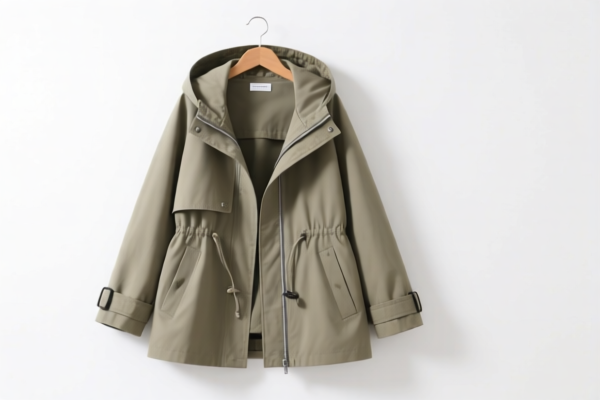
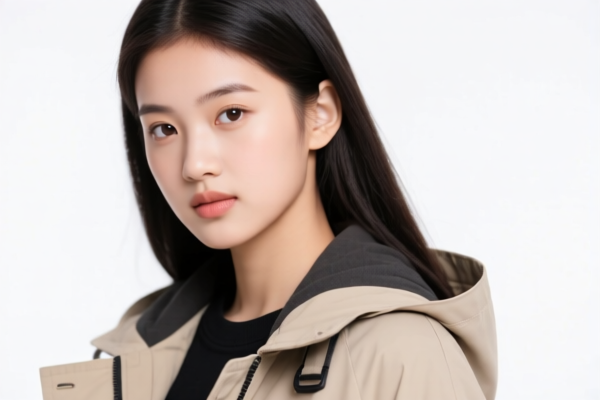
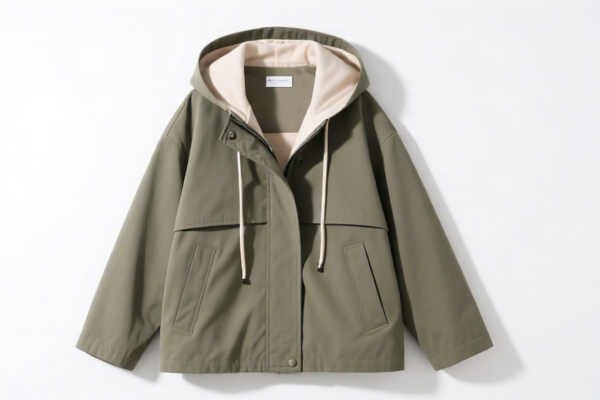
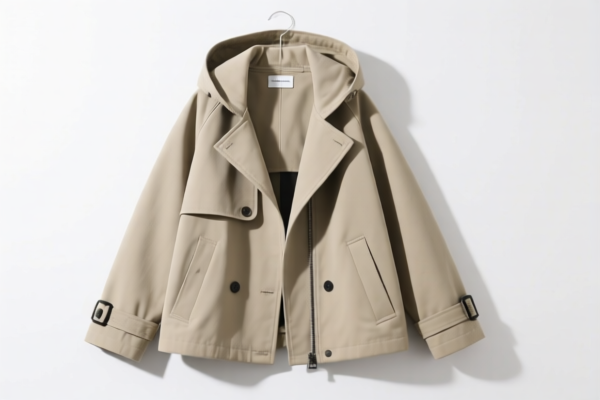
Girls' casual trench coats are outerwear designed for young females, typically characterized by windproof properties, lapels, double-breasted fronts, and waist belts. In international trade, classification heavily depends on gender, material composition, and construction method (knitted vs. woven).
Cotton-Based Trench Coats: Usually classified under Heading 62 (Articles of apparel and clothing accessories, not knitted or crocheted) if woven. Synthetic Fiber-Based Trench Coats: Classified under Heading 61 (Knitted or crocheted) or 62 (Woven), depending on the fabric structure.
⚠️ Key Distinction Point:
- If the coat is made of Cotton and is woven → Generally falls under 6202 or 6101 (depending on knitting status and specific fit); - If the coat is made of Synthetic Fibers (Polyester, Nylon, etc.) → Generally falls under 6202 (Woven) or 6104 (Knitted); - Note: The data provided highlights specific classifications for both synthetic and cotton variants, as well as gender-specific nuances (Girls vs. Boys).
📦 II. HS Code Classification Details (Based on Provided Data)
| HS Code | Product Description | Material Inference | Application/Target Group | Total Tax Rate |
|---|---|---|---|---|
6202.40.20.10 |
Girls' Trench Coat | Man-made fiber or textile | Girls, Casual Windbreaker | 45.2% |
6204.33.50.20 |
Girls' Jacket/Coat | Synthetic fiber inferred | Girls, Bottom-up logic | 44.8% |
6104.33.20.00 |
Girls' Suit Jacket/Blazer | Synthetic fiber or textile | Girls, Suit-style Outerwear | 45.7% |
6101.20.00.20 |
Boys' Casual Trench Coat | Cotton | Boys, Casual Windbreaker | 33.4% |
6101.30.20.20 |
Boys' Casual Trench Coat | Synthetic or Natural fiber | Boys, Casual Windbreaker | 45.7% |
🔍 Critical Observation:
- There is a significant tax discrepancy between Cotton-based (6101.20.00.20at 33.4%) and Synthetic-based (6101.30.20.20at 45.7%) coats, even within the same gender (Boys). - Girls' coats generally attract higher taxes (44.8%–45.7%) compared to Cotton Boys' coats (33.4%), suggesting that synthetic fibers or specific woven/knitted classifications for girls' wear are heavily taxed. - Misclassification Risk: Classifying a synthetic girls' coat as6202(often for woven coats) vs.6204(knitted jackets) results in a 0.4% difference (45.2% vs. 44.8%), which can still impact large volumes.
💰 III. 2026 Latest Tariff Rate Breakdown (Including Surtaxes & Policy Add-ons)
✅ Applicable Country: United States (US)
✅ Origin: China (CN)
✅ Effective Date: 2025 November 10 onwards (and subsequent imports)
🎯 1. 6202.40.20.10 – Girls' Trench Coat (Man-made Fiber)
| Item | Content |
|---|---|
| Base Tariff | 27.7% |
| Section 301 Surtax | +7.5% |
| Section 122 Tariff | +10% |
| Total Tax Rate | 45.2% |
| Tax Calculation | CIF Value × 45.2% |
| De Minimis Exemption | ❌ Not Applicable (High tax burden) |
| Legal Basis Path | USITC:6202.40.20.10 → Section 301: Footnote 7.5 → Section 122: 10% |
📌 Explanation:
- "Base Tariff 27.7%": Standard Most Favored Nation (MFN) rate for women's/girls' woven trench coats made of synthetic fibers. - "Section 301 Surtax 7.5%": Additional duty imposed on Chinese goods under the Trade Act of 1974, Section 301. - "Section 122 Tariff 10%": Specific trade remedy or emergency import surcharge applicable to certain textile/apparel categories. - Total 45.2%: This is a very high effective tariff rate, significantly impacting profit margins.
🎯 2. 6204.33.50.20 – Girls' Jacket/Coat (Synthetic Fiber)
| Item | Content |
|---|---|
| Base Tariff | 27.3% |
| Section 301 Surtax | +7.5% |
| Section 122 Tariff | +10% |
| Total Tax Rate | 44.8% |
| Tax Calculation | CIF Value × 44.8% |
| De Minimis Exemption | ❌ Not Applicable |
| Legal Basis Path | USITC:6204.33.50.20 → Section 301: Footnote 7.5 → Section 122: 10% |
📌 Note:
- Slightly lower than6202due to a 0.4% lower base tariff (27.3% vs. 27.7%). - Suitable for knitted or specific woven synthetic jackets that fall under Heading 6204 rather than 6202.
🎯 3. 6104.33.20.00 – Girls' Suit Jacket/Blazer (Synthetic)
| Item | Content |
|---|---|
| Base Tariff | 28.2% |
| Section 301 Surtax | +7.5% |
| Section 122 Tariff | +10% |
| Total Tax Rate | 45.7% |
| Tax Calculation | CIF Value × 45.7% |
| De Minimis Exemption | ❌ Not Applicable |
| Legal Basis Path | USITC:6104.33.20.00 → Section 301: Footnote 7.5 → Section 122: 10% |
📌 Note:
- Highest base tariff among girls' items (28.2%). - Typically applies to knitted suit jackets for girls. Ensure the item is truly "suit-style" and knitted to avoid misclassification.
🎯 4. 6101.20.00.20 – Boys' Casual Trench Coat (Cotton)
| Item | Content |
|---|---|
| Base Tariff | 15.9% |
| Section 301 Surtax | +7.5% |
| Section 122 Tariff | +10% |
| Total Tax Rate | 33.4% |
| Tax Calculation | CIF Value × 33.4% |
| De Minimis Exemption | ❌ Not Applicable |
| Legal Basis Path | USITC:6101.20.00.20 → Section 301: Footnote 7.5 → Section 122: 10% |
📌 Note:
- Lowest total rate in the dataset (33.4%) due to a significantly lower base tariff (15.9%). - Applies to Cotton boys' coats. If a "Girls' Trench Coat" is mistakenly classified here, it would be a serious compliance error. However, if you can source Cotton materials and target boys' designs, the tax benefit is substantial.
🎯 5. 6101.30.20.20 – Boys' Casual Trench Coat (Synthetic/Natural)
| Item | Content |
|---|---|
| Base Tariff | 28.2% |
| Section 301 Surtax | +7.5% |
| Section 122 Tariff | +10% |
| Total Tax Rate | 45.7% |
| Tax Calculation | CIF Value × 45.7% |
| De Minimis Exemption | ❌ Not Applicable |
| Legal Basis Path | USITC:6101.30.20.20 → Section 301: Footnote 7.5 → Section 122: 10% |
📌 Note:
- Same rate as Girls' Suit Jacket (45.7%). - Applies to Non-Cotton boys' coats. High tax burden regardless of gender if material is synthetic.
🛠️ IV. Customs Clearance Practical Advice (实战避坑指南)
✅ 1. Preparation Checklist (Indispensable)
| Document | Required | Description |
|---|---|---|
| ✅ Product Specification Sheet | ✔️ | Must include fiber composition (e.g., 100% Cotton vs. 100% Polyester), weight, size, and gender. |
| ✅ Fabric Composition Certificate | ✔️ | Critical for distinguishing between 6101.20 (Cotton) and 6101.30 (Synthetic). |
| ✅ Product Photos (Clear) | ✔️ | Must show style details: Lapels, buttons, belt, pockets. Distinguish between "Trench Coat" and "Suit Jacket". |
| ✅ Commercial Invoice | ✔️ | Clearly state "Girls' Casual Trench Coat" or "Boys' Casual Trench Coat". Avoid generic terms like "Outerwear". |
| ✅ Packing List | ✔️ | Detail contents per package to avoid split shipment issues. |
| ✅ Origin Certificate (CO) | ✔️ | To prove Chinese origin and apply correct Section 301/122 rates. |
✅ 2. Declaration Strategy (Key Mnemonics)
🔥 "Material Defines Tax, Gender Defines Code, Style Defines Heading!"
| Scenario | Correct Declaration | Wrong Practice |
|---|---|---|
| Synthetic Girls' Coat | 6202.40.20.10 (Woven) or 6204.33.50.20 (Knitted) |
Misclassifying as Boys' Cotton → Audit Risk |
| Cotton Boys' Coat | 6101.20.00.20 |
Declaring as Synthetic → Overpaying Tax |
| Girls' Suit Jacket | 6104.33.20.00 |
Declaring as Trench Coat → Misclassification |
| Mixed Materials | Specify dominant material | Vague description "Mixed Fabric" → Delay/Rejection |
✅ 3. Special Handling
| Situation | Advice |
|---|---|
| OEM Custom Orders | Provide design sketches + fabric swatches to prove "Girls' Style" vs. "Boys' Style". |
| Cotton vs. Synthetic | If using 100% Cotton, consider if the style can be adapted to Boys' to benefit from the 12.3% tax difference (33.4% vs 45.7%). |
| Knitted vs. Woven | Verify if the trench coat is knitted (Heading 61/6204) or woven (Heading 6202). This affects the base rate by 0.4%–1.0%. |
| "Suit" Style | If the coat has structured shoulders, lapels, and a formal cut, it may be classified as a "Suit Jacket" (6104.33.20.00), incurring the highest rate (45.7%). Avoid formal styling if targeting lower tax brackets. |
🌍 V. Global Market Clearance Comparison (2026 Latest)
| Country/Region | Recommended HS Code | Tariff (Approx.) | Certification Required | Notes |
|---|---|---|---|---|
| 🇺🇸 USA | 6202.40.20.10 / 6101.20.00.20 |
33.4% – 45.7% | CPSIA (Children's Product), Prop 65 | High Section 301 & 122 taxes |
| 🇨🇳 China | 6202.40.20.10 / 6101.20.00.20 |
5% – 15% | CCC (if applicable) | No Section 301/122 |
| 🇪🇺 EU | 6202.40.20.10 / 6101.20.00.20 |
8% – 12% | CE, REACH, EPR | No anti-dumping duties typically |
| 🇬🇧 UK | 6202.40.20.10 / 6101.20.00.20 |
12% | UKCA, REACH | Post-Brexit tariffs apply |
| 🇯🇵 Japan | 6202.40.20.10 / 6101.20.00.20 |
16% – 18% | PSE (if electronics involved) | Low base tariffs, no Section 301 |
📌 Conclusion:
- The US market is the most expensive due to Section 301 (7.5%) and Section 122 (10%) surcharges on top of base tariffs. - Material Choice is Critical: Choosing Cotton for boys' wear saves 12.3% in tax compared to synthetic girls' wear. - Design Strategy: Avoid "Suit Jacket" styling for girls if possible, as it carries the highest base rate (28.2%).
📌 VI. Common Mistakes & Pitfalls (Blood Lessons)
❌ Mistake 1: Declaring a Synthetic Girls' Trench Coat as a Cotton Boys' Coat
👉 Consequence: Customs inspection reveals discrepancy → Fine, Seizure, and Blacklisting.
❌ Mistake 2: Ignoring Section 122 Tariff
👉 Consequence: Underestimating total landed cost by 10% → Margin Erosion.
❌ Mistake 3: Not specifying Knitted vs. Woven
👉 Consequence: Misclassification between 6202 and 6204 → 0.4% Tax Difference + Delay for clarification.
❌ Mistake 4: Using Generic Terms like "Girls' Jacket" without Material Spec
👉 Consequence: Customs assigns highest possible rate → Overpayment.
✅ Correct Practice:
"Girls' Woven Trench Coat, 100% Polyester, Size 6-14, with Belt, Model XYZ, CPSIA Compliant"
🎯 VII. Conclusion: Professional Declaration, Save Costs!
🎯 Remember the Mnemonic:
🔹 "Cotton Boys Save 12%, Synthetic Girls Pay More. Section 301 + 122 = 17.5% Extra. Declare Material Clearly!"
🔹 "HS Code Determines Tax, Tax Determines Profit. Precision is Key!"
📌 Pro Tip:
If your trench coats are made of Cotton, consider adapting the design to Unisex or Boys' styles to utilize the 33.4% tax rate instead of 45.7%. This is a strategic supply chain adjustment rather than just a customs compliance issue.
📣 Immediate Action:
📞 Contact your customs broker + Provide Fabric Composition Report + Apply for Pre-Ruling
🚀 Let your trench coats Clear Smoothly, Maximize Profits, and Stay Compliant!
✨ Professional Clearance Starts with Accurate Classification!
💼 Every Cent of Tax Saved is a Cent of Profit Earned!
Customer Reviews
About HS Code Classification
The Harmonized System (HS) is an internationally standardized nomenclature developed by the World Customs Organization (WCO) to classify traded products. Over 200 countries use the HS system as the basis for customs tariffs, trade statistics, and import/export regulations.
Each HS code follows a hierarchical structure:
- Chapter (2 digits) — Broad category of goods (e.g., Chapter 84: Machinery and Mechanical Appliances)
- Heading (4 digits) — More specific grouping within the chapter
- Subheading (6 digits) — Internationally standardized breakdown, used by all WCO member countries
- National subdivisions (8-10 digits) — Country-specific extensions for further classification, such as US HTSUS 10-digit codes
Correct HS code classification is essential for smooth customs clearance, accurate duty payment, and compliance with trade regulations. Misclassification can lead to customs delays, overpayment of duties, or penalties.
When importing from CN to US, the applicable tariff rates may include:
- Most-Favored-Nation (MFN) rate — The standard duty rate applied to WTO members
- General rate — Applied to countries without trade agreements
- Trade remedy duties — Additional tariffs such as Section 301 (anti-dumping), Section 232 (national security), or countervailing duties
The information provided on this page is for reference purposes only. For official classification, please consult with your local customs authority or a licensed customs broker.