Glass Bead Reflective Plastic Film Tape
CN → US| HS Code | Tariff Rate | Origin | Destination | Doc |
|---|---|---|---|---|
| 3919901000 | 41.5% | CN | US | Official Doc |
| 3919101050 | 41.5% | CN | US | Official Doc |
| 3920992000 | 39.2% | CN | US | Official Doc |
| 3920991000 | 41.0% | CN | US | Official Doc |
| 3926909925 | 22.8% | CN | US | Official Doc |
Product Images

AI Analysis
🌟 Glass Bead Reflective Plastic Film Tape
🌐 HS Code Reference & Customs Clearance Guide | 2026 Latest Tariff Analysis | Professional Compliance Strategy
📌 I. Product Definition & Classification: Do You Really Understand "Reflective Film"?
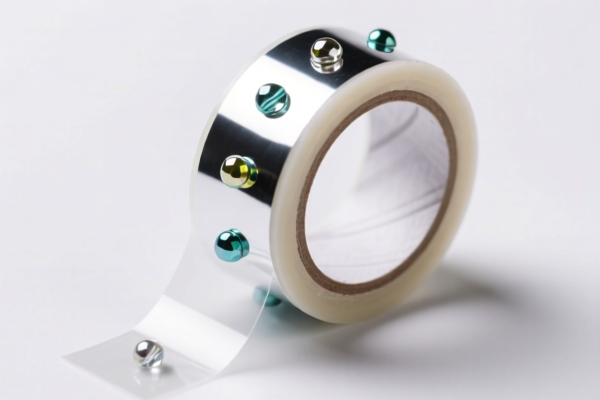
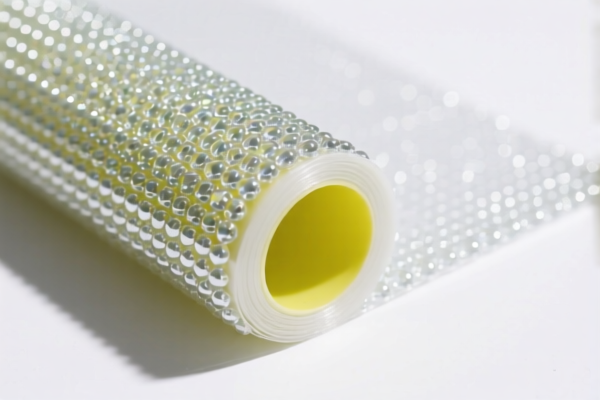
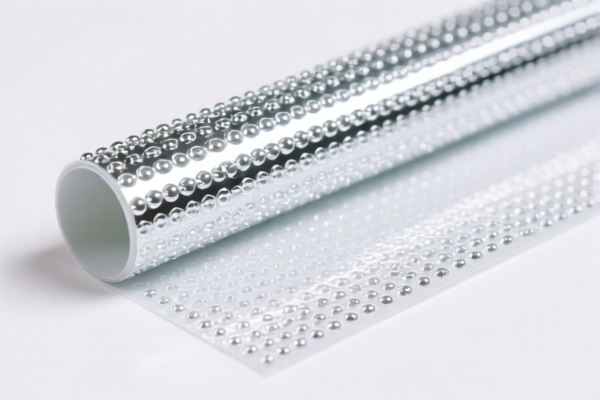
Glass Bead Reflective Plastic Film Tape is a high-performance safety material widely used in traffic signs, automotive markings, safety vests, and logistics labeling. It consists of a plastic base film embedded with glass beads to enhance retro-reflectivity under light sources.
In international trade, this product is not a single unified HS Code but is classified based on its physical state, material structure, and processing stage. Misclassification can lead to significant tariff discrepancies due to US Section 301 and IEEPA additional duties.
⚠️ Key Classification Distinctions:
- If the product is a roll of film with beads embedded in layers → Often falls under Chapter 39 (Plastics) as semi-finished articles.
- If it is a finished adhesive tape ready for application → May fall under 3919 (Self-adhesive plates/sheets/film) or 3920 (Other plates/sheets/film).
- If it is a raw/semi-finished component for further processing → May fall under 3926 (Other plastic articles) or 3920 depending on structure.
📦 II. HS Code Classification Details (2026 Official Tariff Reference)
Based on the provided data, here are the specific HS Codes applicable to Glass Bead Reflective Plastic Film Tape:
| HS Code | Product Description | Structure & Application | Key Feature |
|---|---|---|---|
3919.90.10.00 |
Plastic sheets/films, self-adhesive, with glass bead reflectivity | Roll form, plastic material, reflective property | Self-adhesive reflective film |
3919.10.10.50 |
Plastic sheets/films, self-adhesive, plain (incl. glass beads) | Roll form, plastic material, contains glass beads | Self-adhesive with embedded beads |
3920.99.20.00 |
Other non-cellular, non-reinforced plastic plates/sheets/film | Film/Sheet form, composite structure, non-cellular | Non-self-adhesive reflective film |
3920.99.10.00 |
Glass beads embedded in plastic layers, composite material | Sheet form, multi-layer composite | Composite structure with beads |
3926.90.99.25 |
Semi-finished plastic film articles, for reflective use | Semi-finished state, raw reflective component | Incomplete/semi-processed article |
🔍 Critical Reminder:
- 3919 codes apply if the product has self-adhesive backing and is in roll form.
- 3920 codes apply if it is a non-self-adhesive film/sheet or a composite structure where beads are embedded between plastic layers.
- 3926 applies only if the product is a semi-finished article not yet in a form suitable for direct use as tape or film.
💰 III. 2026 Latest Tariff Rate Breakdown (Including Surtaxes & Policy Add-ons)
✅ Applicable Country: United States (US)
✅ Origin: China (CN)
✅ Effective Date: November 10, 2025 (for all subsequent imports)
🎯 1. 3919.90.10.00 & 3919.10.10.50 —— Self-Adhesive Reflective Film/Roll
| Item | Detail |
|---|---|
| Base Duty | 6.5% (MFN Rate) |
| Section 301 Surtax | +25.0% (Under US Trade Act Section 301) |
| IEEPA Surcharge | +10.0% (Under International Emergency Economic Powers Act for China-origin goods) |
| Total Duty Rate | 41.5% |
| Calculation | CIF Value × 41.5% |
| De Minimis Exemption | ❌ Not Applicable (High duty rates prevent use of Section 321 de minimis) |
| Legal Basis | USITC:3919.90.10.00 / 3919.10.10.50 → FOOTNOTE:301 → IEEPA:9903.01.25 |
📌 Explanation:
- The 6.5% base duty is the standard Most Favored Nation (MFN) rate for plastic films.
- The 25% Section 301 tariff is the primary penalty for Chinese-origin plastic products.
- The 10% IEEPA surcharge is an additional penalty under the current executive order.
- Total 41.5% makes this category highly sensitive to cost optimization strategies.
🎯 2. 3920.99.20.00 & 3920.99.10.00 —— Non-Self-Adhesive Composite Film/Sheet
| Item | Detail |
|---|---|
| Base Duty | 4.2% (3920.99.20.00) / 6.0% (3920.99.10.00) |
| Section 301 Surtax | +25.0% |
| IEEPA Surcharge | +10.0% |
| Total Duty Rate | 39.2% (3920.99.20.00) / 41.0% (3920.99.10.00) |
| Calculation | CIF Value × Rate |
| De Minimis Exemption | ❌ Not Applicable |
| Legal Basis | USITC:3920.99.x0.00 → FOOTNOTE:301 → IEEPA:9903.01.25 |
📌 Note:
-3920.99.20.00has a slightly lower base duty (4.2%) than3920.99.10.00(6.0%), resulting in a 39.2% total rate.
- These codes apply to non-self-adhesive films or composite structures where glass beads are embedded within plastic layers, not just coated on top.
- Misdeclaring a self-adhesive tape as a non-adhesive film to claim a lower rate is a high-risk compliance error.
🎯 3. 3926.90.99.25 —— Semi-Finished Reflective Plastic Article
| Item | Detail |
|---|---|
| Base Duty | 5.3% |
| Section 301 Surtax | +7.5% |
| IEEPA Surcharge | +10.0% |
| Total Duty Rate | 22.8% |
| Calculation | CIF Value × 22.8% |
| De Minimis Exemption | ❌ Not Applicable (Generally, high-duty items are excluded) |
| Legal Basis | USITC:3926.90.99.25 → FOOTNOTE:301 (Reduced rate applies) → IEEPA:9903.01.25 |
📌 Caution:
- This code offers the lowest total rate (22.8%).
- However, it only applies to semi-finished articles that are not yet in the form of finished tape or film rolls.
- If the product is a finished roll of tape with adhesive, declaring it as3926will likely result in customs penalties, reclassification, and back-taxes.
- Use this code only if the product is indeed a semi-finished component (e.g., uncut, no adhesive backing yet).
🛠️ IV. Customs Clearance Operational Advice (Practical Pitfall Avoidance)
✅ 1. Required Documentation Checklist (Mandatory)
| Document | Must Provide | Explanation |
|---|---|---|
| ✅ Product Specification Sheet | ✔️ | Must detail material composition (plastic type), bead content %, adhesive type, thickness, and reflectivity coefficient. |
| ✅ Technical Drawings/Structure Diagram | ✔️ | To prove whether it is a composite structure (3920) or self-adhesive (3919). |
| ✅ High-Resolution Photos | ✔️ | Show cross-section (to reveal bead embedding), adhesive layer (if any), and roll ends. |
| ✅ Test Report | ✔️ | ASTM D4956 (Retro-reflectivity) or similar international standards. |
| ✅ Commercial Invoice | ✔️ | Clearly describe as "Glass Bead Reflective Plastic Film" or "Self-Adhesive Reflective Tape," not just "Plastic Film." |
| ✅ Packing List | ✔️ | Specify if adhesive is included or if it's a bare film roll. |
✅ 2. Declaration Strategy (Key Mantra)
🔥 “Adhesive? Use 3919. No Adhesive? Use 3920. Semi-finished? Only then 3926.”
| Scenario | Correct HS Code | Risk of Misclassification |
|---|---|---|
| Finished Tape with Adhesive | 3919.90.10.00 or 3919.10.10.50 |
❌ High: Declaring as 3920/3926 leads to penalties. |
| Bare Reflective Film (No Adhesive) | 3920.99.20.00 or 3920.99.10.00 |
✅ Safe: If truly non-adhesive. |
| Composite Layer with Embedded Beads | 3920.99.10.00 |
✅ Safe: If structure is multi-layer plastic with beads inside. |
| Unfinished/Semi-processed Component | 3926.90.99.25 |
⚠️ Medium: Must be truly semi-finished; finished goods misclassified here face severe audits. |
✅ 3. Special Handling Cases
| Situation | Advice |
|---|---|
| OEM Custom Tape | Provide design specs and customer PO to justify specific HS Code; avoid generic descriptions. |
| Multi-Layer Composite | Emphasize the "composite structure" in documentation to support 3920.99.10.00 if applicable. |
| Transshipment via Third Countries | Warning: Origin is determined by manufacturing country (China). Transshipment does not eliminate US tariffs unless substantial transformation occurs elsewhere. |
| Hybrid Products (Tape + Signage) | If sold as a complete sign, it may fall under 9405.42.00 (Lighted signs), but if it's just the tape material, it stays in Chapter 39. Do not combine unless it's a finished assembly. |
🌍 V. Global Market Comparison (2026 Latest)
| Country/Region | Recommended HS Code | Estimated Total Duty (China Origin) | Notes |
|---|---|---|---|
| 🇺🇸 USA | 3919.90.10.00 / 3920.99.20.00 |
39.2% – 41.5% | High Section 301 + IEEPA duties. |
| 🇨🇳 China (Import) | 3919.90.10.00 / 3920.99.20.00 |
6.5% - 10% | Lower base duties, no US surtaxes. |
| 🇪🇺 EU | 3919.90.90 / 3920.99.99 |
6.5% - 7.5% | No Section 301; standard EU tariffs apply. |
| 🇲🇽 Mexico | 3919.90.99 / 3920.99.99 |
5% - 8% | USMCA may offer benefits if rules of origin are met. |
📌 Conclusion:
- The USA market is the most costly due to dual surtaxes (301 + IEEPA).
- EU and Mexico offer significantly lower duties, making them favorable for re-export or local distribution.
- Cost Optimization: Consider sourcing from non-China origins (e.g., Vietnam, Thailand) if eligible for IEEPA exemptions, though Section 301 may still apply depending on product scope.
📌 VI. Common Errors & Pitfall Guide (Lessons Learned)
❌ Mistake 1: Declaring self-adhesive tape as non-adhesive film (3920)
👉 Consequence: Customs audit, reclassification to 3919, back-taxes of ~2.3% + penalties.
❌ Mistake 2: Declaring finished tape rolls as semi-finished articles (3926)
👉 Consequence: Accusations of tariff evasion, shipment hold, and potential fraud charges.
❌ Mistake 3: Ignoring IEEPA 10% surcharge
👉 Consequence: Underpayment of duties, leading to delays and interest charges.
❌ Mistake 4: Using vague descriptions like "Plastic Tape"
👉 Consequence: Customs cannot determine if adhesive is present or if beads are embedded, leading to inspection delays.
✅ Correct Practice:
Use precise language:
"Glass Bead Reflective Self-Adhesive Plastic Film, Roll Form, Model XYZ, Material: PET/PE, Bead Content: 5%, ASTM D4956 Compliant"
🎯 VII. Conclusion: Precision in Classification, Savings in Compliance
🎯 Key Takeaway:
🔹 Adhesive = 3919 (41.5%)
🔹 Non-Adhesive Composite = 3920 (39.2%-41.0%)
🔹 Semi-Finished Only = 3926 (22.8%) — Use with extreme caution🔹 "HS Code Determines Tariff; Classification Error Costs Thousands."
📌 Pro Tip:
If your supply chain involves transshipment or re-packaging, ensure that the country of origin remains clearly documented. For US imports, China-origin goods are subject to the highest combined tariffs. Consider Advance Ruling from CBP if your product structure is complex (e.g., hybrid adhesive/composite layers).
📣 Immediate Action:
📞 Consult a licensed customs broker
📄 Submit detailed product specs and cross-section photos
🚀 Secure your clearance and protect your margins!
✨ Professional Customs Clearance Starts with Accurate Classification!
💼 Every Percent of Duty Saved is Profit Earned!
Customer Reviews
About HS Code Classification
The Harmonized System (HS) is an internationally standardized nomenclature developed by the World Customs Organization (WCO) to classify traded products. Over 200 countries use the HS system as the basis for customs tariffs, trade statistics, and import/export regulations.
Each HS code follows a hierarchical structure:
- Chapter (2 digits) — Broad category of goods (e.g., Chapter 84: Machinery and Mechanical Appliances)
- Heading (4 digits) — More specific grouping within the chapter
- Subheading (6 digits) — Internationally standardized breakdown, used by all WCO member countries
- National subdivisions (8-10 digits) — Country-specific extensions for further classification, such as US HTSUS 10-digit codes
Correct HS code classification is essential for smooth customs clearance, accurate duty payment, and compliance with trade regulations. Misclassification can lead to customs delays, overpayment of duties, or penalties.
When importing from CN to US, the applicable tariff rates may include:
- Most-Favored-Nation (MFN) rate — The standard duty rate applied to WTO members
- General rate — Applied to countries without trade agreements
- Trade remedy duties — Additional tariffs such as Section 301 (anti-dumping), Section 232 (national security), or countervailing duties
The information provided on this page is for reference purposes only. For official classification, please consult with your local customs authority or a licensed customs broker.