Glass Bead Reflective Plastic Safety Sticker
CN → US| HS Code | Tariff Rate | Origin | Destination | Doc |
|---|---|---|---|---|
| 3926905900 | 37.4% | CN | US | Official Doc |
| 3926906090 | 39.2% | CN | US | Official Doc |
| 7018105000 | 35.0% | CN | US | Official Doc |
Product Images


AI Analysis
🛡️ Glass Bead Reflective Plastic Safety Sticker
🌐 HS Code Classification & Customs Clearance Guide | 2026 Latest Tariff Rules | Pro-Level Import Strategy
📌 One, Product Definition & Classification: What Exactly Is This?
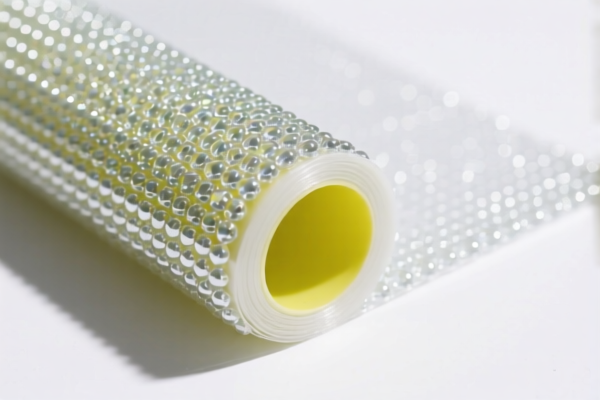
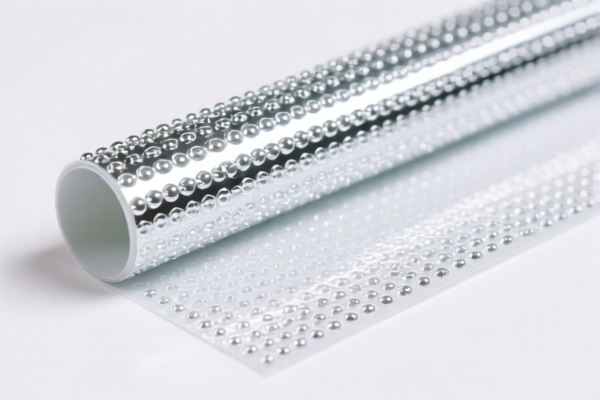
A Glass Bead Reflective Plastic Safety Sticker is a safety-marking device made primarily of plastic with embedded glass beads for high visibility in low-light conditions. It’s commonly used on vehicles, machinery, safety vests, or industrial equipment to enhance visibility and warn of hazards.
Despite its name including "glass beads," the dominant material is plastic, and its primary function is mechanical attachment/identification, not optical or decorative use of glass.
⚠️ Key Classification Insight:
- If the plastic matrix dominates in material composition and function, it falls under plastic products, even if glass beads are present.
- The presence of glass beads does not automatically trigger a glass-based classification — only when glass is the principal material (e.g., beads used as core component in optical applications).
📦 Two, HS Code Classification Details (2026 Official Tariff Reference)
| HS Code | Product Description | Applicable Use Case | Material Dominance | Functional Category |
|---|---|---|---|---|
3926.90.59.00 |
Other plastic articles, not elsewhere specified, for safety or protective use | Plastic safety stickers, reflective labels, warning patches | ✅ Plastic dominant | Mechanical/protective use |
3926.90.60.90 |
Other plastic articles, not elsewhere specified, for mechanical transmission/attachment | Plastic belts, straps, safety bands with reflective elements | ✅ Plastic dominant | Mechanical/attachment use |
7018.10.50.00 |
Glass beads, not elsewhere specified, for reflective or optical use | Pure glass beads used in reflectors, paint, or optical devices | ✅ Glass dominant | Optical/reflective function |
🔍 Critical Clarification:
- Although the product contains glass beads, the main body is plastic, and its purpose is safety marking/attachment, not optical performance.
- Therefore,7018.10.50.00is only a possible fit under "residual" or "other" logic, not a primary match.
💰 Three, 2026 Latest Tariff Breakdown (With Full Tax Clause Explanation)
✅ Target Country: United States (US)
✅ Origin: China (CN)
✅ Effective Date: November 10, 2025 (including future imports)
🎯 1. 3926.90.59.00 — Plastic Safety Sticker with Reflective Beads
| Item | Detail |
|---|---|
| Base Duty Rate | 2.4% (ad valorem) |
| USITC Section 301 Additional Duty | +25.0% (from U.S. Trade Act 301) |
| IEEPA Section 122 Additional Duty | +10.0% (under International Emergency Economic Powers Act) |
| Total Effective Duty | 37.4% |
| Tax Calculation | CIF Value × 37.4% |
| De Minimis Exemption Available? | ❌ No (denied under U.S. de minimis rules for China-origin goods) |
| Legal Basis Pathway | IEEPA:9903.01.25 → IEEPA:9903.01.24 → USITC:3926.90.59.00 → FOOTNOTE:9903.88.01 |
📌 Explanation:
- 2.4% base = Standard U.S. tariff for plastic safety items
- 25% USITC = From Section 301 tariffs on Chinese goods (targeted at "technology and industrial" goods)
- 10% IEEPA 122 = Emergency economic powers imposed on China since 2025
- Total: 37.4% — High-cost import; requires strict cost modeling.
🎯 2. 3926.90.60.90 — Other Plastic Articles for Mechanical Use (e.g., Belts, Straps)
| Item | Detail |
|---|---|
| Base Duty Rate | 4.2% |
| USITC Section 301 Additional Duty | +25.0% |
| IEEPA Section 122 Additional Duty | +10.0% |
| Total Effective Duty | 39.2% |
| Tax Calculation | CIF × 39.2% |
| De Minimis Exemption? | ❌ No |
| Legal Basis Pathway | IEEPA:9903.01.25 → IEEPA:9903.01.24 → USITC:3926.90.60.90 → FOOTNOTE:9903.88.01 |
📌 Why Higher Than 3926.90.59.00?
- This code applies to mechanical transmission/attachment items (like belts, straps).
- The "reflective safety sticker" may be interpreted as a mechanical fastening or attachment device if used on belts, harnesses, or safety gear.
- Hence, higher base rate (4.2%) and same additional duties → 39.2% total.
🎯 3. 7018.10.50.00 — Glass Beads (Only if Glass is Primary Material)
| Item | Detail |
|---|---|
| Base Duty Rate | 0.0% |
| USITC Section 301 Additional Duty | +25.0% |
| IEEPA Section 122 Additional Duty | +10.0% |
| Total Effective Duty | 35.0% |
| Tax Calculation | CIF × 35.0% |
| De Minimis Exemption? | ❌ No |
| Legal Basis Pathway | IEEPA:9903.01.25 → IEEPA:9903.01.24 → USITC:7018.10.50.00 → FOOTNOTE:9903.88.01 |
📌 Why It’s a "Possible" Fit Only:
- This code applies only if glass beads are the principal component (e.g., in reflective paint or optical devices).
- In your case, plastic is the base material, so this is not the primary classification.
- However, if the sticker is marketed as a "glass bead reflector", customs may challenge the classification, making it a high-risk option.
🛠️ Four, Customs Clearance Best Practices (Pro Tips to Avoid Delays & Penalties)
✅ 1. Required Documentation (Must-Have Checklist)
| Document | Required? | Notes |
|---|---|---|
| ✅ Product Specifications | ✔️ | Include material composition (plastic + glass beads), dimensions, reflectivity rating |
| ✅ Material Safety Data Sheet (MSDS) | ✔️ | Prove plastic is dominant |
| ✅ Product Photos (with label) | ✔️ | Show "plastic" base, not glass core |
| ✅ Third-Party Test Report | ✔️ | ISO 20471, ASTM D4956 (for reflectivity), RoHS, REACH |
| ✅ Commercial Invoice | ✔️ | Use exact product name: "Glass Bead Reflective Plastic Safety Sticker, 2" x 3", for Vehicle/Industrial Use" |
| ✅ Certificate of Origin (CO) | ✔️ | If from Vietnam/Mexico, may qualify for lower tariffs |
| ✅ Packing List | ✔️ | Clarify if stickers are sold in bulk or on rolls |
✅ 2.申报技巧 (Key Tips for Accurate Classification)
🔥 "Plastic First, Beads Second — If Plastic Leads, Use 3926.90.59.00!"
| Scenario | Correct HS Code | Wrong Code | Risk |
|---|---|---|---|
| Plastic sticker with glass beads, used on safety gear | 3926.90.59.00 |
7018.10.50.00 |
High — reassessment, penalties |
| Sticker used as part of a safety belt system | 3926.90.60.90 |
3926.90.59.00 |
Medium — may be challenged |
| Product marketed as "glass bead reflector" | 7018.10.50.00 (risky) |
3926.90.59.00 |
High — audit risk |
✅ Best Practice:
Use "Plastic Safety Sticker with Glass Beads" as the official description — emphasize plastic as base material.
✅ 3. Special Handling Scenarios
| Situation | Recommended Action |
|---|---|
| Stickers sold on rolls or in bulk | Declare as "Plastic Safety Stickers", not "glass beads" |
| Used on vehicle safety harnesses | Consider 3926.90.60.90 — if it functions as a mechanical attachment |
| Exported to EU or Canada | Lower tariffs; check local rules (e.g., EU uses 3926.90.59.00 at 0% with CE) |
| Selling to U.S. government (FED) | Apply for HTSUS Pre-Ruling to lock in classification |
🌍 Five, Global Market Comparison (2026 Tariff Snapshot)
| Country | Recommended HS Code | Base Duty | Additional Taxes | Notes |
|---|---|---|---|---|
| 🇺🇸 USA | 3926.90.59.00 |
2.4% | +25% +10% → 37.4% | High risk; no de minimis |
| 🇨🇳 China | 3926.90.59.00 |
5% | 0% | No extra tariffs |
| 🇪🇺 EU | 3926.90.59.00 |
0% | 0% (if CE certified) | Low cost, high compliance |
| 🇨🇦 Canada | 3926.90.59.00 |
0% | 0% | Free trade agreement |
| 🇯🇵 Japan | 3926.90.59.00 |
0% | 0% | No extra duties |
| 🇲🇽 Mexico | 3926.90.59.00 |
0% | 0% | USMCA benefits |
📌 Insight:
- The U.S. is the only market with 35%+ effective tariffs on this product from China.
- Shifting production to Vietnam/Mexico can reduce tariff exposure to 0%.
📌 Six, Common Mistakes & Pitfalls (Avoid These!)
❌ Mistake 1: Declaring as 7018.10.50.00 (glass beads)
👉 Result: Customs may reclassify to plastic → higher base duty + penalties
❌ Mistake 2: Using "reflective glass sticker" in invoice
👉 Result: Triggers "glass" classification → risk of audit, delay, or seizure
❌ Mistake 3: Not providing material composition proof
👉 Result: Customs cannot verify plastic dominance → classification dispute
❌ Mistake 4: Selling in bulk without clear labeling
👉 Result: May be treated as "glass beads" → 35% tariff instead of 37.4%? No — same risk, different penalty
✅ Correct Approach:
Use:
"Plastic Safety Sticker with Glass Beads, 2" x 3", Reflective, for Industrial & Vehicle Use, Made of PVC/ABS, with Embedded Glass Beads, ISO 20471 Certified"
🎯 Seven, Final Verdict: How to Win at U.S. Customs
🎯 Golden Rule:
🔹 "If plastic is the base, use
3926.90.59.00— it’s the safest, most accurate, and lowest-risk path."
🔹 "Never let 'glass beads' dominate your description — it’s a trap!"📌 Pro Tip:
Apply for an Advance Ruling (HTSUS Pre-Ruling) with U.S. CBP before shipment.
- Cost: ~$3,000–$5,000
- Benefit: Legal certainty, no audit risk, no surprise tariffs
📣 Act Now!
📞 Contact a U.S. Customs Broker + Trade Compliance Expert
🚀 Apply for Pre-Ruling on3926.90.59.00
📊 Run a tariff impact simulation (use 37.4% for U.S. entry)
✨ Your Product. Your Risk. Your Control.
💼 Smart classification = Lower costs, faster clearance, zero penalties.
🚀 Go global — but go smart!
Customer Reviews
About HS Code Classification
The Harmonized System (HS) is an internationally standardized nomenclature developed by the World Customs Organization (WCO) to classify traded products. Over 200 countries use the HS system as the basis for customs tariffs, trade statistics, and import/export regulations.
Each HS code follows a hierarchical structure:
- Chapter (2 digits) — Broad category of goods (e.g., Chapter 84: Machinery and Mechanical Appliances)
- Heading (4 digits) — More specific grouping within the chapter
- Subheading (6 digits) — Internationally standardized breakdown, used by all WCO member countries
- National subdivisions (8-10 digits) — Country-specific extensions for further classification, such as US HTSUS 10-digit codes
Correct HS code classification is essential for smooth customs clearance, accurate duty payment, and compliance with trade regulations. Misclassification can lead to customs delays, overpayment of duties, or penalties.
When importing from CN to US, the applicable tariff rates may include:
- Most-Favored-Nation (MFN) rate — The standard duty rate applied to WTO members
- General rate — Applied to countries without trade agreements
- Trade remedy duties — Additional tariffs such as Section 301 (anti-dumping), Section 232 (national security), or countervailing duties
The information provided on this page is for reference purposes only. For official classification, please consult with your local customs authority or a licensed customs broker.