Glass Bead Reflective Plastic Scratch Resistant Film
CN → US| HS Code | Tariff Rate | Origin | Destination | Doc |
|---|---|---|---|---|
| 3926905900 | 37.4% | CN | US | Official Doc |
| 3926906090 | 39.2% | CN | US | Official Doc |
| 7018105000 | 35.0% | CN | US | Official Doc |
| 7018901000 | 20.7% | CN | US | Official Doc |
| 7018105000 | 35.0% | CN | US | Official Doc |
Product Images
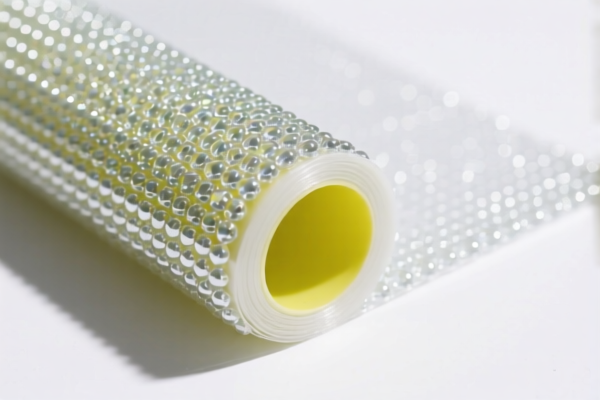
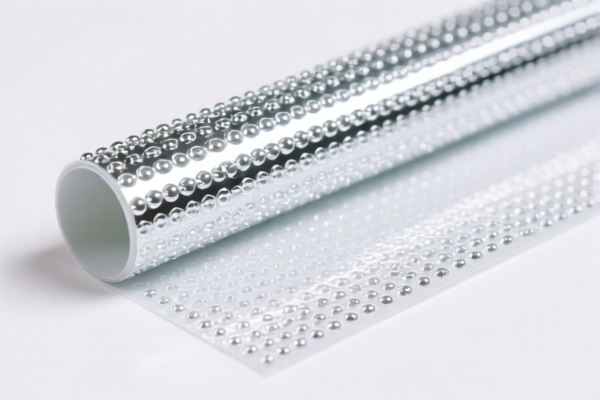
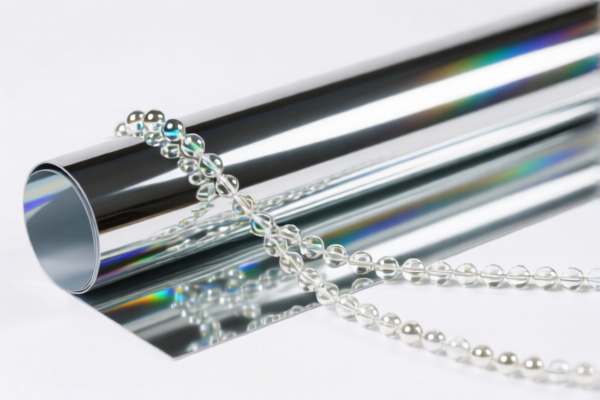
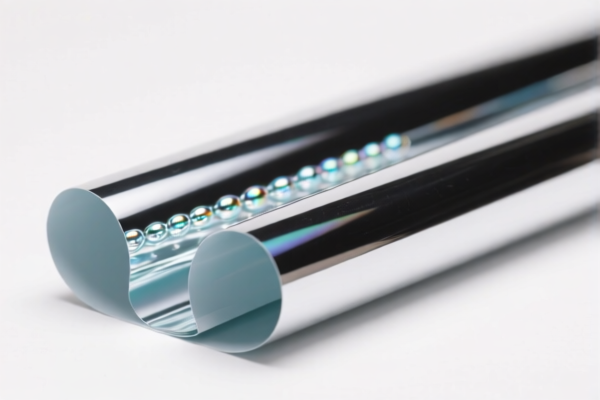
AI Analysis
🪞 Reflective Plastic Film with Glass Beads (Scratch-Resistant)
🌐 HS Code Reference & Customs Clearance Guide | 2026 Latest Tariff Analysis | Professional Clearance Strategy
📌 1. Product Definition & Classification: What Exactly Is This?
"Glass Bead Reflective Plastic Scratch Resistant Film" is a composite material widely used in traffic signs, vehicle markings, and safety equipment. It consists of a plastic substrate coated with microscopic glass beads and a protective scratch-resistant layer.
Key Structural Components:
1. Plastic Substrate: Typically PET or PVC (Polyester/Polyvinyl Chloride), forming the base.
2. Glass Beads: Embedded or coated on the surface to provide retro-reflection (bouncing light back to its source).
3. Protective Layer: A scratch-resistant coating to extend durability.
⚠️ Critical Classification Dilemma:
Customs authorities often debate whether this product is primarily a "Plastic Article" (Chapter 39) or a "Glass Article/Preparation" (Chapter 70). The classification depends on which material defines its essential character.
- If the plastic base is dominant → HS 3926
- If the glass beads are deemed the essential functional component → HS 7018
📦 2. HS Code Classification Details (Based on Provided Data)
Based on the provided dataset, four potential HS codes are identified, with two distinct classifications for plastic vs. glass-centric views.
| HS Code | Product Description | Key Logic from Data |
|---|---|---|
3926.90.59.00 |
Other articles of plastic | "Contains plastic material, fits plastic product classification. Used as reflective film. No obvious material conflict." |
3926.90.60.90 |
Other plastic articles, in sheets | "Material is plastic, form is sheet/film. Falls under other plastic products. No material conflict." |
7018.10.50.00 |
Glass beads | "Product contains glass beads, fits glass bead material characteristics. Although it is a film, it can match under other categories." |
7018.90.10.00 |
Other glass articles | "Material is glass, form is beads and small film-like articles. Fits glass product category. No category conflict." |
🔍 Important Note:
- HS 3926 entries treat the product primarily as a plastic sheet/film with functional additives.
- HS 7018 entries treat the product primarily as a glass-based item (beads) incorporated into a film structure.
- Data Conflict: The dataset lists3926.90.59.00twice with identical tax details but slightly different summaries. Both are treated as valid options under the plastic classification.
💰 3. 2026 Latest Tariff Rate Breakdown (Including Surtaxes & Policy Add-ons)
✅ Applicable Country: United States (US)
✅ Origin: China (CN)
✅ Effective Time: Current rates apply (includes 122 Section & USITC surcharges)
🎯 1. HS Code 3926.90.59.00 & 3926.90.60.90 (Plastic Classification)
These two codes share similar tax structures in the provided data, with slight variations in base rates.
A. For 3926.90.59.00 (Most Common Plastic Classification)
| Item | Content |
|---|---|
| Base Duty | 2.4% (Ad Valorem) |
| USITC Surtax (Section 301) | +25.0% |
| Section 122 Surtax | +10.0% |
| Total Tax Rate | 37.4% |
| Tax Calculation | CIF Value × 37.4% |
| De Minimis Exemption | ❌ Not Eligible (Deny de minimis) |
| Legal Basis Path | Base Rate (2.4%) → USITC (25%) → Section 122 (10%) |
📌 Explanation:
- The 2.4% is the standard Most Favored Nation (MFN) duty for "other plastic articles."
- The 25% is the standard Section 301 tariff on Chinese goods.
- The 10% is an additional surcharge (labeled as "122 Section" in data, likely referring to a specific trade remedy or administrative tariff).
- Total: 37.4% is high, requiring careful cost planning.
B. For 3926.90.60.90 (Plastic Sheets/Films)
| Item | Content |
|---|---|
| Base Duty | 4.2% (Ad Valorem) |
| USITC Surtax (Section 301) | +25.0% |
| Section 122 Surtax | +10.0% |
| Total Tax Rate | 39.2% |
| Tax Calculation | CIF Value × 39.2% |
| De Minimis Exemption | ❌ Not Eligible |
| Legal Basis Path | Base Rate (4.2%) → USITC (25%) → Section 122 (10%) |
📌 Note:
- This code has a higher base duty (4.2% vs 2.4%) but the same surcharges, resulting in a 39.2% total rate.
- This is the highest plastic-based tariff in the dataset.
🎯 2. HS Code 7018.10.50.00 (Glass Beads Focus)
| Item | Content |
|---|---|
| Base Duty | 0.0% |
| USITC Surtax (Section 301) | +25.0% |
| Section 122 Surtax | +10.0% |
| Total Tax Rate | 35.0% |
| Tax Calculation | CIF Value × 35.0% |
| De Minimis Exemption | ❌ Not Eligible |
| Legal Basis Path | Base Rate (0%) → USITC (25%) → Section 122 (10%) |
📌 Explanation:
- The 0% base duty for glass beads significantly lowers the total cost compared to plastic classifications.
- However, the 25% + 10% surcharges still apply due to Chinese origin.
- Total: 35.0% is the lowest total rate among the four options.
🎯 3. HS Code 7018.90.10.00 (Other Glass Articles)
| Item | Content |
|---|---|
| Base Duty | 3.2% |
| USITC Surtax (Section 301) | +7.5% (Note: Lower surtax in data) |
| Section 122 Surtax | +10.0% |
| Total Tax Rate | 20.7% |
| Tax Calculation | CIF Value × 20.7% |
| De Minimis Exemption | ❌ Not Eligible |
| Legal Basis Path | Base Rate (3.2%) → USITC (7.5%) → Section 122 (10%) |
📌 Critical Finding:
- This code offers the lowest total tax rate of 20.7%.
- The 7.5% USITC surtax is significantly lower than the standard 25%, suggesting this specific subheading may be exempt from the full Section 301 list or has a special provision.
- This is the most cost-effective classification if accepted by customs.
🛠️ 4. Customs Clearance Practical Advice (Action Plan)
✅ 1. Preparation Checklist (Non-Negotiable)
| Document | Required | Purpose |
|---|---|---|
| ✅ Product Technical Spec Sheet | ✔️ | Detail plastic type (PET/PVC), glass bead diameter, coating thickness. |
| ✅ Material Composition Analysis | ✔️ | Prove the ratio of plastic to glass beads to support HS 7018 (if claiming lower tax). |
| ✅ Product Photos (Close-up) | ✔️ | Show the glass beads embedded in the film and the scratch-resistant layer. |
| ✅ Commercial Invoice | ✔️ | Clearly state "Reflective Film with Glass Beads," avoid vague terms like "Plastic Sheet." |
| ✅ Packing List | ✔️ | Ensure weight and dimensions match customs records. |
| ✅ Certificate of Origin | ✔️ | Confirm Chinese origin to apply surcharges correctly. |
✅ 2. Classification Strategy & Risk Mitigation
| Scenario | Recommended HS Code | Risk Level | Reason |
|---|---|---|---|
| Maximize Cost Savings | 7018.90.10.00 |
⚠️ Medium-High | Lowest tax (20.7%), but requires convincing customs that the product is primarily a "glass article" not a "plastic product." |
| Standard/Conservative | 3926.90.59.00 |
✅ Low | High tax (37.4%), but clear alignment with "plastic article" definition. Less chance of reclassification. |
| Alternative Plastic View | 3926.90.60.90 |
✅ Low | Highest plastic tax (39.2%). Use only if 3926.90.59.00 is unavailable or rejected. |
| Bead-Focused Argument | 7018.10.50.00 |
⚠️ Medium | Moderate tax (35.0%). Good middle ground if you can prove glass beads are the essential feature. |
🔥 Key Tip:
- If you choose HS 7018, you must provide strong evidence (e.g., engineering drawings, material tests) showing that the glass beads provide the primary function (reflection).
- If customs rejects HS 7018, they may reclassify it under HS 3926, resulting in a surcharge penalty and potential delays.
✅ 3. Special Considerations
| Situation | Advice |
|---|---|
| Scratch-Resistant Coating | Specify if the coating is plastic or polymer. Do not claim it changes the base material classification unless it alters the essential character. |
| Rolls vs. Sheets | Ensure the description matches the physical form. "Film" implies rolls; "Sheet" implies cut pieces. |
| Trade War Impact | The 25% Section 301 tariff applies regardless of HS code for Chinese goods. Only the base rate and specific surtaxes vary. |
| Pre-Ruling | Strongly Recommended: Apply for an Import Administration Ruling (IA Ruling) before shipment. This legally binds CBP to your chosen HS code, avoiding surprises at the border. |
🌍 5. Global Market Comparison (2026 Outlook)
| Country | Recommended HS Code | Est. Duty | Notes |
|---|---|---|---|
| 🇺🇸 USA | 7018.90.10.00 or 3926.90.59.00 |
20.7% - 37.4% | High surcharges (25%+10%) apply. |
| 🇨🇳 China | 3926.90.59.00 |
~2.4% - 5% | Lower base duties, no Section 301. |
| 🇪🇺 EU | 3920.62.00 / 7018.20.00 |
~3.5% - 6% | Different HS structure; no Section 301 equivalent. |
| 🇬🇧 UK | 3926.90.90 |
~4.5% | Post-Brexit tariff schedules apply. |
📌 Conclusion:
- The US market is the most expensive due to Section 301 and Section 122 surcharges.
- HS 7018.90.10.00 offers a 16.7% tax advantage over the most common plastic classification (3926.90.59.00).
- However, customs acceptance is not guaranteed for HS 7018.
📌 6. Common Errors & Pitfalls (Learn from Others)
❌ Error 1: Assuming all "reflective films" are the same HS code.
👉 Consequence: Misclassification leads to underpayment of duties and penalties.
✅ Fix: Distinguish between plastic-based and glass-based essential character.
❌ Error 2: Ignoring the "Scratch-Resistant" layer in documentation.
👉 Consequence: Customs may view it as a different product (e.g., coated paper).
✅ Fix: Clearly state material composition and layer functions.
❌ Error 3: Using vague descriptions like "Plastic Film."
👉 Consequence: High risk of manual examination and delay.
✅ Fix: Use precise terms: "PET-based reflective film with embedded glass beads and polyurethane scratch-resistant coating."
❌ Error 4: Failing to apply for Pre-Ruling.
👉 Consequence: Customs officer makes final decision, potentially choosing a higher tax code.
✅ Fix: Always apply for an IA Ruling before shipping high-volume goods.
🎯 7. Conclusion: Optimize for Cost & Compliance
🎯 Strategic Recommendation:
1. Primary Goal: Attempt to classify under 7018.90.10.00 for the 20.7% total tax rate.
2. Supporting Evidence: Prepare technical documents proving the glass beads are the essential feature for retro-reflection.
3. Backup Plan: If 7018.90.10.00 is rejected, fall back to 3926.90.59.00 (37.4%) rather than 3926.90.60.90 (39.2%).
4. Action: Apply for a Customs Pre-Ruling immediately. This is the only way to secure the lower tax rate with legal certainty.
💡 Pro Tip:
- Cost Savings: Choosing7018.90.10.00over3926.90.59.00saves 16.7% on duties.
- Example: On a $100,000 shipment, savings = $16,700.
- Risk Management: The cost of a pre-ruling ($500-$2,000) is negligible compared to the potential savings and penalty avoidance.
📣 Immediate Action Steps:
📞 Contact your customs broker to draft a Pre-Ruling application.
📄 Prepare technical datasheets highlighting glass bead content and function.
🚀 Ship only after Ruling Approval to ensure smooth clearance and optimal tax efficiency.
✨ Precision in Classification is Profitability in Trade!
💼 Don't let customs reclassification cost you your margin!
Customer Reviews
About HS Code Classification
The Harmonized System (HS) is an internationally standardized nomenclature developed by the World Customs Organization (WCO) to classify traded products. Over 200 countries use the HS system as the basis for customs tariffs, trade statistics, and import/export regulations.
Each HS code follows a hierarchical structure:
- Chapter (2 digits) — Broad category of goods (e.g., Chapter 84: Machinery and Mechanical Appliances)
- Heading (4 digits) — More specific grouping within the chapter
- Subheading (6 digits) — Internationally standardized breakdown, used by all WCO member countries
- National subdivisions (8-10 digits) — Country-specific extensions for further classification, such as US HTSUS 10-digit codes
Correct HS code classification is essential for smooth customs clearance, accurate duty payment, and compliance with trade regulations. Misclassification can lead to customs delays, overpayment of duties, or penalties.
When importing from CN to US, the applicable tariff rates may include:
- Most-Favored-Nation (MFN) rate — The standard duty rate applied to WTO members
- General rate — Applied to countries without trade agreements
- Trade remedy duties — Additional tariffs such as Section 301 (anti-dumping), Section 232 (national security), or countervailing duties
The information provided on this page is for reference purposes only. For official classification, please consult with your local customs authority or a licensed customs broker.