Glass Bead Reflective Plastic Seatbelt
CN → US| HS Code | Tariff Rate | Origin | Destination | Doc |
|---|---|---|---|---|
| 3926906090 | 39.2% | CN | US | Official Doc |
| 7018105000 | 35.0% | CN | US | Official Doc |
| 3926905900 | 37.4% | CN | US | Official Doc |
| 3926909925 | 22.8% | CN | US | Official Doc |
Product Images
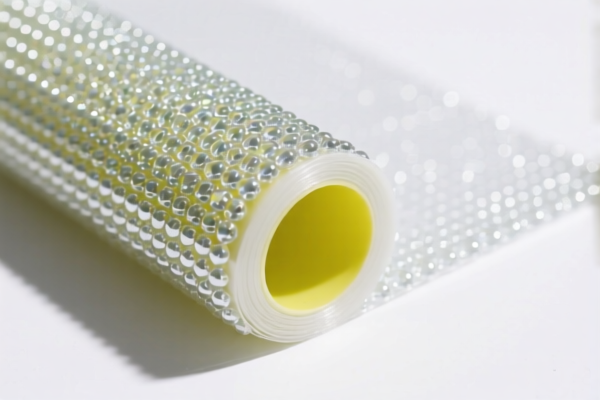
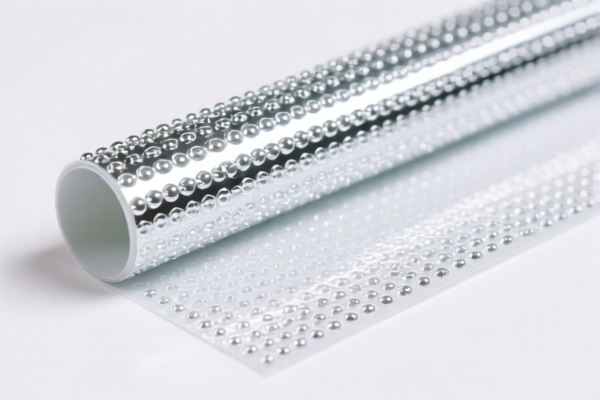
AI Analysis
🚗 Seatbelt, Reflective Plastic (with Glass Beads)
🌐 HS Code Reference & Clearance Guide | 2026 Latest Tariff Analysis | Professional Customs Strategy
📌 I. Product Definition & Classification: What Exactly Is This Product?
This product is a specialized automotive safety component made primarily of plastic but containing glass beads for high-visibility reflective properties. In international trade, its classification hinges on two conflicting yet co-existing characteristics:
1. Material: Primarily plastic (with embedded glass beads for retro-reflection).
2. Function/Use: Seatbelt/Safety harness component (mechanical connection/safety device).
⚠️ Key Classification Dilemma:
- Is it a Plastic Product (Chapter 39)? → Because the base material is plastic.
- Is it a Glass Product (Chapter 70)? → Because it contains "glass beads" for reflection.
- Is it a Vehicle Part (Chapter 87)? → No, it’s not a standard vehicle accessory like a mirror or light.
- Is it a Safety Device (Chapter 95 or 73)? → No specific "seatbelt" HS code exists for plastic materials in most tariff schedules.📌 Critical Distinction:
- If the product is predominantly plastic with glass beads embedded for reflectivity → Chapter 39 (Plastics) applies.
- If the product is mostly glass with plastic coating → Chapter 70 (Glass) might apply (but rare for seatbelts).
- Since this is a "Seatbelt" and seatbelts are not explicitly listed under Chapter 39 or 70 as a standalone item, it falls under "Other" (residual) categories for plastics or glass, depending on the primary material weight/composition.
📦 II. HS Code Classification Details (2026 Latest Tariff Authority Comparison)
| HS Code | Product Description | Applicable Scenario | Material Dominance |
|---|---|---|---|
3926.90.60.90 |
Other articles of plastics: Other (Mechanical/Strap-like) | Plastic seatbelts, straps, belts without specific subheading | ✅ Plastic |
7018.10.50.00 |
Glass beads, small, non-agglomerated | Reflective glass beads used in products, not the finished product itself | ⚠️ Glass Beads Only (Incomplete product) |
3926.90.59.00 |
Other articles of plastics: Other (General) | General plastic parts, not specifically mechanical straps | ✅ Plastic |
3926.90.99.25 |
Other articles of plastics: Other (Reflective/Warning) | Reflective plastic signs, triangles, or similar safety items | ✅ Plastic + Reflective Feature |
🔍 Important Note:
-7018.10.50.00is NOT for finished seatbelts. It is for glass beads themselves. If you ship finished seatbelts under this code, Customs will likely reject it for misclassification.
- The product must be classified under Chapter 39 (Plastics) because the seatbelt structure is plastic-based. The glass beads are a feature, not the primary material.
- Within Chapter 39,3926.90.60.90is the most accurate for "straps/belts," while3926.90.99.25may apply if the "reflective" nature is the primary marketing feature (e.g., for warning signs, not functional seatbelts). For seatbelts,3926.90.60.90is preferred due to the "strap/belt" use case.
💰 III. 2026 Latest Tariff Rate Details (Including Surtaxes & Policy Add-ons)
✅ Applicable Country: United States (US)
✅ Country of Origin: China (CN)
✅ Effective Date: From November 10, 2025 (for subsequent imports)
🎯 1. 3926.90.60.90 —— Plastic Articles, Other (Straps/Belts)
| Item | Content |
|---|---|
| Base Tariff | 4.2% (ad valorem) |
| Section 301 Surcharge | +25.0% (From USITC Footnote 9903.88.01) |
| IEEPA Surcharge | +10.0% (For China/HK products, effective Nov 10, 2025) |
| Total Tariff | 39.2% |
| Tax Calculation | CIF Value × 39.2% |
| De Minimis Eligibility | ❌ Not Eligible (deny_de_minimis) |
| Legal Pathway | IEEPA:9903.01.25 → IEEPA:9903.01.24 → USITC:3926.90.60.90 → FOOTNOTE:9903.88.01 |
📌 Explanation:
- Base 4.2%: Standard MFN tariff for "Other articles of plastics."
- 25% Section 301: Applied to most plastic goods from China due to trade tensions.
- 10% IEEPA: Additional surcharge for Chinese-origin plastic goods.
- Total 39.2%: High cost. Must be factored into pricing.
🎯 2. 7018.10.50.00 —— Glass Beads (Misclassification Risk)
| Item | Content |
|---|---|
| Base Tariff | 0.0% |
| Section 301 Surcharge | +25.0% |
| IEEPA Surcharge | +10.0% |
| Total Tariff | 35.0% |
| Tax Calculation | CIF Value × 35.0% |
| De Minimis Eligibility | ❌ Not Eligible |
| Legal Pathway | IEEPA:9903.01.25 → IEEPA:9903.01.24 → USITC:7018.10.50.00 → FOOTNOTE:9903.88.01 |
📌 Warning:
- Although the tariff is lower (35% vs 39.2%), this code is incorrect for finished seatbelts.
- Customs may assess penalties for misdeclaration.
- Only use if you are importing loose glass beads, not assembled seatbelts.
🎯 3. 3926.90.59.00 —— Other Plastic Articles (General)
| Item | Content |
|---|---|
| Base Tariff | 2.4% |
| Section 301 Surcharge | +25.0% |
| IEEPA Surcharge | +10.0% |
| Total Tariff | 37.4% |
| Tax Calculation | CIF Value × 37.4% |
| De Minimis Eligibility | ❌ Not Eligible |
| Legal Pathway | IEEPA:9903.01.25 → IEEPA:9903.01.24 → USITC:3926.90.59.00 → FOOTNOTE:9903.88.01 |
📌 Note:
- Slightly cheaper than3926.90.60.90but less accurate for "straps/belts."
- Used for general plastic parts not fitting specific subheadings.
🎯 4. 3926.90.99.25 —— Reflective Plastic Articles
| Item | Content |
|---|---|
| Base Tariff | 5.3% |
| Section 301 Surcharge | +7.5% |
| IEEPA Surcharge | +10.0% |
| Total Tariff | 22.8% |
| Tax Calculation | CIF Value × 22.8% |
| De Minimis Eligibility | ❌ Not Eligible |
| Legal Pathway | IEEPA:9903.01.25 → IEEPA:9903.01.24 → USITC:3926.90.99.25 → FOOTNOTE:9903.88.01 |
📌 Explanation:
- This code has a lower Section 301 rate (7.5% vs 25%), likely because it’s classified under a different "Reflective" subcategory that may have different trade policy treatments.
- However, this code is typically for reflective signs/triangles, not functional seatbelts.
- If Customs accepts the argument that the "reflective property" is the primary feature (marketing focus), this could be the cheapest option (22.8%).
- Risk: High risk of reclassification if Customs determines the product is primarily a "seatbelt" (mechanical safety item), not a "warning device."
🛠️ IV. Customs Clearance Practical Advice (Real-World Pitfall Guide)
✅ 1. Required Documentation Checklist (Non-Negotiable)
| Document | Mandatory | Description |
|---|---|---|
| ✅ Product Specification Sheet | ✔️ | Must state material composition: e.g., "90% Nylon Plastic, 10% Glass Beads for Reflectivity" |
| ✅ Product Photos (Labeled) | ✔️ | Clear images showing the seatbelt structure, buckle, and reflective surface |
| ✅ Commercial Invoice | ✔️ | Clearly describe as: "Reflective Plastic Seatbelt, Model XYZ, HS Code 3926.90.60.90" |
| ✅ Bill of Lading/Air Waybill | ✔️ | Must match invoice description |
| ✅ Certificate of Origin (CO) | ✔️ | Required for origin determination; China origin triggers surcharges |
| ✅ Third-Party Test Report | ✔️ | Show safety standards (e.g., FMVSS 209 for seatbelts in US) |
✅ 2. Declaration Tips (Key Mantra)
🔥 "Material Defines, Function Refines, Reflectivity is a Feature, Not a Code!"
| Scenario | Correct Declaration | Wrong Practice |
|---|---|---|
| Plastic Seatbelt with Glass Beads | 3926.90.60.90 (Plastic Strap) |
Use 7018.10.50.00 (Glass Beads) → Misclassification |
| Reflective Warning Triangle | 3926.90.99.25 (Reflective Plastic) |
Use for seatbelts → Risk of Penalty |
| Mixed Material (Plastic + Metal Buckle) | Declare as Plastic Article | Split declaration → Higher Tax |
| Importing Loose Glass Beads | 7018.10.50.00 |
Declaring as seatbelts → Wrong Code |
✅ 3. Special Case Handling
| Scenario | Handling Advice |
|---|---|
| OEM Seatbelts for Car Manufacturers | Provide OEM contract + Engineering Drawings to prove "Plastic Strap" classification |
| High-Visibility Safety Gear (Not Seatbelts) | If used for pedestrian safety, argue for 3926.90.99.25 (Reflective) |
| Mixed Shipment (Seatbelts + Other Plastic Parts) | Separate HS codes; do not mix to avoid confusion |
| Dispute on Classification | Apply for Advance Ruling (Ruling Request) from CBP before shipment |
🌍 V. Global Market Clearance Comparison (2026 Latest)
| Country/Region | Recommended HS Code | Tariff (China Origin) | Certification Required | Notes |
|---|---|---|---|---|
| 🇺🇸 USA | 3926.90.60.90 |
39.2% (Base 4.2% + 35% Surtax) | FMVSS 209 (Seatbelt Safety) | High Tax. IEEPA + 301 apply. |
| 🇨🇳 China | 3926.90.60.90 |
5% (Import Tariff) | CCC (if applicable) | Low tariff. No surcharges. |
| 🇪🇺 EU | 3926.90.99 |
4.5% | CE (if considered PPE) | No US-style surcharges. |
| 🇦🇺 Australia | 3926.90.99 |
5% | SAA Standards | Moderate tax. |
| 🇯🇵 Japan | 3926.90.99 |
3.6% | JIS Standards | Low tax. |
📌 Conclusion:
- USA is the most expensive market due to layered surcharges (301 + IEEPA).
- China/EU/Japan offer significantly lower tariffs.
- For US imports, cost optimization is critical. Consider supply chain diversification (e.g., manufacturing in Vietnam or Mexico) to avoid IEEPA/301 surcharges.
📌 VI. Common Mistakes & Pitfall Guide (Lessons Learned)
❌ Mistake 1: Using 7018.10.50.00 for finished seatbelts
👉 Consequence: Customs rejects shipment for misclassification → Delays, Penalties, or Return.
❌ Mistake 2: Ignoring the "Plastic" nature and focusing only on "Reflective"
👉 Consequence: If Customs determines the product is primarily a "strap," 3926.90.60.90 (39.2%) applies, not 3926.90.99.25 (22.8%).
❌ Mistake 3: Not disclosing Glass Beads in the description
👉 Consequence: Customs may suspect hidden components → Extra Inspection → Delays.
❌ Mistake 4: Assuming "De Minimis" (Section 321) applies
👉 Consequence: Plastic goods from China are excluded from de minimis → Full Tax Applies.
✅ Correct Approach:
"Reflective Plastic Seatbelt, 100% Nylon/Polyester with Embedded Glass Beads, FMVSS 209 Compliant, Model ABC, HS Code 3926.90.60.90"
🎯 VII. Conclusion: Professional Declaration, Cost Control, Efficiency!
🎯 Remember the Mantra:
🔹 "Material is King, Function is Queen, Reflectivity is a Trait, Not a Code!"
🔹 "US Imports: 39.2% is the Price, Plan Your Supply Chain!"
🔹 "HS Code Defines Tax, One Step Wrong, Thousands Lost!"
📌 Pro Tip:
If your seatbelts are originally from Vietnam, Mexico, Thailand, or Malaysia, you may avoid IEEPA/301 surcharges, reducing the tax to ~4.2%.
Recommend Advance Ruling for US imports to confirm classification and avoid post-entry audits.
📣 Immediate Action:
📞 Contact a Licensed Customs Broker + Provide Product Photos + Request HS Code Advance Ruling
🚀 Ensure your reflective plastic seatbelts clear customs smoothly, save costs, and reach the market efficiently!
✨ Professional Customs Clearance Starts with Accurate Classification!
💼 Every Percentage Point of Tax Saved is Pure Profit!
Customer Reviews
About HS Code Classification
The Harmonized System (HS) is an internationally standardized nomenclature developed by the World Customs Organization (WCO) to classify traded products. Over 200 countries use the HS system as the basis for customs tariffs, trade statistics, and import/export regulations.
Each HS code follows a hierarchical structure:
- Chapter (2 digits) — Broad category of goods (e.g., Chapter 84: Machinery and Mechanical Appliances)
- Heading (4 digits) — More specific grouping within the chapter
- Subheading (6 digits) — Internationally standardized breakdown, used by all WCO member countries
- National subdivisions (8-10 digits) — Country-specific extensions for further classification, such as US HTSUS 10-digit codes
Correct HS code classification is essential for smooth customs clearance, accurate duty payment, and compliance with trade regulations. Misclassification can lead to customs delays, overpayment of duties, or penalties.
When importing from CN to US, the applicable tariff rates may include:
- Most-Favored-Nation (MFN) rate — The standard duty rate applied to WTO members
- General rate — Applied to countries without trade agreements
- Trade remedy duties — Additional tariffs such as Section 301 (anti-dumping), Section 232 (national security), or countervailing duties
The information provided on this page is for reference purposes only. For official classification, please consult with your local customs authority or a licensed customs broker.