Glass Bead Reflective Plastic Sheet
CN → US| HS Code | Tariff Rate | Origin | Destination | Doc |
|---|---|---|---|---|
| 3926909989 | 22.8% | CN | US | Official Doc |
| 3926909925 | 22.8% | CN | US | Official Doc |
| 3919901000 | 41.5% | CN | US | Official Doc |
| 3919101050 | 41.5% | CN | US | Official Doc |
| 3920992000 | 39.2% | CN | US | Official Doc |
Product Images
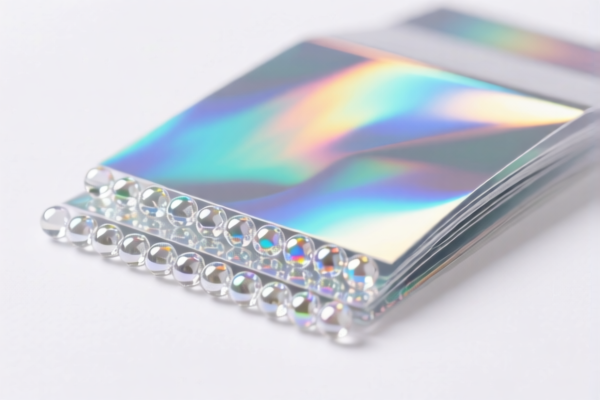
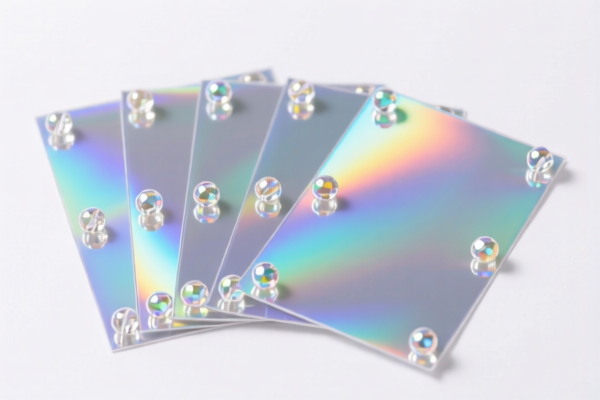
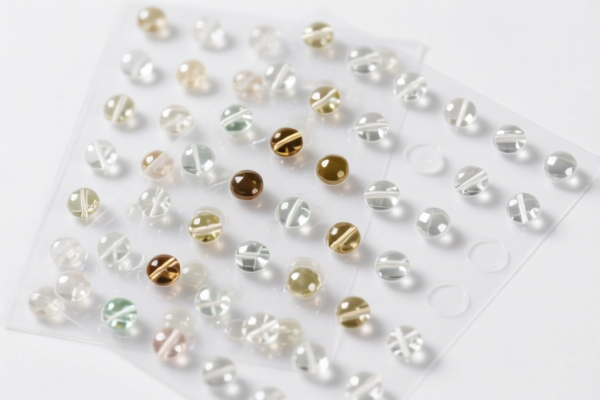

AI Analysis
🌟 Glass Bead Reflective Plastic Sheet (反光塑料胶片)
🌐 HS Code Reference & Customs Clearance Guide | 2026 Latest Tariff Analysis | Professional Customs Strategy
📌 1. Product Definition & Classification: What Exactly is This?
"Glass Bead Reflective Plastic Sheet" is a specialized material widely used in traffic signs, safety clothing, and high-visibility applications. It consists of a plastic substrate embedded with microscopic glass beads that reflect light back to its source.
In international trade, classification depends heavily on the physical form (sheet/film vs. strip) and specific chemical composition. Misclassification can lead to significant tariff differences (from 22.8% to 41.5%) and customs delays.
⚠️ Critical Distinction:
- If the product is a continuous sheet/film with glass beads embedded or coated → Typically falls under Chapter 39 (Plastics), specifically heading 3919 (Self-adhesive) or 3920 (Other plates, sheets, film).
- If the product is cut into strips or is an "article not specified elsewhere" → May fall under 3926 (Other plastic articles).
- Note on HS Codes: The provided data indicates two main paths: 3919/3920 for "Sheet/Film" forms and 3926 for "Strip" forms.
📦 2. HS Code Classification Details (Based on Provided Data)
| HS Code | Product Description Summary | Key Characteristics | Tax Rate |
|---|---|---|---|
| 3919.90.10.00 | Glass bead reflective plastic sheet; Plastic material; Form: Sheet/Film; Reflective property | Self-adhesive or similar sheet/film form with glass beads | 41.5% |
| 3919.10.10.50 | Glass bead reflective plastic sheet; Material, form, and glass bead reflective properties all meet classification requirements | Fits specific subheading for adhesive sheets/films | 41.5% |
| 3920.99.20.00 | Glass bead reflective plastic sheet; Plastic material consistent with film form; Classified as "Other" | Non-adhesive or general plastic film/plate form | 39.2% |
| 3926.90.99.89 | Glass bead reflective plastic strip; Plastic material; Other plastic articles not specified elsewhere | Form: Strip; Not classified as sheet/film | 22.8% |
| 3926.90.99.25 | Glass bead reflective plastic strip; Plastic material; Reflective property; Form: Strip | Form: Strip; Specific reflective plastic article | 22.8% |
🔍 Key Insight:
- Forms Matter: If your product is a large continuous roll (sheet/film), it likely falls under 3919 or 3920 (Higher Tax: 39.2%–41.5%).
- If Cut: If it is pre-cut into strips for specific assembly, it may qualify for 3926 (Lower Tax: 22.8%).
- Adhesiveness: Codes starting with 3919 often imply self-adhesive properties, which may attract higher specific duties in some contexts, though here the total is higher due to additional tariffs.
💰 3. Detailed Tariff Rate Breakdown (2026 Latest)
✅ Applicable Country: United States (US)
✅ Origin: China (CN)
✅ Effective Date: Current trade policy includes Section 301 & IEEPA tariffs.
🎯 1. 3919.90.10.00 & 3919.10.10.50 (Reflective Plastic Sheet/Film)
| Item | Content |
|---|---|
| Base Tariff | 6.5% (Ad Valorem) |
| Section 301 Tariff | +25.0% |
| IEEPA Tariff (Section 122) | +10.0% |
| Total Tariff Rate | 41.5% |
| Tax Calculation | CIF Value × 41.5% |
| De Minimis Exemption | ❌ Not Eligible (High tariff threshold excludes small package exemption) |
| Legal Basis | USTR Section 301 List 4A + IEEPA Authorities |
📌 Explanation:
- The 6.5% is the standard Most Favored Nation (MFN) rate for plastic sheets.
- The 25% is the Section 301 retaliatory tariff on Chinese goods.
- The 10% is an additional surcharge under IEEPA (International Emergency Economic Powers Act) targeting specific Chinese imports.
- Total: 41.5%. This is a high-cost classification. Precise documentation is vital to avoid audits.
🎯 2. 3920.99.20.00 (Other Plastic Sheet/Film)
| Item | Content |
|---|---|
| Base Tariff | 4.2% |
| Section 301 Tariff | +25.0% |
| IEEPA Tariff (Section 122) | +10.0% |
| Total Tariff Rate | 39.2% |
| Tax Calculation | CIF Value × 39.2% |
| De Minimis Exemption | ❌ Not Eligible |
📌 Explanation:
- Slightly lower base rate (4.2% vs 6.5%) results in a 39.2% total rate.
- Still subject to the same punitive tariffs (25% + 10%).
🎯 3. 3926.90.99.89 & 3926.90.99.25 (Reflective Plastic Strip/Article)
| Item | Content |
|---|---|
| Base Tariff | 5.3% |
| Section 301 Tariff | +7.5% |
| IEEPA Tariff (Section 122) | +10.0% |
| Total Tariff Rate | 22.8% |
| Tax Calculation | CIF Value × 22.8% |
| De Minimis Exemption | ❌ Not Eligible |
📌 Explanation:
- Crucial Advantage: If the product is classified as an "Article" (Strip) under 3926 rather than a "Sheet" under 3919/3920, the Section 301 tariff drops from 25% to 7.5%.
- Total: 22.8%. This is a significant saving (18.7% lower total tax) compared to sheet classifications.
- Condition: The product must genuinely be a "strip" or "article" and not merely a sheet cut into strips for simple assembly. It must be a finished good or a component not specified elsewhere.
🛠️ 4. Customs Clearance Practical Advice (Real-World Pitfall Guide)
✅ 1. Documentation Checklist (Mandatory)
| Document | Required? | Notes |
|---|---|---|
| ✅ Product Specification | ✔️ | Must detail: Material (Plastic type), Dimensions (Sheet vs. Strip), Reflective Layer (Glass bead type), Adhesiveness. |
| ✅ Technical Diagrams | ✔️ | Show cross-section to prove glass bead embedding/coating. |
| ✅ Commercial Invoice | ✔️ | Clearly state: "Glass Bead Reflective Plastic Sheet/Strip". Avoid vague terms like "Reflective Material". |
| ✅ Packing List | ✔️ | Specify if goods are rolled (sheet) or cut (strip). |
| ✅ Origin Certificate | ✔️ | Required for tariff determination. |
✅ 2. Declaration Strategy (Key Mnemonic)
🔥 "Sheet vs. Strip: Choose Wisely! Strip = Lower Tax (22.8%), Sheet = Higher Tax (39-41.5%)!"
| Scenario | Correct HS Code | Risk if Misclassified |
|---|---|---|
| Continuous Roll / Sheet | 3919... or 3920... |
None (Standard) |
| Pre-cut Strips for Assembly | 3926.90.99.89 or 3926.90.99.25 |
If declared as "Sheet", you pay 25% extra tax! |
| Adhesive Reflective Tape | 3919.10.10.50 |
Ensure "self-adhesive" nature is documented. |
| Non-adhesive Reflective Sheet | 3920.99.20.00 |
Base rate 4.2% + 35% additional = 39.2% |
📌 Critical Tip:
- If you are selling reflective tape (cut from a roll), argue for 3926 if it is a finished "article" of trade.
- If you are selling raw material (rolls to be cut by the buyer), you must use 3919 or 3920.
- Do not misdeclare a sheet as a "strip" to save taxes. Customs may inspect and assess back-taxes + penalties.
✅ 3. Special Circumstances
| Situation | Handling Advice |
|---|---|
| OEM Custom Colors | Provide color swatches and Pantone codes. Does not affect HS code but helps classification accuracy. |
| Multi-layer Structure | Detail each layer (e.g., PET substrate + Glass beads + Adhesive). This determines if it's 3919 (adhesive) or 3920 (non-adhesive). |
| Sample Shipments | Even for samples, declare the correct HS Code. De Minimis ($800) does not apply due to high tariffs. |
🌍 5. Global Market Comparison (2026)
| Country/Region | Recommended HS Code | Tariff Rate | Notes |
|---|---|---|---|
| 🇺🇸 USA | 3919.90.10.00 (Sheet) 3926.90.99.89 (Strip) |
41.5% (Sheet) 22.8% (Strip) |
Section 301 & IEEPA apply. High duty environment. |
| 🇨🇳 China | 3919.90.10.00 |
Varies (Low) | Import duties may be lower; check FTA if applicable. |
| 🇪🇺 EU | 3920.99.90 (Approx) |
6.5% | No Section 301. Standard MFN rate. |
| 🇯🇵 Japan | 3920.99.00 |
6-8% | No major anti-dumping tariffs on this specific item. |
📌 Conclusion:
- The US market is the most expensive due to combined Section 301 (25% or 7.5%) and IEEPA (10%) tariffs.
- Strategy: If possible, structure exports to the US as "Reflective Strips" (3926) rather than "Sheets" (3919/3920) to save ~18.7% in taxes, provided the product form justifies it.
📌 6. Common Errors & Pitfalls (Lessons Learned)
❌ Error 1: Declaring "Reflective Tape" as "Plastic Sheet" (3920) when it is pre-cut and packaged as a finished article.
👉 Consequence: Pay 39.2% instead of 22.8%.
👉 Fix: Use 3926 if it is a finished "article".
❌ Error 2: Failing to specify "Glass Bead" in the description.
👉 Consequence: Customs may classify as generic plastic, leading to valuation disputes or higher scrutiny.
👉 Fix: Explicitly state "Glass Bead Reflective" in the commercial invoice and packing list.
❌ Error 3: Ignoring IEEPA 10% Tariff.
👉 Consequence: Underpayment of duties, resulting in penalties and delayed clearance.
👉 Fix: Always add 10% to Section 301 calculations for China-origin goods.
✅ Correct Declaration Example:
"Glass Bead Reflective Plastic Strip, 1 inch width, reflective grade, for safety vests, Model XYZ, Origin: China"
HS Code:3926.90.99.25(if applicable) or3926.90.99.89
🎯 7. Conclusion: Precision in Classification Saves Money!
🎯 Remember This:
🔹 "Sheet = 41.5%, Strip = 22.8%!"
🔹 "301 + IEEPA = High Cost. Optimize Form!"
🔹 "Document the 'Strip' form clearly to qualify for lower 3926 rates."
📌 Pro Tip:
If your product is borderline (e.g., sheets that are easily cut into strips), consider negotiating with your US buyer to absorb some tariff costs, or explore supply chain diversification (e.g., shipping from Vietnam/Mexico if possible) to avoid Section 301 tariffs entirely.
📣 Action Required:
📞 Consult a Customs Broker: Provide product samples and technical drawings for a Pre-Classification Ruling.
📝 Invoice Accuracy: Ensure the description matches the chosen HS Code exactly.
🚀 Optimize: If applicable, change packaging from "Rolls" to "Strips" to leverage the lower 22.8% rate.
✨ Professional Clearance Starts with Accurate Classification!
💼 Every Percentage Point Counts in High-Tariff Markets!
Customer Reviews
About HS Code Classification
The Harmonized System (HS) is an internationally standardized nomenclature developed by the World Customs Organization (WCO) to classify traded products. Over 200 countries use the HS system as the basis for customs tariffs, trade statistics, and import/export regulations.
Each HS code follows a hierarchical structure:
- Chapter (2 digits) — Broad category of goods (e.g., Chapter 84: Machinery and Mechanical Appliances)
- Heading (4 digits) — More specific grouping within the chapter
- Subheading (6 digits) — Internationally standardized breakdown, used by all WCO member countries
- National subdivisions (8-10 digits) — Country-specific extensions for further classification, such as US HTSUS 10-digit codes
Correct HS code classification is essential for smooth customs clearance, accurate duty payment, and compliance with trade regulations. Misclassification can lead to customs delays, overpayment of duties, or penalties.
When importing from CN to US, the applicable tariff rates may include:
- Most-Favored-Nation (MFN) rate — The standard duty rate applied to WTO members
- General rate — Applied to countries without trade agreements
- Trade remedy duties — Additional tariffs such as Section 301 (anti-dumping), Section 232 (national security), or countervailing duties
The information provided on this page is for reference purposes only. For official classification, please consult with your local customs authority or a licensed customs broker.