Glass Bead Reflective Tape (Roll)
CN → US| HS Code | Tariff Rate | Origin | Destination | Doc |
|---|---|---|---|---|
| 3919101050 | 41.5% | CN | US | Official Doc |
| 7018105000 | 35.0% | CN | US | Official Doc |
| 3919901000 | 41.5% | CN | US | Official Doc |
| 7018905000 | 41.6% | CN | US | Official Doc |
Product Images
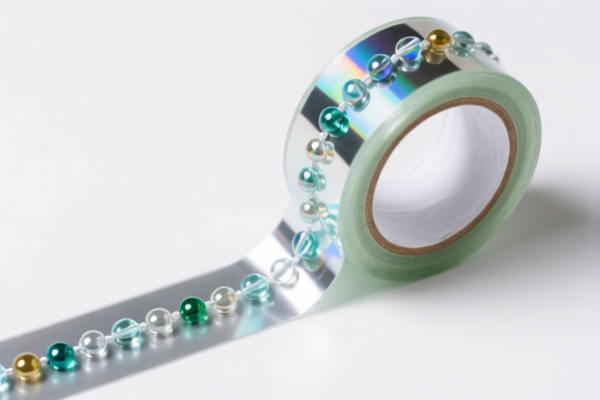

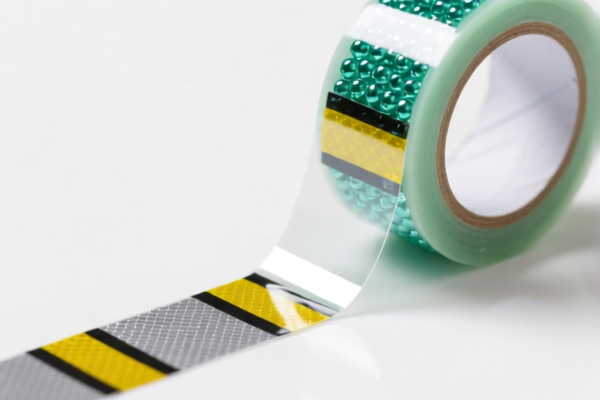
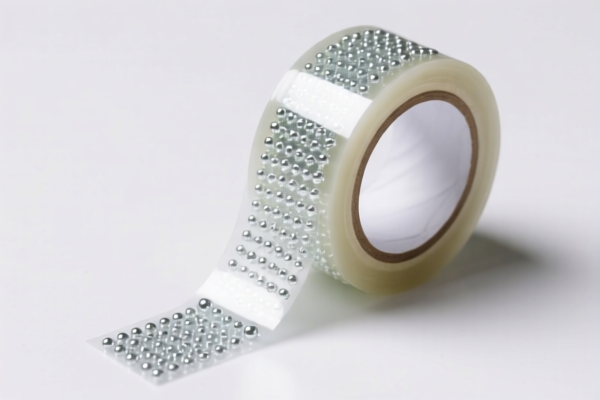
AI Analysis
🌟 Glass Bead Reflective Tape (Roll): HS Code Classification & Tariff Deep Dive
🌐 HS Code Reference & Customs Clearance Guide | 2026 Latest Tariff Analysis | Professional Compliance Strategy
📌 I. Product Definition & Classification: What Exactly Is "Glass Bead Reflective Tape"?
Glass Bead Reflective Tape is a specialized optical material widely used in road safety markings, traffic signs, and high-visibility safety apparel. It relies on microscopic glass beads embedded in a pressure-sensitive adhesive or coated on a plastic film to retro-reflect light back to its source (e.g., car headlights).
In international trade, classification depends heavily on the primary material and structure: - Plastic-Based with Glass Beads: If the backing is plastic (PVC, PET, etc.) and the glass beads are a surface treatment for reflectivity, it is generally classified under Chapter 39 (Plastics). - Pure Glass Products: If the tape is essentially a formed glass article or small glass制品 (less common for this specific description), it might fall under Chapter 70 (Glass), but this is rare for "Tape" forms unless specified as decorative glass strips.
⚠️ Critical Distinction:
- If the product is a plastic film coated with glass beads → Chapter 39 (Most Likely).
- If the product is purely glass micro-beads packed in a roll without a plastic backing → Chapter 70.
- Note: The input data suggests a mix of interpretations, but the dominant feature "Tape" (band/film) usually points to plastics.
📦 II. HS Code Classification Details (2026 Authoritative Reference)
Based on the provided data <DATA>, here are the four potential HS Codes and the reasoning for each:
| HS Code | Description & Matching Logic | Key Characteristics |
|---|---|---|
| 3919.10.10.50 | Self-adhesive plates, sheets, film, foil, tape, strip, and other flat shapes, of plastics, whether or not in rolls. Match Basis: Product name explicitly includes "Glass Bead" (glass micro-beads) and "Reflective" attributes, and "Tape" fits the "flat shape" morphology. Although 3919.10.10.50 is a residual "Other" category, the material and reflective characteristics align perfectly. |
Plastic backing + Glass Beads + Adhesive/Tape form. |
| 7018.10.50.00 | Glass beads, glass spheres, and other glass forms; glass tubes and hollow glass spheres; glass wires and glass fibers; other worked glass (except glassware of heading 70.19). Match Basis: Material is glass ("Glass"); form is tape ("Tape"), which falls under common applications for small glass articles. No material conflict. |
Pure Glass Micro-beads/Forms (Less likely for "Tape"). |
| 3919.90.10.00 | Self-adhesive plates, sheets, film, foil, strips and other flat shapes, of plastics, other. Match Success: "Glass Bead" matches the feature of "glass bead generated reflective surface"; "Tape" matches "self-adhesive plastic tape"; "Roll" matches "whether or not in rolls". |
Specific sub-category for reflective plastic tapes under "Other". |
| 7018.90.50.00 | Other worked glass (except glassware of heading 70.19). Match Basis: "Glass Bead" corresponds to glass bead material; "Tape" belongs to decorative or functional small glass articles. No material or morphological conflict. |
Decorative/Functional small glass制品. |
🔍 Key Insight:
- 3919.xxxx codes are the most probable classification for "Reflective Tape" because the primary structural component is usually a plastic film with a glass bead coating. - 7018.xxxx codes apply only if the product is considered primarily a glass article (e.g., pure glass fibers or beads in a specific form not backed by plastic).
💰 III. 2026 Latest Tariff Rate Breakdown (Including Surcharges & Policy Add-ons)
✅ Applicable Country: USA (US)
✅ Country of Origin: China (CN)
✅ Effective Date: From November 10, 2025 (including subsequent imports)
🎯 1. 3919.10.10.50 & 3919.90.10.00 (Plastic-Based Reflective Tapes)
| Item | Content |
|---|---|
| Base Tariff | 6.5% (ad valorem) |
| USITC Surcharge (Section 301) | +25% (from USITC Footnote 9903.88.01) |
| IEEPA Surcharge | +10% (against China/Hong Kong products, effective from Nov 10, 2025) |
| Total Effective Rate | 41.5% |
| Tax Calculation | CIF Value × 41.5% |
| De Minimis Eligibility | ❌ No (deny_de_minimis) |
| Legal Path | IEEPA:9903.01.25 → IEEPA:9903.01.24 → USITC:3919.10.10.50 / 3919.90.10.00 → FOOTNOTE:9903.88.01 |
📌 Explanation:
- The 25% is the standard Section 301 tariff on many Chinese plastic products. - The 10% is the additional IEEPA surcharge targeting China-origin goods. - Total 41.5% is a high tariff rate. Producers must plan for significant cost increases.
🎯 2. 7018.10.50.00 & 7018.90.50.00 (Glass-Based Articles)
| Item | Content |
|---|---|
| Base Tariff | 0.0% - 6.6% (varies by sub-heading) |
| USITC Surcharge (Section 301) | +25% (if applicable to specific glass articles under Section 301 list) |
| IEEPA Surcharge | +10% (against China/Hong Kong products) |
| Total Effective Rate | 35.0% (for 7018.10) / 41.6% (for 7018.90) |
| Tax Calculation | CIF Value × Rate |
| De Minimis Eligibility | ❌ No (deny_de_minimis) |
| Legal Path | IEEPA:9901.25 / IEEPA:9903.01.24 → USITC:7018.xxxx → FOOTNOTE:9903.88.01 |
📌 Note:
- 7018.10.50.00 has a 0% base tariff, leading to a 35.0% total. - 7018.90.50.00 has a 6.6% base tariff, leading to a 41.6% total. - Clarification: While glass articles can have lower base rates, they are not exempt from the 25% Section 301 and 10% IEEPA surcharges if listed.
🛠️ IV. Customs Clearance Practical Advice (Avoid Pitfalls)
✅ 1. Documentation Checklist (Non-negotiable)
| Document | Mandatory | Description |
|---|---|---|
| ✅ Product Specification Sheet | ✔️ | Must clearly state: Material (Plastic vs. Glass), Bead Type, Reflectivity Coefficient, Adhesive Type. |
| ✅ Product Photos (Label & Structure) | ✔️ | Clear images showing the "Tape" roll, cross-section (if possible), and labeling. |
| ✅ Commercial Invoice | ✔️ | Must describe item as "Reflective Tape, Plastic-based, with Glass Beads" (if applying for 3919). |
| ✅ Certificate of Origin (CO) | ✔️ | To confirm China origin for tariff calculation. |
| ✅ Packaging List | ✔️ | Specify dimensions, weight, and whether it's in rolls or cut pieces. |
✅ 2. Declaration Tips (Key Mantras)
🔥 “Material First, Structure Second, Name Precise, Tariff Minimized!”
| Scenario | Correct Declaration | Wrong Practice |
|---|---|---|
| Plastic film + Glass Beads | Declare as Plastic Tape (HS 3919) | Declaring as "Glass Beads" alone → Misclassification risk |
| Pure Glass Beads (Loose/Specific Form) | Declare as Glass Articles (HS 7018) | Declaring as "Tape" → Rejection by CBP |
| Mixed Materials | Provide Cross-section diagram | Vague description "Reflective Material" |
| OEM/Custom Tape | Provide Design Files/Specs | Using generic "Safety Tape" |
📌 Key Rule:
- If the tape has a plastic backing, it MUST be classified under Chapter 39. - If it is pure glass (e.g., glass fibers woven into a tape), it falls under Chapter 70. - Misclassification can lead to penalties up to 100% of the duty owed.
✅ 3. Special Cases Handling
| Scenario | Handling Advice |
|---|---|
| High-Visibility Safety Tape (Road Markings) | Ensure description includes "for road marking use" to justify HS 3919.10/90. |
| Decorative Glass Tape | If intended for decoration, consider HS 7018.90, but verify Section 301 applicability. |
| Sample Shipments | Even samples are subject to 41.5% duty if classified as plastic tape. Do not rely on de minimis. |
| Pre-Ruling (Advance Ruling) | HIGHLY RECOMMENDED. Apply to CBP for a binding decision on HS Code before shipment. |
🌍 V. Global Market Clearance Comparison (2026 Latest)
| Country/Region | Recommended HS Code | Tariff (China Origin) | Certification | Remarks |
|---|---|---|---|---|
| 🇺🇸 USA | 3919.10.10.50 / 3919.90.10.00 |
41.5% | N/A | High tariff due to Section 301 + IEEPA. |
| 🇺🇸 USA | 7018.10.50.00 / 7018.90.50.00 |
35.0% - 41.6% | N/A | Lower base rate, but still high with surcharges. |
| 🇨🇳 China | 3919.10.10.50 |
6.5% - 13% | CCC (if applicable) | No additional surcharges. |
| 🇪🇺 EU | 3919.10 / 7018.10 |
0% - 6.5% | CE, REACH | No Section 301 equivalent, but high ESG compliance. |
| 🇦🇺 Australia | 3919.10 |
5% | ACCC | Lower duties, strong consumer safety standards. |
| 🇯🇵 Japan | 3919.10 |
6.0% - 10% | PSE (if electrical) | Moderate duties, strict quality checks. |
📌 Conclusion:
- USA is the highest-cost market due to aggressive surcharges (35%-41.6%). - Europe and Asia offer more favorable tariff environments. - Cost Optimization: Consider shifting production to Vietnam or Mexico to potentially avoid Section 301/IEEPA tariffs (subject to rules of origin).
📌 VI. Common Errors & Pitfalls (Lessons Learned)
❌ Error 1: Declaring "Reflective Tape" as "Plastic Sheets" without mentioning "Glass Beads"
👉 Consequence: CBP may reclassify to a different sub-heading, causing delays or audits.
❌ Error 2: Claiming "De Minimis" (800 USD) for small rolls
👉 Consequence: Denied. Goods from China under these HS codes are explicitly excluded from de minimis.
❌ Error 3: Ignoring IEEPA 10% Surcharge
👉 Consequence: Underpayment by 10% → Penalties + Interest.
❌ Error 4: Confusing "Glass Bead" material with "Glass Tape"
👉 Consequence: Wrong HS Code (3919 vs 7018) → Duty Difference.
✅ Correct Practice:
"Self-Adhesive Reflective Tape, Plastic Film Backing, Coated with Glass Beads for High-Visibility Safety, Roll Form, Model XYZ"
🎯 VII. Conclusion: Professional Declaration, Cost Control!
🎯 Remember the Mantra:
🔹 "Plastic Base = 3919 (41.5%) | Pure Glass = 7018 (35-41.6%) | No De Minimis!"
🔹 "Tariff is high, declaration must be precise, avoid penalties!"
📌 Tips:
- If your tape is plastic-based, use HS 3919.10.10.50 or 3919.90.10.00.
- If your tape is glass-based, use HS 7018.10.50.00 or 7018.90.50.00.
- Apply for a Pre-Ruling from CBP to secure your HS Code and tariff rate before shipping.
📣 Immediate Action:
📞 Contact a licensed customs broker + Provide product specs + File for CBP Pre-Ruling
🚀 Clear Customs Smoothly, Minimize Costs, Secure Your Supply Chain!
✨ Professional Customs Clearance Starts with Accurate Classification!
💼 Every Dollar Saved is a Profit Secured!
Customer Reviews
About HS Code Classification
The Harmonized System (HS) is an internationally standardized nomenclature developed by the World Customs Organization (WCO) to classify traded products. Over 200 countries use the HS system as the basis for customs tariffs, trade statistics, and import/export regulations.
Each HS code follows a hierarchical structure:
- Chapter (2 digits) — Broad category of goods (e.g., Chapter 84: Machinery and Mechanical Appliances)
- Heading (4 digits) — More specific grouping within the chapter
- Subheading (6 digits) — Internationally standardized breakdown, used by all WCO member countries
- National subdivisions (8-10 digits) — Country-specific extensions for further classification, such as US HTSUS 10-digit codes
Correct HS code classification is essential for smooth customs clearance, accurate duty payment, and compliance with trade regulations. Misclassification can lead to customs delays, overpayment of duties, or penalties.
When importing from CN to US, the applicable tariff rates may include:
- Most-Favored-Nation (MFN) rate — The standard duty rate applied to WTO members
- General rate — Applied to countries without trade agreements
- Trade remedy duties — Additional tariffs such as Section 301 (anti-dumping), Section 232 (national security), or countervailing duties
The information provided on this page is for reference purposes only. For official classification, please consult with your local customs authority or a licensed customs broker.