Glass Bead Reflective Tape Roll
CN → US| HS Code | Tariff Rate | Origin | Destination | Doc |
|---|---|---|---|---|
| 3920991000 | 41.0% | CN | US | Official Doc |
| 3926909925 | 22.8% | CN | US | Official Doc |
| 3926903500 | 16.5% | CN | US | Official Doc |
| 3919901000 | 41.5% | CN | US | Official Doc |
| 3919101050 | 41.5% | CN | US | Official Doc |
Product Images


AI Analysis
🔦 Glass Bead Reflective Tape Rolls (Plastic Film with Embedded Microspheres)
🌐 HS Code Reference & Customs Clearance Guide | 2026 Latest Tariff Analysis | Professional Customs Strategy
📌 I. Product Definition & Classification: Do You Really Understand "Reflective Tape"?
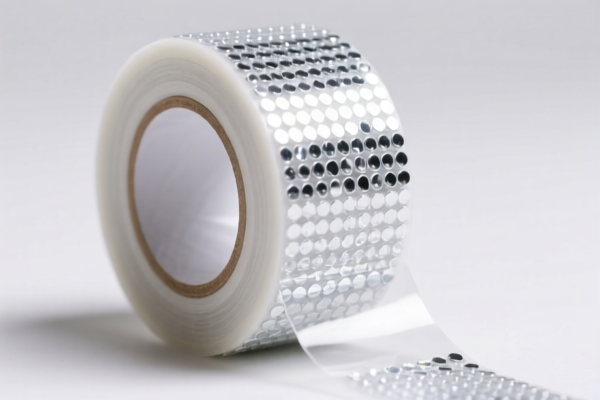
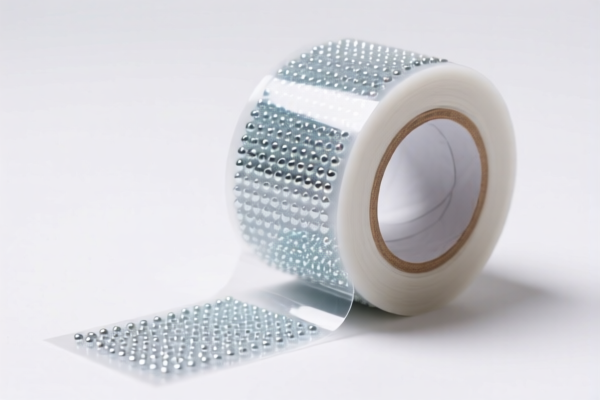
Glass Bead Reflective Tape is a safety-critical product used in traffic signs, vehicle markings, and industrial safety gear. It consists of a plastic film base embedded with tiny glass microspheres that reflect light back to its source. In international trade, its classification depends heavily on its form (roll/film vs. semi-finished component) and specific intended use.
1. Reflective Film/Roll (3919 Series):
If the product is in the form of a continuous roll or sheet, ready for application (e.g., adhesive-backed tape or self-adhesive film), it is classified as Self-Adhesive Plastic Plates, Sheets, Film, Foil, Tape, Strip, and Other Shapes.
2. Reflective Component/Semi-Finished Good (3926 Series):
If the product is described as a "semi-finished reflective film" or a "component part" (e.g., beads already embedded but not yet formed into a final tape structure, or specifically categorized as "other articles of plastic" due to specific manufacturing stages), it may fall under 3926.
⚠️ Key Distinction Point:
- If it is a finished roll/tape ready for use (adhesive or non-adhesive film) → Go to 3919 (Self-adhesive/Film).
- If it is a specific reflective article or semi-finished component categorized as "other plastic articles" → Go to 3926 (Other).
- Misclassification Risk: Declaring a finished tape as a "component" (3926) to seek lower taxes may trigger customs audits for undervaluation or misclassification.
📦 II. HS Code Classification Details (2026 Latest Tariff Authority Match)
Based on the provided data, here are the specific HS Codes, summaries, and tax breakdowns. Note that all items listed are subject to significant additional tariffs for goods originating from China.
| HS Code | Product Summary & Classification Logic | Total Tax Rate | Tax Composition Detail |
|---|---|---|---|
| 3920.99.10.00 | Material: Plastic. Form: Film (Jianpian). Description: Plastic film with embedded glass microspheres (composite material). |
41.0% | Base: 6.0% Section 301: 25.0% Section 122 (IEEPA): 10% |
| 3926.90.99.25 | Material: Plastic. Form: Semi-finished film. Description: Finished for reflective properties. |
22.8% | Base: 5.3% Section 301: 7.5% Section 122 (IEEPA): 10% |
| 3926.90.35.00 | Material: Plastic. Form: Not strung beads/sequins parts. Description: Component of unstrung beads/sequin-like articles. |
16.5% | Base: 6.5% Section 301: 0.0% Section 122 (IEEPA): 10% |
| 3919.90.10.00 | Material: Plastic. Form: Film (Jianpian). Description: Plastic film with glass bead reflective properties. |
41.5% | Base: 6.5% Section 301: 25.0% Section 122 (IEEPA): 10% |
| 3919.10.10.50 | Material: Plastic. Form: Film (Jianpian). Description: Plastic film with glass bead reflective characteristics. |
41.5% | Base: 6.5% Section 301: 25.0% Section 122 (IEEPA): 10% |
🔍 Key Insight:
- Lowest Tax Option:3926.90.35.00(16.5%) offers the lowest total duty, but its description ("component of beads/sequins") may be high-risk if the product is clearly a continuous tape/film. Customs may reject this if it doesn't fit the "bead/sequin component" definition strictly. - Standard High-Tax Option:3919.90.10.00and3919.10.10.50are the most logical fit for "Reflective Tape Rolls" (film form), but carry the highest tax burden (41.5%) due to high Section 301 tariffs (25%). - Composite/Specific Use:3920.99.10.00(41.0%) is also a strong candidate for "film with embedded beads," carrying similar high tariffs.
💰 III. 2026 Latest Tariff Rate Breakdown (Detailed Tax Clauses)
✅ Applicable Country: United States (US)
✅ Origin: China (CN)
✅ Effective Time: Current rates apply (Section 301 & IEEPA 122)
🎯 1. 3919.90.10.00 & 3919.10.10.50 —— Plastic Reflective Film/Tape (Self-Adhesive/Film)
These are the most common classifications for reflective tape rolls.
| Item | Content |
|---|---|
| Base Tariff | 6.5% (Ad Valorem) |
| Section 301 Tariff | +25.0% (USITC Footnote 9903.06) |
| IEEPA (Section 122) Tariff | +10.0% (China-origin goods, effective 2025) |
| Total Effective Rate | 41.5% |
| Tax Calculation | CIF Value × 41.5% |
| De Minimis Eligibility | ❌ NO (Section 301 and IEEPA tariffs generally apply to all shipments, no de minimis exemption for these specific tariff codes from China) |
| Legal Path | HTS:3919 → USITC:3919.90.10.00 → FOOTNOTE:301 + IEEPA:122 |
📌 Explanation:
- 25% Section 301: Applied to "Plastic Plates, Sheets, Film, Foil, Tape..." (Heading 3919/3920) from China. This is the dominant cost driver. - 10% IEEPA 122: A new layer of tariff on Chinese goods under the International Emergency Economic Powers Act. - Result: High compliance cost. Ensure your invoice clearly states "Reflective Tape" or "Reflective Film" to avoid ambiguity.
🎯 2. 3920.99.10.00 —— Plastic Film with Embedded Microspheres (Composite)
| Item | Content |
|---|---|
| Base Tariff | 6.0% |
| Section 301 Tariff | +25.0% |
| IEEPA (Section 122) Tariff | +10.0% |
| Total Effective Rate | 41.0% |
| Tax Calculation | CIF Value × 41.0% |
| De Minimis Eligibility | ❌ NO |
📌 Explanation:
- Slightly lower base tariff (6.0% vs 6.5%) but still subject to the full 25% Section 301 and 10% IEEPA. - Useful if the product is a "composite film" where the glass beads are embedded during manufacturing, rather than a simple self-adhesive tape.
🎯 3. 3926.90.99.25 —— Semi-finished Reflective Articles
| Item | Content |
|---|---|
| Base Tariff | 5.3% |
| Section 301 Tariff | +7.5% (Lower Section 301 rate for specific subheadings) |
| IEEPA (Section 122) Tariff | +10.0% |
| Total Effective Rate | 22.8% |
| Tax Calculation | CIF Value × 22.8% |
| De Minimis Eligibility | ❌ NO (Check specific IEEPA exemptions, but generally high-value industrial goods are excluded) |
📌 Explanation:
- Potential Savings: 22.8% is significantly lower than 41.5%.
- Risk: Requires justification that the item is a "semi-finished" or "other plastic article" not better specified elsewhere. If it is a ready-to-use tape, customs may reclassify it to 3919, leading to back taxes and penalties.
🎯 4. 3926.90.35.00 —— Components of Beads/Sequin Articles
| Item | Content |
|---|---|
| Base Tariff | 6.5% |
| Section 301 Tariff | 0.0% (Exempt under specific section 301 exclusions for certain 3926 subheadings) |
| IEEPA (Section 122) Tariff | +10.0% |
| Total Effective Rate | 16.5% |
| Tax Calculation | CIF Value × 16.5% |
| De Minimis Eligibility | ❌ NO |
📌 Explanation:
- Lowest Tax: 16.5%.
- Risk: High. The description "Component of unstrung beads/sequins" is very specific. If your product is a tape roll, this classification is likely incorrect. Use only if the product is literally individual reflective beads or flakes, not a continuous film/tape.
🛠️ IV. Customs Clearance Practical Advice (Avoid Pitfalls)
✅ 1. Preparation Checklist (Must-Haves)
| Document | Required | Notes |
|---|---|---|
| ✅ Product Specification Sheet | ✔️ | Must detail: Material (PLA/PET/PE), Glass Bead Diameter, Reflectivity Coefficient, Adhesive Type. |
| ✅ Technical Drawing | ✔️ | Show cross-section of film and bead layer. |
| ✅ High-Resolution Photos | ✔️ | Include: Roll end, side view, magnified bead structure, label with HS code suggestion. |
| ✅ Commercial Invoice | ✔️ | Description: "Glass Bead Reflective Plastic Film Roll" or "Reflective Tape for Safety Markings". |
| ✅ Origin Certificate (CO) | ✔️ | To prove Chinese origin (triggers Section 301/IEEPA). |
| ✅ Form E (if applicable) | ❌ | Not helpful for US imports. |
✅ 2. Declaration Tips (Key Strategies)
🔥 "Describe the Form, Not Just the Function"
| Scenario | Recommended HS Code | Wrong Declaration | Consequence |
|---|---|---|---|
| Ready-to-use Tape Roll (Adhesive or Self-Adhesive) | 3919.90.10.00 or 3919.10.10.50 |
Declaring as "Component" (3926) | Reclassification Penalty + Back Taxes (41.5% vs 16.5%) |
| Cut-to-Size Reflective Sheets | 3920.99.10.00 |
Declaring as "Tape" | Minor discrepancy, but ensure "Film" is emphasized |
| Loose Reflective Beads (Not on Film) | 3926.90.35.00 |
Declaring as "Tape" | High risk of rejection if beads are not "sequin-like components" |
| Semi-Finished Reflective Film (Not yet converted to tape) | 3926.90.99.25 |
Declaring as "Finished Tape" | If proven to be semi-finished, may save 18.7% in taxes. Must provide BOM/Process Flow. |
✅ 3. Special Situations
| Situation | Handling Advice |
|---|---|
| OEM Custom Reflective Tape | Provide customer spec sheet. If unique shape/function, argue for 3926 (Other), but prepare for audit. |
| Reflective Tape for Military Use | Check if specific exclusions apply. Usually, Section 301 still applies. |
| Mixed Container | If container has other items (e.g., electronics), ensure clear separation in invoice. Mixed declarations can delay clearance. |
| Value Adjustment | If declaring under 3926 (16.5%) for a product clearly resembling tape, ensure the Unit Price reflects a semi-finished good (lower value) to avoid "Undervaluation" flags. |
🌍 V. Global Market Comparison (2026)
| Country/Region | Recommended HS Code | Tariff Rate (China Origin) | Certification Required | Notes |
|---|---|---|---|---|
| 🇺🇸 USA | 3919.90.10.00 |
41.5% (High) | No specific, but DOT/FMCSA standards apply for traffic | Highest duty due to Section 301 + IEEPA. |
| 🇨🇳 China | 3919.90.10.00 |
~10-15% | CCC (if applicable) | Lower duty, easier clearance. |
| 🇪🇺 EU | 3919.10.10 |
0-6.5% (Varies) | CE Mark (if applicable) | No Section 301 equivalent. |
| 🇬🇧 UK | 3919.10.10 |
0-6.5% | UKCA Mark | Post-Brexit rules may differ slightly. |
| 🇯🇵 Japan | 3919.10.10 |
0-6.0% | PSE (if electrical, not applicable here) | Generally low duty. |
📌 Conclusion:
- USA is the most challenging market due to 41.5% total tariffs for standard reflective tapes.
- Cost Optimization: Consider if the product can be classified as3926.90.99.25(22.8%) if it is truly semi-finished. This saves ~18.7% in duties.
- Risk Management: Do NOT force3926.90.35.00(16.5%) unless the product is literally loose beads/components, as misclassification penalties can exceed the tax savings.
📌 VI. Common Errors & Pitfalls (Blood Lessons)
❌ Error 1: Declaring "Reflective Tape" as "Plastic Film" (3920) to get a lower base rate, but ignoring that Section 301 applies to both.
👉 Consequence: No real savings, just confusion.
❌ Error 2: Using 3926.90.35.00 (16.5%) for a standard adhesive tape roll.
👉 Consequence: Customs Audit. CBP will reclassify to 3919 (41.5%). You pay back taxes + interest + potential penalty (25-50% of duty).
❌ Error 3: Ignoring IEEPA 122 (10%).
👉 Consequence: Even if you negotiate a lower Section 301 rate (e.g., via exclusion or specific 3926 code), the 10% IEEPA tax remains. Always calculate Total Landed Cost including IEEPA.
❌ Error 4: Vague Invoice Description ("Plastic Roll").
👉 Consequence: Customs examiner will use discretion, often choosing the highest tax rate (3919) or requesting more info, delaying clearance by weeks.
✅ Correct Practice:
"Glass Bead Reflective Tape Roll, PET Base, Self-Adhesive, Reflectivity > 200 cd/lx/m², Model XYZ"
Choose HS Code based on strict form: If Roll/Tape → 3919. If Semi-Finished Sheet → 3926.90.99.25.
🎯 VII. Conclusion: Precise Classification, Cost Control, Smooth Clearance
🎯 Remember the Mantra:
🔹 "Tape is 3919 (41.5%), Semi-Finished is 3926 (22.8%), Beads are 3926.35 (16.5%)."
🔹 "Don't fake the description for tax savings; the penalty is 3x the tax."
🔹 "IEEPA 10% is unavoidable for China. Focus on Base + Section 301 optimization."
📌 Pro Tip:
If your reflective tape is used for specific government projects or has unique technical features, apply for a Binding Tariff Ruling (BTR) with US CBP before shipping. This provides legal certainty on whether 3926.90.99.25 (22.8%) is applicable to your specific semi-finished state.
📣 Immediate Action:
📞 Consult a licensed customs broker.
📄 Provide product cross-section and manufacturing process flow.
🚀 Clear Customs Faster, Reduce Duty Burden, Maximize Profit!
✨ Professional Customs, Starts with Accurate Classification!
💼 Every percentage point of duty is a point of profit!
Customer Reviews
About HS Code Classification
The Harmonized System (HS) is an internationally standardized nomenclature developed by the World Customs Organization (WCO) to classify traded products. Over 200 countries use the HS system as the basis for customs tariffs, trade statistics, and import/export regulations.
Each HS code follows a hierarchical structure:
- Chapter (2 digits) — Broad category of goods (e.g., Chapter 84: Machinery and Mechanical Appliances)
- Heading (4 digits) — More specific grouping within the chapter
- Subheading (6 digits) — Internationally standardized breakdown, used by all WCO member countries
- National subdivisions (8-10 digits) — Country-specific extensions for further classification, such as US HTSUS 10-digit codes
Correct HS code classification is essential for smooth customs clearance, accurate duty payment, and compliance with trade regulations. Misclassification can lead to customs delays, overpayment of duties, or penalties.
When importing from CN to US, the applicable tariff rates may include:
- Most-Favored-Nation (MFN) rate — The standard duty rate applied to WTO members
- General rate — Applied to countries without trade agreements
- Trade remedy duties — Additional tariffs such as Section 301 (anti-dumping), Section 232 (national security), or countervailing duties
The information provided on this page is for reference purposes only. For official classification, please consult with your local customs authority or a licensed customs broker.