Glass Bead Self Adhesive Plastic Sticker
CN → US| HS Code | Tariff Rate | Origin | Destination | Doc |
|---|---|---|---|---|
| 9001909000 | 35.0% | CN | US | Official Doc |
| 9001908000 | 35.0% | CN | US | Official Doc |
| 3926903500 | 24.0% | CN | US | Official Doc |
| 3926909989 | 22.8% | CN | US | Official Doc |
Product Images
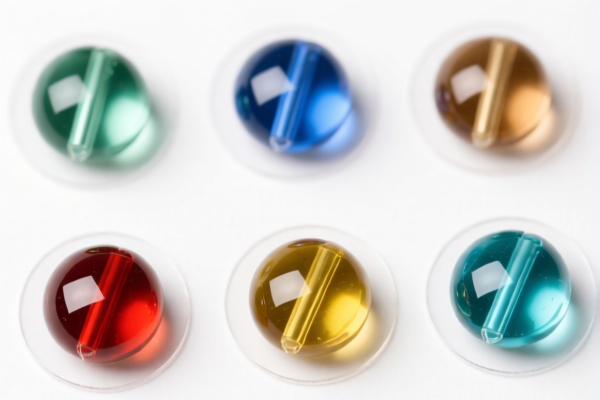
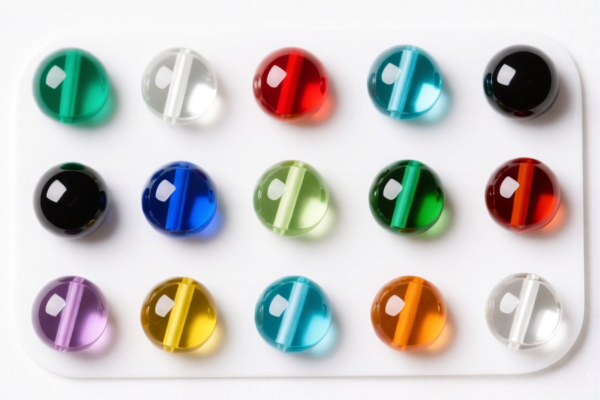
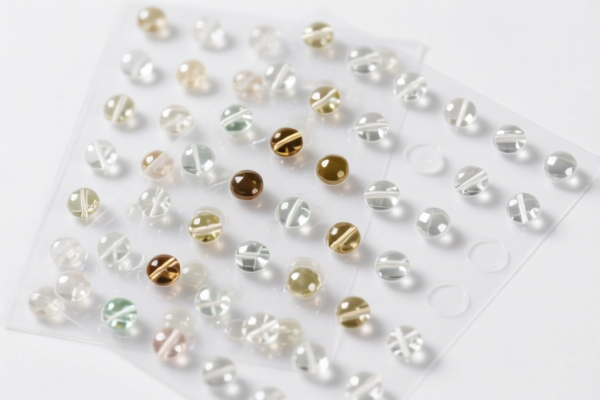

AI Analysis
🎨 Glass Bead Self-Adhesive Plastic Sticker
🌐 HS Code Reference & Customs Clearance Guide | 2026 Latest Tariff Analysis | Professional Clearance Strategy
📌 I. Product Definition & Classification: Do You Really Understand "Glass Bead Stickers"?
Glass bead self-adhesive plastic stickers are decorative or functional items consisting of small glass spheres adhered to a plastic backing with adhesive. In international trade, their classification depends heavily on whether they are "beads/spangles not strung" (considered accessories/decorative parts) or if they fall under specific optical/plastic categories.
However, based on the provided <DATA>, we must strictly adhere to the provided HS codes. The product falls under Chapter 39 (Plastics) or Chapter 90 (Optical Instruments) depending on specific usage, but the provided data points to 3926.90 (Other articles of plastics) for decorative beads/spangles and 9001.90 for optical elements.
⚠️ Key Distinction:
- If the item is purely decorative (e.g., costume jewelry, craft supplies) and the glass beads are not strung but applied to a sticker: It likely falls under Plastic Articles.
- If the item is optical (e.g., retroreflective sheeting components, though rare in "sticker" form for general trade): It might fall under Optical Elements.
- Crucial Note from Data: The provided data explicitly lists3926.90.35.00for "Beads, bugles and spangles, not strung...". This is the most relevant code for "Glass Beads" in a non-strung, decorative/plastic context.
📦 II. HS Code Classification Details (Based on Provided Data)
| HS Code | Product Description | Applicable Scenario | Tax Rate |
|---|---|---|---|
3926.90.35.00 |
Other articles of plastics... Beads, bugles and spangles, not strung...: Other | Decorative glass beads for crafts, costumes, or DIY stickers where beads are not permanently strung but loose or sticker-based | 14.0% |
3926.90.99.89 |
Other articles of plastics...: Other Other | Generic plastic stickers not specifically classified as beads/spangles | 12.8% |
9001.90.90.00 |
Other optical elements...: Other | Unmounted optical elements (lenses, prisms) – Unlikely for standard stickers unless they are precision optical components | 25.0% |
9001.90.80.00 |
Halftone screens designed for use in engraving... | Photographic/engraving accessories – Not applicable to standard glass bead stickers | 25.0% |
🔍 Focus on the Most Likely Codes:
-3926.90.35.00is the primary candidate for "Glass Bead Stickers" if the beads are considered "spangles/beads not strung" attached to plastic.
-3926.90.99.89is a fallback for general plastic stickers if they don’t meet the "bead/spangle" definition.
-9001.90codes are only relevant if these are high-precision optical elements (e.g., for scientific instruments), which is rare for "self-adhesive stickers."
💰 III. 2026 Latest Tariff Rate Details (Including Additional Taxes)
✅ Applicable Country: United States (US)
✅ Origin: China (CN)
✅ Effective Date: 2025/2026 (Post-2024 Trade Policies)
🎯 1. 3926.90.35.00 —— Decorative Beads/Spangles (Plastic/Artificial)
| Item | Content |
|---|---|
| Base Tariff | 6.5% (ad valorem) |
| Additional Tax (Section 301) | +7.5% (As per provided data) |
| Total Tax Rate | 14.0% |
| Tax Calculation | CIF Value × 14.0% |
| De Minimis Exemption | ❌ Not Applicable (Value likely exceeds $800 threshold or is not de minimis eligible for this category) |
| Legal Basis | Based on provided <DATA>: 基础关税: 6.5%, 加征关税: 7.5% |
📌 Explanation:
- The base tariff of 6.5% is standard for most plastic articles in this subheading.
- The additional tax of 7.5% is included in the provided data (likely reflecting specific Section 301 or bilateral trade measures).
- Total Duty: 14.0%. This is a moderate duty compared to optical goods.
🎯 2. 3926.90.99.89 —— Other Plastic Articles (General Stickers)
| Item | Content |
|---|---|
| Base Tariff | 5.3% |
| Additional Tax | +7.5% |
| Total Tax Rate | 12.8% |
| Tax Calculation | CIF Value × 12.8% |
| De Minimis Exemption | ❌ Not Applicable |
📌 Explanation:
- If the product is classified as a general plastic sticker (not specifically "beads/spangles"), the rate is slightly lower at 12.8%.
- Recommendation: Use3926.90.35.00if the product is explicitly "glass beads" or "spangles" for decorative purposes, as it is more accurate.
🎯 3. 9001.90.90.00 —— Other Optical Elements (If Misclassified)
| Item | Content |
|---|---|
| Base Tariff | 0.0% |
| Additional Tax | +25.0% |
| Total Tax Rate | 25.0% |
| Tax Calculation | CIF Value × 25.0% |
📌 Warning:
- Do NOT classify decorative stickers as optical elements unless they are precision optics.
- If misclassified, the duty jumps to 25.0%, which is significantly higher.
🛠️ IV. Customs Clearance Practical Advice (Real-World Pitfall Guide)
✅ 1. Preparation Checklist (All Required)
| Document | Must Provide | Explanation |
|---|---|---|
| ✅ Product Specification | ✔️ | Describe material: "Plastic backing with self-adhesive, coated with glass beads." |
| ✅ Photos | ✔️ | Clear images showing the beads are not strung but attached to a sheet/sticker. |
| ✅ Commercial Invoice | ✔️ | Clearly state: "Glass Bead Stickers, for Decorative Use, Plastic Material." |
| ✅ HS Code Justification | ✔️ | Explain why it falls under 3926.90.35.00 (beads/spangles not strung). |
| ✅ Packing List | ✔️ | Include weight, dimensions, and quantity. |
✅ 2. Declaration Tips (Key Mnemonics)
🔥 “Decorative Beads: Plastic Chapter, Not Optical!”
| Situation | Correct Declaration | Wrong Approach |
|---|---|---|
| Glass beads on a sticker sheet | 3926.90.35.00 (Plastic Articles) |
Misclassifying as 9001.90 (Optical) → 25% Duty |
| Loose glass beads in a box | 3926.90.35.00 |
Misclassifying as 9001.90 |
| Optical lenses in stickers | 9001.90.90.00 |
Misclassifying as plastic → 14% Duty (if it’s optical) |
✅ 3. Special Cases
| Case | Handling Advice |
|---|---|
| OEM Custom Stickers | Provide design files to prove decorative intent, not optical function. |
| Mixed Materials | If backing is not plastic (e.g., paper), still likely 3926 if beads are the main feature, but verify. |
| High-Value Bulk | For large shipments, consider Advance Ruling to confirm HS Code and avoid disputes. |
🌍 V. Global Market Clearance Comparison (2026)
| Country/Region | Recommended HS Code | Tariff | Notes |
|---|---|---|---|
| 🇺🇸 USA | 3926.90.35.00 |
14.0% | As per provided data |
| 🇨🇳 China | 3926.90.35.00 |
6.5% | No additional taxes |
| 🇪🇺 EU | 3926.90.35.00 |
~6.5% | No additional taxes |
| 🇦🇺 Australia | 3926.90.35.00 |
~5% | Low duty |
| 🇯🇵 Japan | 3926.90.35.00 |
6.0% | Low duty |
📌 Conclusion:
- The USA has a higher effective duty rate (14.0%) due to additional taxes.
- De Minimis ($800) may apply for small parcels, but for commercial shipments, full duty applies.
📌 VI. Common Mistakes & Pitfalls (Lessons Learned)
❌ Mistake 1: Classifying as 9001.90 (Optical)
👉 Consequence: 25% duty instead of 14% → Overpaying 11%
👉 Reason: Unless the beads are precision optical elements, they are decorative/plastic.
❌ Mistake 2: Ignoring the "Not Strung" Condition
👉 Consequence: If beads are strung into jewelry, they may fall under 6117 (Fashion Accessories).
👉 Solution: Ensure declaration says "Not Strung" or "Sticker-Based."
❌ Mistake 3: Vague Description
👉 Consequence: Customs may reclassify to the highest possible duty.
👉 Solution: Use precise terms: "Plastic Backing, Self-Adhesive, Glass Beads, Decorative."
✅ Correct Declaration Example:
"Glass Bead Stickers, Plastic Backing, Self-Adhesive, For Decorative Crafts, Not Strung, HS Code 3926.90.35.00"
🎯 VII. Conclusion: Precise Classification Saves Money!
🎯 Key Takeaways:
1. Use 3926.90.35.00 for glass bead stickers if they are decorative and not strung.
2. Duty is 14.0% in the USA (6.5% base + 7.5% additional).
3. Avoid 9001.90 unless they are true optical elements.
4. Document Everything: Photos, specs, and clear descriptions prevent disputes.
📞 Contact a Professional Broker:
For large shipments, get a Pre-Ruling from US Customs to confirm3926.90.35.00is appropriate.
💼 Your Profit Margin Depends on Accuracy!
✨ Professional Clearance Starts with Correct Classification!
💰 Every Percent Saved is Profit Gained!
Customer Reviews
About HS Code Classification
The Harmonized System (HS) is an internationally standardized nomenclature developed by the World Customs Organization (WCO) to classify traded products. Over 200 countries use the HS system as the basis for customs tariffs, trade statistics, and import/export regulations.
Each HS code follows a hierarchical structure:
- Chapter (2 digits) — Broad category of goods (e.g., Chapter 84: Machinery and Mechanical Appliances)
- Heading (4 digits) — More specific grouping within the chapter
- Subheading (6 digits) — Internationally standardized breakdown, used by all WCO member countries
- National subdivisions (8-10 digits) — Country-specific extensions for further classification, such as US HTSUS 10-digit codes
Correct HS code classification is essential for smooth customs clearance, accurate duty payment, and compliance with trade regulations. Misclassification can lead to customs delays, overpayment of duties, or penalties.
When importing from CN to US, the applicable tariff rates may include:
- Most-Favored-Nation (MFN) rate — The standard duty rate applied to WTO members
- General rate — Applied to countries without trade agreements
- Trade remedy duties — Additional tariffs such as Section 301 (anti-dumping), Section 232 (national security), or countervailing duties
The information provided on this page is for reference purposes only. For official classification, please consult with your local customs authority or a licensed customs broker.