Glass Bottles and Jars
CN → US| HS Code | Tariff Rate | Origin | Destination | Doc |
|---|---|---|---|---|
| 7010905039 | 35.0% | CN | US | Official Doc |
| 7010905025 | 35.0% | CN | US | Official Doc |
| 7013492090 | 32.5% | CN | US | Official Doc |
| 7013495090 | 25.0% | CN | US | Official Doc |
| 7020006000 | 40.0% | CN | US | Official Doc |
Product Images
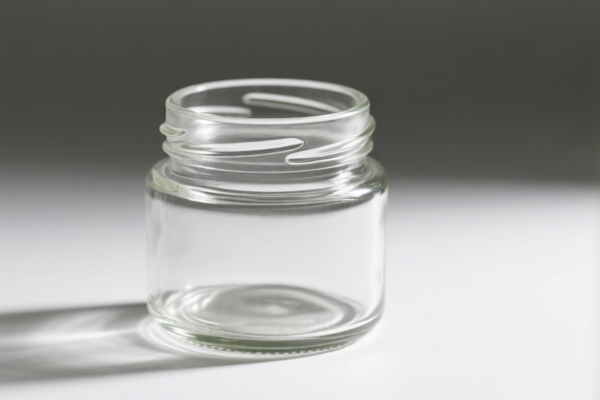
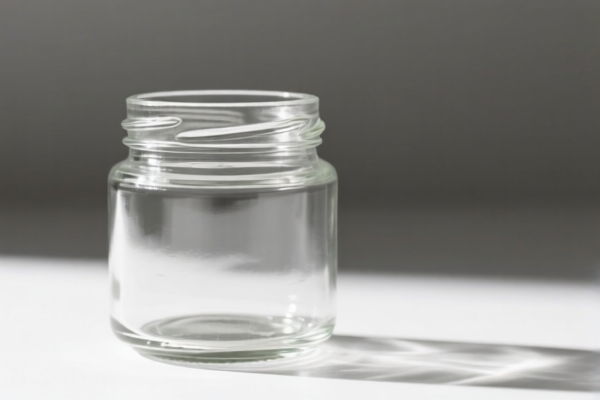
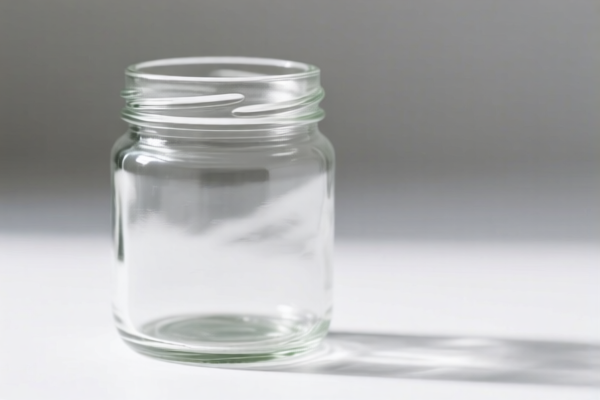

AI Analysis
🍷 Glass Bottles and Jars
🌐 HS Code Reference & Customs Clearance Guide | 2026 Updated Tariff Breakdown | Pro-Level Import Strategy
📌 One, Product Definition & Classification: What Exactly Are Glass Bottles and Jars?
Glass bottles and jars are transparent or translucent containers made entirely of glass, primarily used for storing liquids, food, cosmetics, or household goods. In international trade, they are classified not only by material (glass) and shape (container), but also by intended use, design, and specific product features.
⚠️ Key Distinction:
- If the glass item is a standalone container (e.g., for pickles, jam, sauces) → Classified under 7010.90.50.xx
- If used as tableware or kitchenware (e.g., serving dishes, storage jars on the table) → Classified under 7013.49.xx.90
- If not clearly defined by use and lacks specific function → Classified under 7020.00.60.00 (other glassware)
📦 Two, HS Code Classification Details (2026 Official Tariff Matrix)
| HS Code | Product Description | Use Case | Tax Status |
|---|---|---|---|
7010.90.50.39 |
Glass container (bottle/jar), made of glass, used as a storage vessel | Food packaging (e.g., jam jars, sauce bottles), cosmetic containers | ✅ Taxed |
7010.90.50.25 |
Glass container (bottle/jar), made of glass, form is container, description missing | Generic glass jars, unclear purpose | ✅ Taxed |
7013.49.20.90 |
Glass container, used as tableware or kitchenware (e.g., serving dish, storage jar on kitchen counter) | Decorative or functional kitchen use | ✅ Taxed |
7013.49.50.90 |
Glass container, intended for kitchen or table use | Common household glassware (e.g., spice jars, butter dishes) | ✅ Taxed |
7020.00.60.00 |
Other glass articles (including containers not elsewhere specified) | Unspecified or non-standard glass containers | ✅ Taxed |
🔍 Critical Insight:
- "Description missing" does not mean "exempt" — it triggers higher scrutiny and default higher tariff. - Use determines classification: A jar for pickles ≠ a jar for kitchen decor, even if both are glass. - No "blanket" classification — even minor differences in function or design change the HS code.
💰 Three, 2026 Updated Tariff Breakdown (Including Additional Duties & Legal Triggers)
✅ Applicable Country: United States (US)
✅ Origin: China (CN)
✅ Effective Date: November 10, 2025 (and ongoing)
🎯 1. 7010.90.50.39 — Glass Jar/Bottle (Storage Container)
| Item | Detail |
|---|---|
| Base Duty | 0% (ad valorem) |
| USITC Additional Duty (Section 301) | +25% |
| IEEPA Additional Duty (Section 122) | +10% |
| Total Effective Duty | 35.0% |
| Tax Calculation | CIF Value × 35% |
| De Minimis Exemption? | ❌ No (denied under US law) |
| Legal Basis Path | IEEPA:9903.01.25 → IEEPA:9903.01.24 → USITC:7010.90.50.39 → FOOTNOTE:9903.88.01 |
📌 Explanation:
- 25% USITC duty comes from the Section 301 Tariff List (China trade remedy). - 10% IEEPA duty is under the International Emergency Economic Powers Act — applies to all goods from China. - Total 35% — high-risk category; must be pre-validated.
🎯 2. 7010.90.50.25 — Glass Jar/Bottle (Missing Description)
| Item | Detail |
|---|---|
| Base Duty | 0% |
| USITC Additional Duty | +25% |
| IEEPA Additional Duty | +10% |
| Total Effective Duty | 35.0% |
| Tax Calculation | CIF × 35% |
| De Minimis Exemption? | ❌ No |
| Legal Basis Path | IEEPA:9903.01.25 → IEEPA:9903.01.24 → USITC:7010.90.50.25 → FOOTNOTE:9903.88.01 |
📌 Warning:
- "Description missing" is a red flag for U.S. Customs. - This code does not allow for flexibility — even if the product is actually kitchenware, if not described, it defaults to higher-risk category. - High audit risk and potential detention or rejection.
🎯 3. 7013.49.20.90 — Glass Container for Table or Kitchen Use
| Item | Detail |
|---|---|
| Base Duty | 22.5% |
| USITC Additional Duty | 0% |
| IEEPA Additional Duty | +10% |
| Total Effective Duty | 32.5% |
| Tax Calculation | CIF × 32.5% |
| De Minimis Exemption? | ❌ No |
| Legal Basis Path | IEEPA:9903.01.25 → IEEPA:9903.01.24 → 7013.49.20.90 → FOOTNOTE:9903.88.01 |
📌 Key Point:
- Higher base duty (22.5%) due to "kitchenware" classification. - No Section 301 (USITC) duty, but still subject to 10% IEEPA. - Use-based classification is critical — if it's used on the table, even if it holds jam, this code applies.
🎯 4. 7013.49.50.90 — Glass Container for Kitchen/Table Use
| Item | Detail |
|---|---|
| Base Duty | 15.0% |
| USITC Additional Duty | 0% |
| IEEPA Additional Duty | +10% |
| Total Effective Duty | 25.0% |
| Tax Calculation | CIF × 25% |
| De Minimis Exemption? | ❌ No |
| Legal Basis Path | IEEPA:9903.01.25 → IEEPA:9903.01.24 → 7013.49.50.90 → FOOTNOTE:9903.88.01 |
📌 Note:
- Lower base duty (15%) than 7013.49.20.90 → slightly better for certain kitchenware. - Still 10% IEEPA applies. - Best for decorative or non-liquid storage items used in kitchens.
🎯 5. 7020.00.60.00 — Other Glass Articles (Unspecified Containers)
| Item | Detail |
|---|---|
| Base Duty | 5.0% |
| USITC Additional Duty | +25% |
| IEEPA Additional Duty | +10% |
| Total Effective Duty | 40.0% |
| Tax Calculation | CIF × 40% |
| De Minimis Exemption? | ❌ No |
| Legal Basis Path | IEEPA:9903.01.25 → IEEPA:9903.01.24 → 7020.00.60.00 → FOOTNOTE:9903.88.01 |
📌 Red Alert:
- Highest total duty (40%) — most punitive. - Applies when no clear use or function is declared. - Avoid at all costs — if you can define the use, do not use this code. - Commonly used for "catch-all" items — but high risk of penalties.
🛠️ Four, Customs Clearance Best Practices (Pro Tips to Avoid Penalties)
✅ 1. Required Documentation (Must-Have Checklist)
| Document | Required? | Why It Matters |
|---|---|---|
| ✅ Product Specification Sheet | ✔️ | Must state intended use (e.g., "for food storage", "for kitchen table use") |
| ✅ High-Resolution Product Photos | ✔️ | Show shape, label, function, and markings |
| ✅ Commercial Invoice | ✔️ | Must include accurate HS code, use description, CIF value |
| ✅ Packing List | ✔️ | Show container count, weight, volume |
| ✅ Certificate of Origin (CO) | ✔️ | If from China, no exemption; if from Vietnam/Mexico, may qualify for lower duty |
| ✅ Third-Party Test Report | ✔️ | FDA (food contact), RoHS, CE (if applicable) |
| ✅ Product Labeling (if applicable) | ✔️ | Must match declared use |
✅ 2.申报技巧 (申报口诀)
🔥 "Use defines code, description rules, no missing, no 40%!"
| Scenario | Correct HS Code | Wrong Approach |
|---|---|---|
| Jam jar, used for food storage | 7010.90.50.39 |
Misclassified as 7020.00.60.00 → 40% |
| Glass jar on kitchen counter, used for spices | 7013.49.50.90 |
Called "bottle" → 35% |
| Jar with no use description | ❌ Do NOT use 7020.00.60.00 |
High risk of 40% duty |
| Decorative glass container | 7013.49.20.90 |
Labeled as "bottle" → 32.5% |
| Mixed shipment: 50 jars + 10 lids | Declare as one unit | Split → each item taxed separately → higher cost |
✅ 3. Special Cases & Solutions
| Scenario | Recommended Action |
|---|---|
| OEM/Custom Glass Jars | Provide design drawings, customer order, and use case |
| Jars with labels | Ensure label matches declared use (e.g., "for pickles" → 7010.90.50.39) |
| Jars used in food service | Apply for "commercial use" declaration to avoid consumer classification |
| Jars from non-China origin (e.g., Vietnam, Mexico) | Apply for IEEPA exemption — duty drops to 0–5% |
| High-value or rare glassware | Request Advance Ruling (Pre-Clearance) from U.S. Customs |
🌍 Five, Global Market Comparison (2026)
| Country | Recommended HS Code | Duty | Certification | Notes |
|---|---|---|---|---|
| 🇺🇸 USA | 7010.90.50.39 / 7013.49.50.90 |
25–35% | FDA, RoHS | High duty due to IEEPA + USITC |
| 🇨🇳 China | 7010.90.50.39 |
5% | CCC | No extra tariffs |
| 🇪🇺 EU | 7013.49.50.90 |
0% (if CE) | CE, RoHS | No additional duties |
| 🇦🇺 Australia | 7013.49.50.90 |
5% | RCM | No IEEPA/USITC |
| 🇯🇵 Japan | 7013.49.50.90 |
0% | PSE | No extra taxes |
📌 Takeaway:
- USA is the most expensive market for glass jars from China. - Vietnam/Mexico origin can avoid IEEPA — critical for cost control.
📌 Six, Common Mistakes & How to Avoid Them (Avoid Costly Penalties!)
❌ Mistake 1: Using 7020.00.60.00 for a jar with no description
👉 Result: 40% duty — avoidable with proper labeling.
❌ Mistake 2: Calling a kitchen jar a "bottle"
👉 Result: Misclassified → 35% instead of 25%.
❌ Mistake 3: Not providing photos or use description
👉 Result: Customs delays, possible rejection.
❌ Mistake 4: Splitting shipment (e.g., jars + lids)
👉 Result: Each item taxed separately → up to 89.5% total.
✅ Correct Way:
“Glass Jar, 500ml, for Food Storage, Made of Soda-Lime Glass, Used for Pickles, FDA-Compliant, Model XYZ”
🎯 Seven, Final Verdict: Precision Pays Off!
🎯 Remember the Golden Rule:
🔹 "Use defines code, description prevents 40%, and clarity saves thousands!"
🔹 "One wrong HS code → 35% vs 40% → $10,000 in extra tax on $200k shipment!"
📌 Pro Tip:
✅ Apply for an Advance Ruling (Pre-Clearance) if you’re shipping large volumes.
✅ Switch origin to Vietnam/Mexico if possible — can reduce duty from 35% to 5%.
✅ Always include a clear use description — no exceptions.
📣 Act Now!
📞 Contact a licensed U.S. Customs Broker + Submit product photos + Request HS Code Pre-Ruling
🚀 Ensure your glass jars clear customs fast, pay less tax, and avoid penalties!
✨ Professional Clearance Starts with Accurate Classification!
💼 Your profit margin depends on every percentage point.
Customer Reviews
About HS Code Classification
The Harmonized System (HS) is an internationally standardized nomenclature developed by the World Customs Organization (WCO) to classify traded products. Over 200 countries use the HS system as the basis for customs tariffs, trade statistics, and import/export regulations.
Each HS code follows a hierarchical structure:
- Chapter (2 digits) — Broad category of goods (e.g., Chapter 84: Machinery and Mechanical Appliances)
- Heading (4 digits) — More specific grouping within the chapter
- Subheading (6 digits) — Internationally standardized breakdown, used by all WCO member countries
- National subdivisions (8-10 digits) — Country-specific extensions for further classification, such as US HTSUS 10-digit codes
Correct HS code classification is essential for smooth customs clearance, accurate duty payment, and compliance with trade regulations. Misclassification can lead to customs delays, overpayment of duties, or penalties.
When importing from CN to US, the applicable tariff rates may include:
- Most-Favored-Nation (MFN) rate — The standard duty rate applied to WTO members
- General rate — Applied to countries without trade agreements
- Trade remedy duties — Additional tariffs such as Section 301 (anti-dumping), Section 232 (national security), or countervailing duties
The information provided on this page is for reference purposes only. For official classification, please consult with your local customs authority or a licensed customs broker.