Glass Cover
CN → US| HS Code | Tariff Rate | Origin | Destination | Doc |
|---|---|---|---|---|
| 7020004000 | 41.6% | CN | US | Official Doc |
| 7020006000 | 40.0% | CN | US | Official Doc |
| 9405913000 | 47.0% | CN | US | Official Doc |
| 9405914000 | 42.5% | CN | US | Official Doc |
Product Images
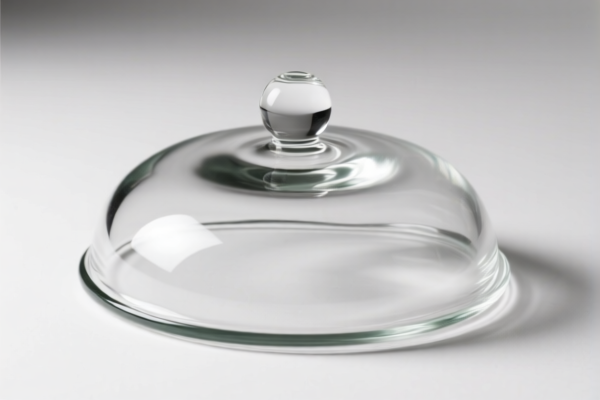
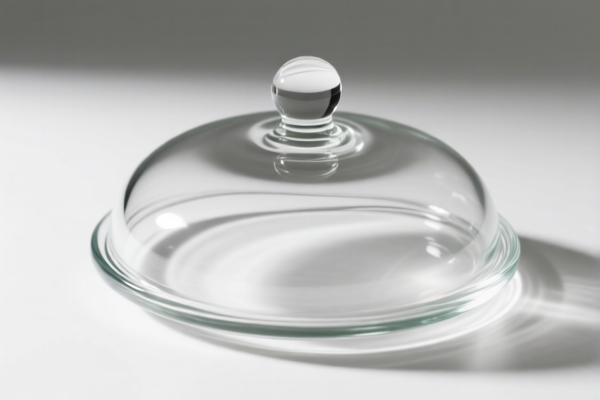


AI Analysis
🏺 Glass Cover (Glass Components/Lenses)
🌐 HS Code Reference & Customs Clearance Guide | 2026 Latest Tariff Analysis | Professional Clearance Strategy
📌 1. Product Definition & Classification: What exactly is a "Glass Cover"?
The term "Glass Cover" is highly ambiguous in international trade. It can refer to anything from a protective lens for a sensor to a decorative lampshade. The final HS Code determination depends entirely on the physical form, specific use, and structural integration of the glass item.
⚠️ Critical Distinction:
- If it is a raw/semi-finished glass piece used as an accessory or derivative product → Chapter 70
- If it is shaped specifically to function as a Lamp Shade → 9405.91.30
- If it is shaped specifically as a Lamp Part (but not strictly a shade) → 9405.91.40
📦 2. HS Code Classification Details (2026 Latest Tariff Reference)
Based on the provided data, here are the four possible classifications. Note that all are subject to significant additional tariffs due to trade restrictions.
| HS Code | Product Description | Summary & Application |
|---|---|---|
7020.00.40.00 |
Glass derivatives/accessories | Glass material, classified as a derivative/accessory glass product. Often used for general glass items that don't fit specific functional categories. |
7020.00.60.00 |
Other glass articles | Glass material, classified under "Other" items in Chapter 70. Used when the glass item does not fit into more specific subheadings like mirrors or optical components. |
9405.91.30.00 |
Lamp Shades | Glass material that meets the morphological requirements of a Lamp Shade. Typically used for decorative lighting fixtures. |
9405.91.40.00 |
Lamp Parts | Glass material defined as a part of a lamp. Used for functional glass components integral to the lighting system but not strictly defined as a shade. |
🔍 Key Insight:
- Chapter 70 (7020...) treats the item as a general glass good.
- Chapter 94 (9405...) treats the item as a lighting accessory.
- Why does it matter? The base tariff rates differ significantly (5% vs 12%), which impacts the total landed cost despite the high additional tariffs.
💰 3. 2026 Latest Tariff Rate Breakdown (Including Surcharges & Policy Add-ons)
✅ Applicable Country: United States (US)
✅ Origin: China (CN)
✅ Effective Date: Includes subsequent imports as per the data provided.
🎯 1. 7020.00.40.00 —— Glass Derivatives/Accessories
| Item | Content |
|---|---|
| Base Tariff | 6.6% |
| Section 301 Surcharge | +25.0% |
| Section 122 Tariff | +10.0% |
| Total Tax Rate | 41.6% |
| Tax Calculation | CIF Value × 41.6% |
| Legal Basis Path | Base Rate (6.6%) + Sec 301 (25%) + Sec 122 (10%) |
📌 Explanation:
- This classification applies if the glass cover is considered a general accessory or derivative.
- The 41.6% total rate is steep, primarily driven by the 25% Section 301 tariff.
🎯 2. 7020.00.60.00 —— Other Glass Articles
| Item | Content |
|---|---|
| Base Tariff | 5.0% |
| Section 301 Surcharge | +25.0% |
| Section 122 Tariff | +10.0% |
| Total Tax Rate | 40.0% |
| Tax Calculation | CIF Value × 40.0% |
| Legal Basis Path | Base Rate (5.0%) + Sec 301 (25%) + Sec 122 (10%) |
📌 Explanation:
- Slightly lower total tax (40.0%) compared to 7020.40 due to a lower base rate (5% vs 6.6%).
- Still subject to the same high surcharges.
🎯 3. 9405.91.30.00 —— Lamp Shades
| Item | Content |
|---|---|
| Base Tariff | 12.0% |
| Section 301 Surcharge | +25.0% |
| Section 122 Tariff | +10.0% |
| Total Tax Rate | 47.0% |
| Tax Calculation | CIF Value × 47.0% |
| Legal Basis Path | Base Rate (12.0%) + Sec 301 (25%) + Sec 122 (10%) |
📌 Explanation:
- This has the highest total tariff (47.0%) due to the highest base rate (12.0%).
- Use this code only if the product is definitively a Lamp Shade. Misclassification here can lead to audits if the item is structurally a simple cover/part.
🎯 4. 9405.91.40.00 —— Lamp Parts
| Item | Content |
|---|---|
| Base Tariff | 7.5% |
| Section 301 Surcharge | +25.0% |
| Section 122 Tariff | +10.0% |
| Total Tax Rate | 42.5% |
| Tax Calculation | CIF Value × 42.5% |
| Legal Basis Path | Base Rate (7.5%) + Sec 301 (25%) + Sec 122 (10%) |
📌 Explanation:
- A middle ground between Chapter 70 and Lamp Shades.
- Applies if the glass cover is a functional part of a lamp (e.g., a housing lens or structural support) but not a decorative shade.
🛠️ 4. Customs Clearance Practical Advice (Avoiding Pitfalls)
✅ 1. Documentation Checklist (Non-negotiable)
| Document | Required? | Notes |
|---|---|---|
| ✅ Product Photos | ✔️ | Must show shape, transparency, and mounting points. |
| ✅ Technical Specification | ✔️ | Define if it is a "Shade," "Lens," "Cover," or "Part." |
| ✅ Bill of Lading / Invoice | ✔️ | Must match HS Code description exactly. |
| ✅ Composition Report | ✔️ | Confirm it is Glass (not plastic/acrylic, which has different HS codes). |
✅ 2. Declaration Strategy (Key Tips)
🔥 "Define Form, Not Just Name!"
| Scenario | Recommended HS Code | Reason |
|---|---|---|
| Decorative Lampshade (Open bottom/top, diffuses light) | 9405.91.30.00 |
Meets morphological definition of a shade. |
| Functional Lamp Housing/Cover (Protects bulb, structural) | 9405.91.40.00 |
Classified as a lamp part. |
| Generic Glass Piece (No specific lamp integration) | 7020.00.40.00 or 7020.00.60.00 |
Treated as general glass article. |
| Plastic/Acrylic Cover | Wrong HS! | Must be checked under Chapter 39 (Plastics). Do not declare as Glass. |
✅ 3. Critical Warnings
| Risk | Consequence |
|---|---|
| Misclassifying Lamp Parts as "Glass Accessories" | If the product is clearly a lamp part, declaring it as 7020... may trigger a customs audit for undervaluation or incorrect classification. |
| Ignoring Section 122 Tariff | The data includes a 10% Section 122 tariff. Failure to include this in cost calculations can erode profit margins completely. |
| Vague Descriptions | Declaring simply as "Glass" is insufficient. Use precise terms like "Glass Lamp Shade, Decorative" or "Glass Lens for LED Fixture." |
🌍 5. Global Market Comparison (2026)
| Market | Recommended HS Code | Est. Total Tariff (China Origin) | Notes |
|---|---|---|---|
| 🇺🇸 USA | 9405.91.40.00 or 7020.00.60.00 |
40.0% - 42.5% | High due to Sec 301 + Sec 122. |
| 🇪🇺 EU | 9405.91.00 |
Varies (0-6.5%) | No Section 301/122 surcharges. |
| 🇨🇳 China | 7020.00.99 or 9405.91 |
Low (0-6%) | Domestic consumption tariff is minimal. |
📌 Conclusion:
- The US market imposes a heavy tax burden (40%+) on glass covers from China.
- Consider supply chain diversification or Value-Added Services (like assembling with electronic parts) if possible to change the classification, though this is difficult for pure glass items.
📌 6. Common Mistakes & Pitfalls
❌ Mistake 1: Calling it a "Glass Cover" without specifying its function.
👉 Result: Customs may choose the highest duty rate (9405.91.30 at 47%) or reject the shipment for insufficient detail.
❌ Mistake 2: Assuming all glass items are 7020.
👉 Result: If it is clearly a lamp part, Chapter 94 is the correct legal classification. Incorrect classification leads to penalties.
❌ Mistake 3: Ignoring the 10% Section 122 Tariff.
👉 Result: Under-quoting the landed cost. The 10% is a mandatory add-on in this dataset.
✅ Correct Practice:
"Glass Lamp Shade, Decorative, Model XYZ, Origin China, HS Code 9405.91.30.00"
OR
"Glass Lens Housing for LED Fixture, Model ABC, Origin China, HS Code 9405.91.40.00"
🎯 7. Conclusion: Precision is Profit
🎯 Remember:
🔹 "Glass is not just glass. Form determines Function, Function determines Code."
🔹 "US Tariffs are High: 40%+ is the norm. Plan accordingly."
📌 Tips:
- Always provide photos to customs brokers to justify the "Shade" vs "Part" vs "Accessory" classification.
- Use Advance Ruling if the product has a novel shape.
- Calculate costs based on the highest likely base rate (12% for shades) to ensure profitability.
📣 Immediate Action:
📞 Verify the product's exact physical form.
📄 Update your commercial invoice with the specific HS Code and description.
🚀 Ensure your financial model accounts for the 40-47% total tax burden.
✨ Professional clearance starts with precise classification!
💼 Don't let hidden tariffs eat your margins!
Customer Reviews
About HS Code Classification
The Harmonized System (HS) is an internationally standardized nomenclature developed by the World Customs Organization (WCO) to classify traded products. Over 200 countries use the HS system as the basis for customs tariffs, trade statistics, and import/export regulations.
Each HS code follows a hierarchical structure:
- Chapter (2 digits) — Broad category of goods (e.g., Chapter 84: Machinery and Mechanical Appliances)
- Heading (4 digits) — More specific grouping within the chapter
- Subheading (6 digits) — Internationally standardized breakdown, used by all WCO member countries
- National subdivisions (8-10 digits) — Country-specific extensions for further classification, such as US HTSUS 10-digit codes
Correct HS code classification is essential for smooth customs clearance, accurate duty payment, and compliance with trade regulations. Misclassification can lead to customs delays, overpayment of duties, or penalties.
When importing from CN to US, the applicable tariff rates may include:
- Most-Favored-Nation (MFN) rate — The standard duty rate applied to WTO members
- General rate — Applied to countries without trade agreements
- Trade remedy duties — Additional tariffs such as Section 301 (anti-dumping), Section 232 (national security), or countervailing duties
The information provided on this page is for reference purposes only. For official classification, please consult with your local customs authority or a licensed customs broker.