Glass Cup
CN → US| HS Code | Tariff Rate | Origin | Destination | Doc |
|---|---|---|---|---|
| 7013371001 | 46.0% | CN | US | Official Doc |
| 7013372090 | 40.0% | CN | US | Official Doc |
| 7010905039 | 35.0% | CN | US | Official Doc |
| 7010905029 | 35.0% | CN | US | Official Doc |
| 7013496090 | 24.7% | CN | US | Official Doc |
Product Images
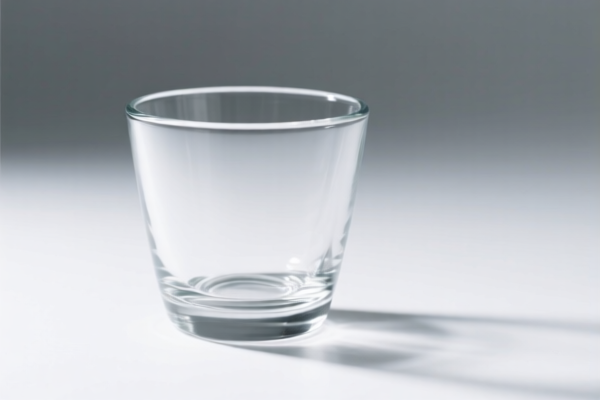
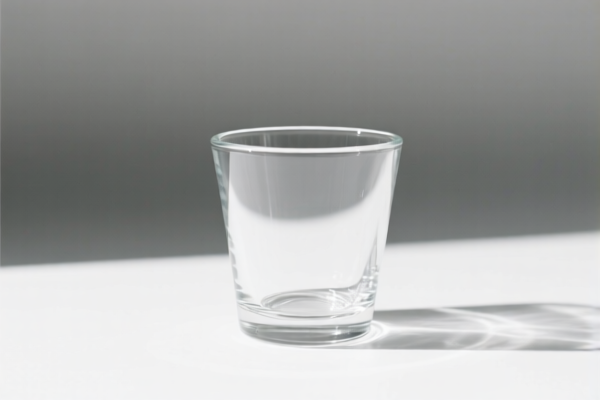
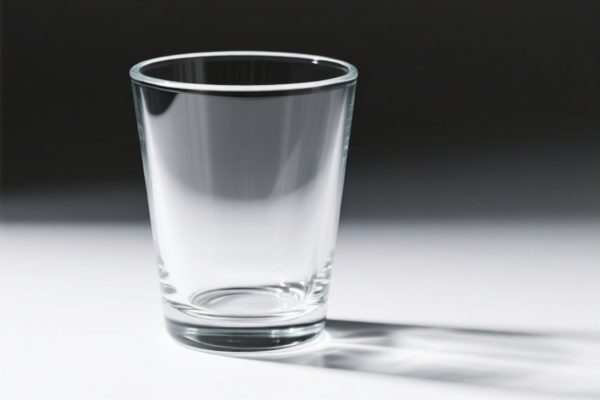

AI Analysis
🥂 Glass Cups (Glass Drinking Ware)
🌐 HS Code Reference & Customs Clearance Guide | 2026 Latest Tariff Analysis | Strategic Clearance Strategy
📌 I. Product Definition & Classification: Do You Really Understand "Glass Cups"?
Glass cups are everyday items used for drinking, falling under the category of glass articles. In international trade, their classification depends heavily on material form, specific use, and structural characteristics. Misclassification can lead to drastic differences in tariff rates, ranging from 24% to 46%.
Key Classification Distinctions: * Tableware (7013.37): Cups specifically designed for drinking, typically with a handle or spout, or shaped like standard drinkware. * Containers (7010.90): Glass vessels intended for packaging or holding liquids, often used as "catch-all" categories if specific tableware codes don't apply. * Plastic Alternatives (3924.10): If the material is misidentified or if the product is actually plastic, it falls under plastic tableware.
⚠️ Critical Distinction Point:
- If it is a glass cup for drinking → Look at 7013.37 (Tableware) or 7010.90 (Containers).
- If it is plastic → Look at 3924.10.
- The Total Tax Rate varies significantly (46% vs 40% vs 35% vs 24%) based on the specific sub-code chosen.
📦 II. HS Code Classification Details (2026 Latest Tariff Authority Comparison)
| HS Code | Product Description | Application Scenario | Total Tax Rate | Tax Composition Breakdown |
|---|---|---|---|---|
7013.37.10.01 |
Glass drinking cup, material is glass, used for drinking, fits glass cup category. | Standard glass mugs, handled drinking glasses. | 46.0% | Base: 28.5% + Section 301: 7.5% + Section 301 (122): 10% |
7013.37.20.90 |
Glass drinking cup, material is glass, used for drinking, belongs to glass products. | General glass drinkware not fitting specific sub-headings. | 40.0% | Base: 22.5% + Section 301: 7.5% + Section 301 (122): 10% |
7010.90.50.39 |
Glass drinking cup, material is glass, belongs to glass containers, judged as residual category. | Glass jars/bottles repurposed or classified broadly as containers. | 35.0% | Base: 0.0% + Section 301: 25.0% + Section 301 (122): 10% |
7010.90.50.29 |
Glass drinking cup, material is glass, used as containers, form and classification match. | Generic glass containers used for drinking/storage. | 35.0% | Base: 0.0% + Section 301: 25.0% + Section 301 (122): 10% |
3924.10.20.00 |
Plastic cup, material is plastic, used as cups, fits plastic tableware definition. | Plastic cups (Misclassification Risk if actually glass). | 24.0% | Base: 6.5% + Section 301: 7.5% + Section 301 (122): 10% |
🔍 Key Reminder:
- 7013.37 codes are for Glass Tableware. The difference between.10.01(46%) and.20.90(40%) lies in specific shape/form definitions within the tariff schedule. - 7010.90 codes are for Glass Containers. These have 0% Base Duty but a high 25% Section 301 Duty, totaling 35%. - 3924.10 is for Plastic. If you import plastic cups but declare them as glass, or vice versa, it constitutes a declaration error.
💰 III. 2026 Latest Tariff Rate Details (Including Surtaxes, Policy Additions)
✅ Applicable Country: USA (US)
✅ Origin: China (CN)
✅ Effective Date: From 2025/2026 onwards (including subsequent imports)
🎯 1. 7013.37.10.01 —— Glass Drinking Cup (Specific Tableware)
| Item | Content |
|---|---|
| Base Tariff | 28.5% (ad valorem) |
| Section 301 Surcharge | +7.5% (Standard China Tariff) |
| Section 301 (122) Surcharge | +10% (Specific Policy Surcharge) |
| Total Tax Rate | 46.0% |
| Tax Calculation | CIF Value × 46% |
| De Minimis Eligibility | ❌ No (Deny De Minimis) |
| Legal Basis Path | HTSUS:7013.37.10.01 → USITC:Footnote for Glass → Section 301 Tariff List |
📌 Explanation:
- This is the highest taxed glass cup category.
- The base duty (28.5%) is relatively high for glass tableware.
- Combined with Section 301 surcharges, the landed cost increases significantly.
🎯 2. 7013.37.20.90 —— Glass Drinking Cup (General Glass Products)
| Item | Content |
|---|---|
| Base Tariff | 22.5% |
| Section 301 Surcharge | +7.5% |
| Section 301 (122) Surcharge | +10% |
| Total Tax Rate | 40.0% |
| Tax Calculation | CIF Value × 40% |
| De Minimis Eligibility | ❌ No |
| Legal Basis Path | HTSUS:7013.37.20.90 → Section 301 Tariff List |
📌 Note:
- This code is for glass cups that do not fit the specific description of.10.01.
- It is 6 percentage points cheaper than the specific cup code.
- Ensure your product’s shape/form does not accidentally fall into the.10.01definition.
🎯 3. 7010.90.50.39 & 7010.90.50.29 —— Glass Containers (Residual Category)
| Item | Content |
|---|---|
| Base Tariff | 0.0% |
| Section 301 Surcharge | +25.0% (High Penalty Rate) |
| Section 301 (122) Surcharge | +10% |
| Total Tax Rate | 35.0% |
| Tax Calculation | CIF Value × 35% |
| De Minimis Eligibility | ❌ No |
| Legal Basis Path | HTSUS:7010.90.50 → Section 301 List |
📌 Note:
- These codes are for glass containers (jars, bottles, flasks).
- Although base duty is 0%, the 25% Section 301 surcharge is punitive.
- Total 35% is lower than tableware (40-46%) but higher than plastic (24%).
- Use only if the item is structurally a container, not a standard drinking glass.
🎯 4. 3924.10.20.00 —— Plastic Cup (Plastic Tableware)
| Item | Content |
|---|---|
| Base Tariff | 6.5% |
| Section 301 Surcharge | +7.5% |
| Section 301 (122) Surcharge | +10% |
| Total Tax Rate | 24.0% |
| Tax Calculation | CIF Value × 24% |
| De Minimis Eligibility | ❌ No |
| Legal Basis Path | HTSUS:3924.10.20.00 → Section 301 Tariff List |
📌 Note:
- This code is for PLASTIC cups.
- If you are importing Glass cups but declare as Plastic, this is fraudulent declaration and carries severe penalties.
- If you are importing Plastic cups, this is the most cost-effective option (24%).
🛠️ IV. Customs Clearance Practical Advice (Battle-Tested Pitfall Avoidance Guide)
✅ 1. Required Documentation Checklist (Non-negotiable)
| Document | Must Provide | Description |
|---|---|---|
| ✅ Product Specification Sheet | ✔️ | Material (Glass/Plastic), Shape, Capacity, Handle/No Handle |
| ✅ Product Photos | ✔️ | Clear images of front, back, bottom mark, and usage context |
| ✅ Commercial Invoice | ✔️ | Must specify "Glass Drinking Cup" or "Plastic Cup" accurately |
| ✅ Packing List | ✔️ | Net weight, gross weight, packaging details |
| ✅ Material Declaration | ✔️ | Explicitly state "Soda-Lime Glass", "Borosilicate Glass", or "PET/PP Plastic" |
✅ 2. Declaration Tips (Key Mantra)
🔥 “Material First, Use Second, Shape Third, Code Fourth!”
| Scenario | Correct Declaration | Wrong Practice |
|---|---|---|
| Glass Cup with Handle | 7013.37.10.01 or 7013.37.20.90 |
Declare as 7010 (Container) → Risk of Audit |
| Glass Jar/Bottle for Drinks | 7010.90.50.39 |
Declare as 7013 (Tableware) → Wrong Code |
| Plastic Cup | 3924.10.20.00 |
Declare as Glass → Severe Penalty |
| Mixed Packaging | Split Declaration | Lump sum → Customs Seizure |
✅ 3. Special Case Handling
| Situation | Handling Advice |
|---|---|
| Gift Sets | If glass cups are part of a gift set with plastic items, declare separately or classify based on essential character. |
| Decorative Glassware | If not for drinking, may not be 7013. Check if it falls under 7013.99 (Other). |
| OEM Custom Shapes | Provide design drawings. Specific shapes may trigger specific sub-codes (e.g., .10.01). |
| Sample Imports | Even samples are subject to de minimis rules if over $800. Ensure correct HS code for compliance. |
🌍 V. Global Market Clearance Comparison (2026 Latest)
| Country/Region | Recommended HS Code | Tariff Rate | Certification Requirements | Notes |
|---|---|---|---|---|
| 🇺🇸 USA | 7013.37.10.01 / 7013.37.20.90 |
46% / 40% | FDA (if food contact), Prop 65 | High tariffs due to Section 301 |
| 🇨🇳 China | 7013.37.10.01 / 7013.37.20.90 |
28.5% / 22.5% | CCC (if applicable) | Lower base duty than US |
| 🇪🇺 EU | 7013.37.10.00 |
5.8% (Approx) | CE (General Product Safety) | No Section 301 equivalent |
| 🇬🇧 UK | 7013.37.10.00 |
5.8% (Approx) | UKCA | Post-Brexit tariffs may vary |
| 🇯🇵 Japan | 7013.37.10.00 |
14.0% (Approx) | PSE (if electrical components) | No high surcharges |
📌 Conclusion:
- USA has the highest tariffs for glass tableware (40-46%) due to Section 301 and 122 surcharges.
- EU and UK have moderate tariffs (~5-6%).
- Plastic cups (3924.10) are cheaper to import into the US (24%) but must be correctly identified as plastic.
📌 VI. Common Mistakes & Pitfalls (Blood & Tears Lessons)
❌ Mistake 1: Declaring Glass Cups as 7010.90 (Containers) to save tax
👉 Consequence: Customs may reject if the product is clearly tableware. Base duty is 0%, but if misclassified, you face penalties and back taxes.
❌ Mistake 2: Confusing 7013.37.10.01 (46%) with 7013.37.20.90 (40%)
👉 Consequence: Overpaying 6% tax if you should have used .20.90. Or Underpaying if you should have used .10.01. Check specific shape definitions.
❌ Mistake 3: Importing Plastic Cups but declaring as Glass
👉 Consequence: Fraud. Penalties include seizure of goods, fines up to 3x the value, and loss of import privileges.
❌ Mistake 4: Ignoring FDA Compliance for Food Contact
👉 Consequence: Goods held at border until FDA clearance is provided. Glass must be free of lead/cadmium.
✅ Correct Practice:
“Glass Drinking Cup, Soda-Lime Glass, 12oz, Handle, for Household Use, Model XYZ, FDA Compliant”
🎯 VII. Conclusion: Professional Declaration, Save Money, Save Time!
🎯 Remember the Mantra:
🔹 “Glass Tableware is Expensive (40-46%), Containers are Middle (35%), Plastic is Cheapest (24%).”
🔹 “Check Shape for Tableware, Check Form for Containers, Check Material for Plastic.”
📌 Tips:
- If your glass cups are decorative only and not for drinking, consider other HS codes that might have lower tariffs.
- For Plastic Cups, ensure the material is clearly stated as Plastic to avoid misclassification penalties.
- Consider Advance Rulings from US Customs (CBP) to confirm the correct HS code before shipping.
📣 Immediate Action:
📞 Contact a licensed customs broker + Provide Product Photos + Verify Material Composition
🚀 Let your Glass Cups Clear Customs Smoothly, Reduce Costs, and Boost Profits!
✨ Professional Clearance Starts with Accurate Classification!
💼 Every Dollar of Tariff is Worth Calculating Precisely!
Customer Reviews
About HS Code Classification
The Harmonized System (HS) is an internationally standardized nomenclature developed by the World Customs Organization (WCO) to classify traded products. Over 200 countries use the HS system as the basis for customs tariffs, trade statistics, and import/export regulations.
Each HS code follows a hierarchical structure:
- Chapter (2 digits) — Broad category of goods (e.g., Chapter 84: Machinery and Mechanical Appliances)
- Heading (4 digits) — More specific grouping within the chapter
- Subheading (6 digits) — Internationally standardized breakdown, used by all WCO member countries
- National subdivisions (8-10 digits) — Country-specific extensions for further classification, such as US HTSUS 10-digit codes
Correct HS code classification is essential for smooth customs clearance, accurate duty payment, and compliance with trade regulations. Misclassification can lead to customs delays, overpayment of duties, or penalties.
When importing from CN to US, the applicable tariff rates may include:
- Most-Favored-Nation (MFN) rate — The standard duty rate applied to WTO members
- General rate — Applied to countries without trade agreements
- Trade remedy duties — Additional tariffs such as Section 301 (anti-dumping), Section 232 (national security), or countervailing duties
The information provided on this page is for reference purposes only. For official classification, please consult with your local customs authority or a licensed customs broker.