Glass Fiber Machinery
CN → US| HS Code | Tariff Rate | Origin | Destination | Doc |
|---|---|---|---|---|
| 8479909565 | 35.0% | CN | US | Official Doc |
| 8479909596 | 85.0% | CN | US | Official Doc |
Product Images
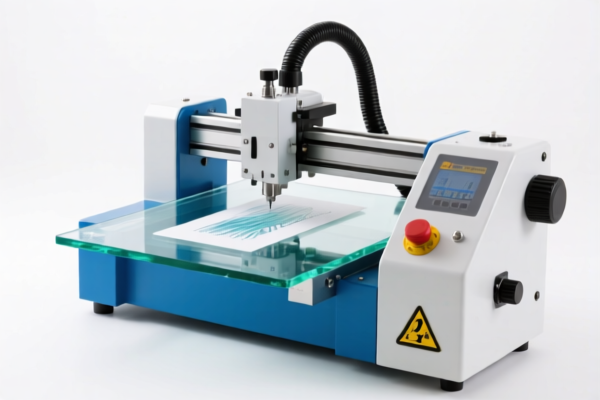
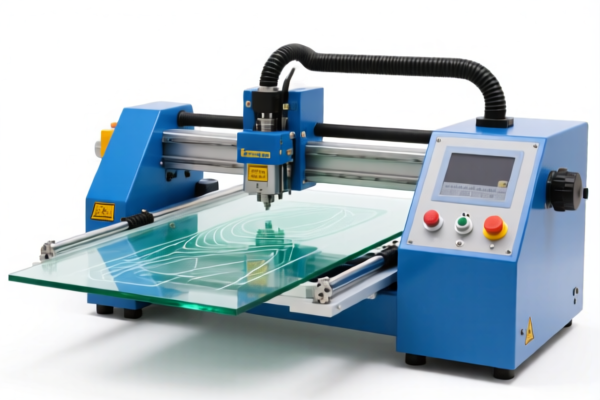
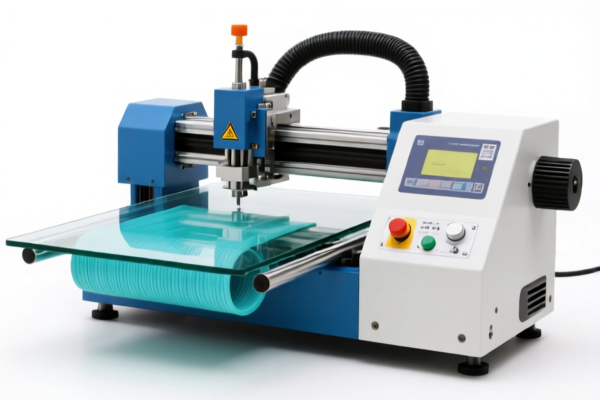
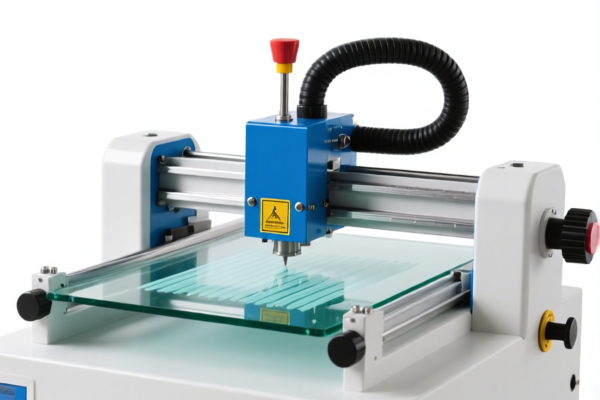
AI Analysis
⚙️ Glass Fiber Machinery (Industrial Mechanical Appliances)
🌐 HS Code Reference & Clearance Guide | 2026 Latest Tariff Analysis | Specialized Customs Strategy
📌 I. Product Definition & Classification: Do You Really Understand "Glass Fiber Machinery Parts"?
Glass fiber machinery refers to specialized mechanical equipment used in the production, processing, or treating of glass fibers (such as melting, drawing, sizing, and winding machines). However, the specific data provided focuses strictly on the Parts of machines having individual functions that are not specified elsewhere.
In international trade, the classification hinges on two critical distinctions: 1. End-Use of the Part: Is the part exclusively for metal-treating machines or for general mechanical appliances? 2. Material of the Product: Does the part itself contain steel, aluminum, or copper components that trigger additional anti-dumping or safeguard tariffs?
⚠️ Key Distinction:
- If the part is strictly for metal treatment machinery (even if it's a part of a glass fiber plant, it might fall here if the HS code description is restrictive) → HS 8479.90.95.65
- If the part is for other mechanical appliances (general glass fiber machinery) → HS 8479.90.95.96
- ⚠️ Crucial Warning: The second HS code triggers a massive 50% additional tariff if the part contains Steel, Aluminum, or Copper.
📦 II. HS Code Classification Details (2026 Latest Tariff Authority)
| HS Code | Product Description | Application Scenario | Material Trigger | Base Tariff | Additional Tariff | Total Tax |
|---|---|---|---|---|---|---|
8479.90.95.65 |
Parts of machines for treating metal | Parts exclusively designed for metal-treating equipment (e.g., metal cutting, forming parts used in hybrid lines) | ❌ Not specified in detail, but lower tier | 0.0% | +25.0% | 25.0% |
8479.90.95.96 |
Parts of other mechanical appliances | Parts for general mechanical appliances (including glass fiber production machinery) not listed elsewhere | ✅ Yes (Steel/Al/Cu) | 0.0% | +25.0% + 50% (Steel/Al/Cu) | 75.0% |
🔍 Critical Reminder:
- 8479.90.95.96 is the "catch-all" for parts of mechanical appliances. If your glass fiber machinery part is made of steel, aluminum, or copper, you MUST pay the 50% steel/aluminum/copper surcharge. - 8479.90.95.65 is a narrower category for parts of metal treating machines. If your part is NOT for metal treating, do not use this code, as it may be considered misclassification.
💰 III. 2026 Latest Tariff Rate Breakdown (Detailed Policy Analysis)
✅ Applicable Country: United States (US)
✅ Origin: China (CN)
✅ Effective Date: 2025–2026 (Current Trade Policy)
🎯 1. 8479.90.95.65 —— Parts of Machines for Treating Metal
| Item | Content |
|---|---|
| Base Tariff | 0.0% (ad valorem) |
| Section 301 Tariff | +25.0% (General China Surcharge) |
| Steel/Al/Cu Surcharge | Not explicitly listed in this specific sub-code detail, implying standard 301 applies |
| Total Tax Rate | 25.0% |
| Calculation | CIF Value × 25% |
| De Minimis Exemption | ❌ Not Applicable (Commercial shipment) |
| Legal Basis | Section 301 Tariff List 4 |
📌 Explanation:
- This code applies if the part is specifically for metal treating machinery. - The tax burden is 25%, which is significant but manageable compared to the alternative. - Caution: Ensure the part is truly for "metal treating." If it's for glass fiber melting or drawing, this code is likely incorrect.
🎯 2. 8479.90.95.96 —— Parts of Other Mechanical Appliances
| Item | Content |
|---|---|
| Base Tariff | 0.0% |
| Section 301 Tariff | +25.0% |
| Steel/Al/Cu Additional Tariff | +50.0% (If part contains steel, aluminum, or copper) |
| Total Tax Rate | 75.0% |
| Calculation | CIF Value × 75% |
| De Minimis Exemption | ❌ Not Applicable |
| Legal Basis | Section 301 + Steel/Aluminum/Copper Specific Provisions |
📌 Warning:
- If your glass fiber machinery part (e.g., a steel shaft, aluminum housing, or copper winding) falls under this code, the 75% tariff is devastating. - This is the most common pitfall for mechanical parts from China.
🛠️ IV. Clearance Practical Advice (Real-World Pitfall Guide)
✅ 1. Documentation Checklist (Non-Negotiable)
| Document | Required | Purpose |
|---|---|---|
| ✅ Product Specification Sheet | ✔️ | Must clearly state: "Part for Glass Fiber Machinery" or "Part for Metal Treating Machine" |
| ✅ Material Certificate | ✔️ | Crucial to prove if the part contains steel/aluminum/copper |
| ✅ Technical Drawing | ✔️ | To show the part's function and integration with the machine |
| ✅ Commercial Invoice | ✔️ | Must accurately describe the part and HS Code |
| ✅ Certificate of Origin | ✔️ | To confirm Chinese origin (triggering tariffs) |
| ✅ Packing List | ✔️ | Itemize parts clearly |
✅ 2. Declaration Strategy (Key Tips)
🔥 Rule of Thumb: "Function First, Material Second, Code Precision Saves Money!"
| Scenario | Correct Declaration | Wrong Declaration | Consequence |
|---|---|---|---|
| Part for Glass Fiber Drawing Machine | 8479.90.95.96 |
8479.90.95.65 |
Misclassification Penalty + Back Taxes |
| Part for Metal Cutting Machine | 8479.90.95.65 |
8479.90.95.96 |
Overpaying 50% (if steel/al/cu) |
| Part Contains Steel/Al/Cu | 8479.90.95.96 |
8479.90.95.96 (without noting surcharge) |
Underpayment → Audit & Fines |
| Part is Non-Metal (Plastic/Ceramic) | 8479.90.95.96 |
8479.90.95.96 |
Still 75% if not carefully argued? |
📌 Critical Note on Material:
- Even if the part is for glass fiber machinery (8479.90.95.96), if it contains steel, aluminum, or copper, the 50% surcharge applies. - Strategy: If the part is made of plastic, ceramic, or composite materials (no steel/al/cu), check if you can argue against the 50% surcharge. However, the data provided states 75% total for8479.90.95.96, implying the surcharge is automatic for this code in the provided dataset. Assume 75% unless you have a specific exemption ruling.
✅ 3. Special Case Handling
| Case | Handling Advice |
|---|---|
| Glass Fiber Machine Parts | Likely 8479.90.95.96. Prepare for 75% tariff if made of metal. |
| Hybrid Machine (Metal + Glass) | Determine the primary function. If for metal treating → 8479.90.95.65 (25%). If for glass → 8479.90.95.96 (75%). |
| Non-Metal Parts (Plastic/Ceramic) | If truly no steel/al/cu, check with customs if the 50% surcharge still applies. It may be reduced to 25% if the surcharge is material-specific. |
| OEM Custom Parts | Provide detailed engineering drawings to prove function and material. |
🌍 V. Global Market Comparison (2026)
| Country/Region | Recommended HS Code | Tariff Rate | Certification | Notes |
|---|---|---|---|---|
| 🇺🇸 USA | 8479.90.95.96 |
75% (if metal) | No specific cert | Highest risk: Steel/Al/Cu surcharge |
| 🇨🇳 China | 8479.90.95.96 |
0–5% | None | Domestic trade |
| 🇪🇺 EU | 8479.90.95.96 |
0–2.7% | CE (if applicable) | No major surcharge |
| 🇦🇺 Australia | 8479.90.95.96 |
5% | RCM (if applicable) | No surcharge |
📌 Conclusion:
- The USA imposes a massive 75% tariff on glass fiber machine parts made of steel/aluminum/copper. - This is not just a Section 301 tariff; it includes a 50% steel/aluminum/copper surcharge. - Cost Mitigation: Consider sourcing non-metal parts (ceramic, plastic) if possible, or explore exclusion requests (if available).
📌 VI. Common Errors & Pitfalls (Lessons Learned)
❌ Error 1: Using 8479.90.95.65 for glass fiber machine parts
👉 Consequence: Misclassification. 8479.90.95.65 is for metal treating machines. If your part is for glass fiber, you risk penalties and back taxes.
❌ Error 2: Ignoring the Steel/Al/Cu Surcharge
👉 Consequence: Paying only 25% when 75% is due. Customs will audit and levy interest and fines.
❌ Error 3: Declaring "Machine Parts" without specifying material
👉 Consequence: Customs may assume worst-case scenario (metal) and apply 75%.
✅ Correct Action:
"Glass Fiber Machine Shaft (Steel), Part for Drawing Machine, HS 8479.90.95.96, Origin: China, Total Tax: 75%"
🎯 VII. Conclusion: Professional Clearance, Cost Control!
🎯 Key Takeaway:
🔹 "Glass Fiber Machine Parts = HS 8479.90.95.96"
🔹 "Steel/Al/Cu Content = 75% Total Tax"
🔹 "Metal Treating Parts = HS 8479.90.95.65 (25%)"
📌 Recommendation:
1. Verify Function: Is the part for metal treating or glass fiber production?
2. Verify Material: Does it contain steel, aluminum, or copper?
3. Calculate Cost: 25% vs. 75% can make or break your profit margin.
📣 Immediate Action:
📞 Consult a Customs Broker: Provide drawings and material certs.
📄 Apply for Pre-Ruling: If possible, get a binding tariff determination.
💡 Explore Alternatives: Non-metal materials? Third-country assembly?
✨ Accurate Classification is the Key to Profitability!
💼 Don’t Let 75% Tariffs Eat Your Margins!
Customer Reviews
About HS Code Classification
The Harmonized System (HS) is an internationally standardized nomenclature developed by the World Customs Organization (WCO) to classify traded products. Over 200 countries use the HS system as the basis for customs tariffs, trade statistics, and import/export regulations.
Each HS code follows a hierarchical structure:
- Chapter (2 digits) — Broad category of goods (e.g., Chapter 84: Machinery and Mechanical Appliances)
- Heading (4 digits) — More specific grouping within the chapter
- Subheading (6 digits) — Internationally standardized breakdown, used by all WCO member countries
- National subdivisions (8-10 digits) — Country-specific extensions for further classification, such as US HTSUS 10-digit codes
Correct HS code classification is essential for smooth customs clearance, accurate duty payment, and compliance with trade regulations. Misclassification can lead to customs delays, overpayment of duties, or penalties.
When importing from CN to US, the applicable tariff rates may include:
- Most-Favored-Nation (MFN) rate — The standard duty rate applied to WTO members
- General rate — Applied to countries without trade agreements
- Trade remedy duties — Additional tariffs such as Section 301 (anti-dumping), Section 232 (national security), or countervailing duties
The information provided on this page is for reference purposes only. For official classification, please consult with your local customs authority or a licensed customs broker.