Glass Jar with Bamboo Lid
CN → USProduct Images
AI Analysis
🌿 Glass Jar with Bamboo Lid
🌐 HS Code Reference & Customs Clearance Guide | 2026 Latest Tariff Analysis | Professional Entry Strategy
📌 I. Product Definition & Classification: Do You Truly Understand "Glass Jars"?
A glass jar with a bamboo lid is a composite good primarily classified by its essential character. In international trade, the determination hinges on whether the bamboo lid is considered an integral part of the container or a separate accessory, and the specific contents (if any) packaged within.
1. The "Empty Container" Principle (Most Common):
If the jar is sold empty (without food, cosmetic, or chemical contents), it is classified based on its material of primary value: Glass. The bamboo lid is treated as an integral component or accessory that does not change the essential character of the glass vessel.
2. The "Filled Container" Principle:
If the jar contains a specific product (e.g., honey, jam, spices, cosmetics), the classification depends on the contents, not the packaging. The glass/bamboo container is considered mere packaging.
⚠️ Critical Distinction:
- Empty Glass Jars → Classified under Chapter 70 (Glass)
- Filled Jars (e.g., Honey) → Classified under Chapter 17 (Sugar/Honey) or Chapter 21 (Food Preparations)
- Filled Jars (Cosmetics) → Classified under Chapter 33 (Essential Oils/Cosmetics)
📦 II. HS Code Classification Details (2026 Latest Tariff Authority)
| HS Code | Product Description | Applicable Scenario | Contains Contents? |
|---|---|---|---|
7013.49.50.00 |
Other glassware of a kind used for table, kitchen, toilet, office, indoor decoration or similar purposes, not elsewhere specified or included (Glassware) | Empty jars, bottles, and containers (incl. with lids) | ❌ No |
7013.99.50.00 |
Other glassware of a kind used for table, kitchen, toilet, office, indoor decoration or similar purposes, not elsewhere specified or included | Glassware not specifically covered by 7013.49/51/57/91 (e.g., specialized storage) | ❌ No |
1704.90.99.00 |
Other candy and other sugar confectionery (not including chocolate) | Filled jars containing candy or sugar-based products | ✅ Yes (Sugar) |
1702.90.90.00 |
Other sugars, including chemically pure lactose, maltose, glucose and glucose syrup... | Filled jars containing honey, molasses, or syrups | ✅ Yes (Honey/Syrup) |
3304.99.00.00 |
Beauty or makeup preparations and preparations for the maintenance of the body... | Filled jars containing creams, balms, or lotions | ✅ Yes (Cosmetics) |
3305.90.90.00 |
Preparations for use on the hair | Filled jars containing hair products | ✅ Yes (Cosmetics) |
9013.90.80.00 |
Other parts and accessories | Separate bamboo lids sold as accessories for replacement | ❌ N/A (Accessory only) |
🔍 Key Reminder:
- Empty jars with bamboo lids are almost always classified under 7013.49.50.00 (or similar subheadings under 7013). The bamboo lid is considered a minor component compared to the glass body.
- Never classify an empty jar under Chapter 46 (Bamboo) unless the bamboo structure is the dominant feature (rare for jars).
- If the jar is filled, the HS code is dictated by the product inside, and the tariff rates will differ significantly.
💰 III. 2026 Latest Tariff Rate Details (Including Surcharges, Policy Surcharges)
✅ Applicable Country: United States (US)
✅ Country of Origin: China (CN)
✅ Effective Date: From November 10, 2025 (including subsequent imports)
🎯 1. 7013.49.50.00 —— Empty Glass Jars (with Bamboo Lid)
| Item | Content |
|---|---|
| Basic Tariff Rate | 5.3% (ad valorem) |
| USITC Surcharge | +25% (from USITC Footnote 9903.88.01) |
| IEEPA Surcharge | +10% (for China/HK products, effective from Nov 10, 2025) |
| Total Tariff Rate | 40.3% |
| Tax Calculation | CIF Value × 40.3% |
| De Minimis Eligibility | ❌ No (deny_de_minimis) |
| Legal Basis Path | IEEPA:9903.01.25 → IEEPA:9903.01.24 → USITC:7013.49.50.00 → FOOTNOTE:9903.88.01 |
📌 Explanation:
- The 25% USITC Surcharge is part of the "Section 301" tariffs on Chinese goods.
- The 10% IEEPA Surcharge is an additional duty under the International Emergency Economic Powers Act.
- Total 40.3% is a high tariff, significantly increasing the cost for exporters.
- Note: While glass is sometimes exempt from certain trade wars, glassware (7013) is often subject to these surcharges if from China.
🎯 2. 1702.90.90.00 —— Filled Jars (e.g., Honey/Syrup)
| Item | Content |
|---|---|
| Basic Tariff Rate | 36.4% (ad valorem) |
| USITC Surcharge | +25% |
| IEEPA Surcharge | +10% |
| Total Tariff Rate | 71.4% |
| Tax Calculation | CIF Value × 71.4% |
| De Minimis Eligibility | ❌ No |
| Legal Basis Path | IEEPA:9903.01.25 → IEEPA:9903.01.24 → USITC:1702.90.90.00 → FOOTNOTE:9903.88.01 |
📌 Note:
- If the jar contains honey or syrup, the high base tariff of 36.4% combined with surcharges results in a very high total duty.
- Ensure the product description clearly states the contents and their weight.
🛠️ IV. Customs Clearance Practical Advice (Real-World Pitfall Guide)
✅ 1. Preparation Checklist (Mandatory)
| Document | Must Provide | Description |
|---|---|---|
| ✅ Product Specification Sheet | ✔️ | Material of jar (Glass type, e.g., Borosilicate), Lid material (Bamboo species), Dimensions, Capacity |
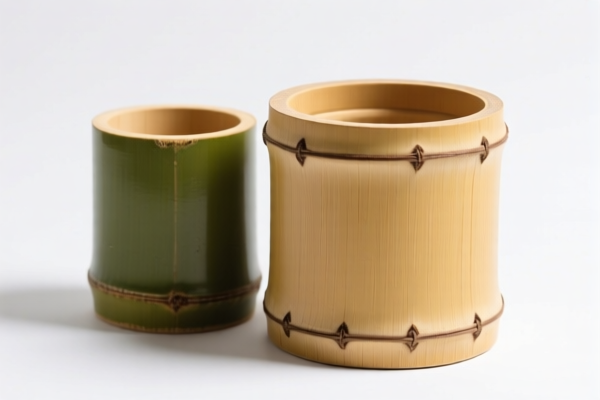
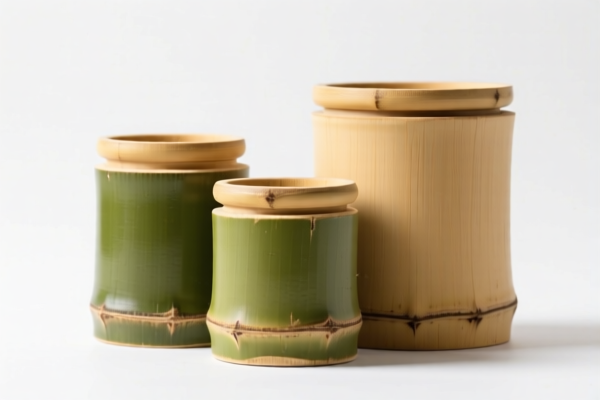
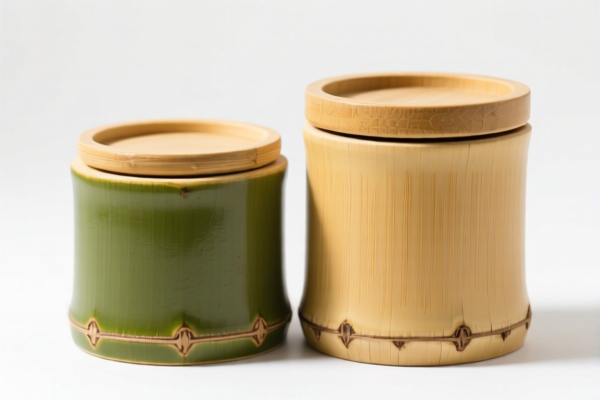
| ✅ Product Photos (Including Lid) | ✔️ | Clear images showing the bamboo lid closure mechanism |
| ✅ Commercial Invoice | ✔️ | Must specify: "Empty Glass Jar with Bamboo Lid" OR "Glass Jar Filled with [Content]" |
| ✅ Packing List | ✔️ | Weight breakdown: Glass weight vs. Total weight (if filled) |
| ✅ Certificate of Origin (CO) | ✔️ | If non-China origin, to claim preferential rates |
| ✅ FDA Registration (If Filled) | ✔️ | If containing food/cosmetics, FDA registration is mandatory for US entry |
✅ 2. Declaration Tips (Key Mnemonic)
🔥 "Empty Glass, Code 7013; Filled Food, Code 1702/2101; Bamboo Lid, No Extra Code!"
| Situation | Correct Declaration | Incorrect Practice |
|---|---|---|
| Empty Glass Jar with Bamboo Lid | 7013.49.50.00 |
Misclassifying as "Bamboo Product" (Chapter 46) → Higher duty or seizure |
| Filled Jar (Honey) | 1702.90.90.00 (or specific honey code) |
Classifying as "Empty Jar" to avoid high food tariffs → Fraud/Seizure |
| Filled Jar (Cosmetics) | 3304.99.00.00 (or specific cosmetic code) |
Misclassifying as "Empty Jar" → FDA rejection |
| Separate Bamboo Lids | 4602.12.00.00 (or other bamboo accessory code) |
Declaring with the jar → Wrong valuation |
✅ 3. Special Circumstances Handling
| Situation | Handling Advice |
|---|---|
| Composite Material | Even with bamboo, the glass body dominates the value. Do not use bamboo HS codes for the whole product. |
| Food Contact Safety | If filled with food, ensure the bamboo lid is treated/sealed to meet FDA food contact standards (e.g., BPA-free coating). Provide a Food Contact Notification if required. |
| Wood/Bamboo Treatment | Bamboo is subject to ISPM 15 regulations if shipped as raw wood. However, processed bamboo for lids is usually exempt. Check with customs broker. |
| Origin Marking | Clearly mark "Made in China" on the jar or packaging. Failure to mark can result in seizure or fines. |
🌍 V. Global Main Market Customs Clearance Comparison (2026 Latest)
| Country/Region | Recommended HS Code | Tariff | Certification Requirements | Remarks |
|---|---|---|---|---|
| 🇺🇸 USA | 7013.49.50.00 (Empty) |
40.3% (China) | FDA (if filled) + Labeling | High surcharges apply |
| 🇨🇳 China | 7013.49.50.00 (Empty) |
5.0% | CCC (if applicable) | Low domestic duty |
| 🇪🇺 EU | 7013.49.00.00 (Empty) |
6.5% | CE (if applicable) + Labeling | No additional surcharges |
| 🇦🇺 Australia | 7013.49.00.00 (Empty) |
5.0% | Standard Import Declaration | Low duty |
| 🇯🇵 Japan | 7013.49.00.00 (Empty) |
15.0% | PSE (if applicable) | Moderate duty |
📌 Conclusion:
- USA imposes the highest burden due to Section 301 + IEEPA surcharges.
- EU and Australia have more favorable rates but require strict labeling and safety compliance.
- If exporting to the US, consider shifting production to Vietnam, Mexico, or India to avoid surcharges.
📌 VI. Common Mistakes & Pitfall Guide (Lessons Learned)
❌ Mistake 1: Classifying empty glass jars with bamboo lids under Chapter 46 (Bamboo).
👉 Consequence: Misclassification, potential audit, and incorrect duty calculation. Glass is the essential character.
❌ Mistake 2: Declaring filled jars as "Empty" to avoid food/cosmetic regulations.
👉 Consequence: FDA seizure, fines, and legal action for misdeclaration.
❌ Mistake 3: Ignoring FDA Food Contact Notification for bamboo lids in filled jars.
👉 Consequence: Rejection at US customs if the bamboo contains unsafe chemicals (e.g., formaldehyde-based glues).
❌ Mistake 4: Not marking "Made in China" on the product.
👉 Consequence: Seizure by CBP (Customs and Border Protection).
✅ Correct Practice:
"Empty Glass Jar with Bamboo Lid, 500ml, Borosilicate Glass, Natural Bamboo Lid, For Storage Only, Made in China"
🎯 VII. Conclusion: Professional Declaration, Save Time and Money!
🎯 Remember the Mnemonic:
🔹 "Empty Glass, 7013; Filled Food, 1702/2101; Bamboo Lid, Just a Part!"
🔹 "Surcharge 40%, Fill the Gaps; Clear Declaration, Avoid the Claps!"
📌 Pro Tip:
If your glass jars are originating from Vietnam, Mexico, or India, you can apply for IEEPA Exemption, reducing tariffs to 0%~5%.
Consider applying for an Advance Ruling to confirm HS Code classification before shipment.
📣 Immediate Action:
📞 Contact a professional customs broker + Provide product photos + Apply for HS Code Advance Ruling
🚀 Let your glass jars clear customs smoothly, boost profits, and expand globally!
✨ Professional Clearance Starts with Accurate Classification!
💼 Every cent of cost deserves precise calculation!
Customer Reviews
About HS Code Classification
The Harmonized System (HS) is an internationally standardized nomenclature developed by the World Customs Organization (WCO) to classify traded products. Over 200 countries use the HS system as the basis for customs tariffs, trade statistics, and import/export regulations.
Each HS code follows a hierarchical structure:
- Chapter (2 digits) — Broad category of goods (e.g., Chapter 84: Machinery and Mechanical Appliances)
- Heading (4 digits) — More specific grouping within the chapter
- Subheading (6 digits) — Internationally standardized breakdown, used by all WCO member countries
- National subdivisions (8-10 digits) — Country-specific extensions for further classification, such as US HTSUS 10-digit codes
Correct HS code classification is essential for smooth customs clearance, accurate duty payment, and compliance with trade regulations. Misclassification can lead to customs delays, overpayment of duties, or penalties.
When importing from CN to US, the applicable tariff rates may include:
- Most-Favored-Nation (MFN) rate — The standard duty rate applied to WTO members
- General rate — Applied to countries without trade agreements
- Trade remedy duties — Additional tariffs such as Section 301 (anti-dumping), Section 232 (national security), or countervailing duties
The information provided on this page is for reference purposes only. For official classification, please consult with your local customs authority or a licensed customs broker.