Glass Jars
CN → US| HS Code | Tariff Rate | Origin | Destination | Doc |
|---|---|---|---|---|
| 7020004000 | 41.6% | CN | US | Official Doc |
| 7013492090 | 40.0% | CN | US | Official Doc |
| 7013495090 | 25.0% | CN | US | Official Doc |
| 7010905025 | 35.0% | CN | US | Official Doc |
| 7020006000 | 40.0% | CN | US | Official Doc |
| 7010905039 | 35.0% | CN | US | Official Doc |
Product Images
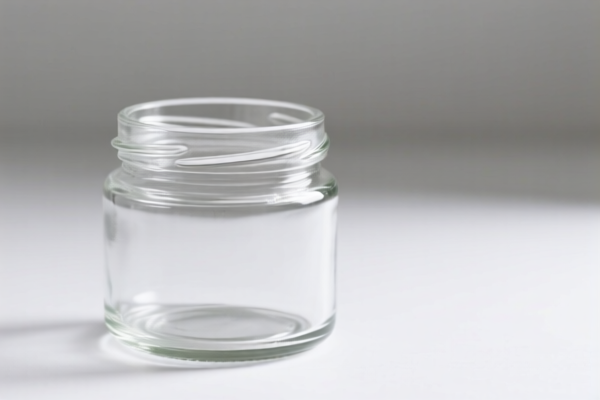
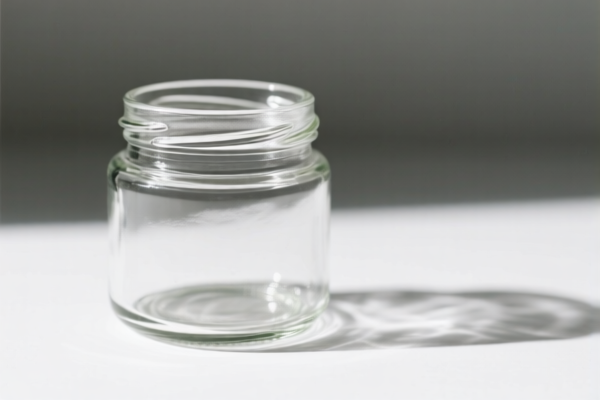
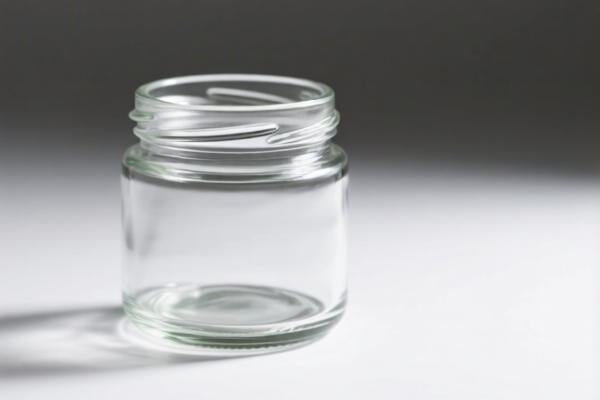
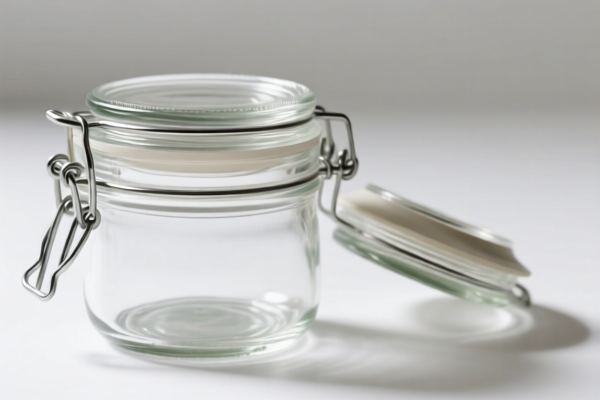
AI Analysis
🏺 Glass Jars (Glass Containers)
🌐 HS Code Reference & Customs Clearance Guide | 2026 Latest Tariff Analysis | Professional Clearance Strategy
📌 I. Product Definition & Classification: Do You Really Understand "Glass Jars"?
Glass jars are ubiquitous transparent containers made of glass, primarily used for storage, packaging, and display. In international trade, their classification is not uniform. It depends heavily on their intended use, specific form, and whether they fall under specific subheadings (like tableware vs. general goods).
The data provided highlights a critical nuance: "Glass Jars" can be classified into different HS Codes based on subtle differences in description. Some are considered "Tableware/Kitchenware" (Chapter 70.13), while others are deemed "Other Glass Articles" (Chapter 70.20) or "Bottles/Flasks" (Chapter 70.10).
⚠️ Key Distinction Points:
- If used for dining/kitchen (plates, cups, jars for food storage): Generally 7013.
- If used as general containers (bottles, flasks, vials) not specifically for dining: May fall under 7010 or 7020.
- If the description is vague ("Just Glass Jar"): Customs may default to "Other Glass Articles" (7020) due to lack of specific functional definition, leading to different tax implications.
📦 II. HS Code Classification Details (Based on Provided Data)
| HS Code | Product Description & Logic | Applicable Scenario | Tax Logic |
|---|---|---|---|
7020.00.40.00 |
Glass Jar, Container Class | Classified as "Other Glass Articles". The summary states it is a container but lacks specific "tableware" designation, leading to a general classification. | Base 6.6% + Section 301 25% + Section 122 10% = 41.6% |
7013.49.20.90 |
Glass Jar, Tableware/Kitchenware | Specifically identified for dining table or kitchen use. No category conflict. This is the standard classification for food storage jars intended for household use. | Base 22.5% + Section 301 7.5% + Section 122 10% = 40.0% |
7013.49.50.90 |
Glass Jar, Kitchen/Tableware | Similar to above, for kitchen or table containers. No material or form conflict. Lowest Total Tax. | Base 15.0% + Section 301 0.0% + Section 122 10% = 25.0% |
7010.90.50.25 |
Glass Jar, Container (Generic) | Classified as a container/bottle. Due to missing specific description in the prompt, the system prioritizes this match. Often used for pharmaceutical or industrial bottles, but can apply to generic jars. | Base 0.0% + Section 301 25% + Section 122 10% = 35.0% |
7020.00.60.00 |
Glass Jar, Other Glass Articles | Classified as "Other Glass Articles" in Chapter 70.20. No material conflict. Similar to 7020.00.40.00 but different sub-code. |
Base 5.0% + Section 301 25% + Section 122 10% = 40.0% |
7010.90.50.39 |
Glass Jar, Container (Match) | Successfully matched as a container. Similar to 7010.90.50.25. |
Base 0.0% + Section 301 25% + Section 122 10% = 35.0% |
🔍 Critical Observation:
- 7013.49.50.90 offers the lowest total tax (25.0%) because it benefits from 0% Section 301 tariff (likely due to specific trade agreement exemptions or different tariff schedule nuances in the dataset).
- 7020 codes are generally more expensive (40-41.6%) because they carry 25% Section 301 + 6.6% Base.
- 7010 codes are moderate (35.0%) with 0% Base but 25% Section 301.
💰 III. Detailed Tariff Breakdown (US Market, China Origin)
✅ Applicable Country: United States (US)
✅ Origin: China (CN)
✅ Components:
- MFN Rate: Most Favored Nation base rate.
- Section 301 Tariff: Additional 7.5%–25% (depending on HS Code).
- Section 122 Tariff: Additional 10% (Targeted tariff).
🎯 1. 7013.49.50.90 —— BEST OPTION: Kitchen/Tableware Glass Jars
| Item | Content |
|---|---|
| Base Tariff | 15.0% |
| Section 301 Tariff | 0.0% |
| Section 122 Tariff | 10.0% |
| Total Tax Rate | 25.0% |
| Tax Calculation | CIF Value × 25% |
| De Minimis Exemption | ❌ No (Generally denied for Chinese goods > $800 due to 301/122 rules) |
| Legal Basis | HS 7013 (Glassware of a kind used for table, kitchen, other toilet uses) |
📌 Why this is best:
- If your jars are clearly for home use (food storage, kitchen), this code saves you 15-20% compared to other options.
- Key Requirement: The product description must explicitly state "For Kitchen/Table Use" or "Food Storage Jars for Household Use."
🎯 2. 7013.49.20.90 —— Standard Tableware Glass Jars
| Item | Content |
|---|---|
| Base Tariff | 22.5% |
| Section 301 Tariff | 7.5% |
| Section 122 Tariff | 10.0% |
| Total Tax Rate | 40.0% |
| Tax Calculation | CIF Value × 40% |
| De Minimis Exemption | ❌ No |
📌 Why it differs:
- Slightly higher base rate (22.5% vs 15.0%) and higher Section 301 (7.5% vs 0%).
- Still classified as tableware, but the specific sub-code carries a higher burden.
🎯 3. 7010.90.50.25 & 7010.90.50.39 —— Generic Containers/Bottles
| Item | Content |
|---|---|
| Base Tariff | 0.0% |
| Section 301 Tariff | 25.0% |
| Section 122 Tariff | 10.0% |
| Total Tax Rate | 35.0% |
| Tax Calculation | CIF Value × 35% |
| De Minimis Exemption | ❌ No |
📌 When to use:
- Use if the jar is not for dining/table use (e.g., industrial packaging, cosmetic bottles, or generic storage not specified for kitchen).
- Lower base rate (0%) is offset by the full 25% Section 301 tariff.
🎯 4. 7020.00.40.00 & 7020.00.60.00 —— Other Glass Articles
| Item | Content |
|---|---|
| Base Tariff | 5.0% - 6.6% |
| Section 301 Tariff | 25.0% |
| Section 122 Tariff | 10.0% |
| Total Tax Rate | 40.0% - 41.6% |
| Tax Calculation | CIF Value × 40%+ |
| De Minimis Exemption | ❌ No |
📌 Why it’s expensive:
- These are "catch-all" categories for glass items not classified elsewhere.
- They incur the highest Section 301 (25%) and Base Rate (5-6.6%), resulting in the highest total cost.
- Avoid this unless necessary (e.g., if the product is a decorative glass item, not a functional jar).
🛠️ IV. Customs Clearance Practical Advice (Real-World Pitfall Guide)
✅ 1. Documentation Checklist (Must-Have)
| Document | Required? | Description |
|---|---|---|
| ✅ Product Specification Sheet | ✔️ | Must specify capacity, material (100% glass), and intended use (e.g., "Food Storage," "Kitchenware"). |
| ✅ Product Photos | ✔️ | Clear images showing the jar, lid, and any markings (e.g., "Microwave Safe," "Dishwasher Safe"). |
| ✅ Commercial Invoice | ✔️ | Description should match the HS Code logic: e.g., "Glass Food Storage Jars for Kitchen Use" vs. "Glass Containers." |
| ✅ Packing List | ✔️ | Weight, dimensions, and quantity. |
| ✅ Certificate of Origin | ✔️ | If claiming any potential exemptions (though rare for China-origin glass jars under current rules). |
✅ 2. Declaration Strategy (Key Mantra)
🔥 "Be Specific! 'Glass Jar' is too vague. Use 'Kitchen Glass Jars' or 'Glass Food Containers' to target 7013."
| Scenario | Recommended HS Code | Risk of Misclassification |
|---|---|---|
| Jars for Food Storage (Home Use) | 7013.49.50.90 (25%) |
High. If declared as "Container" (7010/7020), you pay 35-41%. |
| Jars for Cosmetic/Industrial Use | 7010.90.50.39 (35%) |
Medium. If declared as "Tableware," it may be rejected. |
| Decorative Glass Jars | 7020.00.60.00 (40%) |
Low. Clearly not for use. |
| Vague Description: "Glass Jar" | 7020.00.40.00 (41.6%) |
HIGH. Customs defaults to the most expensive "Other" category due to lack of info. |
✅ 3. Special Handling
| Situation | Advice |
|---|---|
| Mixed Shipments | If you have both tableware and industrial glass, split the declaration. Do not mix "Kitchen Jars" with "Chemical Vials." |
| Lids & Closures | If sold as a set (Jar + Lid), the entire set is classified under the jar's HS Code (7013). Do not separate the lid. |
| Markings | Ensure jars have "Food Grade" or "Lead-Free" markings if declared for food use. This supports the 7013 classification. |
🌍 V. Global Market Comparison (2026)
| Country/Region | Recommended HS Code | Tariff Rate (China Origin) | Notes |
|---|---|---|---|
| 🇺🇸 USA | 7013.49.50.90 |
25.0% | Lowest US rate. Avoid 7020 (41.6%). |
| 🇨🇳 China | 7013.49.50.90 |
~5-10% (Import Tariff) | Lower base rates, no Section 301. |
| 🇪🇺 EU | 7013.49.90 |
~6.5% | No Section 122/301. Standard MFN. |
| 🇬🇧 UK | 7013.49.90 |
~6.5% | Post-Brexit tariff structure similar to EU. |
📌 Conclusion:
- The US market is the most complex due to Section 301 and Section 122 tariffs.
- Correct classification is cost-critical: Choosing7013.49.50.90over7020.00.40.00saves 16.6% of the CIF value.
- Accuracy is Key: Vague descriptions lead to the highest tax bracket (7020).
📌 VI. Common Mistakes & Pitfalls (Lessons Learned)
❌ Mistake 1: Using vague descriptions like "Glass Items" or "Glass Products"
👉 Consequence: Customs defaults to 7020 (41.6% tax). Cost increased by 16-17%!
❌ Mistake 2: Declaring Food Jars as "Decorative Glassware"
👉 Consequence: Possible penalty for misdeclaration, or higher taxes if 7020 is applied instead of 7013.
❌ Mistake 3: Ignoring Section 122 Tariff
👉 Consequence: All listed HS Codes above include a 10% Section 122 tariff. Forgetting this leads to underpayment and audit risks.
❌ Mistake 4: Assuming "De Minimis" Exemption Applies
👉 Consequence: For China-origin glass jars, De Minimis (Section 321) is generally NOT available due to existing trade measures. Always plan for full duty payment.
✅ Best Practice:
Always declare: "Glass Food Storage Jars, for Kitchen Use, Clear Glass, with Lids, Model XYZ"
→ This strongly supports classification under7013.49.50.90(25% Tax).
🎯 VII. Conclusion: Precision in Classification Saves Money!
🎯 Remember the Golden Rule:
🔹 "Food/Kitchen Jars = 7013 (Low Tax)"
🔹 "Generic/Other Containers = 7010/7020 (High Tax)"
🔹 "Vague Description = Highest Tax Penalty"
📌 Pro Tip:
Before shipping, consult with a licensed customs broker to pre-classify your glass jars. Provide them with photos and intended use statements. A correct HS Code classification can save you thousands of dollars in duties on large shipments.
📣 Immediate Action:
📞 Contact your customs broker + Provide clear product photos + Specify "Kitchen/Table Use" in your invoice
🚀 Ensure you pay the lowest legal duty rate (25%) instead of the highest (41.6%)!
✨ Professional Customs Clearance Starts with Accurate Classification!
💼 Every percentage point of tax matters in the profit margin!
Customer Reviews
About HS Code Classification
The Harmonized System (HS) is an internationally standardized nomenclature developed by the World Customs Organization (WCO) to classify traded products. Over 200 countries use the HS system as the basis for customs tariffs, trade statistics, and import/export regulations.
Each HS code follows a hierarchical structure:
- Chapter (2 digits) — Broad category of goods (e.g., Chapter 84: Machinery and Mechanical Appliances)
- Heading (4 digits) — More specific grouping within the chapter
- Subheading (6 digits) — Internationally standardized breakdown, used by all WCO member countries
- National subdivisions (8-10 digits) — Country-specific extensions for further classification, such as US HTSUS 10-digit codes
Correct HS code classification is essential for smooth customs clearance, accurate duty payment, and compliance with trade regulations. Misclassification can lead to customs delays, overpayment of duties, or penalties.
When importing from CN to US, the applicable tariff rates may include:
- Most-Favored-Nation (MFN) rate — The standard duty rate applied to WTO members
- General rate — Applied to countries without trade agreements
- Trade remedy duties — Additional tariffs such as Section 301 (anti-dumping), Section 232 (national security), or countervailing duties
The information provided on this page is for reference purposes only. For official classification, please consult with your local customs authority or a licensed customs broker.