Glass Pen
CN → US| HS Code | Tariff Rate | Origin | Destination | Doc |
|---|---|---|---|---|
| 9608996000 | 17.5% | CN | US | Official Doc |
| 7020006000 | 40.0% | CN | US | Official Doc |
| 7020004000 | 41.6% | CN | US | Official Doc |
| 9608300039 | 0.0% | CN | US | Official Doc |
Product Images
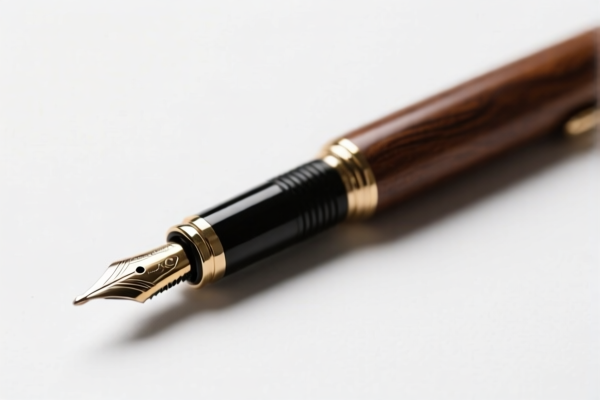


AI Analysis
🖊️ Glass Pen (玻璃笔) – The Clear Choice for Precision?
🌐 HS Code Reference & Customs Clearance Guide | 2026 Latest Tariff Analysis | Professional Entry Strategy
📌 I. Product Definition & Classification: Is a "Glass Pen" a Pen or Glass?
A Glass Pen is a unique writing instrument featuring a tip made of glass, designed for smooth flow of ink or fountain-style writing. However, its classification in international trade is a classic "Material vs. Function" conflict.
In customs classification, you face a critical dilemma: 1. Function-Based (The "Pen" Logic): Since it writes, it should be a writing instrument (Chapter 96). 2. Material-Based (The "Glass" Logic): Since it is primarily made of glass, it might be classified as a glass article (Chapter 70).
⚠️ Critical Distinction:
- If declared as a Writing Instrument → Lower base tariff, specific "pen" rules apply, but high US Section 301 duties may stack on top.
- If declared as a Glass Article → Higher base tariff (6.6% or 5.0%), but potentially different Section 301 calculation paths.
- Risk: Misclassification can lead to severe penalties, duty evasion accusations, or cargo detention.
📦 II. HS Code Classification Details (2026 Latest Tariff Authority)
Based on the provided data, here are the four distinct classification pathways for Glass Pens:
| HS Code | Classification Logic | Summary of Goods | Key Feature |
|---|---|---|---|
| 9608.99.60.00 | Function: Writing Instrument | Other pens (Ballpoint, Fountain, Markers) | The "Pen" Logic: Fits the "other pen" residual category. No material conflict. |
| 7020.00.60.00 | Material: Glass Article | Other glass articles (Parts/Components) | The "Glass" Logic: Treated as a glass part/component. |
| 7020.00.40.00 | Material: Glass Article | Glass articles (General Form) | The "Glass" Logic: Fits the general shape/category of glass products. |
| 9608.30.00.39 | Function: Pen Type | Fountain pens, ballpoint pens, other多孔 pens | The "Pen" Logic: Treated as a specific pen type (other porous/fountain). |
🔍 Deep Dive into Logic:
- 9608.99.60.00 & 9608.30.00.39: These rely on the Chapter 96 (Arts & Crafts) definition where the primary use (writing) overrides the material. This is often the preferred strategy for "writing" tools.
- 7020.00.60.00 & 7020.00.40.00: These rely on Chapter 70 (Glass). This applies if the glass nature is considered the defining characteristic, or if the item is deemed a "glass part" of a larger system.
💰 III. 2026 Tariff Rate Analysis (US Market: China Origin)
✅ Applicable Country: USA (US)
✅ Country of Origin: China (CN)
✅ Effective Date: Current (includes 301, Section 122, and Base rates)
🎯 Scenario A: 9608.99.60.00 (Best for "Pen" Strategy)
Total Tariff: 17.5%
| Component | Rate | Description |
|---|---|---|
| Base Duty | 0.0% | Free entry under normal trade. |
| Section 301 (Add-on) | 7.5% | Additional tariff on Chinese goods. |
| Section 122 Tariff | 10.0% | Specific duty under Section 122 (often related to supply chain/strategic goods). |
| Total Effective Rate | 17.5% | 0% + 7.5% + 10% = 17.5% |
📌 Explanation:
This is the lowest overall tax burden among the "Pen" classifications. The logic is: "It's a pen, so it starts at 0%." However, the US aggressively adds 7.5% (301) and 10% (122), totaling 17.5%.
🎯 Scenario B: 9608.30.00.39 (Fountain/Porous Pen Strategy)
Total Tariff: 2.7% Base + $0.4¢/unit + 17.5% Add-ons
| Component | Rate | Description |
|---|---|---|
| Base Duty | 2.7% + $0.4¢/unit | Ad valorem + Specific duty per unit. |
| Section 301 (Add-on) | 7.5% | Additional tariff on Chinese goods. |
| Section 122 Tariff | 10.0% | Specific duty under Section 122. |
| Total Effective Rate | 2.7% + $0.4¢ + 17.5% surcharge | High complexity: Mix of percentage and unit tax. |
📌 Warning:
The Unit Duty ($0.4¢ each) is a hidden cost killer for low-value pens. If you import 10,000 pens worth $500, you pay $40 in unit duties plus the 2.7% + 17.5% ad valorem on top. This can be more expensive than Scenario A if volume is high.
🎯 Scenario C: 7020.00.60.00 (Glass Part Logic)
Total Tariff: 40.0%
| Component | Rate | Description |
|---|---|---|
| Base Duty | 5.0% | Base rate for glass articles. |
| Section 301 (Add-on) | 25.0% | HIGHER Section 301 rate for glass/category. |
| Section 122 Tariff | 10.0% | Specific duty under Section 122. |
| Total Effective Rate | 40.0% | 5% + 25% + 10% = 40% |
📌 Explanation:
This classification is financially dangerous. The "Glass" category attracts a 25% Section 301 tariff (vs 7.5% for pens), leading to a total 40% tax burden. Avoid this unless the item is clearly a raw glass component, not a finished pen.
🎯 Scenario D: 7020.00.40.00 (General Glass Form)
Total Tariff: 41.6%
| Component | Rate | Description |
|---|---|---|
| Base Duty | 6.6% | Base rate for glass articles. |
| Section 301 (Add-on) | 25.0% | HIGHER Section 301 rate for glass/category. |
| Section 122 Tariff | 10.0% | Specific duty under Section 122. |
| Total Effective Rate | 41.6% | 6.6% + 25% + 10% = 41.6% |
📌 Explanation:
This is the worst-case scenario (41.6%). The combination of a higher base duty (6.6%) and the high Section 301 rate (25%) makes this classification prohibitively expensive for commercial pens.
🛠️ IV. Customs Clearance Practical Advice (Pitfall Avoidance)
✅ 1. Material Declaration Strategy
| Strategy | Description | Risk |
|---|---|---|
| Declare as "Pen" (9608) | Focus on the function (writing). Use keywords: "Fountain Pen", "Writing Instrument", "Ink Pen". | ✅ Low Risk if the item is a finished, ready-to-use pen. |
| Declare as "Glass" (7020) | Focus on the material. Use keywords: "Glass Article", "Glass Component". | ❌ High Risk of 40%+ duty. Only use if the "pen" is actually a raw glass tip for assembly. |
🔥 Golden Rule:
If it writes, it's a pen. Do not declare a finished Glass Pen as a "Glass Article" to save money; you will end up paying 40%+ instead of 17.5%.
✅ 2. Documentation Checklist (Must-Have)
| Document | Requirement | Why? |
|---|---|---|
| Product Photo | Clear view of the tip and body | Prove it is a writing instrument, not a decorative glass shard. |
| Composition Spec | "Tip: Glass; Body: Plastic/Metal/Resin" | Shows the glass is just a component, not the whole product. |
| Function Test | Proof of ink flow (video/photo) | Confirms "Writing" capability (Chapter 96 priority). |
| HS Code Justification | Note on "Primary Function = Writing" | Pre-empts customs officer's confusion about material vs. function. |
✅ 3. Cost Optimization Tip
Avoid Unit Duty Traps!
If you choose9608.30.00.39, remember the $0.4¢ per unit fee.
- 1,000 pens = $0.40 extra tax.
- 100,000 pens = $400 extra tax.
Recommendation: Prefer9608.99.60.00(17.5% flat) unless your product is specifically a "Fountain Pen" that legally must go under 30. The 0% base rate in9608.99.60.00is a huge advantage for low-value items.
🌍 V. Market Comparison (US vs. Global)
| Market | Recommended HS Code | Est. Total Tax (China Origin) | Notes |
|---|---|---|---|
| 🇺🇸 USA | 9608.99.60.00 |
17.5% | Best Option. Avoid 7020 codes (40%+). |
| 🇨🇳 China | 9608.99.60.00 |
~10-13% | Lower base rates, no Section 301/122. |
| 🇪🇺 EU | 9608.99 |
0-4% | Generally low tariffs, no Section 301. |
📌 Conclusion:
The US market is the most complex due to Section 122 and 301 tariffs. The Glass Pen faces a 17.5% vs 40% gap depending on your choice. Always choose the Pen classification (9608) to save ~22.5% in tariffs.
📌 VI. Common Mistakes & Pitfalls (Learn from Errors)
❌ Mistake 1: Declaring as "Glass Article" (7020) to look "eco-friendly".
👉 Result: 40% tariff. You lose 22.5% of your margin instantly.
❌ Mistake 2: Ignoring the "Per Unit" tax in 9608.30.00.39.
👉 Result: Low-value pens get crushed by the $0.4¢/unit fee.
❌ Mistake 3: Failing to prove the "Writing Function".
👉 Result: Customs may default to the "Glass" classification (7020) because they can't verify it writes. Provide ink flow proof!
✅ Correct Action:
"Classify as 'Pen' (9608.99.60.00), prove writing function, and ignore the 'Glass' material label in the description."
🎯 VII. Final Verdict: The Smart Path
🚀 Your Action Plan:
1. Select HS Code:9608.99.60.00
2. Total Tax: 17.5% (0% Base + 7.5% 301 + 10% 122).
3. Documentation: Submit photos showing the pen in use or with ink.
4. Avoid: Any 7020 classification (Saves you ~22.5% tax).💡 Pro Tip:
If your "Glass Pen" is a high-end luxury item with a metal body and glass tip, emphasize the Metal Body in the description to further solidify the "Pen" argument over "Glass".
✨ Professional Customs Clearance Starts with the Right HS Code!
💼 Don't let the "Glass" material trap cost you 40% of your profit!
Customer Reviews
About HS Code Classification
The Harmonized System (HS) is an internationally standardized nomenclature developed by the World Customs Organization (WCO) to classify traded products. Over 200 countries use the HS system as the basis for customs tariffs, trade statistics, and import/export regulations.
Each HS code follows a hierarchical structure:
- Chapter (2 digits) — Broad category of goods (e.g., Chapter 84: Machinery and Mechanical Appliances)
- Heading (4 digits) — More specific grouping within the chapter
- Subheading (6 digits) — Internationally standardized breakdown, used by all WCO member countries
- National subdivisions (8-10 digits) — Country-specific extensions for further classification, such as US HTSUS 10-digit codes
Correct HS code classification is essential for smooth customs clearance, accurate duty payment, and compliance with trade regulations. Misclassification can lead to customs delays, overpayment of duties, or penalties.
When importing from CN to US, the applicable tariff rates may include:
- Most-Favored-Nation (MFN) rate — The standard duty rate applied to WTO members
- General rate — Applied to countries without trade agreements
- Trade remedy duties — Additional tariffs such as Section 301 (anti-dumping), Section 232 (national security), or countervailing duties
The information provided on this page is for reference purposes only. For official classification, please consult with your local customs authority or a licensed customs broker.