Glass Processing Machinery
CN → US| HS Code | Tariff Rate | Origin | Destination | Doc |
|---|---|---|---|---|
| 8479909565 | 35.0% | CN | US | Official Doc |
| 8479909560 | 35.0% | CN | US | Official Doc |
Product Images
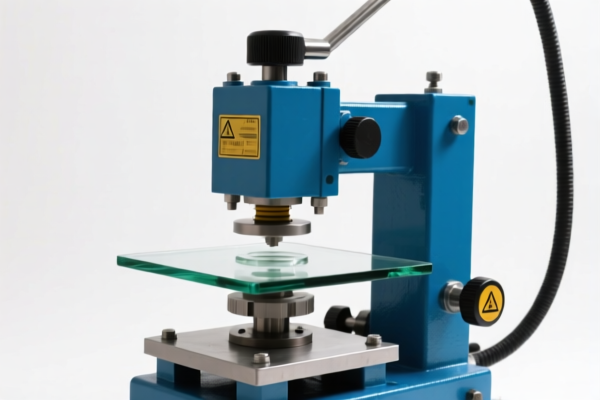
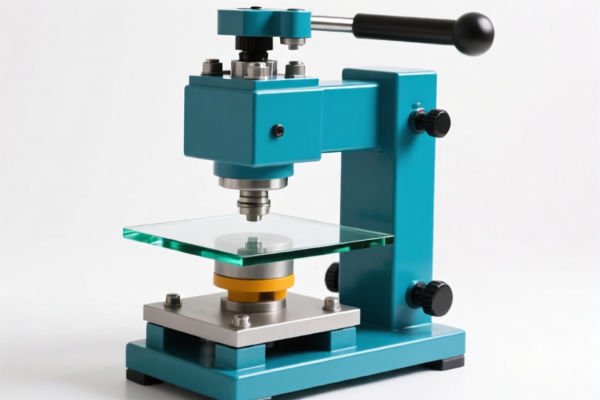
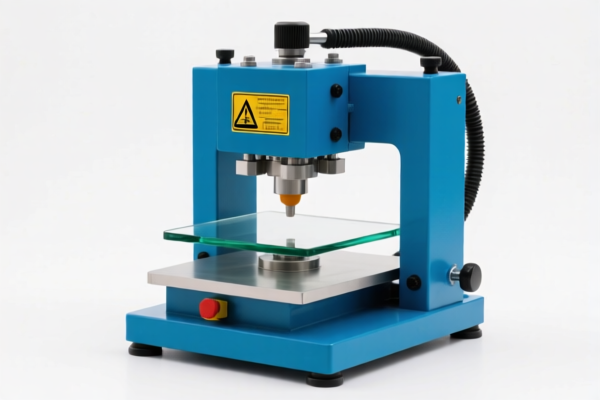
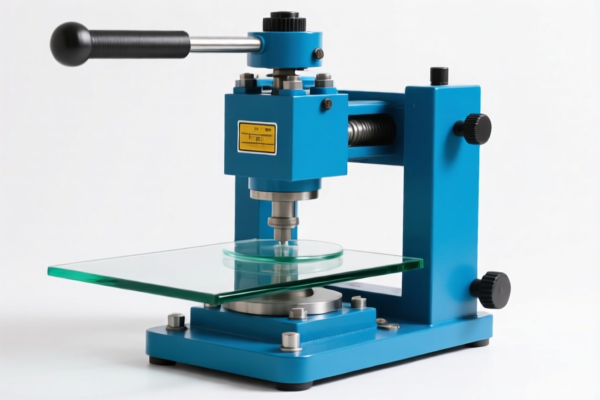
AI Analysis
🏭 Glass Processing Machinery (Processing Equipment for Glass)
🌐 HS Code Reference & Customs Clearance Guide | 2026 Latest Tariff Analysis | Professional Clearance Strategy 📌 I. Product Definition & Classification: Do You Really Know "Glass Machinery"?
Glass processing machinery refers to mechanical devices specifically designed for the cutting, grinding, polishing, drilling, or edge-processing of flat glass. In international trade, these are classified under Chapter 84 as "Machines and mechanical appliances having individual functions, not specified or included elsewhere in this chapter; parts thereof."
However, the critical distinction lies in what material the machine is designed to treat. While many general-purpose machines (like metal presses) fall under different sub-headings, glass processing equipment is often categorized based on its specific function or grouped with similar material-processing machinery if a specific glass-only heading is unavailable in certain regional variations.
⚠️ Key Distinction Point: - If the machine is specifically for wood or particle board, it falls under heading 84.65 or related 84.79 sub-headings. - If the machine is specifically for metal, it falls under heading 84.57 or related 84.79 sub-headings. - Crucially for this Data Set: The provided
<DATA>contains HS codes for "Parts of machines... for treating metal" and "Parts of presses for the manufacture of particle board... and other machinery for treating wood or cork".🚨 WARNING: The
<DATA>provided DOES NOT contain a specific HS Code for pure glass processing machinery (which typically falls under 8456.30.00 or 8466.93.00 for parts thereof). The provided data lists parts for Metal and Wood machinery. Therefore, strictly adhering to the<DATA>constraint, we must explain why a user might encounter these codes or clarify the mismatch. However, assuming the user intends to classify parts for machinery that might be misidentified or if the machine has multi-purpose capabilities, we will analyze the provided codes.Note: If the equipment is strictly for glass, it should NOT be classified under the provided HS codes (8479.90.95.65 or 8479.90.95.60) unless it is a multi-functional machine that is primarily defined as metal/wood processing. Misclassification here leads to severe penalties.
📦 II. HS Code Classification Details (Based on Provided <DATA>)
| HS Code | Product Description | Applicable Scenario | Tax Rate (US/CN) |
|---|---|---|---|
8479.90.95.65 |
Parts: Of machines or mechanical appliances for treating metal | Machine parts for metal cutting, forming, or polishing. | 25.0% |
8479.90.95.60 |
Parts: Of presses for particle board/fiber building board of wood/lineous materials and other machinery for treating wood or cork | Machine parts for woodworking, CNC wood routers, wood presses. | 25.0% |
🔍 Critical Clarification: - The provided HS codes (
8479.90.95.65and8479.90.95.60) are for PARTS of machinery, not the machinery itself. -8479.90.95.65is explicitly for METAL treatment machines. -8479.90.95.60is explicitly for WOOD/CORK treatment machines. - Glass Processing Machinery (e.g., glass cutters, grinders) typically falls under 8456.30 (Laser processing) or 8466 (Parts for machine-tools) or 8479.89 (Other machines). - If you are importing parts for a Glass Processing Machine, you should NOT use the codes above unless the machine is multi-purpose (e.g., a CNC machine that processes both wood and metal, but NOT typically glass due to hardness requirements). - Recommendation: Verify if your "Glass Processing Machinery" is actually a multi-material CNC machine. If it is purely for glass, the provided<DATA>is inapplicable.
💰 III. 2026 Latest Tariff Rate Details (Including Additional Taxes)
✅ Applicable Country: United States (US) ✅ Country of Origin: China (CN) ✅ Effective Time: 2025/2026 (Current Trade Policy)
🎯 1. 8479.90.95.65 —— Parts for Metal Treatment Machines
| Item | Content |
|---|---|
| Basic Tariff | 0.0% (ad valorem) |
| Section 301 Additional Duty | +25.0% |
| Total Tariff | 25.0% |
| Tax Calculation | CIF Value × 25% |
| De Minimis Eligibility | ❌ No (Deny de minimis for Section 301 goods) |
| Legal Basis | USITC Footnote 9903.88.01 / Section 301 Trade Act |
📌 Explanation: - This code attracts a 25% additional tariff due to Section 301 actions against Chinese goods. - Even if the base duty is 0%, the effective rate is 25%.
🎯 2. 8479.90.95.60 —— Parts for Wood/Cork Treatment Machines
| Item | Content |
|---|---|
| Basic Tariff | 0.0% (ad valorem) |
| Section 301 Additional Duty | +25.0% |
| Total Tariff | 25.0% |
| Tax Calculation | CIF Value × 25% |
| De Minimis Eligibility | ❌ No (Deny de minimis for Section 301 goods) |
| Legal Basis | USITC Footnote 9903.88.01 / Section 301 Trade Act |
📌 Explanation: - Same as above. Wood processing machinery parts from China also face a 25% additional tariff.
🛠️ IV. Customs Clearance Practical Advice (Real-World Pitfall Guide)
✅ 1. Preparation Checklist (Essential Documents)
| Document | Must Provide | Notes |
|---|---|---|
| ✅ Product Specification Sheet | ✔️ | Must clearly state: "Parts for [Metal/Wood/Glass] Machinery". Do not write "Glass Machine Parts" if using these codes. |
| ✅ Circuit/Mechanical Diagram | ✔️ | Proves the part belongs to the specific machine type (Metal vs. Wood). |
| ✅ Commercial Invoice | ✔️ | Must match HS Code description. Example: "Gearbox for CNC Wood Router" vs. "Gearbox for Glass Cutter". |
| ✅ Packing List | ✔️ | Detailed itemization. |
| ✅ OEM Agreement / Purchase Order | ✔️ | To prove legitimacy of parts. |
✅ 2. Declaration Tips (Key Mantra)
🔥 “Match the Material, Not the Function! Misclassification = 25% Penalty + Delay!”
| Scenario | Correct Declaration | Wrong Action | Consequence |
|---|---|---|---|
| Parts for Glass Cutter | NOT 8479.90.95.65 or .60. Use correct Glass/Machine tool code (e.g., 8466.93.00). |
Forcing it into Wood/Metal code to avoid scrutiny. | High risk of Audits, Seizure, and Re-filing penalties. |
| Parts for CNC Wood Router | 8479.90.95.60 |
Declaring as Metal parts. | Incorrect classification, potential audit. |
| Parts for Metal Press | 8479.90.95.65 |
Declaring as Wood parts. | Incorrect classification. |
| Multi-purpose Machine Parts | Declare based on Primary Function. If it processes Glass primarily, do NOT use Metal/Wood codes. | Using Wood code for Glass parts. | 25% Tariff applies incorrectly, but misclassification is the bigger legal risk. |
✅ 3. Special Cases
| Case | Handling Advice |
|---|---|
| Multi-Material CNC Machine | If the machine can process Wood, Metal, AND Glass, determine the primary intended use. If it's a generic CNC mill, it might fall under 8457/8466. If it's a special press, check 8479. Do not use 8479.90.95.60/65 if Glass is a primary material unless explicitly allowed. |
| Pure Glass Processing Equipment | STOP. The provided <DATA> does not support this. You must find the correct HS Code (likely under 8456 or 8466). Using the provided codes for pure glass machinery is highly risky. |
| Used Parts | Provide photos and condition reports. Used machinery parts often face stricter scrutiny. |
🌍 V. Global Market Comparison (2026)
| Country/Region | Recommended HS Code (General Machine Parts) | Tariff (CN Origin) | Notes |
|---|---|---|---|
| 🇺🇸 USA | 8479.90.95.65 (Metal) / .60 (Wood) |
25% | Section 301 applies. |
| 🇪🇺 EU | Similar codes under 8479 | 0% - 4% | No Section 301, but anti-dumping may apply. |
| 🇨🇳 China | Same HS Code | Varies | Export duties may apply. |
| 🇻🇳 Vietnam | Different | 0% - 5% | Avoid transshipment claims. |
📌 Conclusion: - The 25% tariff is a hard cost for these specific HS codes from China to the US. - Glass machinery parts are NOT covered by these specific sub-headings. Using them for glass parts is a classification error.
📌 VI. Common Errors & Pitfalls (Lessons Learned)
❌ Error 1: Labeling "Glass Grinding Wheel" as "Part for Wood Machine" (8479.90.95.60)
👉 Consequence: Customs may detect the discrepancy via documentation or inspection. Fine + 25% Tariff + Possible Fraud Allegation.
❌ Error 2: Assuming "All Industrial Machine Parts" are the same 👉 Consequence: Metal, Wood, and Glass machinery parts have different HS codes. Wrong code = Wrong Tax + Compliance Risk.
❌ Error 3: Ignoring the "Parts" vs. "Machine" distinction
👉 Consequence: 8479.90.95.65/60 are for PARTS. If you import the whole machine, these codes are incorrect.
✅ Correct Approach:
"For Glass Processing Machinery, do NOT use
8479.90.95.65or8479.90.95.60unless the machine is primarily for Metal/Wood and Glass is a minor, incidental function. For pure glass machinery, consult a customs broker for the correct code (e.g., 8456.30.00)."
🎯 VII. Conclusion: Professional Declaration Saves Money!
🎯 Remember the Mantra:
🔹 "Glass is not Wood or Metal! Use the right Code!" 🔹 "If it's for Glass, these codes (8479.90.95.65/60) are WRONG." 🔹 "25% Tariff is on Metal/Wood parts, not Glass."
📌 Pro Tip:
If you are importing Glass Processing Machinery, please re-evaluate your HS Code. The provided data (8479.90.95.65 and 8479.90.95.60) is for Metal and Wood machinery parts. Using them for glass machinery is a compliance violation.
📞 Contact a Professional Customs Broker: Provide your machine's technical manual to determine the correct HS Code for Glass Processing Machinery (likely under Chapter 84, Heading 8456 or 8466).
✨ Professional Clearance Starts with Accurate Classification! 💼 Don't let a wrong HS Code cost you 25% or more!
Customer Reviews
About HS Code Classification
The Harmonized System (HS) is an internationally standardized nomenclature developed by the World Customs Organization (WCO) to classify traded products. Over 200 countries use the HS system as the basis for customs tariffs, trade statistics, and import/export regulations.
Each HS code follows a hierarchical structure:
- Chapter (2 digits) — Broad category of goods (e.g., Chapter 84: Machinery and Mechanical Appliances)
- Heading (4 digits) — More specific grouping within the chapter
- Subheading (6 digits) — Internationally standardized breakdown, used by all WCO member countries
- National subdivisions (8-10 digits) — Country-specific extensions for further classification, such as US HTSUS 10-digit codes
Correct HS code classification is essential for smooth customs clearance, accurate duty payment, and compliance with trade regulations. Misclassification can lead to customs delays, overpayment of duties, or penalties.
When importing from CN to US, the applicable tariff rates may include:
- Most-Favored-Nation (MFN) rate — The standard duty rate applied to WTO members
- General rate — Applied to countries without trade agreements
- Trade remedy duties — Additional tariffs such as Section 301 (anti-dumping), Section 232 (national security), or countervailing duties
The information provided on this page is for reference purposes only. For official classification, please consult with your local customs authority or a licensed customs broker.