Glass Table
CN → US| HS Code | Tariff Rate | Origin | Destination | Doc |
|---|---|---|---|---|
| 7006004050 | 39.9% | CN | US | Official Doc |
| 7006002000 | 16.4% | CN | US | Official Doc |
| 7006004050 | 39.9% | CN | US | Official Doc |
Product Images
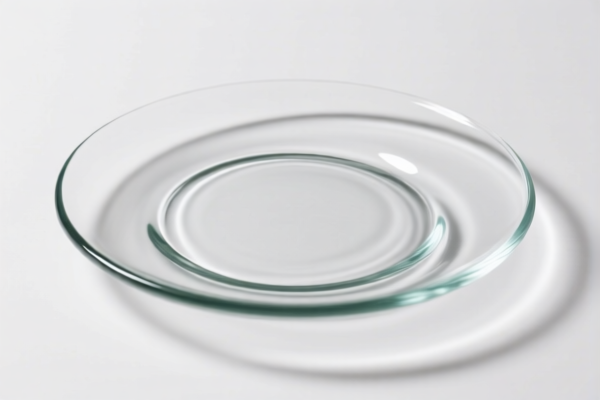
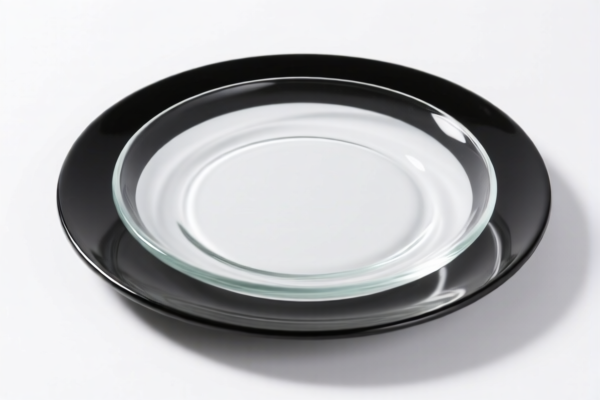
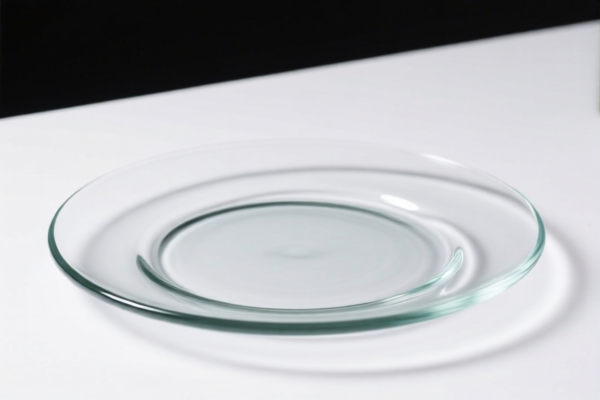
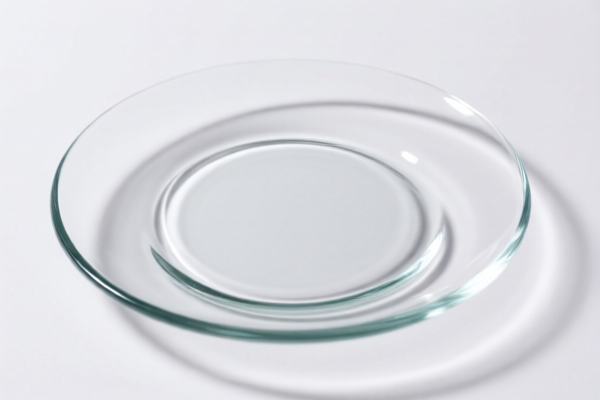
AI Analysis
🪟 Glass Table (Glass Tops & Glass Furniture)
🌐 HS Code Reference & Customs Clearance Guide | 2026 Latest Tariff Analysis | Professional Clearance Strategy
📌 I. Product Definition & Classification: Do You Really Understand "Glass Table"?
A glass table is not a single commodity. In international trade, its classification depends strictly on its processing level and assembly status. Misclassification is the #1 cause of overpayment and customs delays for glass products.
1. Processed Glass Sheets/Tops (Unassembled)
Raw or cut glass that has been tempered, laminated, polished, or shaped but has not been fitted with a frame, legs, or other mounting materials.
Key Characteristic: It is a "component" or "semi-finished good," not a piece of furniture.
2. Finished Glass Tables (Assembled)
Glass tops that are already installed in frames, attached to legs, or integrated into complete furniture units.
Key Characteristic: It is a "finished good" or "complete furniture item."
⚠️ Critical Distinction:
- If the glass is loose, unframed, and unmounted → It is classified as Glass Products (Chapter 70).
- If the glass is fixed to a frame/legs → It is classified as Furniture (Chapter 94).Note: The data provided below focuses on the Glass Product classification (HS 7006), specifically for glass tops that are processed but not yet assembled into complete furniture frames.
📦 II. HS Code Classification Details (2026 Latest Tariff Alignment)
Based on the provided data, here are the two possible HS Codes for processed glass components (specifically glass tops/surfaces).
| HS Code | Product Description | Processing Level | Customary Use |
|---|---|---|---|
7006.00.20.00 |
Glass tops, processed but not framed or mounted with other materials | Semi-finished / Processed | Glass slabs, tabletop blanks, decorative glass panels |
7006.00.40.50 |
Glass tables / Glass surfaces, processed, falling under other residual categories | Finished/Residual Glass Item | Tempered glass tops, specific shaped glass surfaces not covered in 7006.20 |
🔍 Key Analysis of the Data Provided:
The dataset highlights a massive tariff discrepancy between7006.00.20.00and7006.00.40.50.
-7006.00.20.00: Explicitly mentions "processed but not framed."
-7006.00.40.50: Described as "other residual categories" (兜底类目), often applied when the specific glass item doesn't fit neatly into the "unframed top" definition or is considered a finished glass good.⚠️ Warning: Customs officers may scrutinize
7006.00.40.50heavily because it attracts high punitive tariffs. If your product is a simple cut/tempered sheet without a frame, argue for7006.00.20.00.
💰 III. 2026 Latest Tariff Rate Breakdown (Including Surtaxes & Policy Add-ons)
✅ Applicable Country: United States (US)
✅ Origin: China (CN)
✅ Effective Date: Current applicable rates (Section 301 & Section 122)
🎯 1. 7006.00.20.00 —— Glass Tops, Processed but Unframed
This is the preferred classification for uninstalled glass tops, as it attracts the lowest punitive duties.
| Item | Content |
|---|---|
| Base Duty | 6.4% (Ad Valorem) |
| Section 301 Surtax | 0.0% |
| Section 122 Duty | 10.0% |
| Total Tax Rate | 16.4% |
| Calculation Basis | CIF Value × 16.4% |
| De Minimis Eligibility | ❌ No (Generally, Section 301/122 duties apply regardless of value for China-origin goods) |
| Legal Basis Path | USITC:7006.00.20.00 → Section 122:10% |
📌 Explanation:
- This code benefits from 0% Section 301 additional duty, which is a significant saving compared to the alternative.
- The 10% Section 122 duty is a national security/trade remedy surcharge applied to certain imports.
- Total Cost Impact: Only 16.4%, making this the most cost-effective classification for raw/processed glass tops.
🎯 2. 7006.00.40.50 —— Glass Table Tops / Residual Glass Items
This code is classified under "Other" or "Residual" categories and attracts maximum punitive tariffs.
| Item | Content |
|---|---|
| Base Duty | 4.9% (Ad Valorem) |
| Section 301 Surtax | 25.0% |
| Section 122 Duty | 10.0% |
| Total Tax Rate | 39.9% |
| Calculation Basis | CIF Value × 39.9% |
| De Minimis Eligibility | ❌ No |
| Legal Basis Path | USITC:7006.00.40.50 → Section 301:25% → Section 122:10% |
📌 Explanation:
- The 25% Section 301 duty is the primary driver of this high cost. This tariff is applied to a broad range of Chinese manufactured goods under the "Trade Enhancement" framework.
- Combined with the 10% Section 122 duty and base rate, the total tax is more than double that of7006.00.20.00.
- Risk: If Customs determines your "glass table" is a finished article not qualifying as an "unframed top," they will force this classification.
🛠️ IV. Customs Clearance Practical Advice (Avoiding Pitfalls)
✅ 1. Documentation Checklist (Must-Haves)
| Document | Required? | Purpose |
|---|---|---|
| ✅ Product Specification Sheet | ✔️ | Must explicitly state: "Glass Top, Unframed, No Mounting Hardware" |
| ✅ Technical Drawings | ✔️ | Show dimensions, thickness, and edge processing (polished/beveled). Prove it is not attached to legs/frame. |
| ✅ Commercial Invoice | ✔️ | Description must read: "Glass Top (Unframed), For Assembly Into Furniture" NOT "Glass Table" |
| ✅ Packing List | ✔️ | List glass separately from any hardware (even if shipped together, clearly mark hardware as separate items). |
| ✅ Photos | ✔️ | Show the glass alone, without any frames or legs attached. |
✅ 2. Declaration Tips (The Golden Rules)
🔥 “Don’t Say ‘Table’ Until It’s a Table!”
| Scenario | Correct Declaration | Wrong Declaration | Consequence |
|---|---|---|---|
| Loose Glass Top | "Glass Top, Processed, Unframed" (7006.00.20.00) |
"Glass Table" | Tax jumps to 39.9% |
| Glass + Legs Shipped Separately | Declare Glass as 7006.00.20.00 (if unframed) |
Declare as "Furniture Parts" | Risk of misclassification |
| Assembled Table (Glass + Frame) | Declared as Furniture (Chapter 94, e.g., 9403.40) | Declared as Glass (7006) |
Customs will reject; delay |
📌 Crucial Strategy:
- If you are shipping only the glass top, emphasize "Unframed" and "For Assembly".
- Avoid the word "Table" in the HS Code description if possible; use "Glass Top" or "Glass Sheet, Processed".
- The term "Glass Table" in the product name is acceptable only if the item is fully assembled. If it is just the glass part, call it a "Glass Top".
✅ 3. Special Case Handling
| Situation | Handling Advice |
|---|---|
| Tempered Glass | Both 7006.00.20.00 and 7006.00.40.50 apply to tempered glass. The key is assembly status. |
| Curved/Laminated Glass | If complex, Customs may lean toward 7006.00.40.50. Ensure your technical specs prove it is still a "sheet/top" and not a furniture unit. |
| Mixed Container | If shipping glass tops with furniture frames in the same container, declare them separately. Do not mix them into one line item. |
🌍 V. Global Market Comparison (2026 Latest)
| Country/Region | Recommended HS Code | Duty Rate | Key Requirement | Note |
|---|---|---|---|---|
| 🇺🇸 USA | 7006.00.20.00 |
16.4% | Strict proof of "unframed" status | Avoid 7006.00.40.50 (39.9%) |
| 🇺🇸 USA | 7006.00.40.50 |
39.9% | Residual category, high risk | Use only if 7006.20 is invalid |
| 🇨🇳 China | 7006.00.20.00 |
6.4% | No Section 301/122 | Lower base duty, no punitive taxes |
| 🇪🇺 EU | 7006.00.20.00 |
Varies (0-6.5%) | CE Marking (if applicable) | No Section 301/122 |
| 🇬🇧 UK | 7006.00.20.00 |
Varies (0-6.5%) | UKCA Marking | No punitive surcharges like US |
📌 Conclusion:
The USA is the most critical market for classification accuracy due to Section 301 and Section 122 duties. A $10,000 shipment classified under7006.00.40.50pays $3,990 in taxes. Classified under7006.00.20.00, it pays $1,640.
Savings: $2,350 per $10k shipment.
📌 VI. Common Mistakes & Pitfalls (Lessons Learned)
❌ Mistake 1: Using "Glass Table" as the product name for an unframed glass top.
👉 Consequence: Customs assumes it is a finished good → Classifies as 7006.00.40.50 or Furniture → Tax doubles.
❌ Mistake 2: Shipping a glass top already glued into a frame.
👉 Consequence: It is no longer "unframed." It must be declared as Furniture (Chapter 94). If declared as glass, it will be flagged for misdeclaration.
❌ Mistake 3: Ignoring Section 122 Duty.
👉 Consequence: Forgetting the 10% Section 122 duty in calculations leads to unexpected costs at port.
✅ Correct Approach:
"Glass Top, Tempered, 12mm Thick, Polished Edges, Unframed, For Custom Furniture Assembly"
🎯 VII. Conclusion: Precision Saves Money!
🎯 Remember the Golden Rule:
🔹 "Unframed = 16.4% | Assembled/Residual = 39.9%"
🔹 "Describe the 'Top', not the 'Table', until it’s built!"
📌 Pro Tip:
If your glass top is unframed but uniquely shaped (not standard rectangular), Customs may still push for 7006.00.40.50. To avoid this, provide detailed engineering drawings proving it is a generic component, not a finished article.
Consider applying for a Binding Ruling (Advance Ruling) with CBP if your product is complex, to lock in the 16.4% rate legally.
📣 Take Action Now:
📞 Contact your broker: Provide photos of the glass without frames.
🚀 Update your Invoice: Change "Glass Table" to "Glass Top (Unframed)".
💼 Save thousands by getting the HS Code right from day one!
✨ Smart Clearance, Lower Costs!
💼 Every percentage point matters in 2026!
Customer Reviews
About HS Code Classification
The Harmonized System (HS) is an internationally standardized nomenclature developed by the World Customs Organization (WCO) to classify traded products. Over 200 countries use the HS system as the basis for customs tariffs, trade statistics, and import/export regulations.
Each HS code follows a hierarchical structure:
- Chapter (2 digits) — Broad category of goods (e.g., Chapter 84: Machinery and Mechanical Appliances)
- Heading (4 digits) — More specific grouping within the chapter
- Subheading (6 digits) — Internationally standardized breakdown, used by all WCO member countries
- National subdivisions (8-10 digits) — Country-specific extensions for further classification, such as US HTSUS 10-digit codes
Correct HS code classification is essential for smooth customs clearance, accurate duty payment, and compliance with trade regulations. Misclassification can lead to customs delays, overpayment of duties, or penalties.
When importing from CN to US, the applicable tariff rates may include:
- Most-Favored-Nation (MFN) rate — The standard duty rate applied to WTO members
- General rate — Applied to countries without trade agreements
- Trade remedy duties — Additional tariffs such as Section 301 (anti-dumping), Section 232 (national security), or countervailing duties
The information provided on this page is for reference purposes only. For official classification, please consult with your local customs authority or a licensed customs broker.