Glass Tube Beads
CN → US| HS Code | Tariff Rate | Origin | Destination | Doc |
|---|---|---|---|---|
| 7117909000 | 28.5% | CN | US | Official Doc |
| 7018101000 | 39.0% | CN | US | Official Doc |
| 7018105000 | 35.0% | CN | US | Official Doc |
Product Images



AI Analysis
📿 Glass Tube Beads (Decorative Glass Beads for Jewelry)
🌐 HS Code Reference & Customs Clearance Guide | 2026 Latest Tariff Analysis | Professional Clearance Strategy
📌 I. Product Definition & Classification: Are You Sure About "Glass Beads"?
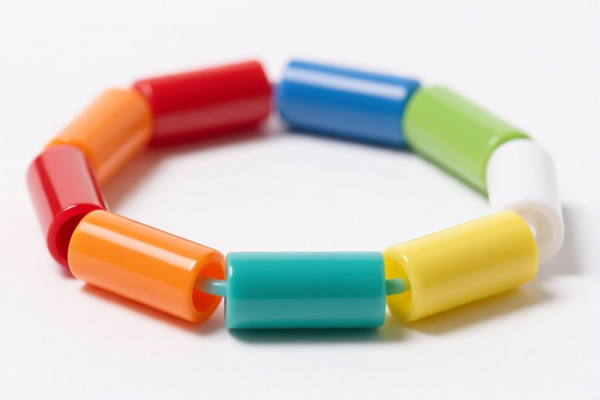
Glass tube beads are cylindrical, hollow glass components primarily used as decorative elements in jewelry, fashion accessories, and craft supplies. In international trade, their classification depends heavily on their primary use and material composition. The data provided identifies three potential classifications based on whether they are treated as imitation jewelry accessories or pure glass products.
⚠️ Key Distinction:
- If viewed as decorative components for non-precious metal jewelry → Classify under 7117.90.90.00 (Imitation Jewelry Parts).
- If viewed as raw glass beads (material-focused) → Classify under 7018 (Glass Articles).
- Tax Implication: The difference between 28.5% and 39% total tax is significant. Misclassification can lead to customs audits, penalties, or delayed clearance.
📦 II. HS Code Classification Details (2026 Latest Tariff Authority Comparison)
Based on the provided data <DATA>, here are the three applicable HS Codes and their corresponding tax structures:
| HS Code | Product Description | Classification Logic | Total Tax Rate (CN→US) |
|---|---|---|---|
7117.90.90.00 |
Parts of Imitation Jewelry: Non-precious metal ornaments, specifically glass beads used as decorative loose beads. | Focuses on function: "Decorative elements for imitation jewelry." Fits the attribute of "other articles" in imitation jewelry. | 28.5% |
7018.10.10.00 |
Glass Beads: Glass tubes/beads matching material and form definitions strictly. | Focuses on material: Direct match to "Glass" and "Bead" form. High additional tariffs apply. | 39.0% |
7018.10.50.00 |
Glass Beads: Direct correspondence to "Glass Beads" in classification definitions. | Focuses on material: Direct match to "Glass" and "Bead" form. Lower base tariff but high additional tariffs. | 35.0% |
🔍 Critical Note:
-7117.90.90.00is often the preferred classification for finished decorative beads intended for jewelry because it avoids the highest "Section 301" additional tariffs compared to pure glass articles.
-7018codes are technically correct for the material, but attract higher duties due to trade policies.
- Do not mix these codes. The Customs Officer will check if the beads are "finished jewelry components" or "raw glass material."
💰 III. 2026 Latest Tariff Rate Breakdown (Detailed Tax Clauses)
✅ Applicable Country: United States (US)
✅ Origin: China (CN)
✅ Effective Time: Post-2025 Trade Policy (Includes Section 301 & 122 Tariffs)
🎯 1. 7117.90.90.00 — Imitation Jewelry Parts (Glass Beads as Decorations)
Recommended for jewelry supply chains.
| Item | Content |
|---|---|
| Base Tariff | 11.0% (Ad Valorem) |
| Section 301 Additional Tariff | +7.5% (From USITC Footnote 9903.71.17) |
| Section 122 Tariff | +10% (Specific additional duty) |
| Total Tax Rate | 28.5% |
| Tax Calculation | CIF Value × 28.5% |
| De Minimis Exemption | ❌ No (Deny De Minimis) |
| Legal Basis Path | IEEPA:9903.71.17 → USITC:7117.90.90.00 → SECTION_122 |
📌 Explanation:
- This classification treats the glass bead as a component of imitation jewelry.
- It avoids the higher 25% Section 301 tariff applied to some glass articles.
- Cost Advantage: 10.5% lower than the7018.10.50.00classification.
🎯 2. 7018.10.10.00 — Glass Beads (Material Classification)
Higher risk, higher cost.
| Item | Content |
|---|---|
| Base Tariff | 4.0% (Ad Valorem) |
| Section 301 Additional Tariff | +25.0% (From USITC Footnote 9903.70.18) |
| Section 122 Tariff | +10% (Specific additional duty) |
| Total Tax Rate | 39.0% |
| Tax Calculation | CIF Value × 39.0% |
| De Minimis Exemption | ❌ No (Deny De Minimis) |
| Legal Basis Path | IEEPA:9903.70.18 → USITC:7018.10.10.00 → SECTION_122 |
📌 Explanation:
- High Section 301 tariff (25%) makes this the most expensive option.
- Only use if7117.90.90.00is rejected by Customs and you have no other option.
🎯 3. 7018.10.50.00 — Glass Beads (Material Classification)
Middle ground.
| Item | Content |
|---|---|
| Base Tariff | 0.0% (Ad Valorem) |
| Section 301 Additional Tariff | +25.0% (From USITC Footnote 9903.70.18) |
| Section 122 Tariff | +10% (Specific additional duty) |
| Total Tax Rate | 35.0% |
| Tax Calculation | CIF Value × 35.0% |
| De Minimis Exemption | ❌ No (Deny De Minimis) |
| Legal Basis Path | IEEPA:9903.70.18 → USITC:7018.10.50.00 → SECTION_122 |
📌 Explanation:
- Lower base tariff (0%) but still hit by the full 25% Section 301 and 10% Section 122.
- Cheaper than7018.10.10.00but still more expensive than the jewelry classification (7117.90.90.00).
🛠️ IV. Customs Clearance Practical Advice (Avoid Pitfalls)
✅ 1. Required Documentation Checklist
| Document | Mandatory | Description |
|---|---|---|
| ✅ Product Specification Sheet | ✔️ | Must state: "Glass Beads," "Material: Glass," "Use: Jewelry Decoration." |
| ✅ Product Photos | ✔️ | Clear images showing beads are hollow (tube type) or solid, and their decorative nature. |
| ✅ Commercial Invoice | ✔️ | Accurately describe as "Glass Beads for Jewelry Making" or "Decorative Glass Beads." |
| ✅ Packing List | ✔️ | Detail quantity, weight, and packaging. |
| ✅ Origin Certificate (CO) | ✔️ | Required for US import; check if any preferential rates apply (unlikely for China). |
| ✅ Customs Ruling Letter (Optional) | ✔️ | If available, obtain an Advance Ruling to confirm HS Code. |
✅ 2. Declaration Strategy (Key Tips)
🔥 Golden Rule: "Define by Use, Not Just Material!"
| Scenario | Recommended HS Code | Reason |
|---|---|---|
| Beads sold for jewelry making | 7117.90.90.00 |
Customs views them as "Jewelry Parts." Lowest total tax (28.5%). |
| Beads sold as raw craft material | 7018.10.50.00 |
If Customs rejects jewelry classification, use this. Tax 35%. |
| Beads with high lead/content | Check 7018.10.10.00 |
Some glass types have specific material constraints. Tax 39%. |
⚠️ Warning:
- Do NOT declare as "Jewelry" (e.g., finished necklaces) if they are just loose beads. This is fraud.
- Do NOT declare as "Glass Bottles" or "Glass Tubes" (packaging) — this is incorrect classification.
✅ 3. Special Handling for Section 301 & 122
- Section 122 Tariff (10%): Applies to almost all imports from China under current policy. Ensure your broker includes this in the calculation.
- Section 301 Tariff: Varies by HS Code.
7117.90.90.00enjoys a lower 7.5% add-on, while7018codes face 25%. - De Minimis: Glass beads from China do not qualify for the $800 de minimis exemption (Type 86). Full duties apply.
🌍 V. Global Market Comparison (2026 Latest)
| Country/Region | Recommended HS Code | Est. Total Tax (CN Origin) | Remarks |
|---|---|---|---|
| 🇺🇸 USA | 7117.90.90.00 |
28.5% | Best option due to lower Section 301. |
| 🇨🇳 China | 7117.90.90.00 |
~5-10% | Import into China: Lower duties. |
| 🇪🇺 EU | 7117.90.90.00 |
~5-15% | Varies by member state. No Section 301. |
| 🇬🇧 UK | 7117.90.90.00 |
~5-15% | Post-Brexit rules. No Section 301. |
📌 Conclusion:
- USA is the most expensive market due to叠加 tariffs (Base + 301 + 122).
- Strategic Recommendation: Use7117.90.90.00for US imports to save 6.5-10.5% compared to glass classifications.
📌 VI. Common Errors & Pitfalls (Lessons Learned)
❌ Error 1: Declaring glass beads as "Glass Bottles" (7010)
👉 Consequence: Customs will correct it, apply wrong duties, and issue penalties.
❌ Error 2: Using 7018.10.10.00 when 7117.90.90.00 is applicable
👉 Consequence: Overpaying 10.5% in additional taxes unnecessarily.
❌ Error 3: Claiming De Minimis ($800 exemption) for glass beads from China
👉 Consequence: Shipment held, back-taxes charged, and fines. Not eligible.
❌ Error 4: Vague Description: "Glass Things"
👉 Consequence: Customs suspicion, audit, and delays.
✅ Correct Description Example:
"Glass Beads, Hollow Tube Type, 6mm Diameter, Color: Clear, Used for Jewelry Making, Origin: China, HS: 7117.90.90.00"
🎯 VII. Conclusion: Professional Classification Saves Money!
🎯 Remember:
🔹 "Jewelry Parts < Raw Glass" for US Tariffs.
🔹 28.5% vs 39.0% — That’s a 10.5% savings per dollar!
🔹 No De Minimis for China → Plan for full duty payment.
📌 Pro Tip:
- If you are importing large volumes, apply for an Advance Ruling from US Customs and Border Protection (CBP) to lock in the 7117.90.90.00 classification.
- Ensure your supplier provides material safety data if beads contain lead or other restricted substances (CPSIA compliance for children's jewelry).
📣 Immediate Action:
📞 Contact your freight forwarder to confirm the HS Code
7117.90.90.00is accepted for your specific bead type.
📄 Prepare detailed product photos showing the beads are decorative components.
💰 Calculate landed cost including 28.5% tax + 122 tariff + freight.
✨ Professional Clearance Starts with Precise Classification!
💼 Your profit margin depends on accurate HS Code selection!
Customer Reviews
About HS Code Classification
The Harmonized System (HS) is an internationally standardized nomenclature developed by the World Customs Organization (WCO) to classify traded products. Over 200 countries use the HS system as the basis for customs tariffs, trade statistics, and import/export regulations.
Each HS code follows a hierarchical structure:
- Chapter (2 digits) — Broad category of goods (e.g., Chapter 84: Machinery and Mechanical Appliances)
- Heading (4 digits) — More specific grouping within the chapter
- Subheading (6 digits) — Internationally standardized breakdown, used by all WCO member countries
- National subdivisions (8-10 digits) — Country-specific extensions for further classification, such as US HTSUS 10-digit codes
Correct HS code classification is essential for smooth customs clearance, accurate duty payment, and compliance with trade regulations. Misclassification can lead to customs delays, overpayment of duties, or penalties.
When importing from CN to US, the applicable tariff rates may include:
- Most-Favored-Nation (MFN) rate — The standard duty rate applied to WTO members
- General rate — Applied to countries without trade agreements
- Trade remedy duties — Additional tariffs such as Section 301 (anti-dumping), Section 232 (national security), or countervailing duties
The information provided on this page is for reference purposes only. For official classification, please consult with your local customs authority or a licensed customs broker.