Glasses Storage Box
CN → US| HS Code | Tariff Rate | Origin | Destination | Doc |
|---|---|---|---|---|
| 4202929315 | 52.6% | CN | US | Official Doc |
| 3926909989 | 22.8% | CN | US | Official Doc |
| 3926901000 | 20.9% | CN | US | Official Doc |
| 4420908000 | 38.2% | CN | US | Official Doc |
| 3923102000 | 35.0% | CN | US | Official Doc |
| 4202999000 | 55.0% | CN | US | Official Doc |
Product Images
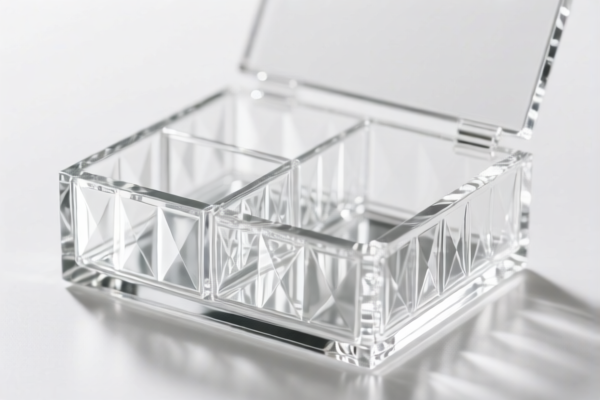
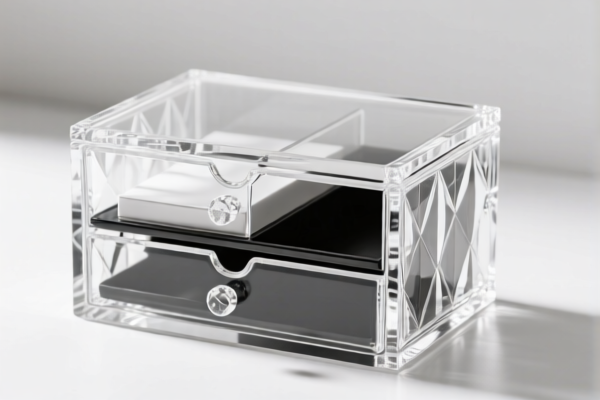
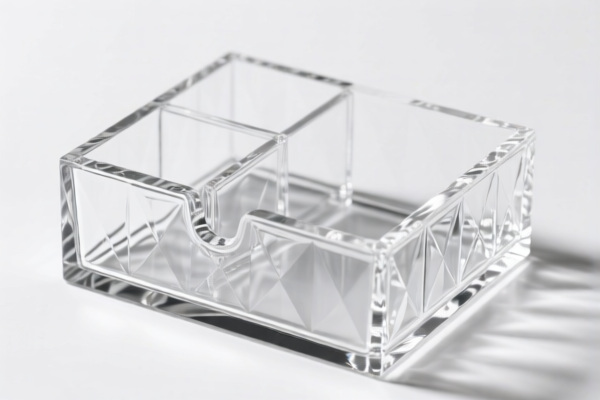
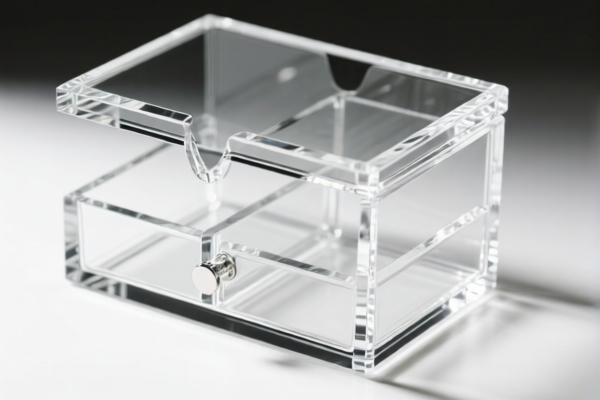
AI Analysis
🛍️ Glasses Storage Box (Case/Pouch/Organizer)
🌐 HS Code Reference & Customs Clearance Guide | 2026 Latest Tariff Analysis | Professional Level Entry Strategy
📌 I. Product Definition & Classification: Do You Really Understand "Glasses Storage Boxes"?
A "Glasses Storage Box" is a broad term in international trade, covering everything from soft pouches to rigid organizers. The Harmonized System (HS) classification depends entirely on the primary material and functional nature of the container. In the eyes of customs, it is not just a "box"; it is classified based on what it is made of (Plastic, Wood, Textiles, Leather/Fabrics).
Key Classification Divergence: * Plastic Cases: Rigid or semi-rigid containers made primarily of plastic. * Wooden Cases: Rigid containers made of wood. * Textile/Leather Cases: Soft or structured cases made of woven materials, leather, or non-woven fabrics (often classified under bags/cases).
⚠️ Critical Distinction Point:
- If the case is made of Plastic and is a general-purpose container → Likely Chapter 39 or 3923.
- If the case is made of Wood → Chapter 44.
- If the case is made of Textiles/Leather and has a lining/structure → Chapter 42.
- Misclassification leads to massive tax discrepancies (from 20% to 55%+).
📦 II. HS Code Classification Matrix (2026 Latest Tariff Authority Mapping)
Based on the product "Glasses Storage Box," here are the precise HS Codes derived from material and functional characteristics:
| HS Code | Product Description | Material/Feature | Applicable Scenario | Tax Category |
|---|---|---|---|---|
3926.90.99.89 |
Other articles of plastics, not specified elsewhere | Rigid Plastic Case | General rigid plastic glasses box, no specific packaging function | High Risk |
3926.90.10.00 |
Other articles of plastics; Containers | Plastic Container | Plastic box specifically designed as a container/storage vessel | Medium Risk |
3923.10.20.00 |
Articles for the conveyance or packing of goods | Plastic Packing Material | Plastic case viewed primarily as "packaging" rather than a reusable container | Low Base, High Surcharge |
4420.90.80.00 |
Wooden Articles for Decorative Purposes | Wooden Box | Rigid wooden glasses case, often treated as decorative/accessory | Very High Risk |
4202.92.93.15 |
Articles of bedding or similar furniture... or cases | Textile Surface Case | Glasses case with an outer surface of textile material | Extreme Risk |
4202.99.90.00 |
Other articles of leather, sheeting, or textile | Multi-material/General Case | General case made of plastic, textile, or cardboard with structural elements | Highest Risk |
🔍 Key Reminder:
- Plastic vs. Textile: A hard shell glasses case with a soft fabric lining is often still classified under Chapter 42 if the textile is the defining exterior or primary material. - "Container" vs. "Packing": If the box is intended for single-use shipping, it may fall under3923. If it is a reusable retail product, it likely falls under3926or4202.
💰 III. 2026 Latest Tariff Rate Breakdown (Including Surtaxes & Policy Add-ons)
✅ Applicable Country: United States (US)
✅ Origin: China (CN)
✅ Effective Date: From November 10, 2025 (including subsequent imports)
🎯 1. 3926.90.99.89 —— Other Articles of Plastics
| Item | Details |
|---|---|
| Base Duty | 5.3% (Ad Valorem) |
| Section 301 Surtax | +7.5% (Additional Duty under USITC Footnote) |
| 122-Clause Tariff | +10% (Specific China-targeted tariff) |
| Total Rate | 22.8% |
| Calculation | CIF Value × 22.8% |
| De Minimis Exemption? | ❌ No (Not eligible for de minimis relief under current enforcement) |
| Legal Path | USITC:3926.90.99.89 → FOOTNOTE:Section 301 → 122-Clause |
📌 Explanation:
- This is a "catch-all" for plastic goods. The base duty is low, but the Section 301 and 122-Clause add-ons significantly increase the cost. - Suitable for generic, unbranded rigid plastic cases.
🎯 2. 3926.90.10.00 —— Other Articles of Plastics; Containers
| Item | Details |
|---|---|
| Base Duty | 3.4% |
| Section 301 Surtax | +7.5% |
| 122-Clause Tariff | +10% |
| Total Rate | 20.9% |
| Calculation | CIF Value × 20.9% |
| De Minimis Exemption? | ❌ No |
| Legal Path | USITC:3926.90.10.00 → FOOTNOTE:Section 301 → 122-Clause |
📌 Explanation:
- Slightly cheaper than3926.90.99.89due to a lower base duty, but still subject to the same surcharges. - Best for cases explicitly marketed as "storage containers" rather than "other plastic articles."
🎯 3. 3923.10.20.00 —— Articles for Conveyance or Packing (Plastic)
| Item | Details |
|---|---|
| Base Duty | 0.0% |
| Section 301 Surtax | +25.0% |
| 122-Clause Tariff | +10% |
| Total Rate | 35.0% |
| Calculation | CIF Value × 35.0% |
| De Minimis Exemption? | ❌ No |
| Legal Path | USITC:3923.10.20.00 → Section 301:25% → 122-Clause:10% |
📌 Explanation:
- Trap Alert: While the base duty is 0%, the Section 301 surcharge jumps to 25% (full rate for packaging materials in some contexts). - Only use this if the item is strictly defined as "packaging" (e.g., bulk shipping containers), not as a consumer retail glasses case.
🎯 4. 4420.90.80.00 —— Wooden Articles (Decorative)
| Item | Details |
|---|---|
| Base Duty | 3.2% |
| Section 301 Surtax | +25.0% |
| 122-Clause Tariff | +10% |
| Total Rate | 38.2% |
| Calculation | CIF Value × 38.2% |
| De Minimis Exemption? | ❌ No |
| Legal Path | USITC:4420.90.80.00 → Section 301:25% → 122-Clause:10% |
📌 Explanation:
- Wooden cases are often viewed as "decorative" or "accessory" items, attracting higher surcharges. - Ideal for high-end, luxury wooden glasses cases.
🎯 5. 4202.92.93.15 —— Articles with Textile Surface
| Item | Details |
|---|---|
| Base Duty | 17.6% |
| Section 301 Surtax | +25.0% |
| 122-Clause Tariff | +10% |
| Total Rate | 52.6% |
| Calculation | CIF Value × 52.6% |
| De Minimis Exemption? | ❌ No |
| Legal Path | USITC:4202.92.93.15 → Section 301:25% → 122-Clause:10% |
📌 Explanation:
- High Cost Warning: Textile-surfaced cases (even if plastic-lined) are taxed heavily because Chapter 42 often carries higher base duties. - Common for "soft shell" glasses cases with fabric exteriors.
🎯 6. 4202.99.90.00 —— Other Articles of Leather/Textile (General)
| Item | Details |
|---|---|
| Base Duty | 20.0% |
| Section 301 Surtax | +25.0% |
| 122-Clause Tariff | +10% |
| Total Rate | 55.0% |
| Calculation | CIF Value × 55.0% |
| De Minimis Exemption? | ❌ No |
| Legal Path | USITC:4202.99.90.00 → Section 301:25% → 122-Clause:10% |
📌 Explanation:
- The Most Expensive Option: This is a catch-all for bags/cases not elsewhere specified. If your glasses case is made of mixed materials or has a structural form like a bag, it may fall here. - Avoid unless the product strictly fits this description.
🛠️ IV. Customs Clearance Practical Advice (Avoid Pitfalls)
✅ 1. Documentation Checklist (Mandatory)
| Document | Required | Purpose |
|---|---|---|
| ✅ Product Specification | ✔️ | Must clearly state material (e.g., "100% ABS Plastic" or "Textile Exterior, Plastic Interior") |
| ✅ Material Breakdown | ✔️ | Percentages by weight/volume. Critical for Chapter 42 vs. 39 classification |
| ✅ High-Res Photos | ✔️ | Show closure mechanisms, interior lining, and branding |
| ✅ Commercial Invoice | ✔️ | Describe as "Glasses Storage Case, Plastic/Textile, Not for Packaging Only" |
| ✅ Packing List | ✔️ | Clarify if items are retail units or bulk shipping containers |
✅ 2. Declaration Strategy (Key Mantras)
🔥 "Material Defines Chapter, Function Defines Subheading, Name Prevents Audit!"
| Scenario | Correct Declaration | Wrong Declaration |
|---|---|---|
| Rigid Plastic Box | "Plastic Glasses Storage Case" → 3926.90.10.00 or 3926.90.99.89 |
"Box" → Ambiguous, may trigger audit |
| Fabric-Outside Case | "Textile Exterior Glasses Case" → 4202.92.93.15 |
"Plastic Case" → Misclassification, penalty |
| Wooden Box | "Wooden Glasses Case" → 4420.90.80.00 |
"Wood Box" → May be misclassified as furniture |
| Bulk Shipping Container | "Plastic Shipping Container" → 3923.10.20.00 |
"Glasses Case" → Wrong functional classification |
✅ 3. Special Handling Cases
| Situation | Handling Advice |
|---|---|
| OEM Custom Cases | Provide design specs to prove material composition. If >50% textile by surface area, lean towards Chapter 42. |
| Mixed Material (e.g., Leather + Plastic) | If leather is the essential character, classify under Chapter 42 (higher tax). If plastic dominates, consider Chapter 39. |
| "Free Sample" Import | Even for samples, if value exceeds de minimis thresholds (currently low for China due to surtaxes), duties apply. |
| Return/Exchange Goods | Ensure proper documentation to claim duty drawbacks if goods are returned to China. |
🌍 V. Global Market Clearance Comparison (2026)
| Country/Region | Recommended HS Code | Duty Rate (China Origin) | Certification Requirements | Notes |
|---|---|---|---|---|
| 🇺🇸 USA | 3926.90.10.00 / 4202.99.90.00 |
20.9% ~ 55.0% | None (General) | High Surtaxes Apply |
| 🇨🇳 China | 3926.90.99 / 4202.92 |
5% ~ 20% | CCC (if electronic, not applicable) | No additional surtaxes |
| 🇪🇺 EU | 3926.90 / 4202.92 |
4.5% ~ 12% | CE (if applicable) | No 301-style surtaxes |
| 🇦🇺 Australia | 3926.90 / 4202.92 |
5% | ACMA (if electronic) | GST applies |
| 🇯🇵 Japan | 3926.90 / 4202.92 |
5% ~ 14% | PSE (if electronic) | Stable rates |
📌 Conclusion:
- The US market is the most expensive for glasses cases due to the cumulative Section 301 + 122-Clause tariffs. - Chapter 42 (Textile/Leather) items are significantly more expensive than Chapter 39 (Plastic) items in the US. - If possible, optimize material composition (e.g., use all-plastic) to reduce tax burden in the US market.
📌 VI. Common Errors & Pitfalls (Lessons Learned)
❌ Error 1: Calling a textile-covered case a "Plastic Box"
👉 Consequence: Misclassification → Back taxes + Penalties (up to 55% vs 22.8%).
❌ Error 2: Ignoring the "122-Clause" surcharge
👉 Consequence: Underpayment → Account freeze or seizure. Always include the 10% 122-Clause tariff in cost models.
❌ Error 3: Using "Bag" vs. "Case" terminology loosely
👉 Consequence: Chapter 42 (Bags) vs. Chapter 42 (Cases) may have different subheadings. Precision matters.
✅ Correct Practice:
"Rigid ABS Plastic Glasses Storage Case, No Textile Exterior, Model XYZ"
Use this exact phrasing to support3926classification.
🎯 VII. Conclusion: Precision Saves Money!
🎯 Remember the Mantra:
🔹 "Plastic is King (Cheaper), Textile is Queen (Expensive), Wood is Noble (Moderate-High)."
🔹 "Check the 122-Clause: 10% is always there for China Origin."
🔹 "Declare Material, Not Just Product Name!"
📌 Pro Tip:
If your glasses cases are originating from Vietnam or Thailand, you may avoid the Section 301 and 122-Clause tariffs entirely, reducing duties to 0%~5%.
Recommendation: Conduct a Material Origin Audit. If 100% plastic, keep supply chain in China but consider final assembly or packaging in a non-China origin country to leverage FTA benefits.
📣 Immediate Action:
📞 Audit your product material composition.
📝 Request a Binding Ruling (Advance Ruling) from CBP if the classification is ambiguous.
🚀 Optimize your HS Code to save up to 32% in tariffs!
✨ Professional Clearance Starts with Accurate Classification!
💼 Every Percentage Point of Duty Saved is Pure Profit!
Customer Reviews
About HS Code Classification
The Harmonized System (HS) is an internationally standardized nomenclature developed by the World Customs Organization (WCO) to classify traded products. Over 200 countries use the HS system as the basis for customs tariffs, trade statistics, and import/export regulations.
Each HS code follows a hierarchical structure:
- Chapter (2 digits) — Broad category of goods (e.g., Chapter 84: Machinery and Mechanical Appliances)
- Heading (4 digits) — More specific grouping within the chapter
- Subheading (6 digits) — Internationally standardized breakdown, used by all WCO member countries
- National subdivisions (8-10 digits) — Country-specific extensions for further classification, such as US HTSUS 10-digit codes
Correct HS code classification is essential for smooth customs clearance, accurate duty payment, and compliance with trade regulations. Misclassification can lead to customs delays, overpayment of duties, or penalties.
When importing from CN to US, the applicable tariff rates may include:
- Most-Favored-Nation (MFN) rate — The standard duty rate applied to WTO members
- General rate — Applied to countries without trade agreements
- Trade remedy duties — Additional tariffs such as Section 301 (anti-dumping), Section 232 (national security), or countervailing duties
The information provided on this page is for reference purposes only. For official classification, please consult with your local customs authority or a licensed customs broker.