Glassware for Table, Kitchen or Other Household Purposes
CN → US| HS Code | Tariff Rate | Origin | Destination | Doc |
|---|---|---|---|---|
| 7017905000 | 41.7% | CN | US | Official Doc |
| 7017200000 | 41.7% | CN | US | Official Doc |
| 7013495090 | 25.0% | CN | US | Official Doc |
| 7013995090 | 40.0% | CN | US | Official Doc |
Product Images
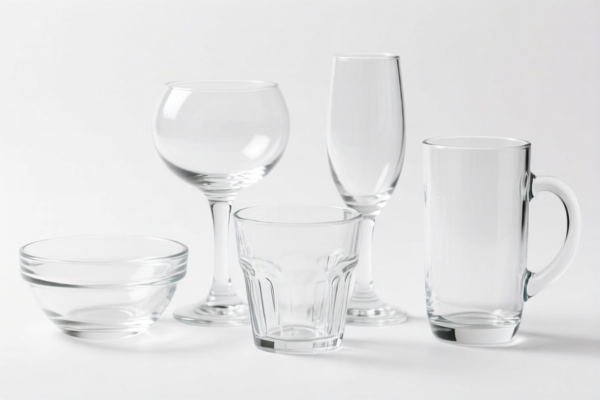
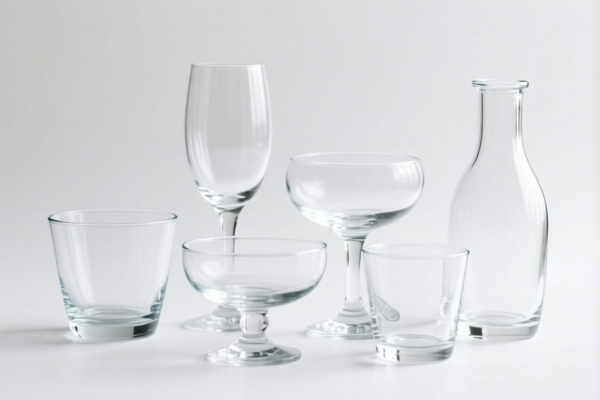
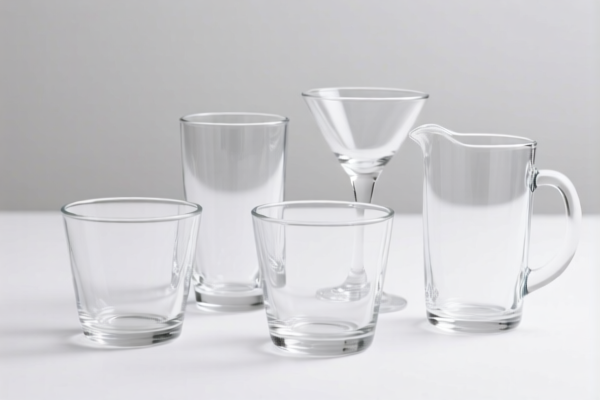
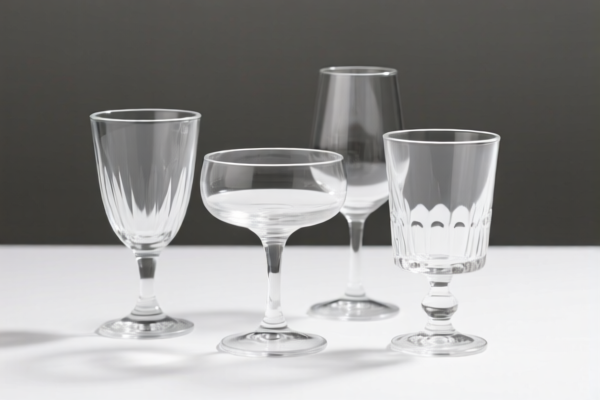
AI Analysis
🍽️✨ Glassware for Table, Kitchen & Household Purposes: The Ultimate 2026 HS Code & Duty Masterclass
🌐 Global HS Code Reference & Clearance Guide | 2026 Tax Regime Decoded | Expert Logistics Strategy
📌 Section I: What Exactly is "Glassware"?
Glassware for table, kitchen, or household purposes is a vast category covering everything from your morning coffee mug to laboratory beakers (if they fit the description). In international trade, material composition, intended use, and calibration are the three pillars determining your HS Code and tax bill.
The market is generally split into: * Table & Kitchen Glass: Plates, cups, bowls, drinking glasses, and food storage containers. * Specialty Lab/Pharma Glass: Beakers, test tubes, and calibrated glassware used in science or medicine. * Decorative Glass: Vases, sculptures, or items purely for indoor display.
⚠️ Critical Distinction:
- Is it calibrated? If yes (graduated markings), it often falls under 7017.
- Is it for the table/kitchen? It falls under 7013.
- Is it "Scientific" but uncalibrated? It falls under 7017.90.50.
- Is it for decoration? It falls under 7013.99.
📦 Section II: HS Code Classification Matrix (2026 Tariff Rulings)
Based on the provided data, here is the precise breakdown of the four most relevant classifications for glassware:
| HS Code | Product Description | Primary Use Case | Material/Feature Specifics |
|---|---|---|---|
7017.90.50.00 |
Laboratory, hygienic or pharmaceutical glassware (Other) | Lab experiments, medical prep, hygiene standards | "Other" category – not graduated/calibrated (unless specified otherwise). |
7017.20.00.00 |
Laboratory, hygienic or pharmaceutical glassware | High-precision thermal applications | Specialized Glass: Linear coefficient of expansion ≤ 5 x 10⁻⁶ K⁻¹ (0°C to 300°C). |
7013.49.50.90 |
Other glassware for table or kitchen purposes | Dining, serving, food storage | Exclusions: Not drinking glasses, not lead crystal, not glass-ceramics. |
7013.99.50.90 |
Other glassware for indoor decoration | Vases, centerpieces, aesthetic displays | Exclusions: Not table/kitchen, not lead crystal, not glass-ceramics. |
🔍 Deep Dive Analysis:
-7017.20.00.00is for heat-resistant glass (e.g., Pyrex). If your lab glassware withstands thermal shock, this is your code.
-7017.90.50.00is the "catch-all" for lab glass that isn't the special thermal type (e.g., standard test tubes, beakers without heat resistance specs).
-7013.49.50.90is the kitchen workhorse code for non-drinking items (e.g., salad bowls, casserole dishes, butter dishes).
-7013.99.50.90is the decoration code. If it doesn't hold food, it goes here.
💰 Section III: 2026 Tariff Rate Breakdown (China Export Context)
✅ Applicable Market: United States (US) Import from China (CN)
✅ Effective Date: 2026 Tariff Regime (Current Analysis)
✅ Tax Basis: CIF Value (Cost + Insurance + Freight)
🎯 1. 7017.90.50.00 (Lab Glassware – Other)
| Item | Detail |
|---|---|
| Base Tariff | 0.0% |
| Additional Tariff (Section 301) | 0.0% |
| Total Effective Rate | 0.0% |
| Tax Detail | "Base Tariff: 0.0%, Additional Tariff: 0.0%" |
| Strategic Insight | Zero Duty! This category enjoys a complete tariff exemption. Ideal for importing scientific equipment. |
🎯 2. 7017.20.00.00 (Lab Glassware – Heat Resistant)
| Item | Detail |
|---|---|
| Base Tariff | 0.0% |
| Additional Tariff (Section 301) | 0.0% |
| Total Effective Rate | 0.0% |
| Tax Detail | "Base Tariff: 0.0%, Additional Tariff: 0.0%" |
| Strategic Insight | Zero Duty! Even specialized thermal glassware is duty-free. High priority for biotech and chemical supply chains. |
🎯 3. 7013.49.50.90 (Kitchen/Table Glassware – Non-Drinking)
| Item | Detail |
|---|---|
| Base Tariff | 15.0% |
| Additional Tariff (Section 301) | 0.0% |
| Total Effective Rate | 15.0% |
| Tax Detail | "Base Tariff: 15.0%, Additional Tariff: 0.0%" |
| Strategic Insight | Moderate Duty. This applies to non-drinking kitchen items. Note that drinking glasses usually fall under different codes (not listed here), but this covers the rest of the kitchen set. |
🎯 4. 7013.99.50.90 (Decorative Glassware)
| Item | Detail |
|---|---|
| Base Tariff | 30.0% |
| Additional Tariff (Section 301) | 0.0% |
| Total Effective Rate | 30.0% |
| Tax Detail | "Base Tariff: 30.0%, Additional Tariff: 0.0%" |
| Strategic Insight | High Duty! Decorative glass is taxed heavily. Importers must verify if the item can be argued as "household utility" rather than "decoration" to save costs. |
🛠️ Section IV: Clearance Operations & Practical Advice
✅ 1. Documentation Checklist (The "Golden Rules")
To avoid delays at US Customs (CBP), ensure these documents accompany every shipment:
| Document | Requirement | Why? |
|---|---|---|
| Technical Data Sheet | ✔️ Mandatory | Must explicitly state the Linear Coefficient of Expansion for 7017.20.00.00. Without this, CBP may reclassify to the higher 7017.90.50.00 or refuse entry. |
| Usage Declaration | ✔️ Mandatory | Clearly state: "For Laboratory Use," "For Kitchen Storage," or "For Indoor Decoration." Mislabeling decoration as kitchenware leads to fraud. |
| Material Composition | ✔️ Mandatory | Prove it is NOT "Lead Crystal" or "Glass-Ceramics" if claiming 7013 codes. Lead crystal attracts different taxes! |
| Graduation Photos | ✔️ Visual Proof | Show if the glass has measurement lines. If yes, it might be 7017 (Lab) vs. 7013 (Household). |
| Commercial Invoice | ✔️ Mandatory | Must match the HS Code description exactly. Do not write "Glass" generally; write "Laboratory Glassware, Uncalibrated." |
✅ 2. Classification Strategy (The "Do's & Don'ts")
🔥 Rule: "Intent Defines Identity" - Scenario A: You sell a beaker for a chemistry lab. - ✅ Correct:
7017.90.50.00(0% Duty). - ❌ Wrong:7013.49.50.90(15% Duty) – This is a misclassification.
- Scenario B: You sell a fancy vase.
- ✅ Correct:
7013.99.50.90(30% Duty).- ❌ Wrong: Claiming it is "Houseware" to get 15% -> Risk of Audit.
💡 Pro Tip: - For
7017.20.00.00(Heat Resistant), you must provide a certified test report showing the expansion coefficient ≤ 5 x 10⁻⁶ K⁻¹. If you cannot prove this, you default to7017.90.50.00.
✅ 3. Common Pitfalls (Red Flags)
| Pitfall | Consequence | Solution |
|---|---|---|
| Confusing "Decorative" with "Kitchen" | Paying 30% instead of 15% | Ensure the item is functional for food prep (kitchen) vs. aesthetic (decoration). |
| Overlooking "Graduation" | Misclassification of Lab vs. Household | If it has measurement lines, it is almost certainly 7017. |
| Missing "Non-Lead" Proof | Rejection or higher duty | Proactively state "Non-Lead Crystal" on the invoice. |
| Generic Description | "Glass Container" | Be specific: "Laboratory Beaker" vs. "Kitchen Casserole Dish." |
🌍 Section V: Global Market Summary (2026)
| Destination | Recommended HS Code | Total Duty (China Origin) | Key Requirement |
|---|---|---|---|
| 🇺🇸 USA | 7017.20.00.00 / 7017.90.50.00 |
0.0% | Thermal certification for 7017.20 |
| 🇺🇸 USA | 7013.49.50.90 (Kitchen) |
15.0% | Proof of kitchen utility |
| 🇺🇸 USA | 7013.99.50.90 (Decor) |
30.0% | Strict "Non-Functional" proof |
| 🇪🇺 EU | Similar Codes | Varies (Avg 3-4%) | CE Marking, RoHS |
| 🇯🇵 Japan | Similar Codes | Varies (Avg 5-8%) | JIS Standards |
📌 Section VI: Final Checklist & Action Plan
✅ Pre-Shipment Verification
- Define Use: Is it for the lab, the kitchen table, or the living room shelf?
- Check Specs: Does it have graduation marks? Is it heat-resistant?
- Select Code: Match the 4 criteria in Section II.
- Calculate Duty: 0% (Lab), 15% (Kitchen), or 30% (Decor).
- Prepare Docs: Get the thermal test report if targeting
7017.20.00.00.
🚀 Clearance Success Formula
"Lab = 0%, Kitchen = 15%, Decor = 30%. Prove your Use, Define your Material, Avoid the Penalty!"
📣 Call to Action
🔹 Are you shipping Lab Glassware? Ensure your thermal specs are perfect to secure that 0% Duty.
🔹 Are you shipping Decorative Glass? Prepare for the 30% Duty or re-evaluate your product design.
🔹 Contact Customs Brokers today to file a Binding Tariff Ruling (BTR) if your product sits on the edge between categories.
✨ Precision Classification = Maximum Profit.
💼 Don't let a 15% or 30% surprise eat your margins!
Customer Reviews
About HS Code Classification
The Harmonized System (HS) is an internationally standardized nomenclature developed by the World Customs Organization (WCO) to classify traded products. Over 200 countries use the HS system as the basis for customs tariffs, trade statistics, and import/export regulations.
Each HS code follows a hierarchical structure:
- Chapter (2 digits) — Broad category of goods (e.g., Chapter 84: Machinery and Mechanical Appliances)
- Heading (4 digits) — More specific grouping within the chapter
- Subheading (6 digits) — Internationally standardized breakdown, used by all WCO member countries
- National subdivisions (8-10 digits) — Country-specific extensions for further classification, such as US HTSUS 10-digit codes
Correct HS code classification is essential for smooth customs clearance, accurate duty payment, and compliance with trade regulations. Misclassification can lead to customs delays, overpayment of duties, or penalties.
When importing from CN to US, the applicable tariff rates may include:
- Most-Favored-Nation (MFN) rate — The standard duty rate applied to WTO members
- General rate — Applied to countries without trade agreements
- Trade remedy duties — Additional tariffs such as Section 301 (anti-dumping), Section 232 (national security), or countervailing duties
The information provided on this page is for reference purposes only. For official classification, please consult with your local customs authority or a licensed customs broker.