Glazed Ceramic Beads
CN → US| HS Code | Tariff Rate | Origin | Destination | Doc |
|---|---|---|---|---|
| 7018101000 | 39.0% | CN | US | Official Doc |
| 7117909000 | 28.5% | CN | US | Official Doc |
| 9505102500 | 10.0% | CN | US | Official Doc |
| 7018105000 | 35.0% | CN | US | Official Doc |
| 9505101000 | 17.5% | CN | US | Official Doc |
Product Images
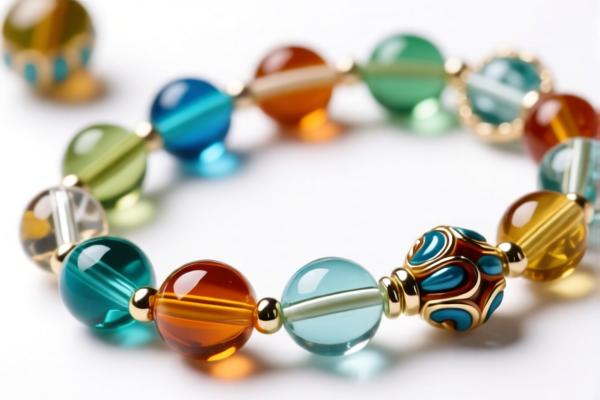
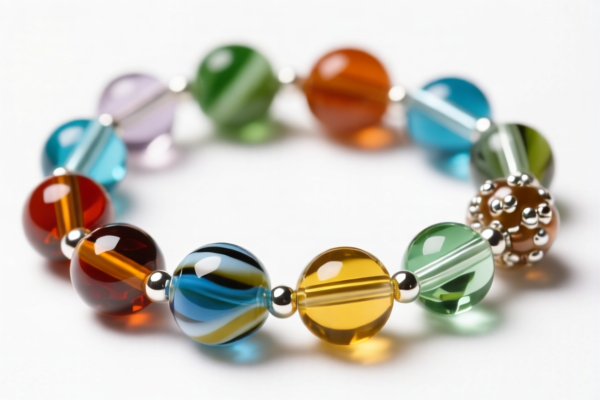
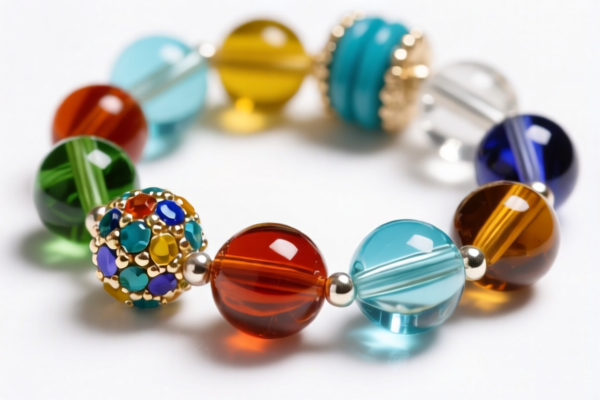
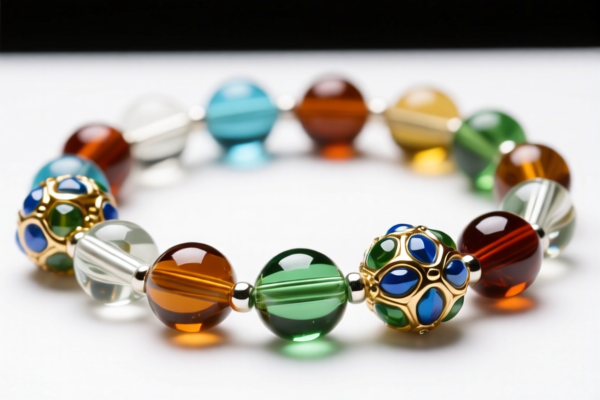
AI Analysis
🎨 Glazed Ceramic Beads
🌐 HS Code Reference & Customs Clearance Guide | 2026 Updated Tariff Analysis | Expert-Level Import Strategy
📌 One, Product Definition & Classification: What Are Glazed Ceramic Beads Really?
Glazed ceramic beads are small, round or shaped decorative items made from fired clay with a vitrified (glass-like) surface coating. They are widely used in jewelry crafting, holiday decorations, craft projects, and fashion accessories. In international trade, their classification depends heavily on intended use, material composition, and end application.
⚠️ Key Differentiator:
- If used as beads in necklaces, bracelets, or earrings → likely classified as "imitation jewelry"
- If used as decorative elements for Christmas trees, wreaths, or seasonal displays → may fall under "ornaments"
- If primarily made of glass with a ceramic-like finish, it might be misclassified — but true ceramic beads are not glass✅ Important Note:
Despite the name "glazed," ceramic beads are NOT glass beads. However, if the product is actually made of glass with a glazed appearance, it may be reclassified under glass-based HS codes.
📦 Two, HS Code Classification Details (2026 Updated Tariff Authority)
| HS Code | Product Description | Intended Use | Material Type | Key Feature |
|---|---|---|---|---|
7018.10.10.00 |
Glass beads, in the form of beads, made of glass | General use, jewelry, crafts | Glass | High-gloss, transparent or colored glass |
7117.90.90.00 |
Other imitation jewelry, including beads made of glass or non-precious materials | Fashion accessories, jewelry | Glass or imitation material | Designed to look like gemstones; not real precious stones |
9505.10.25.00 |
Other Christmas decorations, including decorative beads and particles | Seasonal decoration, holiday use | Glass | Used in garlands, tree ornaments, festive displays |
7018.10.50.00 |
Glass beads, in the form of beads, made of glass | Craft and decorative use | Glass | Similar to 7018.10.10.00, but with different duty treatment |
9505.10.10.00 |
Other ornaments and decorations for Christmas trees, including beads | Holiday decor, festive use | Glass | Non-structural, decorative function |
🔍 Critical Insight:
- True ceramic beads (fired clay with glaze) are not listed in these codes, as they are not glass.
- However, if the product is actually glass-based with a glossy, ceramic-like finish, it must be classified under glass HS codes, even if labeled "ceramic."
- Misrepresentation can lead to customs penalties, seizures, or reclassification.
💰 Three, 2026 Updated Tariff Breakdown (With附加 Taxes & Legal Basis)
✅ Applicable Country: United States (US)
✅ Origin: China (CN)
✅ Effective Date: November 10, 2025 (including subsequent imports)
🎯 1. 7018.10.10.00 — Glass Beads (General Use)
| Item | Detail |
|---|---|
| Base Duty | 4.0% (ad valorem) |
| Section 301 (USITC) Additional Duty | +25.0% |
| Section 122 (IEEPA) Additional Duty | +10.0% |
| Total Effective Duty | 39.0% |
| Tax Calculation | CIF Value × 39.0% |
| De Minimis Exemption? | ❌ No (denied under U.S. law) |
| Legal Basis Path | IEEPA:9903.01.25 → IEEPA:9903.01.24 → USITC:7018.10.10.00 → FOOTNOTE:9903.88.01 |
📌 Explanation:
- This code applies to glass beads used in crafts, jewelry, or general decoration.
- The 25% USITC duty comes from Section 301 of the Trade Act of 1974, targeting Chinese goods deemed to have unfair trade practices.
- The 10% IEEPA duty is under the International Emergency Economic Powers Act, imposed on goods from China/Hong Kong due to national security concerns.
- Total: 39% — one of the highest tariffs in the glass bead category.
🎯 2. 7117.90.90.00 — Imitation Jewelry (Glass or Non-Precious Materials)
| Item | Detail |
|---|---|
| Base Duty | 11.0% |
| Section 301 (USITC) Additional Duty | +7.5% |
| Section 122 (IEEPA) Additional Duty | +10.0% |
| Total Effective Duty | 28.5% |
| Tax Calculation | CIF Value × 28.5% |
| De Minimis Exemption? | ❌ No |
| Legal Basis Path | IEEPA:9901.25 → IEEPA:9903.01.24 → USITC:7117.90.90.00 → FOOTNOTE:9903.88.01 |
📌 Explanation:
- Applies when beads are intended as jewelry (e.g., strung into necklaces or bracelets).
- Lower base rate (11%) but still subject to 10% IEEPA + 7.5% USITC.
- Total: 28.5% — significantly lower than7018.10.10.00, but still high.
- Best choice if product is marketed as jewelry.
🎯 3. 9505.10.25.00 — Christmas Decorations (Decorative Beads & Particles)
| Item | Detail |
|---|---|
| Base Duty | 0.0% |
| Section 301 (USITC) Additional Duty | +0.0% |
| Section 122 (IEEPA) Additional Duty | +10.0% |
| Total Effective Duty | 10.0% |
| Tax Calculation | CIF Value × 10.0% |
| De Minimis Exemption? | ✅ Yes (if value < $800) |
| Legal Basis Path | IEEPA:9903.01.24 → 9505.10.25.00 → FOOTNOTE:9903.88.01 |
📌 Explanation:
- Applies only if the beads are clearly for seasonal holiday use (e.g., Christmas trees, wreaths, garlands).
- No base or USITC duty, but 10% IEEPA tariff applies.
- De Minimis applies — if total value < $800, duty-free entry under U.S. law.
- Best option for seasonal, non-jewelry use.
🎯 4. 7018.10.50.00 — Glass Beads (General Use, Lower Base Rate)
| Item | Detail |
|---|---|
| Base Duty | 0.0% |
| Section 301 (USITC) Additional Duty | +25.0% |
| Section 122 (IEEPA) Additional Duty | +10.0% |
| Total Effective Duty | 35.0% |
| Tax Calculation | CIF Value × 35.0% |
| De Minimis Exemption? | ❌ No |
| Legal Basis Path | IEEPA:9903.01.25 → IEEPA:9903.01.24 → USITC:7018.10.50.00 → FOOTNOTE:9903.88.01 |
📌 Explanation:
- Similar to7018.10.10.00, but with 0% base duty.
- Still subject to 25% USITC + 10% IEEPA → 35% total.
- Slightly lower than 39%, but still high.
- Use only if no other code fits better.
🎯 5. 9505.10.10.00 — Other Christmas Tree Ornaments (Including Beads)
| Item | Detail |
|---|---|
| Base Duty | 0.0% |
| Section 301 (USITC) Additional Duty | +7.5% |
| Section 122 (IEEPA) Additional Duty | +10.0% |
| Total Effective Duty | 17.5% |
| Tax Calculation | CIF Value × 17.5% |
| De Minimis Exemption? | ✅ Yes (if value < $800) |
| Legal Basis Path | IEEPA:9903.01.24 → USITC:9505.10.10.00 → FOOTNOTE:9903.88.01 |
📌 Explanation:
- Applies to non-specific Christmas ornaments, including beads used in holiday displays.
- 7.5% USITC + 10% IEEPA → 17.5% total.
- De Minimis applies — ideal for small shipments.
- Best choice for seasonal, non-jewelry use with higher value than $800.
🛠️ Four, Customs Clearance Best Practices (Pro Tips to Avoid Penalties)
✅ 1. Required Documentation (Must-Have Checklist)
| Document | Required? | Notes |
|---|---|---|
| ✅ Product Specification Sheet | ✔️ | Include material (glass/ceramic), dimensions, color, finish |
| ✅ Product Photos (with label) | ✔️ | Show bead shape, glaze, packaging, branding |
| ✅ Commercial Invoice | ✔️ | Clearly state intended use (e.g., “for Christmas decoration”) |
| ✅ Packing List | ✔️ | Show quantity, net weight, packaging type |
| ✅ Certificate of Origin (CO) | ✔️ | If not from China, may reduce tariffs |
| ✅ Third-Party Test Report | ✔️ | RoHS, CE, FCC (if applicable) |
| ✅ Sample Bead (Optional) | ✔️ | For customs inspection or pre-ruling |
✅ 2.申报技巧(Critical Tips)
🔥 "Use Case Defines Code — Jewelry vs. Decoration!"
| Scenario | Correct HS Code | Why? |
|---|---|---|
| Beads sold as necklace/bracelet components | 7117.90.90.00 |
Classified as imitation jewelry |
| Beads used in Christmas tree garlands or wreaths | 9505.10.25.00 or 9505.10.10.00 |
Seasonal decoration use |
| Beads made of actual ceramic (fired clay) | ❌ Not listed here — may need custom classification | Must be declared as ceramic, not glass |
| Beads made of glass with a ceramic-like glaze | 7018.10.10.00 or 7018.10.50.00 |
Must be glass, not ceramic |
⚠️ Warning:
- Do not label ceramic beads as "glass" unless they are actually glass.
- Misclassification = penalties, delays, or seizure.
✅ 3. Special Cases & Solutions
| Situation | Recommended Action |
|---|---|
| Mixed use (jewelry & decoration) | Choose primary use — declare accordingly |
| Small batch (<$800) | Use 9505.10.25.00 or 9505.10.10.00 → de minimis applies |
| High-value shipment | Use 7117.90.90.00 → lower total duty (28.5%) than 7018.10.10.00 |
| Non-Chinese origin | Apply for CO — may qualify for lower or zero tariffs |
| Custom-made or artisanal beads | Apply for Advance Ruling to lock in HS Code |
🌍 Five, Global Market Comparison (2026 Update)
| Country/Region | Recommended HS Code | Duty Rate | Certification | Notes |
|---|---|---|---|---|
| 🇺🇸 United States | 7117.90.90.00 or 9505.10.25.00 |
10%–28.5% | FCC, RoHS | High附加 taxes on China-origin |
| 🇨🇳 China | 7117.90.90.00 |
5% | CCC | No附加 taxes |
| 🇪🇺 European Union | 7117.90.90.00 |
0% (if CE compliant) | CE, RoHS | No附加 taxes |
| 🇦🇺 Australia | 7117.90.90.00 |
5% | RCM | No附加 taxes |
| 🇯🇵 Japan | 7117.90.90.00 |
0% | PSE | No附加 taxes |
📌 Takeaway:
- U.S. has the highest tariffs on glass beads from China.
- China, EU, Australia, Japan are much more favorable.
- Origin matters — consider shifting production to Vietnam, Thailand, Mexico for tariff relief.
📌 Six, Common Mistakes & How to Avoid Them
❌ Mistake 1: Labeling ceramic beads as "glass"
👉 Result: Misclassification → 39% duty instead of 5% (if ceramic) → huge overpayment
❌ Mistake 2: Declaring jewelry beads under Christmas decoration code
👉 Result: Under-dutied → back taxes + penalties
❌ Mistake 3: Not specifying intended use on invoice
👉 Result: Customs may assume highest-duty use → 39% penalty
❌ Mistake 4: Shipping large volume without de minimis strategy
👉 Result: Pay 17.5% or 28.5% on $10,000 shipment → $1,750–$2,850 in taxes
✅ Correct Approach:
Use clear, truthful descriptions like:
"Glazed glass beads, 8mm, used for Christmas tree decorations, not for jewelry"
🎯 Seven, Conclusion: Accurate Classification = Cost Savings & Smooth Clearance
🎯 Remember the Golden Rule:
🔹 "Use defines Code — Jewelry =
7117.90.90.00, Holiday Decor =9505.10.25.00, Glass =7018.10.10.00"
🔹 "Never call ceramic beads 'glass' unless they are!"
📌 Pro Tip:
If your product is ceramic, not glass, it may not be covered in this data.
✅ Contact a U.S. Customs Pre-Ruling Service to get an official HS Code determination.
📣 Take Action Now:
📞 Contact a licensed customs broker + Provide product photos + Request HS Code Pre-Ruling
🚀 Avoid delays, penalties, and overpayment — ship smarter, not harder!
✨ Precision in Classification = Profit in Trade!
💼 Your next shipment starts with the right HS Code!
Customer Reviews
About HS Code Classification
The Harmonized System (HS) is an internationally standardized nomenclature developed by the World Customs Organization (WCO) to classify traded products. Over 200 countries use the HS system as the basis for customs tariffs, trade statistics, and import/export regulations.
Each HS code follows a hierarchical structure:
- Chapter (2 digits) — Broad category of goods (e.g., Chapter 84: Machinery and Mechanical Appliances)
- Heading (4 digits) — More specific grouping within the chapter
- Subheading (6 digits) — Internationally standardized breakdown, used by all WCO member countries
- National subdivisions (8-10 digits) — Country-specific extensions for further classification, such as US HTSUS 10-digit codes
Correct HS code classification is essential for smooth customs clearance, accurate duty payment, and compliance with trade regulations. Misclassification can lead to customs delays, overpayment of duties, or penalties.
When importing from CN to US, the applicable tariff rates may include:
- Most-Favored-Nation (MFN) rate — The standard duty rate applied to WTO members
- General rate — Applied to countries without trade agreements
- Trade remedy duties — Additional tariffs such as Section 301 (anti-dumping), Section 232 (national security), or countervailing duties
The information provided on this page is for reference purposes only. For official classification, please consult with your local customs authority or a licensed customs broker.