Gloss Coated Paper Roll
CN → US| HS Code | Tariff Rate | Origin | Destination | Doc |
|---|---|---|---|---|
| 4811512010 | 35.0% | CN | US | Official Doc |
| 4810131900 | 35.0% | CN | US | Official Doc |
| 4811516000 | 35.0% | CN | US | Official Doc |
| 4810132090 | 35.0% | CN | US | Official Doc |
| 4810141140 | 35.0% | CN | US | Official Doc |
Product Images

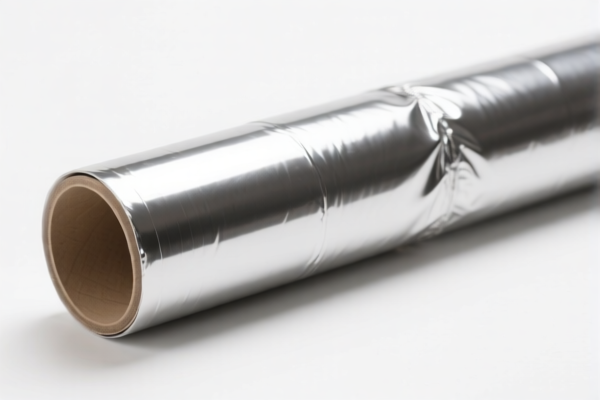
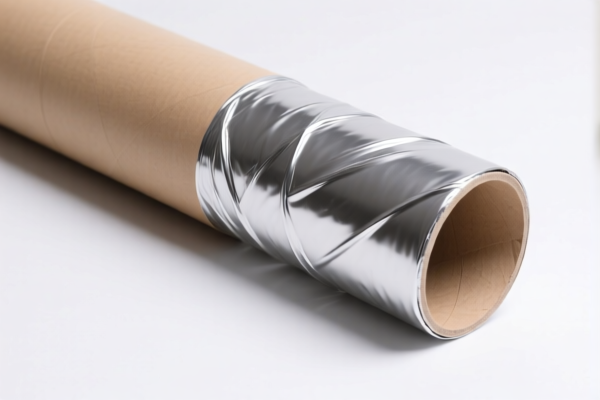
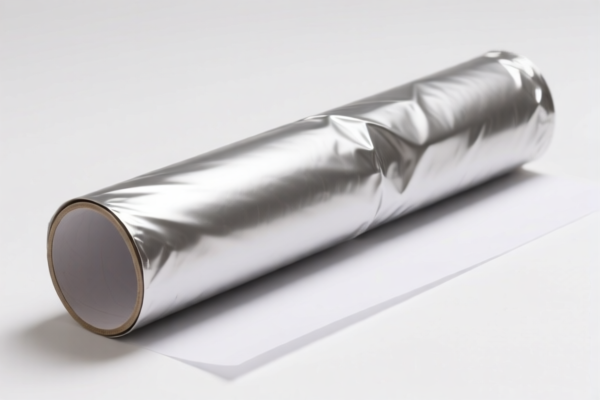
AI Analysis
📜 Gloss Coated Paper Roll (涂布纸卷)
🌐 HS Code Classification & Customs Clearance Guide | 2026 Updated Tariff Analysis | Strategic Import Strategy
📌 I. Product Definition & Classification: Do You Really Know "Glossy Coated Paper"?
Gloss Coated Paper Roll refers to paper that has been coated with a mineral pigment and binder mixture, dried, and calibrated to achieve a high-gloss surface. It is primarily used for high-quality printing (magazines, catalogs, brochures) or specialized applications like beverage carton substrates.
In international trade, the classification depends heavily on: 1. Specific Use: Is it for photography? For general printing? For carton substrates? 2. Weight/Caliper: Though not explicitly detailed in the provided data, weight often influences the sub-heading. 3. Origin: Assuming China (CN) origin importing to USA (US), subject to Section 301 and IEEPA tariffs.
⚠️ Key Distinction Point:
- If intended for photographic use (light-sensitive or specific photo-grade base) → Look at 4810.14
- If for general printing/writing → Look at 4810.13
- If for beverage container substrates or specific coated rolls → Look at 4811.51 or 4810.13 as a fallback.
📦 二、HS Code Classification Details (2026 Latest Tariff Reference)
Based on the provided <DATA>, here are the four potential HS Codes for Gloss Coated Paper Rolls. Note that while the base duty is 0%, the additional tariffs significantly impact the total cost.
| HS Code | Product Description (from Data) | Application / Reason for Classification | Total Tax Rate (CN→US) |
|---|---|---|---|
4811.51.20.10 |
Coated Paper Roll, Shape: Roll, Material: Coated Paper, Use: Beverage Container Substrate | High-gloss paper used as the base material for drink cartons (e.g., Tetra Pak layers) | 35.0% |
4810.13.19.00 |
Coated Paper Roll, Coating matches material, Roll matches form, Used for printing or writing | General offset printing, magazines, brochures. "19" indicates other coated paper of heading 4810.13 | 35.0% |
4811.51.60.00 |
Coated Paper Roll, Coating & Classification Consistent, Roll Form, No Obvious Conflicts | Generic coated paper roll where specific printing grade doesn't fit 4810.13 but fits 4811.51 | 35.0% |
4810.13.20.90 |
Coated Paper Roll, Material matches coated paper, Roll matches form, Based on "Other" Category Catch-all | General use when no other specific sub-heading applies. The ".90" indicates "Other" | 35.0% |
4810.14.11.40 |
Photographic Glossy Coated Paper, Explicitly Includes Photo Use & Coated Material, Matches Photosensitive Paper Characteristics | High-end photo paper or light-sensitive photographic base paper | 35.0% |
🔍 Critical Reminder:
- All listed HS Codes carry a 35% total tax rate due to the combination of 0% Base Duty + 25% Section 301 Tariff + 10% IEEPA 122 Clause Tariff.
- There is no preferential duty for Chinese-origin coated paper rolls under current trade policies.
- Misclassification (e.g., declaring a photo paper as general printing paper) can lead to audits, back-duties, and penalties.
💰 三、2026 Latest Tariff Rate Breakdown (Including Surcharges)
✅ Applicable Country: United States (US)
✅ Origin: China (CN)
✅ Effective Date: Ongoing (Post-2024 Trade Policy Updates)
🎯 1. 4811.51.20.10 —— Coated Paper Roll (Beverage Substrate)
| Item | Content |
|---|---|
| Base Duty | 0% (ad valorem) |
| USITC Supplementary Tariff (Sec 301) | +25% (List 3 / List 4A items) |
| IEEPA Supplementary Tariff (Clause 122) | +10% (Targeting specific Chinese goods) |
| Total Effective Tax Rate | 35.0% |
| Tax Calculation | CIF Value × 35% |
| De Minimis Exemption? | ❌ Not Applicable (Merchandise valued under $800 may still be subject to duties if not de minimis eligible for this specific HTS, but generally, paper rolls are high-volume and unlikely to qualify for single-package exemption in commercial shipments) |
| Legal Path | HTS:4811.51.20.10 → USITC:Footnote 9903.88.01 (Section 301) → IEEPA:9903.01.25 (122 Clause) |
📌 Explanation:
- The 25% is the standard Section 301 tariff on many Chinese papers and paper products.
- The 10% is the additional IEEPA tariff applied under recent executive orders targeting specific categories.
- 35% is a hard floor; no duty-free quota is currently available for these items from China.
🎯 2. 4810.13.19.00 & 4810.13.20.90 —— General Printing Coated Paper
| Item | Content |
|---|---|
| Base Duty | 0% |
| USITC Supplementary Tariff (Sec 301) | +25% |
| IEEPA Supplementary Tariff (Clause 122) | +10% |
| Total Effective Tax Rate | 35.0% |
| Tax Calculation | CIF Value × 35% |
📌 Note:
- Both.19(Other) and.20(Other) sub-headings under4810.13fall under the same tariff block.
- The distinction between.19and.20is technical (often based on weight, brightness, or specific coating type). Ensure your Spec Sheet clearly defines these to avoid Customs rejection.
🎯 3. 4810.14.11.40 —— Photographic Coated Paper
| Item | Content |
|---|---|
| Base Duty | 0% |
| USITC Supplementary Tariff (Sec 301) | +25% |
| IEEPA Supplementary Tariff (Clause 122) | +10% |
| Total Effective Tax Rate | 35.0% |
📌 Note:
- Photo paper is often classified under4810.14. Despite being a higher-value niche, it is not exempt from Section 301 tariffs.
- Ensure documentation explicitly states "Photographic" or "Light-Sensitive" if using this code, as General Printing paper declared as Photo paper will be flagged.
🎯 4. 4811.51.60.00 —— Generic Coated Roll (Fallback)
| Item | Content |
|---|---|
| Base Duty | 0% |
| USITC Supplementary Tariff (Sec 301) | +25% |
| IEEPA Supplementary Tariff (Clause 122) | +10% |
| Total Effective Tax Rate | 35.0% |
📌 Note:
- This code is used when the paper doesn't fit the strict definitions of4810.13(printing/writing) or4811.51.20(beverage substrate).
- Use as a last resort if technical specifications are ambiguous, but be prepared for CBP (Customs and Border Protection) queries.
🛠️ 四、Customs Clearance Practical Advice (Best Practices)
✅ 1. Documentation Checklist (Mandatory)
| Document | Required? | Details |
|---|---|---|
| ✅ Product Specification Sheet | ✔️ | Must include: Basis weight (gsm), Coating type (CLM, Clay, Calcium Carbonate), Brightness, Gloss level, Caliper, Width, Length, Core size. |
| ✅ Commercial Invoice | ✔️ | Clearly state "Gloss Coated Paper Roll", HS Code, Country of Origin (China), and Unit Price. |
| ✅ Packing List | ✔️ | Detail number of rolls, gross/net weight, and dimensions. |
| ✅ Bill of Lading / Airway Bill | ✔️ | Standard shipping document. |
| ✅ Certificate of Origin (CO) | ✔️ | Required to prove origin for tariff calculation (though no FTA benefit applies for CN→US). |
| ✅ Fumigation Certificate | ✔️ | Crucial: If the paper is packed on wooden pallets or uses wooden dunnage. Wood must be ISPM 15 compliant. |
✅ 2. Declaration Tips (Key Formulas)
🔥 "Specify Use, Define Coating, Match Weight, Avoid Ambiguity!"
| Scenario | Correct Declaration | Incorrect Declaration |
|---|---|---|
| Magazine/Calendar Printing | 4810.13.19.00 - "Coated Paper Roll, for Offset Printing" |
"Paper" → Rejected (Too vague) |
| Drink Cartons | 4811.51.20.10 - "Coated Paper for Beverage Container Substrate" |
"Cardboard" → Wrong Classification |
| Photo Paper | 4810.14.11.40 - "Glossy Coated Paper for Photographic Use" |
"Printer Paper" → Audit Risk |
| Unknown/Generic | 4811.51.60.00 or 4810.13.20.90 |
"Other Paper" → Customs Query |
✅ 3. Special Considerations
| Situation | Handling Advice |
|---|---|
| Wooden Pallets | Ensure wood is heat-treated (HT) and stamped with ISPM 15 mark. Fungal infestation can lead to rejection. |
| Mixed Shipments | If different paper types are in one shipment, split the HS Codes on the entry. Do not average them. |
| Samples vs. Commercial | Even samples from China are subject to the 35% tariff unless properly marked as "Non-Commercial Samples" and meeting specific value limits (though often still duty-bearing for paper). |
| Anti-Dumping/Countervailing Duties (AD/CVD) | Check if specific types of coated paper (e.g., carbonless copy paper) are subject to AD/CVD. Standard glossy coated paper usually is not, but verify with a customs broker. |
🌍 五、Global Market Clearance Comparison (2026)
| Country/Region | Recommended HS Code | Duty Rate (China Origin) | Certification/Notes |
|---|---|---|---|
| 🇺🇸 USA | 4810.13.19.00 / 4811.51.20.10 etc. |
35% (0% Base + 25% Sec 301 + 10% IEEPA) | High scrutiny. Ensure ISPM 15 for wood. |
| 🇨🇳 China | 4810.13 / 4811.51 |
0% - 5% (Export Duty usually 0, Import to CN varies) | N/A (Export side) |
| 🇪🇺 EU | 4810.13 / 4811.51 |
0% (Most-Favored-Nation Rate) | No Section 301 equivalent. Standard import duties apply (often 0% for paper). |
| 🇬🇧 UK | 4810.13 / 4811.51 |
0% | Post-Brexit UK Global Tariff is generally low for paper. |
| 🇦🇺 Australia | 4810.13 / 4811.51 |
5% | Standard MFN rate. No major retaliatory tariffs like US. |
📌 Conclusion:
- USA is the most difficult market for Chinese paper exports due to the 35% effective duty rate.
- EU, UK, and Australia are significantly more favorable, with duties often at 0-5%.
- Consider supply chain diversification (e.g., sourcing from Malaysia, Vietnam, or Thailand) to avoid the 25%+10% US surcharges, if feasible.
📌 六、Common Errors & Pitfalls (Lessons Learned)
❌ Error 1: Declaring "Paper" without specifying "Coated" or "Glossy"
👉 Consequence: CBP may reclassify to a higher duty category or demand extensive documentation → Delays.
❌ Error 2: Using 4811.51.20.10 (Beverage Substrate) for General Printing Paper
👉 Consequence: Mismatch between description and physical use → Penalties + Back Duties.
❌ Error 3: Ignoring Wooden Pallet Compliance (ISPM 15)
👉 Consequence: Cargo held at port for fumigation or destruction → Demurrage Charges + Delays.
❌ Error 4: Assuming "De Minimis" applies to large commercial rolls
👉 Consequence: Paper rolls are rarely under $800 per shipment in commercial contexts; assuming exemption leads to non-payment of duties.
✅ Correct Approach:
"Glossy Coated Paper Roll, 150gsm, Clay Coated, for Offset Printing, Width 1200mm, Core 76mm, Packed on ISPM 15 Wooden Pallet, Origin: China"
🎯 七、Conclusion: Precision Saves Money!
🎯 Remember the Formula:
🔹 "Coated Paper + China = 35% Total Duty in USA"
🔹 "Specify Use: Photo vs. Print vs. Substrate"
🔹 "Wood = ISPM 15 Stamp"
📌 Pro Tip:
If you are importing into the USA, calculate the landed cost including the 35% tariff.
If the margin is thin, consider transshipping through a non-China country (though rules of origin may still apply) or sourcing from ASEAN countries (Vietnam, Thailand) which may benefit from lower US tariffs (check current FTAs/Exclusions).
📣 Immediate Action:
📞 Consult a licensed US Customs Broker for Pre-Import Ruling on specific paper specifications.
📄 Ensure all packaging materials are ISPM 15 Certified.
📊 Include the 35% tariff in your cost modeling for US-bound shipments.
✨ Professional Clearance Starts with Accurate Classification!
💼 Every Percent Counts in the Paper Trade!
Customer Reviews
About HS Code Classification
The Harmonized System (HS) is an internationally standardized nomenclature developed by the World Customs Organization (WCO) to classify traded products. Over 200 countries use the HS system as the basis for customs tariffs, trade statistics, and import/export regulations.
Each HS code follows a hierarchical structure:
- Chapter (2 digits) — Broad category of goods (e.g., Chapter 84: Machinery and Mechanical Appliances)
- Heading (4 digits) — More specific grouping within the chapter
- Subheading (6 digits) — Internationally standardized breakdown, used by all WCO member countries
- National subdivisions (8-10 digits) — Country-specific extensions for further classification, such as US HTSUS 10-digit codes
Correct HS code classification is essential for smooth customs clearance, accurate duty payment, and compliance with trade regulations. Misclassification can lead to customs delays, overpayment of duties, or penalties.
When importing from CN to US, the applicable tariff rates may include:
- Most-Favored-Nation (MFN) rate — The standard duty rate applied to WTO members
- General rate — Applied to countries without trade agreements
- Trade remedy duties — Additional tariffs such as Section 301 (anti-dumping), Section 232 (national security), or countervailing duties
The information provided on this page is for reference purposes only. For official classification, please consult with your local customs authority or a licensed customs broker.